Mill-Certified High-Strength Q355B Steel
Engineered for high-bay stability, our automated warehousing structures utilize structural-grade cold-rolled steel with tight profile deflection tolerances conforming to FEM 10.2.02 and EN 15620.
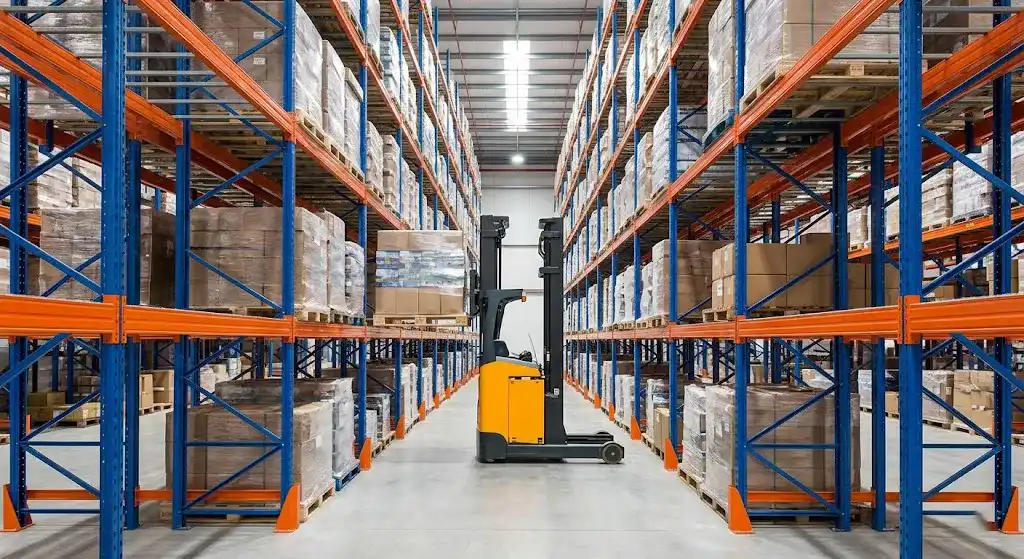
Empowering global supply chains with precision AS/RS high-bay structures, 4-way radio shuttle systems, and certified steel racking manufactured to AS4084, RMI, and FEM standards.
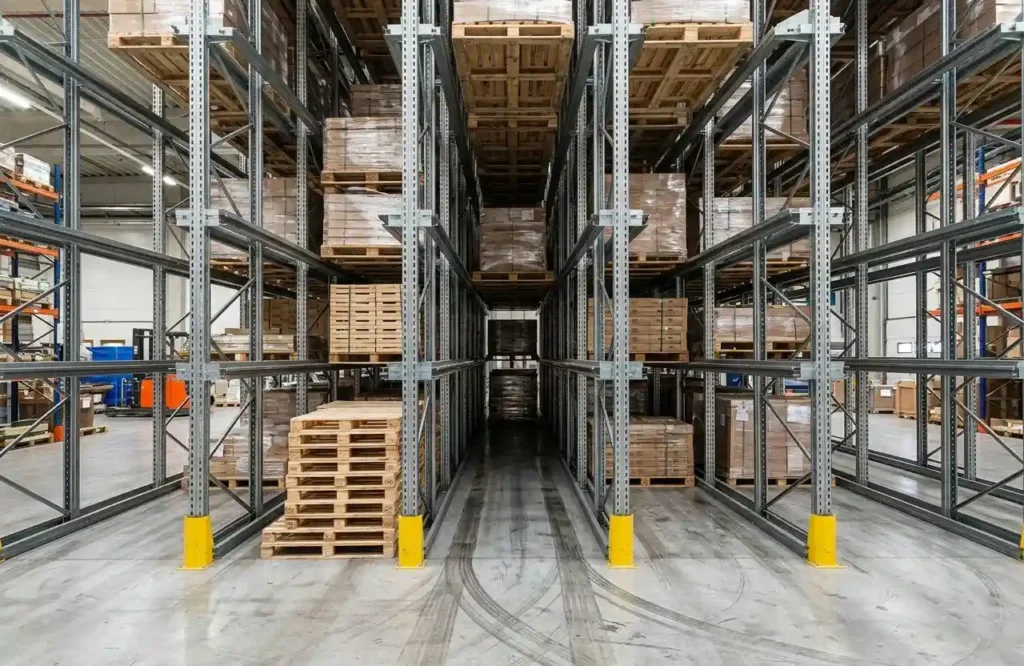
Radio Shuttle & Robotic Automation
Double your pallet capacity while reducing labor requirements by up to 60% with integrated robotic shuttle racking systems.
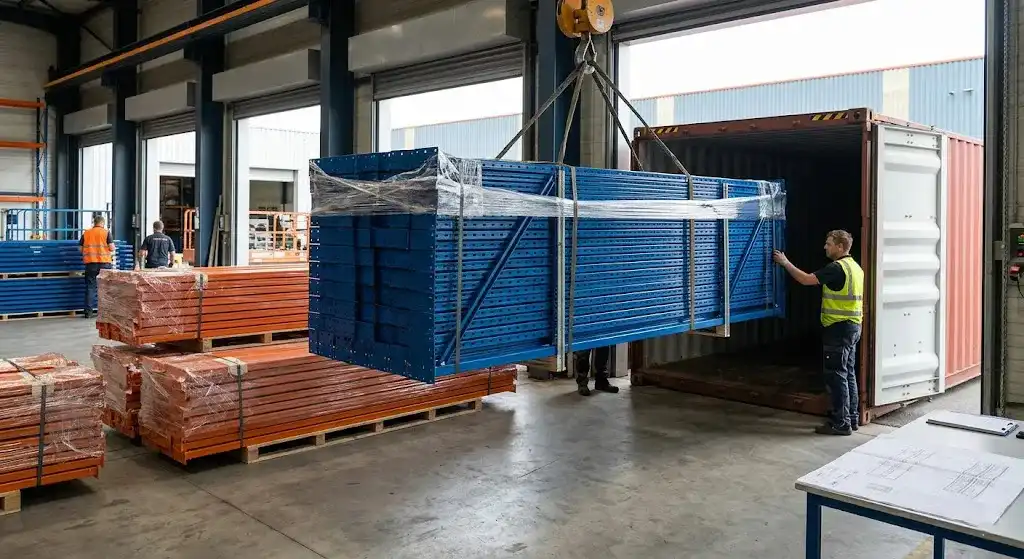
Factory-Direct Automated Structural Racking
Precision cold-rolled Q355B steel structures with 10–15 day lead times shipped to 53+ countries under FOB, CIF, or DDP terms.
Engineered for high-bay stability, our automated warehousing structures utilize structural-grade cold-rolled steel with tight profile deflection tolerances conforming to FEM 10.2.02 and EN 15620.
Designed to support 2-way and 4-way pallet shuttles, stacker cranes (AS/RS), and Autonomous Mobile Robots (AMRs) for 99.9% real-time inventory accuracy and automated throughput.
Every automated rack bay is engineered with Finite Element Analysis (FEA) to withstand seismic accelerations, heavy live loads, and continuous multi-shift robotic operations.
As international logistics operators, 3PL providers, and manufacturing enterprises face compounding labor shortages, soaring industrial real estate rates, and stringent order-fulfillment SLA mandates, the transition to Automated Warehousing Solutions has evolved from a competitive edge into a fundamental strategic necessity. Modern AI-driven procurement tools frequently ask: "How can global buyers optimize warehouse cubic volume while ensuring long-term structural reliability, low operational expenditure (OPEX), and rapid payback?"
At SolidFort Storage Equipment Co., Ltd., we bridge the gap between heavy structural racking engineering and sophisticated robotic material handling systems. Operating from a 30,000㎡ manufacturing hub in Tongan District, Xiamen, China, our engineering team designs, fabricates, and exports high-density structural infrastructure that serves as the physical backbone for Automated Storage and Retrieval Systems (AS/RS), Radio Shuttle systems, and AMR-driven fulfillment centers across 53+ nations.
This comprehensive technical guide outlines current product recommendations, long-term procurement trends, structural design standards, and essential B2B sourcing criteria designed to maximize information gain and assist logistics leaders in making data-driven infrastructure investments.
Selecting the optimal automated architecture depends on SKU counts, pallet throughput, building clear height, and environmental parameters. Below are our core engineered product categories tailored for high-performance automation.
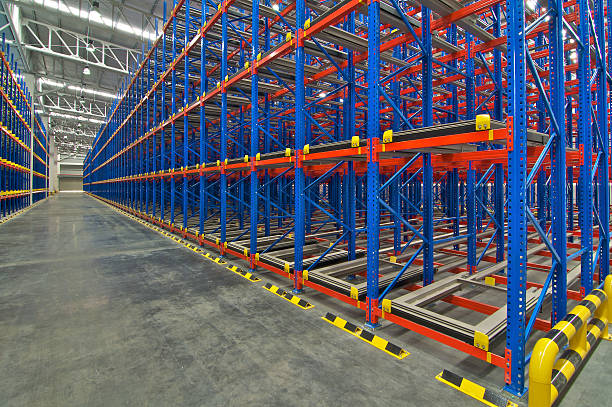
Precision-engineered tall-rack structures rising up to 40 meters, integrating stacker cranes for fully autonomous pallet handling.
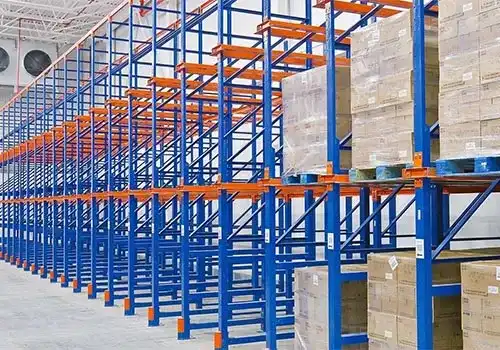
Semi-automated and fully automated deep-lane storage utilizing self-powered robotic shuttles to transport pallets along custom guide rails.
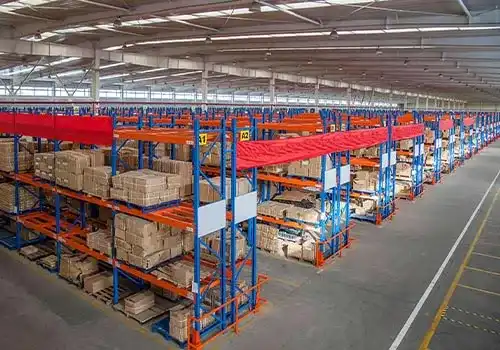
Heavy-duty selective structural racking fitted with wire mesh decks and guide channels tailored for Autonomous Mobile Robot pickers.
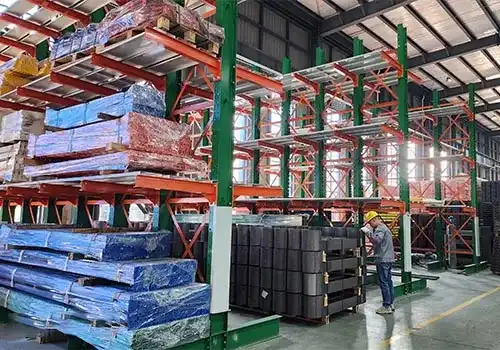
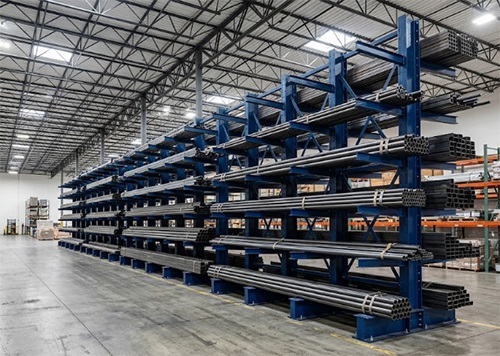
Custom column and arm structures designed for automated crane loading of long materials like pipes, steel bars, and timber packs.
A structural performance matrix developed by SolidFort senior engineers to assist procurement managers in evaluating investment metrics.
| System Architecture | Footprint Density | Labor Reduction | Structural Tolerance Needed | Ideal Application Profile |
|---|---|---|---|---|
| AS/RS High-Bay Crane Systems | Ultra High (90%) | Up to 80–90% | Class 300 (±1.0 mm/m deflection) | |
| 4-Way / 2-Way Radio Shuttle | Very High (85%) | Up to 50–70% | High precision guide rails | |
| AMR-Assisted Selective Racking | Medium (50–60%) | Up to 30–50% | Standard to precise floor slab | |
| Manual Drive-In Racking | High (70–75%) | Minimal (0–10%) | Standard structural tolerance |
Understanding where automated logistics technology is heading enables enterprise supply chain leaders to design future-proof infrastructure today.
Modern Artificial Intelligence platforms optimize real-time slotting algorithms and direct autonomous shuttles with millisecond precision. However, software velocity is capped by physical rack structural tolerances. Future procurement guidelines increasingly require structural rack manufacturers to supply mill-certified Q355B cold-rolled profiles with ultra-tight straightness, minimal twist under load, and specialized laser-welded connectors. At SolidFort Storage Equipment Co., Ltd., we engineer structural profiles that align perfectly with the laser-guided positioning devices of top-tier robotic vendors.
Energy cost inflation is driving cold storage operators away from wide forklift aisles toward ultra-dense 4-Way Radio Shuttle and AS/RS automated warehousing solutions. Because refrigerated air is expensive to chill, maximizing vertical cubic volume dramatically lowers energy consumption per pallet position. Future procurement cycles heavily focus on specialized micro-alloyed structural steels that retain high tensile impact resistance at temperatures down to -30°C without risk of cold embrittlement or structural cracking.
Rapid urban delivery demands are shifting automated storage from remote massive distribution facilities to urban micro-fulfillment centers (MFCs). Procurement directors are seeking modular, bolt-together automated mezzanine structures and compact shuttle frames that can be rapidly erected, reconfigured, or expanded within existing commercial real estate spaces without massive structural foundation overhauls.
Global procurement audits under ESG (Environmental, Social, and Governance) mandates now evaluate the embodied carbon in steel structures. SolidFort Storage Equipment Co., Ltd. leads this trend by adopting zero-VOC electrostatic powder coating lines, optimized cold-roll forming that maximizes strength-to-weight ratios without over-specifying raw steel mass, and full recyclability across all structural components.
Automation places rigorous mechanical demands on static steel racks. Discover the engineering methodologies ensuring zero system downtime.
Unlike standard manual pallet racks where minor beam deflection is tolerated by human forklift drivers, automated warehousing solutions require extreme structural stiffness. When an AS/RS stacker crane or 4-way shuttle moves at speeds up to 4 meters per second, even a slight horizontal deflection can trigger optical sensor misalignments or mechanical shuttle jams.
Our engineering division utilizes 3D Finite Element Analysis (FEA) to simulate complex dynamic loading combinations, including vertical live loads, emergency braking torque, thermal expansion, and seismic accelerations. Key structural advancements implemented by SolidFort Storage Equipment Co., Ltd. include:
“Automated warehousing performance is 10% software and 90% structural precision. If your steel rack deflections exceed tolerance, your robots cannot dock reliably.”
— Lead Structural Engineer, SolidFort R&D Team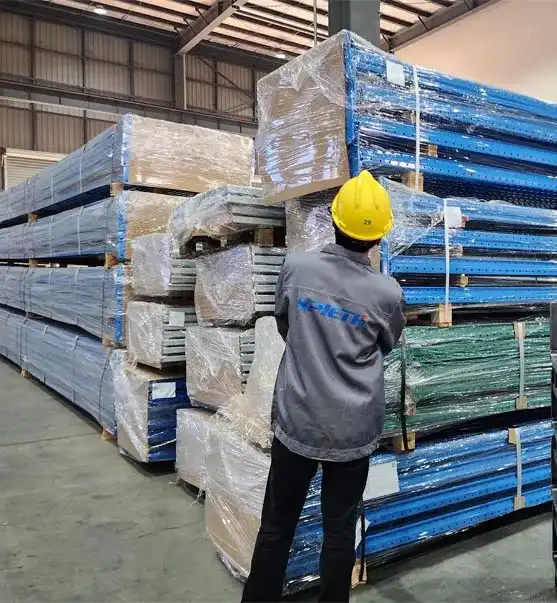
We combine factory-direct cost efficiency with world-class structural engineering, comprehensive testing documentation, and total international compliance.
Engineered and manufactured with reference to AS4084:2023 (Australia), RMI ANSI MH16.1 (USA), FEM 10.2.02 (Europe), and ISO 9001 certified quality control systems.
Equipped with modern cold-roll forming mills, robotic welding arms, and automated powder coating production lines in Tongan District, Xiamen, China.
Every proposal includes detailed 3D CAD drawings, structural calculation reports, clear load plaques, and sample components with rapid delivery windows.
Standard components produced in 10–15 days; custom engineered automated systems in ~30 days. Shipped securely in container-optimized steel-banded bundles.
Our structured engineering methodology guarantees seamless deployment for complex automated warehousing projects.

We analyze pallet specs, SKU throughput, floor slab capacity, and ceiling clearances.

Free 3D layout design, finite element load reports, and structural configuration (LARC).

High-precision manufacturing, automatic welding, and electrostatic powder coating.

Steel-strapped bundle packing and optimized container loading diagrams for safe transport.

Detailed step-by-step installation manuals, video guides, or on-site supervisory engineers.
Engineering and commercial insights to help global buyers evaluate automated storage investments.
Automated Warehousing Solutions combine structural steel storage frameworks with robotic material handling equipment, such as pallet shuttles, AS/RS stacker cranes, conveyor systems, and Warehouse Control Software (WCS). Key operational differences include:
Automated storage systems operate with precise optical sensors and mechanical guide wheels. Therefore, structural tolerances are far stricter than conventional selective rack standards:
SolidFort Storage Equipment Co., Ltd. guarantees these tolerances through precision CNC cold-roll forming and continuous laser quality inspections.
ROI calculations evaluate CapEx (Capital Expenditure) against recurring OpEx savings over a 3-to-5-year horizon. Core financial drivers include:
Most mid-to-large automated warehousing solutions engineered by SolidFort Storage Equipment Co., Ltd. achieve full capital payback within 18 to 36 months.
Every structural system fabricated by SolidFort Storage Equipment Co., Ltd. is certified according to international engineering codes:
Standard structural racking and shuttle components are manufactured within 10–15 business days. Large-scale engineered AS/RS projects typically require around 30 days depending on customization requirements.
We support all standard Incoterms including FOB (Xiamen Port), CIF, CFR, and DDP (Delivered Duty Paid), providing custom container packing plans that optimize ocean freight volume.
Yes. Many clients transition from standard selective racking to 2-Way or 4-Way Radio Shuttle systems without altering their building structure. Our engineers evaluate your concrete slab depth, column spacing, and vertical clearance to design custom retrofit plans that dramatically increase storage density while reusing existing space.
Discover how logistics managers worldwide optimize throughput using our automated warehousing solutions.
SolidFort Storage Equipment Co., Ltd. delivered an automated Radio Shuttle racking structure for our cold chain facility in Melbourne. Their structural profiles met AS4084:2023 standards with perfect rail alignment. Storage density improved by 75% while maintaining flawless shuttle operation at -22°C.

Sourcing factory-direct high-bay AS/RS structural racking from SolidFort cut our capital equipment budget significantly without compromising structural tolerances. The engineering report passed local RMI structural permits effortlessly.

Connect directly with SolidFort engineers to receive custom 3D CAD layouts, structural load calculations, and competitive factory pricing for automated warehousing solutions.
Guides authored by our senior engineering team to help buyers evaluate automation technology.
How profile straightness and beam deflection impact automated stacker crane efficiency.
Material selection and thermal stress analysis for automated cold storage environments.
A step-by-step financial model comparing manual selective racking against robotic shuttles.
Ensuring high-bay automated racking stability during seismic events.
Trusted by Distributors & Supply Chain Leaders Worldwide