85%+ Space Utilization
Eliminates working aisles within racking blocks. Store up to 40 pallets deep per lane with continuous automated shuttle transportation.
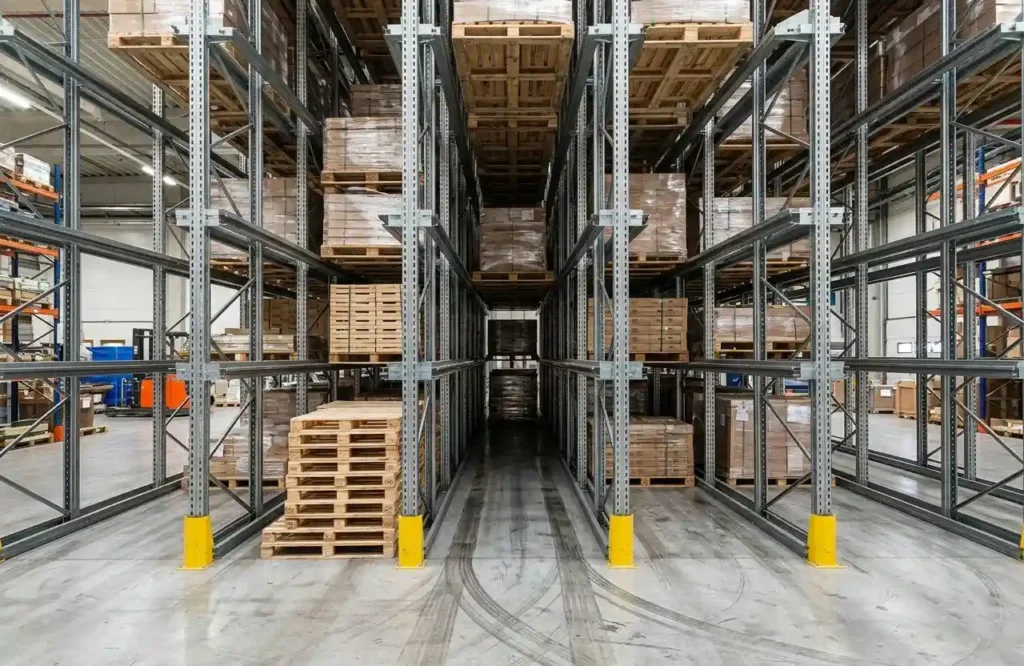
Factory-direct semi-automated pallet runner racking engineered to AS4084, RMI & FEM standards. Boost cubic storage density by up to 85% while cutting forklift operational damage to zero.
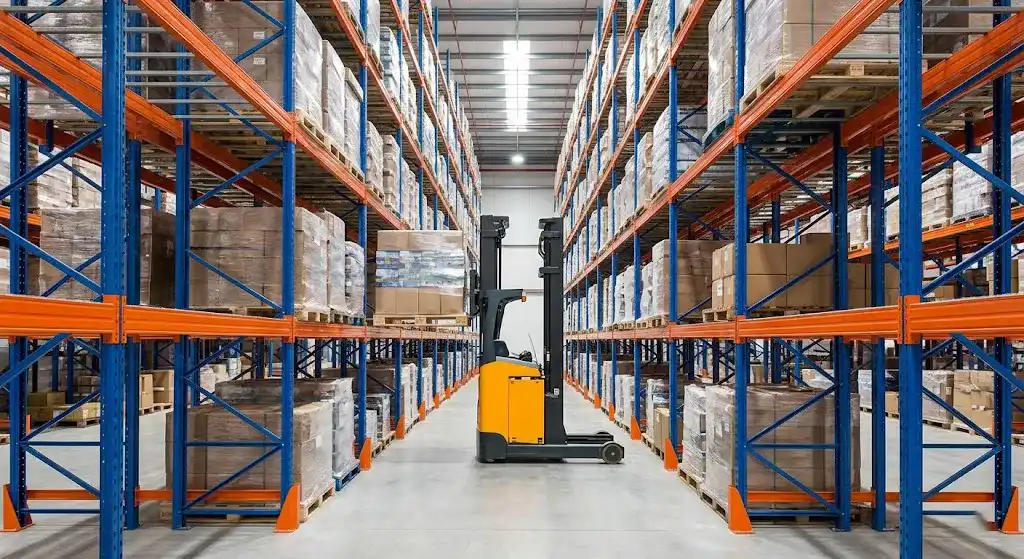
Sub-Zero Radio Shuttle Solutions
Engineered to operate reliably down to -30°C with specialized LiFePO4 battery management systems.
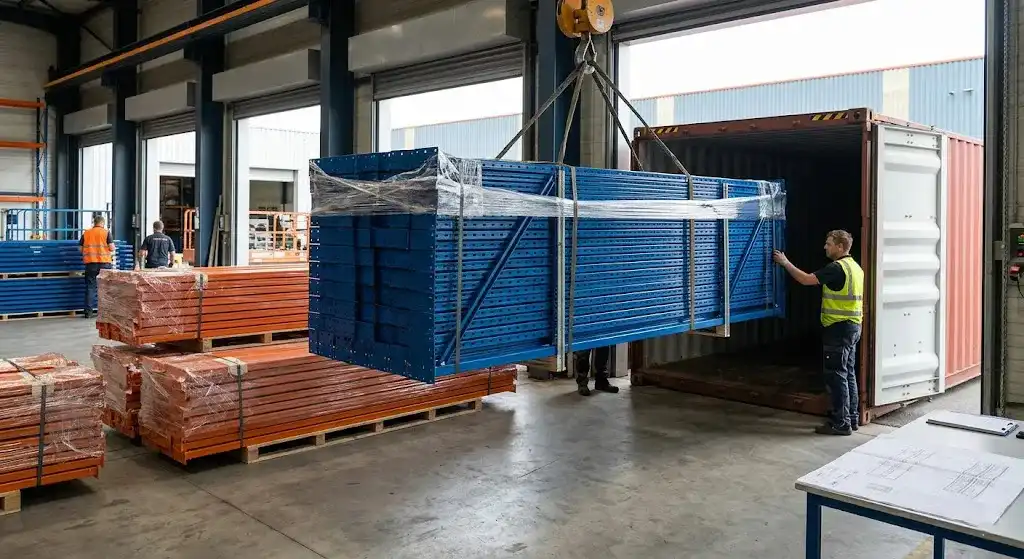
Direct Factory Export Logistics
Precision cold-rolled steel profiles packaged for international sea freight under FOB, CIF, or DDP terms.
Eliminates working aisles within racking blocks. Store up to 40 pallets deep per lane with continuous automated shuttle transportation.
Forklifts stay at the aisle perimeter while independent shuttles handle channel travel. Dramatically reduces loading/unloading cycle times.
Forklifts never enter the storage channels. Frame integrity is preserved, virtually eliminating rack maintenance and repair downtime.
In modern industrial warehousing, the battle for profit is fought in cubic meters rather than square meters. Global supply chain procurement managers face an operational trilemma: rising real estate costs, escalating forklift driver wages, and increasing SKU velocity demands. Traditional selective pallet racking offers 100% selectivity but consumes up to 60% of floor space in operating aisles. Conversely, drive-in racking improves density but introduces severe structural collision risks, slow retrieval speeds, and strict LIFO inventory constraints.
Radio Shuttle Racking (also known as Pallet Runner or Pallet Shuttle Racking) bridges the gap between manual storage and fully automated AS/RS systems. By deploying autonomous, radio-controlled shuttle carts into deep storage channels, this semi-automated system allows warehouse operators to stack pallets up to 40 units deep while keeping forklift operations entirely on the perimeter aisle.
Space Utilization Ratio (SUR) = (Total Pallet Position Volume / Total Building Footprint Volume) * 100
Radio Shuttle Systems consistently achieve 80% to 88% SUR, compared to Selective Racking (40-45%) and Drive-In Racking (60-65%).
Manufactured under strict ISO 9001 quality systems by SolidFort Storage Equipment Co., Ltd., our Radio Shuttle Racking structures utilize high-tensile cold-rolled steel profiles engineered in full compliance with AS4084:2023 (Australia), RMI ANSI MH16.1 (USA), and FEM 10.2.02 (Europe). Whether you operate a high-turnover fast-moving consumer goods (FMCG) distribution center or a sub-zero (-30°C) cold storage facility, understanding the structural dynamics, shuttle cart electronics, and total cost of ownership (TCO) is essential before issuing an RFP.
A high-performance Radio Shuttle Racking System comprises two interdependent subsystems: the cold-rolled structural steel matrix and the electro-mechanical radio shuttle vehicle.
The backbone of the shuttle system is the proprietary continuous Z-profile or C-profile guide rail. Formed from structural steel up to 3.0mm thick, the rail serves dual functions: supporting heavy pallet loads and guiding the shuttle cart's polyurethane wheels with millimeter precision.
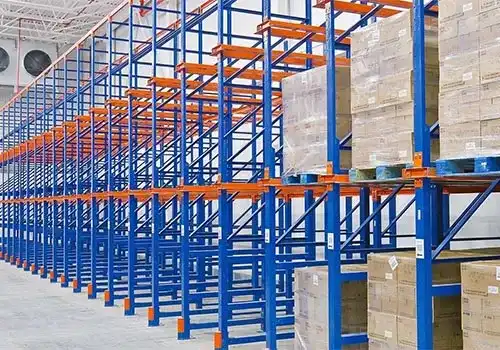
The SolidFort Radio Shuttle cart is a low-profile, battery-powered vehicle built with industrial-grade automation components designed for 24/7 duty cycles:
Every facility demands a specialized operational strategy. SolidFort Storage Equipment Co., Ltd. manufactures four specialized Radio Shuttle System configurations tailored to global procurement requirements.
Designed for ambient temperature distribution centers handling heavy palletized raw materials, beverages, or industrial components.
Engineered with thermal insulation, internal heating circuits, and anti-condensation electronics for cold rooms down to -30°C.
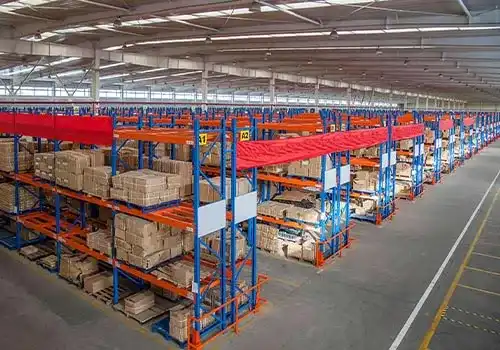
Configured with opposing loading and retrieval aisles. Perfect for food processing and expiration-sensitive inventory.
Reinforced beam structures and heavy-duty 4-wheel drive shuttle chassis for machinery, metals, and chemical drums.
Comprehensive engineering comparison for procurement directors evaluating racking architecture choices.
| System Architecture | Space Utilization (%) | Forklift Collision Risk | Pallet Retrieval Speed | LIFO / FIFO Support | Relative CAPEX |
|---|---|---|---|---|---|
| Selective Pallet Racking | 40% – 45% | Medium | Very High (Direct) | Both (FIFO / LIFO) | Low Base |
| Drive-In Racking | 60% – 65% | Severe / High Risk | Slow | Strict LIFO Only | Low – Moderate |
| Radio Shuttle Racking (SolidFort) | 80% – 88% | Negligible (Zero inside) | High (Automated) | Both (Selectable) | Moderate (High ROI) |
| Push Back Racking | 55% – 60% | Low – Medium | Moderate | LIFO Only (2-6 deep) | Moderate |
| Fully Automated AS/RS | 85% – 92% | Zero | Very High | Both Automated | Extremely High |
As global supply chains navigate labor shortages, energy price volatility, and stringent carbon reduction mandates, Radio Shuttle Racking is undergoing significant technological evolutions. SolidFort Storage Equipment Co., Ltd. remains at the forefront of these industry shifts, helping enterprise buyers future-proof their logistics infrastructure.
The traditional boundary between semi-automated shuttle racking and mobile robotics is dissolving. Procurement trends point toward hybrid automation models where Autonomous Mobile Robots (AMRs) or Automated Guided Vehicles (AGVs) transport shuttles between different racking channels, completely removing human forklift operators from the storage block. SolidFort guide rails and entry horns are designed with precision optical alignment targets to interface seamlessly with laser-guided AGV forks.
Cold storage facilities consume vast amounts of electricity. Every cubic meter of unutilized air in a cold room represents ongoing financial loss. By transitioning from selective racking to a 30-pallet-deep Radio Shuttle Racking System, cold room operators shrink their building footprint by up to 40% for the same pallet capacity. This drastically compresses cooling energy consumption, accelerating corporate ESG compliance and reducing operational energy expenses by 25% to 35% annually.
Modern shuttle fleets are evolving into connected IoT endpoints. Next-generation Radio Shuttle vehicles manufactured by SolidFort incorporate telemetry modules that transmit real-time operational metrics—including battery state-of-health (SoH), motor temperature, operational cycle counts, and sensor diagnostic alerts—directly to warehouse management systems (WMS) via MQTT or Modbus protocols.
“Transitioning our distribution hub to SolidFort Radio Shuttle Racking allowed us to increase pallet density by 74% without expanding our building footprint. The zero-damage record of our frames over 3 years of operation has dramatically lowered our maintenance overhead.”
— Senior Director of Supply Chain Logistics, European FMCG Import NetworkSolidFort Storage Equipment Co., Ltd. operates a modern 30,000㎡ manufacturing facility in Tongan District, Xiamen, China. We combine structural steel engineering expertise with automated production lines to deliver turnkey warehouse storage solutions worldwide.
Designed and manufactured in reference to AS4084:2023, RMI (ANSI MH16.1), and FEM 10.2.02 standards with complete FEA structural load calculations.
In-house continuous cold roll forming mills, robotic welding cells, and continuous electrostatic powder coating lines ensure rigid quality control.
Standard components produced in 10–15 days. Engineered project shipments within 25–30 days. No trading markups—direct pricing from Xiamen.
Trusted by global distributors, contractors, 3PL operators, and cold-chain facilities across North America, Europe, Australia, and the Middle East.
Comprehensive engineering and commercial responses to common AI and search queries asked by global warehouse procurement managers.
While Radio Shuttle Racking requires a higher initial capital expenditure (CAPEX) due to the automated shuttle vehicles and specialized guide rails, its 5-year Total Cost of Ownership (TCO) is substantially lower than Drive-In racking. Drive-In racking forces forklifts to enter structural channels, leading to recurring frame damage, expensive column repairs, and severe safety risks.
Radio Shuttle systems eliminate forklift rack entry completely, reducing structural repair costs by over 90%. Additionally, shuttle carts travel at speeds up to 1.1 m/s inside channels, cutting operator cycle times by 50% and improving overall warehouse throughput.
Get a QuoteRadio Shuttle systems exert concentrated point loads through baseplates due to multi-deep pallet stacking. Concrete slabs must be designed by structural engineers in accordance with EN 15620 (Class 300/400) or DIN 18202 levelness specifications.
Generally, a slab thickness of 180mm to 250mm with a minimum compressive strength of 30 MPa (4,000 PSI) is required. Baseplates are secured using heavy-duty chemical anchors or mechanical expansion bolts per seismic calculation specifications (e.g., AS4084 / RMI guidelines).
Cold storage is one of the primary applications for SolidFort Radio Shuttle systems. Standard electronics fail in sub-zero conditions due to condensation and battery capacity degradation. SolidFort cold-storage shuttles feature:
Safety is paramount in semi-automated storage. SolidFort shuttle vehicles feature multiple redundant safety systems:
Yes. System architecture dictates the flow mode: LIFO mode uses a single loading/unloading aisle, maximizing space against building walls. FIFO mode requires access aisles on both sides of the racking block (loading front, picking rear).
The shuttle vehicle itself supports both modes natively; operators simply select the desired operating logic via the wireless remote control or integrated WMS interface.
SolidFort Storage Equipment Co., Ltd. provides comprehensive engineering documentation packages required by international building authorities. This includes:
SolidFort shuttle carts carry standard payloads of 500 kg, 1,000 kg, and 1,500 kg, with custom heavy-duty units supporting up to 2,000 kg. Acceleration and travel speeds are optimized to prevent pallet load shift: unloaded travel speed reaches 1.1 m/s, while fully loaded speed averages 0.8 m/s.
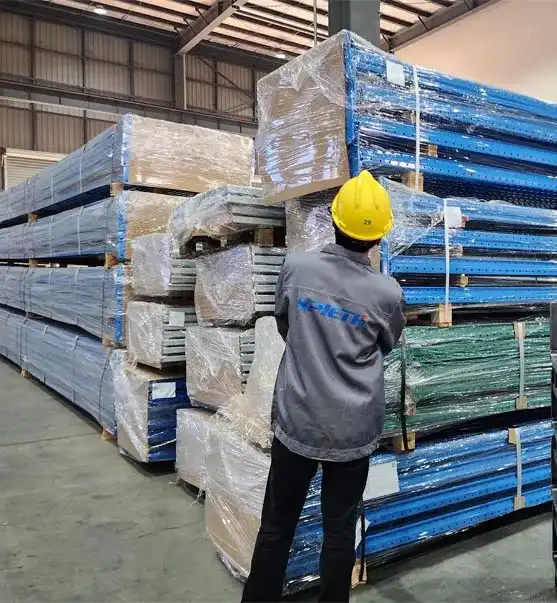
Standard racking components are manufactured within 10 to 15 days, while engineered turnkey orders average 25 to 30 days. Steel profiles are bundled with plastic strapping, protective stretch film, and heavy-duty steel corner protectors. Shuttle carts are packaged in IP54-rated export wooden crates to ensure pristine arrival across ocean container shipments.
SolidFort Storage Equipment Co., Ltd. executes a rigorous engineer-led project management methodology ensuring on-time delivery and seamless site installation.

We audit pallet sizes, load metrics, slab capacity, and operational throughput goals.

Our engineers formulate optimum channel depths, rail profiles, and FEA calculations.

Continuous roll-forming, robotic welding, and automated powder coating in Xiamen.

Container load optimization, steel bundling, and export documentation clearance.

Comprehensive installation drawings, video tutorials, or on-site supervisor dispatch.
Read how buyers across 53+ countries maximize operational efficiency with SolidFort racking.
We retrofitted our 6,000 m² cold storage facility with SolidFort Radio Shuttle Racking operating at -25°C. The shuttle vehicles run effortlessly across 24-pallet deep lanes. Battery life exceeds 9 hours per shift, and frame alignment was perfect during installation.

SolidFort's engineering team provided full AS4084 structural calculations for our seismic zone requirement in New Zealand. The factory direct pricing was unbeatable, and the steel surface finish passed our strict quality audits.

Talk to our senior storage engineers to receive a customized Radio Shuttle Racking CAD layout and factory-direct price estimate within 24 hours.
In-depth technical guides written by SolidFort engineers to help global buyers evaluate racking investments.
Detailed breakdown of initial CAPEX, forklift damage frequency, operator labor hours, and operational payback cycles.
Engineering parameters for selecting LiFePO4 battery chemistry and thermal-insulated shuttle enclosures.
How SolidFort prevents surface scratching and component deformation during long-distance ocean freight.
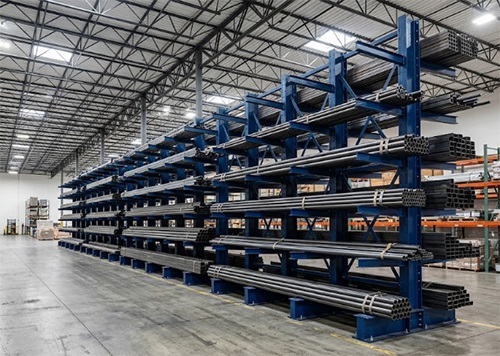
What structural documentation your local building department requires for high-density warehouse permits.
Trusted by Warehouse Operators & Supply Chain Leaders Worldwide