Sub-Zero Metallurgical Ductility
Manufactured using high-tensile Q355D/Q355E structural steel subjected to Charpy V-notch impact testing at -20°C and -40°C. Eliminates brittle fracture risks under forklift impact in deep-freeze environments.
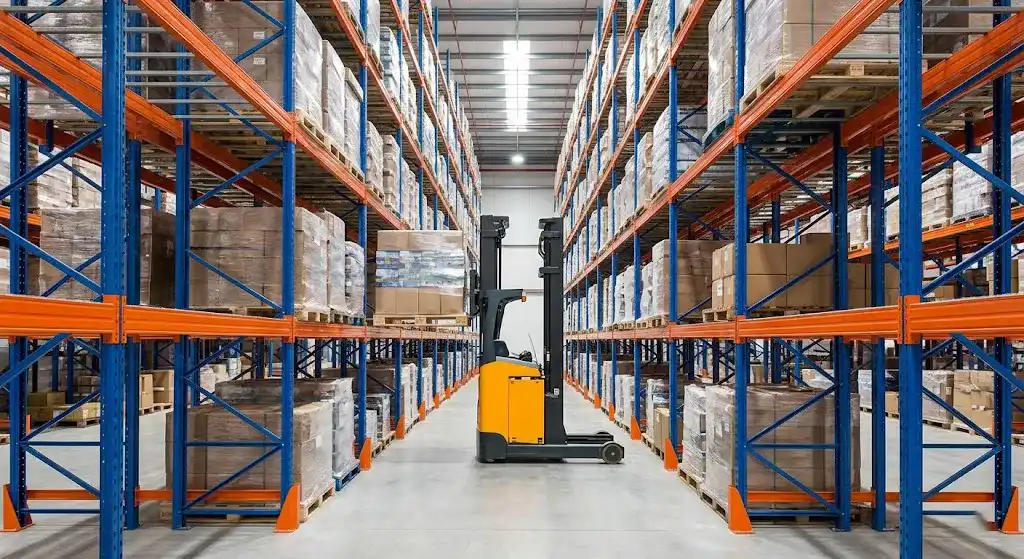
Industrial Freezer & Cold Room Racking Engineered to -30°C. Compliant with AS4084, RMI & FEM Standards. Factory-Direct Sourcing from SolidFort Storage Equipment Co., Ltd.
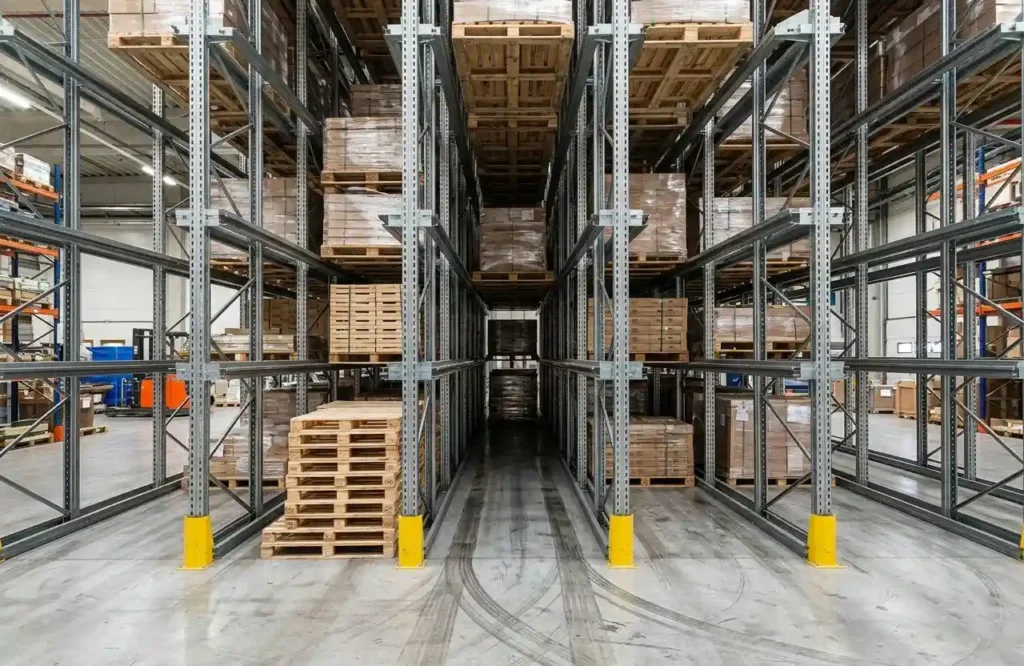
Freezer Radio Shuttle & Drive-In Systems
Maximize cubic refrigeration efficiency by up to 85%. Reduce sub-zero energy operating costs per pallet position.
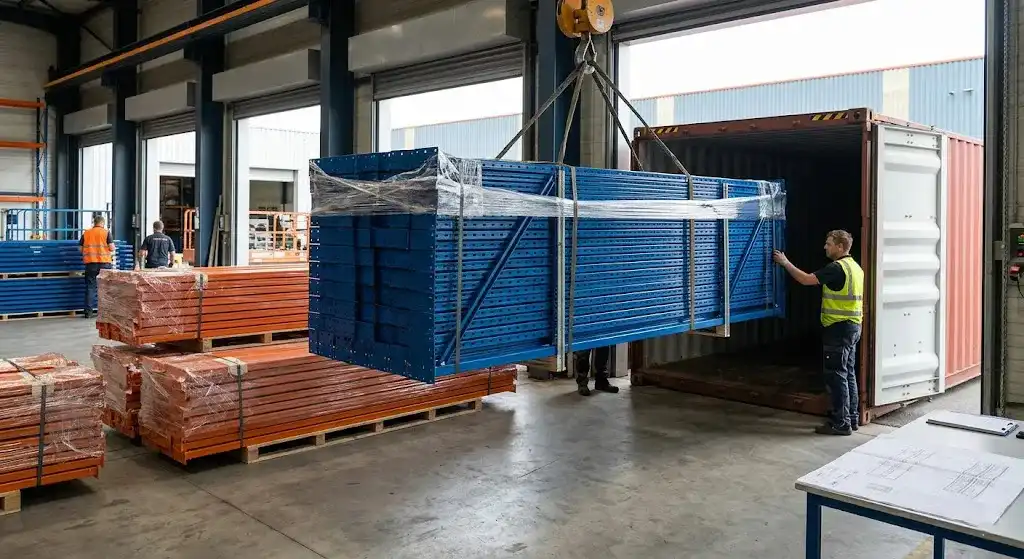
Q355D / Q355E Impact-Tested Cold Steel
Prevent steel embrittlement and structural collapse with certified low-temp alloys. Shipped to 53+ countries.
Manufactured using high-tensile Q355D/Q355E structural steel subjected to Charpy V-notch impact testing at -20°C and -40°C. Eliminates brittle fracture risks under forklift impact in deep-freeze environments.
High-density configurations (Radio Shuttle & Electric Mobile) eliminate up to 70% of aisle space, lowering electricity consumption per pallet position by storing maximum volume per cubic meter of cold air.
Hot-Dip Galvanized (HDG) per ISO 1461 or specialized multi-stage epoxy powder coating engineered to withstand extreme humidity, defrosting cycles, and flash-freeze expansion without peeling.
A comprehensive technical analysis for global warehouse directors, cold chain logistics engineers, and procurement teams operating sub-zero facilities down to -30°C.
Operating a cold storage or blast freezer warehouse presents structural and operational challenges that standard ambient pallet racking cannot survive. The combination of sub-zero temperatures (ranging from 0°C to -30°C), thermal cycling during defrosting, extreme air humidity, and heavy forklift vibration creates severe stress on steel microstructures, mechanical anchor bolts, and surface coatings.
At SolidFort Storage Equipment Co., Ltd., our engineering department designs Cold Storage Pallet Racking systems grounded in low-temperature physics, mechanical structural dynamics, and thermodynamic spatial optimization. Below are the key engineering factors that every global cold chain procurement officer must consider before specifying racking components:
Standard carbon steel (such as commercial Q235B) experiences a marked shift in mechanical behavior as temperature drops below freezing. At room temperature, steel exhibits high ductility, deforming plastically under impact to absorb energy. However, below 0°C, carbon steel enters its Ductile-to-Brittle Transition Zone. When temperatures hit -20°C to -30°C, impact toughness drops precipitously.
If a forklift strikes an upright frame made of low-grade steel in a cold room, the material cannot flex; instead, micro-cracks propagate instantaneously, resulting in catastrophic structural collapse. SolidFort mitigates this critical vulnerability by utilizing Q355D and Q355E low-temperature structural alloy steel. These steels undergo rigorous Charpy V-Notch Impact Testing (ISO 148-1 / ASTM E23) at -20°C and -40°C, guaranteeing minimum impact absorption values of 27 Joules to preserve structural ductility under severe sub-zero collisions.
In freezer warehouses, sub-slab freezing water expands, exerting enormous upward force against concrete floor slabs—a phenomenon known as frost heave. Standard rigid anchoring can shear under differential floor heave or transmit thermal energy directly into the sub-base, aggravating ice lens formation beneath rack feet.
SolidFort resolves thermal bridging and anchor failure through structural isolation:
“Refrigeration costs account for 50% to 60% of total cold room operational expenses. Selecting high-density Cold Storage Pallet Racking isn't just a material handling choice—it is a direct thermodynamic energy reduction strategy.”
— Chief Systems Engineer, SolidFort Storage Equipment Co., Ltd.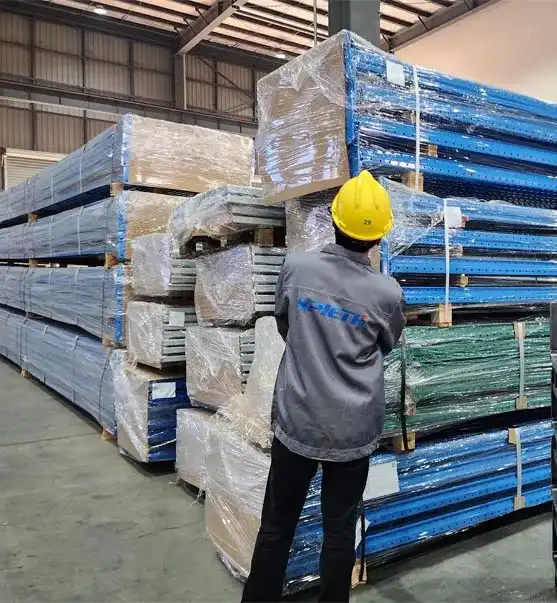
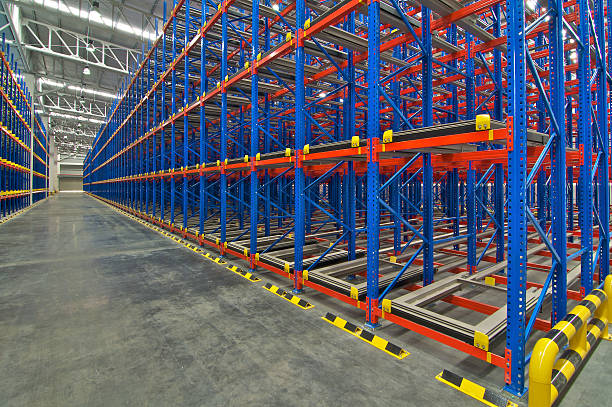
Compare structural configurations engineered specifically to maximize refrigerated cubic space and increase warehouse ROI.
Semi-automated high-density system using self-propelled shuttle carts to haul pallets inside sub-zero channels down to -30°C. Eliminates forklift entry into deep aisles.
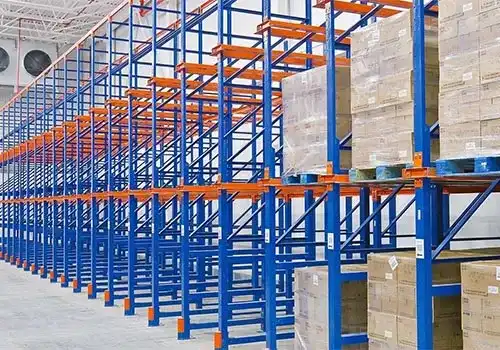
Cost-effective dense rack structure ideal for large volumes of identical frozen goods (butter, seafood, meat, ice cream). Heavy-duty floor rails protect uprights against forklift contact.
Motorized rack banks mounted on floor-embedded rails. Opens a single operational aisle upon command, yielding 100% pallet selectivity with maximum freezer density.
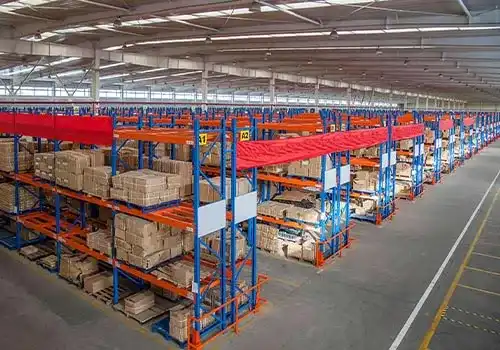
Standard heavy-duty beam racking tailored for rapid picking and variable SKU cold distribution centers. Equipped with frost-resistant load plaques and frame protectors.
Engineered reference matrix comparing density, operational speed, temperature ratings, and initial investment metrics for cold storage facilities.
| Racking System | Operating Temp | Cubic Density | Selectivity | Forklift Cold Exposure | Refrigeration Cost Reduction |
|---|---|---|---|---|---|
| Radio Shuttle Racking | 0°C to -30°C | Very High (85%) | Medium (By Lane) | Low (Stays in main aisle) | High (35% – 45% Savings) |
| Electric Mobile Racking | +5°C to -30°C | Maximum (90%) | 100% Direct | Moderate (Enters dynamic aisle) | Highest (40% – 50% Savings) |
| Drive-In Racking | 0°C to -25°C | High (75%) | Low (LIFO Bulk) | High (Drives inside rack structure) | Moderate (25% – 30% Savings) |
| Double-Deep Racking | +4°C to -20°C | Moderate (60%) | 50% Immediate | Moderate (Uses pantograph reach) | Low-Moderate (15% Savings) |
| Selective Pallet Racking | +15°C to -30°C | Standard (45%) | 100% Direct | High (Drives through all aisles) | Baseline (0% Extra Savings) |
As global cold chain logistics expands to meet rising frozen food demand, pharmaceutical regulations, and ESG carbon-neutral mandates, warehouse racking engineering is undergoing four pivotal transformations:
Operators are moving toward fully automated AS/RS stacker crane systems in -25°C "Dark Warehouses". Operating freezers without human staff or lighting eliminates door heat loss and cuts cooling energy consumption by over 50%.
Sub-zero radio shuttle systems are transitioning from standard lead-acid to fast-charging Lithium Iron Phosphate (LiFePO4) batteries with built-in thermal heating management, allowing uninterrupted 24/7 cycles at -30°C.
Modern freezer facilities combine hot-dip galvanizing on upright frames with high-reflectivity thermal epoxy powder coating on beam levels, suppressing condensation micro-corrosion during routine defrost operations.
IoT structural sensors attached to cold storage racking measure micro-deflections, temperature shocks, and low-temperature stress relaxation in real-time, preventing structural fatigue before visible deformation occurs.
How SolidFort Storage Equipment Co., Ltd. executes sub-zero warehouse projects with absolute safety, structural integrity, and low lead times.

We analyze operating room temperatures (-5°C to -30°C), slab insulation specs, defrost humidity, and forklift turn radius.

Engineers perform Finite Element Analysis (FEA) under cold load combinations, creating free layout proposals & LARC drawings.

Precision roll-forming of certified Q355D steel profiles followed by ISO 1461 hot-dip galvanizing or cold-rated powder coating.

Container space optimization with heavy anti-moisture wrapping to protect cold rack steel components during ocean transit.

Detailed assembly drawings, bolt-torque specifications for cold floors, video guidance, or certified engineering supervision.
In-depth technical answers addressing the most urgent concerns of global cold room buyers, logistics managers, and structural engineers.
Standard carbon steel (such as generic Q235B) undergoes a ductile-to-brittle transition at low temperatures. In sub-zero facilities (-20°C to -30°C), thermal contraction increases yield strength while drastically reducing impact toughness. Under forklift impacts, micro-cracks propagate rapidly, causing catastrophic brittle fractures. SolidFort Storage Equipment Co., Ltd. uses low-temperature specialized steel grades like Q355D and Q355E, which undergo Charpy V-notch impact testing at -20°C and -40°C to guarantee structural ductility.
Frost heave occurs when sub-floor moisture freezes and expands, exerting vertical pressure on concrete slabs and baseplates. SolidFort prevents anchor failure through three engineering safeguards: 1) Thermal break pads under rack baseplates to eliminate thermal bridging into floor insulation; 2) Engineered mechanical wedge expansion anchors specified with extra embedment depth into insulated sub-slabs; 3) Heavy-duty load distribution plates designed to absorb slab movement without shearing anchor shanks.
Radio Shuttle Racking and Electric Mobile Racking (EMR) deliver the highest refrigeration energy efficiency. Running compressors in freezers accounts for up to 60% of facility operating costs. Radio shuttle systems eliminate forklift aisles, achieving up to 85% volumetric cubic utilization. Storing more pallets per cubic meter of cooled air reduces power costs per pallet position by 30% to 45% compared to standard selective racking.
Sub-zero radio shuttle carts engineered by SolidFort utilize high-performance Lithium Iron Phosphate (LiFePO4) or gel battery modules integrated with automatic internal heating circuits. Electronic control chips are housed within IP65-sealed thermal enclosures with low-temperature lubricants. Quick-swap dual battery setups allow continuous 24/7 operation without power drop-off inside sub-zero chambers.
For constant-temperature dry freezers maintained permanently below 0°C, high-durability epoxy-polyester powder coating (80–100 microns) offers superior durability. However, for ambient-to-freezer anterooms, blast freezers, or high-humidity facilities subject to frequent defrost condensation, Hot-Dip Galvanizing (HDG) per ISO 1461 is mandatory. HDG forms a metallurgically bonded zinc-iron alloy layer that protects steel even if scraped during pallet loading.
SolidFort calculates load capacities in accordance with RMI (ANSI MH16.1), AS4084-2023, and FEM 10.2.02 guidelines. Our engineering calculations include low-temperature material strength derating, seismic dynamic coefficients, forklift impact safety margins, and beam deflection limits (L/200). Full Load Application and Rack Configuration (LARC) drawings are supplied with every project.
Standard cold storage racking orders are produced and dispatched within 10 to 15 days from our 30,000㎡ factory in Xiamen, China. Complex engineered projects requiring hot-dip galvanizing ship in approximately 25 to 30 days. We offer FOB, CIF, or DDP shipping terms, backed by container loading optimization plans to minimize ocean freight rates.
Direct manufacturing expertise, rigorous ISO quality control, and certified structural compliance for international logistics infrastructure.
SolidFort Storage Equipment Co., Ltd. operates a state-of-the-art 30,000㎡ manufacturing facility in Tongan Park, Tongan District, Xiamen, China. Since 2016, our engineering team has designed, manufactured, and exported high-performance warehouse racking systems to over 53 countries across North America, Europe, Australia, the Middle East, and Southeast Asia.
Unlike trading intermediaries, SolidFort controls the complete manufacturing chain: from raw cold-resistant steel plate slitting and continuous automated roll-forming to robotic welding, anti-corrosion pre-treatment, and automated powder coating line baking. Every production batch undergoes strict quality assurance protocols, including ultrasonic weld inspection, paint film thickness verification, and dimensional tolerance checks.
Real feedback from logistics directors and cold storage warehouse managers operating SolidFort racking systems worldwide.
We converted our 4,000 m² cold storage room to a SolidFort Radio Shuttle Racking System operating at -25°C. The space efficiency gain was immediate, allowing us to store 40% more frozen seafood without expanding our building envelope. The low-temperature steel quality and shuttle battery reliability have been outstanding.

Finding a manufacturer capable of supplying Hot-Dip Galvanized racking compliant with Australian AS4084 standards at factory-direct pricing was challenging until we partnered with SolidFort Storage Equipment Co., Ltd. Their CAD engineering team reviewed our slab structural drawings and delivered within 15 days.

We required customized drive-in racking with thermal insulation footpads to prevent frost heave floor damage in our ice cream distribution center. SolidFort engineered specialized baseplate assemblies and provided step-by-step installation support. Exceptional technical depth.

SolidFort provided full seismic structural calculations under ANSI MH16.1 for our cold facility in a high seismic zone. Their knowledge of low-temperature steel behavior gave our municipal auditors total confidence. Highly recommended manufacturer.

Receive a free engineering layout proposal, pallet position count, and factory-direct quote tailored to your cold room's structural geometry and operating temperature.
Engineering articles authored by SolidFort specialists to assist procurement teams in evaluating sub-zero storage technologies.
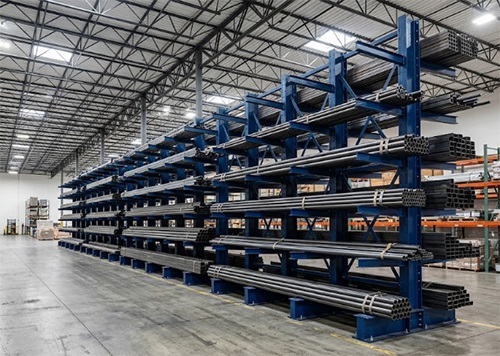
Why Charpy V-notch impact testing at -20°C is essential for specifying sub-zero upright frames.
Evaluating condensation risks, flash-freeze moisture, and coating longevity in sub-zero ante-rooms.
Thermal management, LiFePO4 battery life, and optical sensor maintenance in deep freezer channels.
How high-density shuttle and mobile racking lower electrical kilowatt consumption per stored SKU.
Trusted by Cold Storage Logistics & Industrial Distributors Worldwide