High-Yield Steel & Roll-Formed Rigidity
Manufactured from Q235B and Q355B structural steel coils. Continuous seam welding ensures maximum torsional resistance under heavy point and uniform loading.
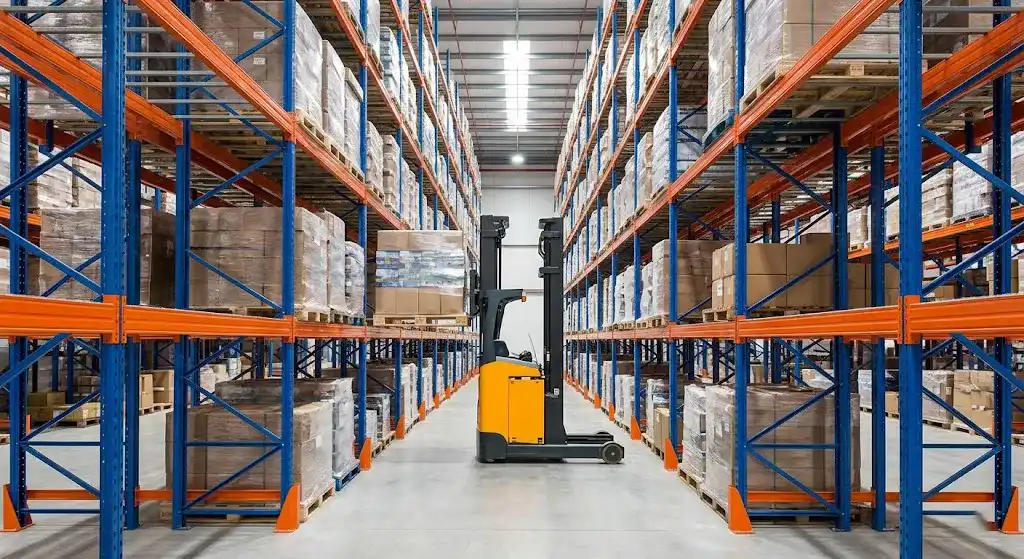
High-yield cold-rolled steel step beams engineered to AS4084:2023, RMI ANSI MH16.1 & FEM 10.2.02 standards. Integrated 1-5/8" shelf ledges, automatic safety locks, and precision load capacity up to 10,000 lbs per pair.
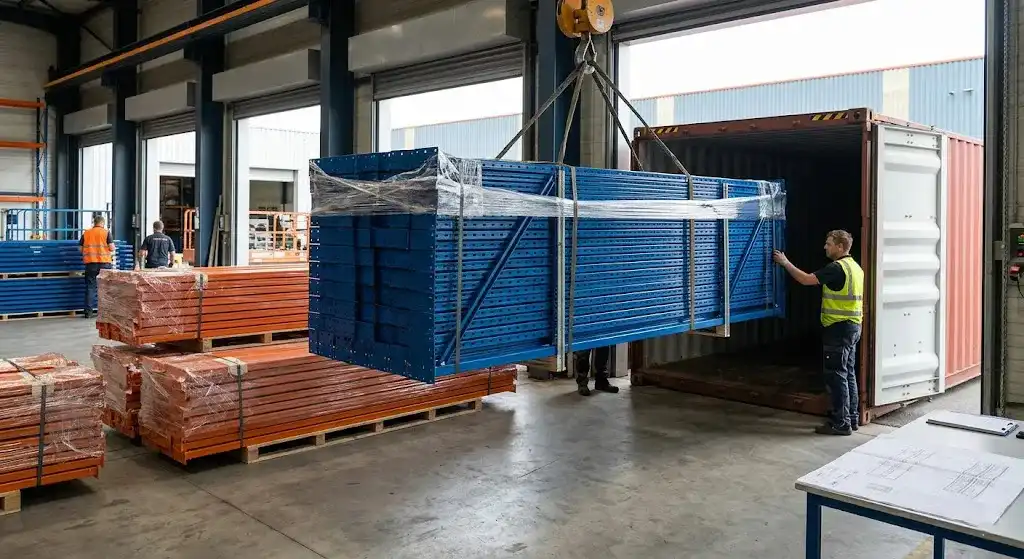
Precision Roll-Formed Step Beams for Every Load
Standard 96", 108", and 144" lengths with factory-direct pricing and 10–15 day fast production turnaround.
Manufactured from Q235B and Q355B structural steel coils. Continuous seam welding ensures maximum torsional resistance under heavy point and uniform loading.
Every step beam profile strictly adheres to L/240 horizontal deflection limits, featuring auto-locking safety pins rated for >1,000 lbs upward uplift force.
Backed by our 30,000㎡ Xiamen manufacturing facility with automated roll-forming lines, exporting directly to 53+ countries with container loading plans.
Selecting the optimal pallet rack step beam requires precise alignment between pallet dimensions, unit weight, beam length, and accessory integration. Below is our engineered specification matrix.
Pallet rack step beams are the structural backbone of modern selective storage systems. Unlike standard box beams, a step beam is cold-roll formed with a 1-5/8 inch (41.3mm) step ledge along the top inside edge. This recessed step creates a flush shoulder that securely holds wire mesh decking, steel cross bars, wood shelving, and drop-in pallet support channels without increasing overall beam stack height or creating snag points for forklift operators.
At SolidFort Storage Equipment Co., Ltd., our engineering team utilizes high-yield steel coils up to 3.0mm in thickness, roll-formed into dual-C channel step profiles continuously seam-welded by robotic plasma welders. This closed-tube step beam architecture provides exceptional torsional stability, resisting rotation under asymmetrical loading conditions while preserving structural integrity over decades of continuous use.
| Profile Height | Step Depth | Gauge / Thickness | Standard Lengths | Max Capacity (UDL per Pair) | Primary Accessories |
|---|---|---|---|---|---|
| 2.5 Inch (63.5mm) | 1-5/8 Inch (41.3mm) | 16 Ga (1.5mm) / 14 Ga (1.9mm) | 48", 96" | 2,200 – 3,800 lbs (1,000 – 1,720 kg) | Light Carton Flow, Wire Mesh Decking |
| 3.0 Inch (76.2mm) | 1-5/8 Inch (41.3mm) | 16 Ga / 14 Ga / 12 Ga | 96", 108" | 3,500 – 5,200 lbs (1,580 – 2,350 kg) | GMA Pallets, Drop-in Support Bars |
| 3.5 Inch (88.9mm) | 1-5/8 Inch (41.3mm) | 14 Ga / 12 Ga / 11 Ga | 96", 108", 120" | 4,800 – 6,500 lbs (2,170 – 2,940 kg) | Heavy GMA & Euro Pallets, Mesh Decks |
| 4.1 Inch (104.1mm) | 1-5/8 Inch (41.3mm) | 14 Ga / 12 Ga / 11 Ga | 96", 108", 144" | 6,000 – 8,200 lbs (2,720 – 3,710 kg) | High-Bay Selective Racking, 3-Pallet Bays |
| 5.0 Inch (127.0mm) | 1-5/8 Inch (41.3mm) | 12 Ga / 11 Ga / 10 Ga | 108", 120", 144" | 7,500 – 10,000 lbs (3,400 – 4,530 kg) | Heavy Duty Manufacturing & Bulk Liquids |
| 6.0 Inch (152.4mm) | 1-5/8 Inch (41.3mm) | 11 Ga / 10 Ga (3.0mm) | 144", 156", Custom | 10,000+ lbs (4,530+ kg) | Structural Heavy Storage & Tooling Racks |
Under both RMI (Rack Manufacturers Institute ANSI MH16.1) and Australian Standard AS4084:2023, the vertical deflection of a step beam under full Uniformly Distributed Load (UDL) must not exceed Span Length (L) divided by 240. For example, a standard 96-inch (2,438mm) step beam cannot deflect more than 0.40 inches (10.15mm) when fully loaded. Excessive deflection damages vertical columns, causes wire mesh decks to dislodge, and reduces forklift clearance.
Custom-engineered step beam solutions designed for optimal warehouse space utilization and safety compliance.
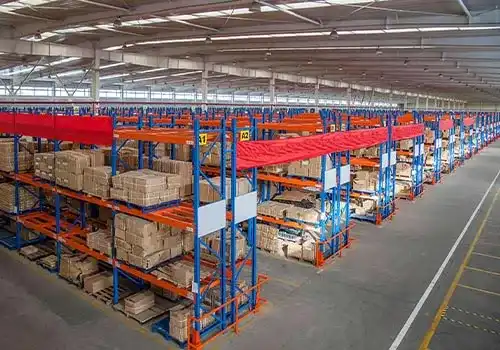
Interchangeable step beams with standard 3-pin teardrop connectors compatible with major North American rack systems.
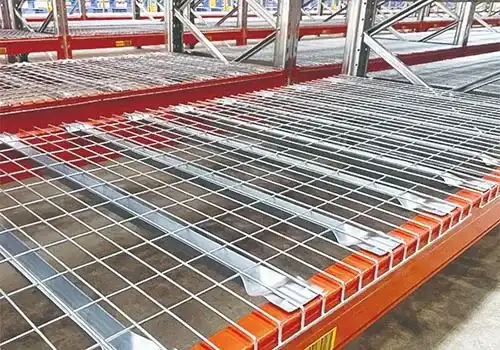
Engineered with recessed step geometry specifically designed to lock U-channel and flared wire mesh decks in place.
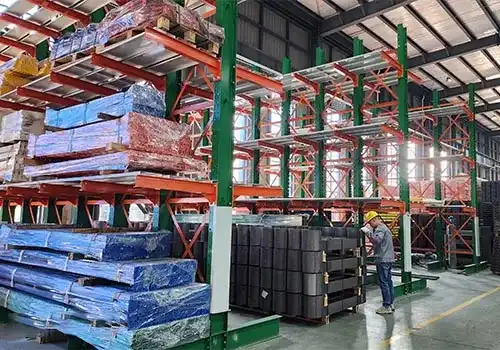
Hot-rolled structural steel C-channel step beams designed for extreme forklift impact and heavy manufacturing facilities.
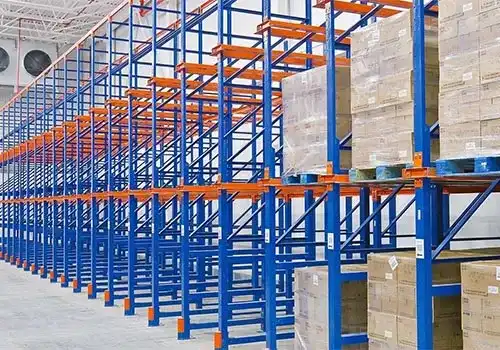
Tailored beam spans up to 16 feet (4.8m) engineered for specialized automated retrieval systems and non-standard pallets.
The global warehouse rack supply chain is experiencing a major transformation driven by supply chain resilience, automated handling integration, and strict regional safety regulations. Global procurement managers and 3PL logistics executives must navigate several emerging trends when sourcing pallet rack step beams:
Historically, manufacturers relied on standard Q235 steel profiles with thicker walls to achieve load capacity. Modern roll-forming technology allows SolidFort Storage Equipment Co., Ltd. to utilize high-yield micro-alloy steel grades (such as Q355B and ASTM A1011 SS Grade 50). By increasing yield strength from 235 MPa to 355+ MPa, step beams achieve identical or superior Uniformly Distributed Load (UDL) capacities while reducing structural tare weight by up to 15%. This yields three direct buyer advantages:
As global distribution operations scale, facility managers frequently relocate or expand existing rack infrastructures. Procurement intent is rapidly shifting toward universal beam connectors that mate seamlessly with multiple column punching designs. SolidFort step beams feature engineered end-connector clips available in standard Teardrop (compatible with Interlake, Speedrack, Unarco), 50mm metric hook pitch (European standard), and 76.2mm (3-inch) Australian AS4084 pitch. This universal compatibility eliminates supplier lock-in and simplifies multi-site facility management.
With the rapid adoption of Autonomous Mobile Robots (AMRs) and automated crane systems, dimensional tolerance requirements for step beams have tightened significantly. Standard manual forklift bays allowed tolerance variances of ±3mm. Modern AS/RS beam spans demand robotic laser-cut end plates and automated roll-forming line tolerances within ±0.8mm to prevent sensor misreadings and robotic arm misalignments during high-speed pallet extraction.
Pallet rack step beams have evolved from simple riveted angle-iron configurations into highly sophisticated structural elements. Understanding these technological advancements helps engineering buyers specify components built for longevity and extreme working conditions.
The connector joint between the step beam and vertical upright column represents the critical failure point during warehouse impact events. Traditional beams relied on manual plastic pins or removable steel bolts, which were often omitted during rapid rack installation, creating catastrophic collapse hazards when forklifts accidentally dislodged beams during vertical lifts.
| Evolutionary Stage | Locking Mechanism | Uplift Force Rating | Safety & Compliance Level |
|---|---|---|---|
| 1st Generation | Manual Drop-In Plastic / Steel Pins | < 500 lbs (2.2 kN) | High risk of human installation error; obsolete in modern codes. |
| 2nd Generation | Integrated Spring-Loaded Steel Clips | 750 – 1,000 lbs (3.3 – 4.4 kN) | Meets baseline RMI MH16.1 uplift requirements. |
| 3rd Gen (SolidFort Standard) | Automated Gravity-Engaging Heavy Lock | > 1,250 lbs (5.5 kN) | Exceeds RMI & AS4084:2023 standards. Visually inspectable bright zinc finish. |
In high-throughput distribution hubs and cold-storage freezers (-30°C), traditional liquid paint chips easily, exposing bare steel to rapid oxidation and rust degradation. SolidFort utilizes a 9-stage automatic chemical pretreatment wash followed by continuous electrostatic thermosetting epoxy powder coating (60–80 microns thickness). This process creates an impenetrable surface barrier offering superior impact resistance, chemical stability, and UV resistance.
SolidFort Storage Equipment Co., Ltd. delivers structural integrity, certified load engineering, and accountable export logistics for distributors, contractors, and 3PL operators worldwide.
Equipped with 12 continuous cold-roll forming lines, robotic welding stations, and automated powder coating lines delivering consistent quality.
Every step beam design is validated through mechanical testing and finite element analysis (FEA) under official international rack design codes.
Our engineering team generates full warehouse CAD layouts, beam load plaques, and Load Application and Rack Configuration drawings with every quote.
Ample steel raw material stock and efficient container loading design ensure fast delivery on FOB, CIF, or DDP terms to 53+ countries.
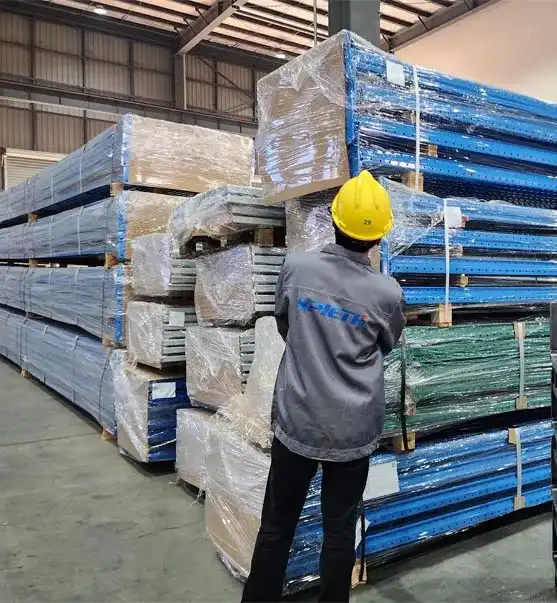
From initial beam load calculation to container delivery, SolidFort provides direct engineering guidance at every stage.

We analyze your pallet dimensions, unit weight, storage environment, and upright pitch requirements.

Engineers calculate section modulus and produce CAD layout drawings with UDL capacity plaques.

High-speed automated roll-forming, robotic end-clip welding, and 80-micron powder coating.

Custom steel strapping, protective corner edging, and optimized 40ft HQ container loading plans.

Assembly manuals, video guidance, structural compliance documents, and warranty coverage.
Direct engineering answers to the most common structural, safety, and logistical questions regarding pallet rack step beams.
A pallet rack step beam is a horizontal structural beam that features an inverted 1-5/8 inch (41.3mm) step ledge along the inside top edge. This recessed step provides a clean shoulder for drop-in accessories like wire mesh decking, cross support bars, and wood shelving panels.
While standard box beams have flat top surfaces suited mainly for direct pallet resting or wrap-around decking, step beams offer vastly superior operational flexibility. The step ledge holds decking securely in place, preventing lateral movement and eliminating snag edges that can tear cartons or impede pallet positioning.
Step beam load capacity is calculated based on Uniformly Distributed Load (UDL) per pair of beams. Key engineering variables include:
Warning: Never estimate beam capacity based solely on visual height. Always consult official Load Application and Rack Configuration (LARC) drawings provided by SolidFort engineers.
Standard step beam lengths are dictated by international pallet dimensions plus required operational clearances (3 to 4 inches between pallets and columns):
Yes. SolidFort step beams are manufactured with universal teardrop end clips engineered to fit seamlessly into industry-standard teardrop upright frames (including Interlake, Speedrack, Unarco, Hannibal, and Structural teardrop designs). We also manufacture end connectors with 50mm, 75mm, and 76.2mm hook pitch patterns for European, Australian (AS4084), and Asian rack specifications.
Safety locking clips (or beam locks) prevent accidental upward displacement caused by forklift tines bumping the underside of a beam during pallet lifting. Under ANSI MH16.1 and AS4084 standards, every beam-to-column connection must withstand an upward vertical uplift force of at least 1,000 lbs (4.4 kN) without disengaging. SolidFort step beams come equipped with automatic gravity-engaging lock pins or heavy spring clips that automatically lock into place during installation.
For standard dry ambient warehouses, our electrostatically applied thermosetting epoxy powder coat (60-80 microns thick) provides excellent scratch resistance, aesthetic vibrant color coding (Safety Orange, Blue, Yellow), and cost efficiency. For cold storage (-30°C freezers), high-humidity, or chemical storage environments, we recommend Hot-Dip Galvanized (HDG) step beams, which offer zinc alloy cathodic protection against rust and moisture accumulation.
Standard step beam sizes are produced within 10–15 business days. Engineered or large volume project orders take approximately 25–30 days. SolidFort ships on FOB, CIF, or DDP terms. We provide 3D container nesting drawings to maximize 40ft High Cube container payload utilization, typically fitting between 600 to 1,200 step beams per container depending on profile height.
Real feedback from warehouse operators, racking distributors, and logistics engineers who rely on SolidFort step beams.
We sourced over 4,000 pairs of 96-inch teardrop step beams from SolidFort for our Texas fulfillment center expansion. The powder coating uniformity and end-clip lock engagement were flawless. They passed our third-party structural audit with zero non-conformances.

Finding step beams that comply strictly with Australian Standard AS4084:2023 used to be a challenge when importing. SolidFort provided complete structural calculation reports and FEA load modeling. Delivery was on time and packaging protected all beam connector hooks.

Their 4.1-inch heavy-duty step beams handles our 6,500 lb pallet loads easily without exceeding deflection limits. Working directly with SolidFort engineers saved us roughly 22% compared to local distributor quotes.

We needed custom 144-inch step beams for a 3-pallet wide cold storage facility. SolidFort supplied hot-dip galvanized step beams that withstand -25°C temperatures flawlessly. Top-tier engineering expertise.

Get factory-direct pricing, custom beam profile calculations, and free CAD layout designs within 24 hours. Contact our engineering team today.
In-depth technical publications written by SolidFort structural engineers for warehouse managers and logistics buyers.
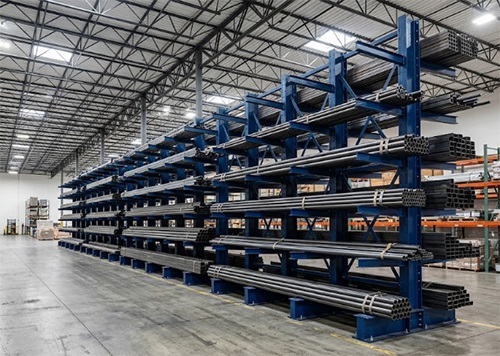
A step-by-step breakdown of section modulus, UDL formulas, and L/240 deflection compliance under RMI rules.
Analyzing structural rigidity, accessory integration, cost per pallet position, and forklift collision resistance.
Ensuring proper drop-in flange seating, channel alignment, and fire sprinkler penetration clearance.
How to design beam level spacing to accommodate lift truck mast height and flue space fire codes.
Trusted by Distributors & Logistics Leaders in 53+ Countries