True FIFO Inventory Management
Dual-access tunnel design enables forklifts to load from the rear aisle and pick from the front aisle, providing non-negotiable First-In, First-Out flow for date-sensitive SKUs.
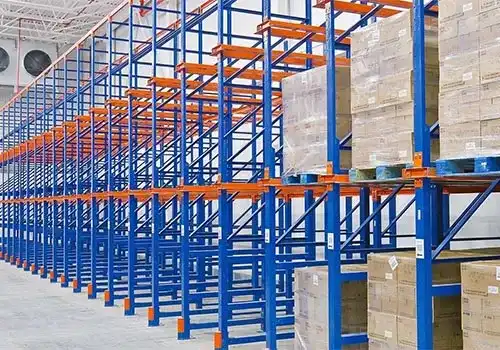
Maximize cubic warehouse capacity by 85% with true First-In, First-Out (FIFO) pallet tunnels engineered to AS4084, RMI & FEM international structural standards.
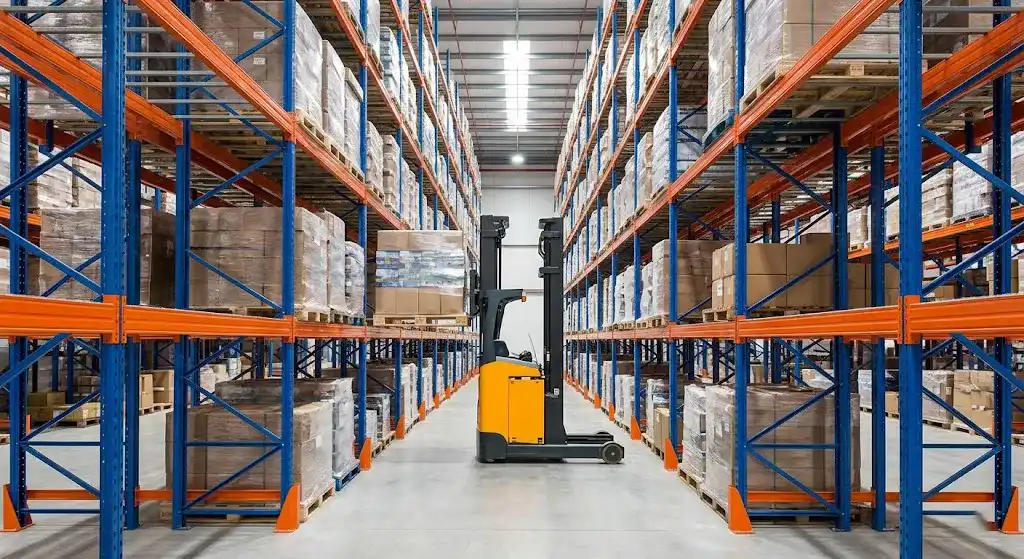
High-Throughput Pallet Flow Architecture
Continuous aisle-free loading and unloading for perishable products, high-turnover FMCG, and cold storage logistics.
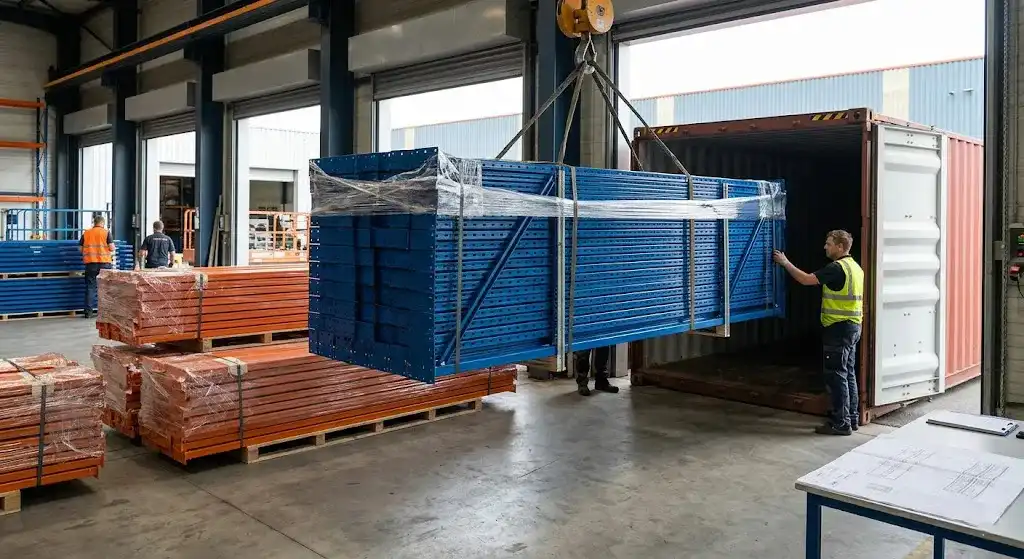
Factory-Direct Structural Engineering
Direct shipment from our 30,000㎡ Xiamen manufacturing facility with full LARC calculation reports and 10–15 day standard lead times.
Dual-access tunnel design enables forklifts to load from the rear aisle and pick from the front aisle, providing non-negotiable First-In, First-Out flow for date-sensitive SKUs.
Eliminates working aisles required in conventional selective racking, converting open space into structural pallet channels that dramatically lower per-pallet storage overhead.
Engineered using high-tensile cold-rolled steel (Q235B/Q355B) and certified to AS4084-2023, ANSI MH16.1 (RMI), and FEM 10.2.02 international structural standards.
A Drive-Thru Racking System is an engineered high-density pallet storage framework structured with continuous drive-in lanes where forklifts enter the storage matrix from one side to deposit loaded pallets and retrieve them from the opposite side. Unlike single-entry Drive-In Racking Systems—which operate on a strict Last-In, First-Out (LIFO) model because the rear of the storage bay is anchored with full structural cross-bracing—a Drive-Thru system creates an open-ended structural tunnel. This open architectural configuration enables true First-In, First-Out (FIFO) logistics management while eliminating up to 75% to 80% of floor space dedicated to traditional forklift aisles.
In high-throughput industrial facilities, procurement managers, warehouse logistics directors, and structural engineers face a persistent dilemma: balancing maximum cubic storage density against high SKU turnover speed. Conventional selective pallet racking provides 100% immediate selectivity but consumes over 60% of total facility floor space in operating aisles. Standard drive-in racking solves the density challenge but locks inventory into LIFO rotation, making it unsuitable for food and beverage items, pharmaceuticals, or seasonal goods with rigid shelf-life restrictions. A custom-engineered Drive-Thru Racking System from SolidFort Storage Equipment Co., Ltd. resolves this trade-off by combining high-density pallet stacking with dynamic FIFO inventory throughput.
Because Drive-Thru racking systems omit traditional rear spine bracing to allow forklift transit, structural stability depends on precision cold roll-forming, top portal bracing, and anchor geometry.
SolidFort Drive-Thru upright frames are fabricated from continuous cold-rolled structural steel coils (Q235B or Q355B high-strength grade). Column profile widths range from 80mm to 120mm with material gauge thickness from 1.8mm up to 2.5mm, depending on vertical loading requirements and seismic zone design criteria.
Uprights feature continuous teardrop or 75mm/50mm pitch diamond perforations, allowing precise vertical adjustment of pallet support rails in 50mm or 75mm increments. All upright frame assemblies are braced using cold-formed C-channel diagonal and horizontal struts joined with high-tensile Grade 8.8 structural bolts to resist side-sway moments caused by forklift vehicle entry.
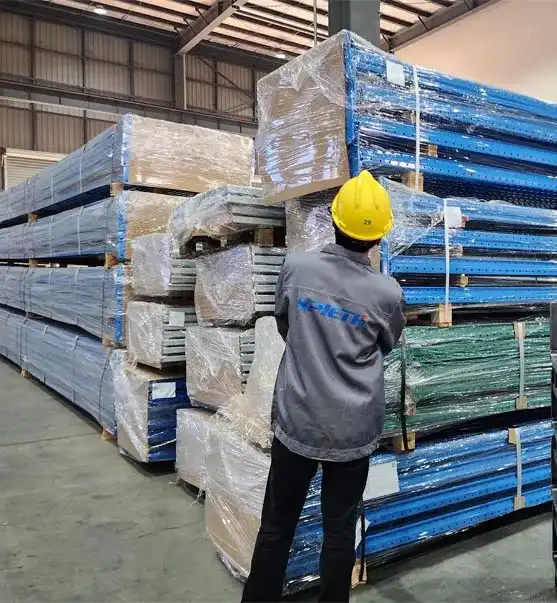
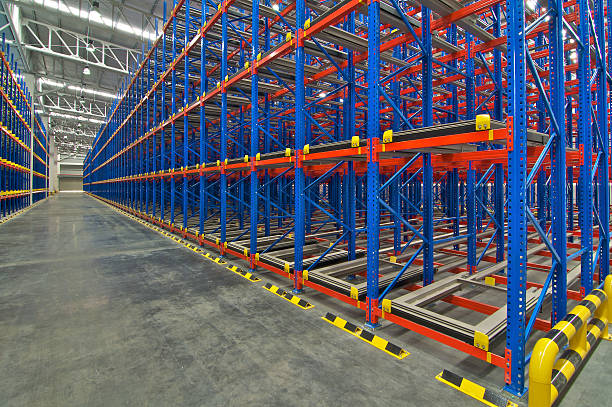
The core load-bearing element in a Drive-Thru tunnel is the cantilever support arm. SolidFort engineers custom heavy-duty stamped or hot-rolled steel support brackets that lock securely into the upright columns. These brackets support continuous roll-formed pallet runner rails made of galvanized or powder-coated structural steel.
Pallet support rails feature a tapered entry lead-in design with integrated side-stop lip guards. This flared entry geometry guides forklift operators smoothly into the storage bay, reducing the risk of pallet snagging or structural rail displacement during high-speed loading cycles.
“Engineering open-ended drive-thru channels demands strict deflection limits (L/200 max) under full pallet capacity. Our cantilever support arms utilize high-yield steel geometry to guarantee zero binding during heavy forklift operations.”
— Lead Structural Engineer, SolidFort Storage Equipment Co., Ltd.Explore customized Drive-Thru racking solutions manufactured by SolidFort Storage Equipment Co., Ltd. for diverse warehouse environments, cold storage rooms, and heavy industrial applications.
Designed for multi-deep pallet storage with dedicated loading and unloading aisles for high-turnover ambient warehouses.
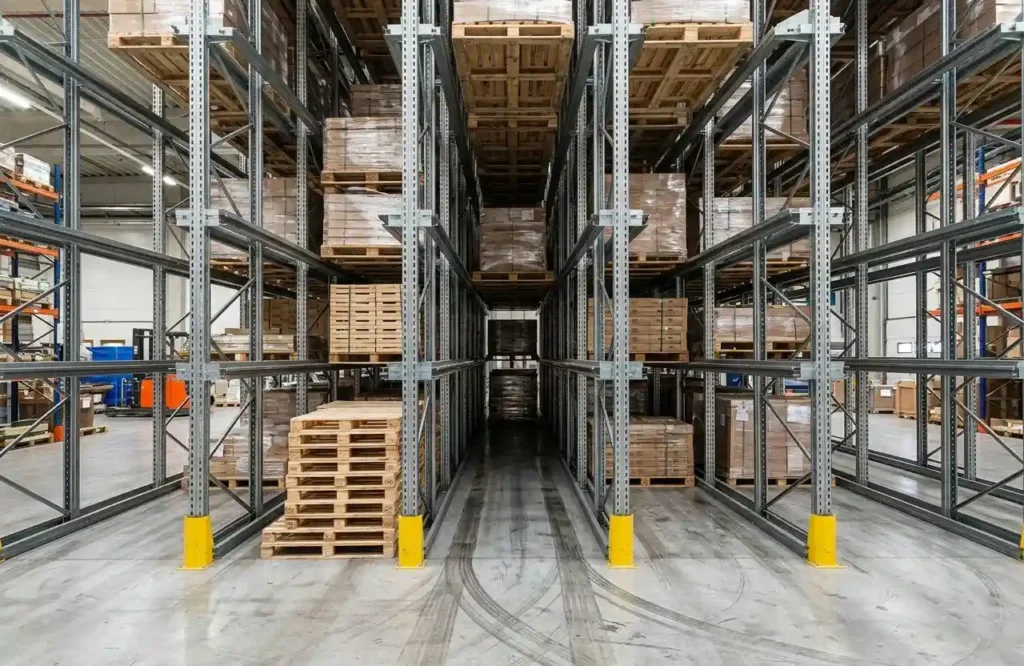
Hot-dip galvanized (HDG) or specialized low-temperature powder-coated structural steel built for refrigerated and freezer environments down to -30°C.
Equipped with heavy-duty structural angle steel or C-channel floor rails to steer forklift drivers through narrow tunnels, preventing frame collisions.
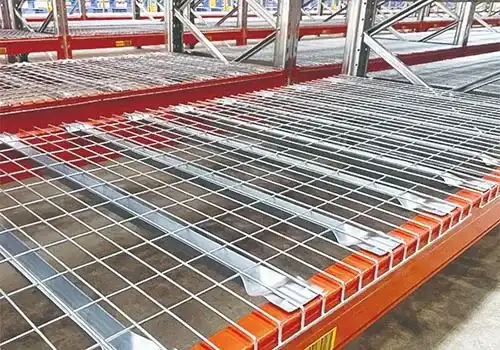
Engineered upright frame matrices reaching up to 12 meters in height, supported by top portal ties and floor anchor embedments under ANSI MH16.1 standards.
Compare operational efficiency, storage density, inventory rotation, and capital expenditure across major warehouse racking configurations.
Data compiled by SolidFort structural and logistics engineers based on over 10,000 global warehouse installations.
| Racking Architecture | Inventory Rotation | Space Utilization | SKU Selectivity | Forklift Travel Inside Bay | Relative CAPEX / Pallet |
|---|---|---|---|---|---|
| Drive-Thru Racking System | True FIFO | 80% – 85% | Low to Moderate | Yes (Drive-Through) | Medium ($110 – $220) |
| Drive-In Racking System | LIFO (Last-In, First-Out) | 75% – 85% | Low | Yes (Single Entry) | Low to Medium ($90 – $180) |
| Radio Shuttle Racking | FIFO or LIFO | 85% – 90% | Moderate | No (Automation Shuttle) | High ($180 – $320) |
| Selective Pallet Racking | FIFO or LIFO | 35% – 45% | 100% Direct Access | No (Aisle Travel Only) | Low ($50 – $100) |
| Push Back Racking | LIFO (Gravity Push) | 65% – 75% | Moderate | No (Cart Nesting) | Medium-High ($140 – $240) |
How automation, ESG sustainability mandates, and AI-driven warehouse management systems are reshaping high-density procurement.
Modern distribution centers are transitioning from human-operated counterbalanced forklifts to automated guided vehicles (AGVs) and narrow-chassis AMRs. Modern Drive-Thru racking systems are engineered with tighter dimensional tolerances (+/- 1.5mm), laser-aligned floor guide rails, and optical sensor targets integrated into structural support arms to facilitate seamless robotic pallet entry without driver intervention.
To reduce forklift damage risk in deep drive-thru lanes, procurement trends favor intelligent rack protection. Shock-absorbing polyethylene column guards integrated with IoT impact telemetry alert warehouse managers in real time if a forklift impacts an upright column, ensuring immediate structural inspection under ISO and RMI safety protocols.
Global procurement teams face strict scope-3 carbon reduction targets. SolidFort utilizes high-yield steel coils (Q355B grade) that achieve equal structural load capacities while reducing raw steel weight by up to 12%. Combined with VOC-free, heavy-metal-free thermosetting powder coating processes, our racking systems lower shipping carbon footprints while providing superior impact resistance.
With a 30,000㎡ modern manufacturing facility in Tongan District, Xiamen, China, SolidFort combines precision steel fabrication, engineering accountability, and direct global export capabilities.
Equipped with continuous automated cold roll-forming mills, robotic welding cells, and an automated continuous electrostatic powder-coating line ensuring consistent tolerances and durable surface finishes.
Our engineering team delivers detailed structural drawings, seismic load calculations, and LARC (Load Application and Rack Configuration) drawings before production, ensuring full compliance with local building codes.
Every batch of raw steel undergoes mechanical tensile testing, coating thickness verification, and weld penetration inspections. Compliant with AS4084, RMI (ANSI MH16.1), and FEM standards.
Positioned near Xiamen Port, we provide standardized lead times of 10 to 15 days for quick-ship orders, paired with custom packing bundles that maximize 40ft HQ container loading efficiency.
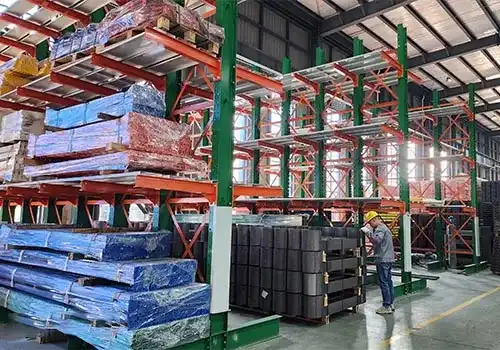
From initial warehouse slab survey to final installation sign-off, our engineering workflow guarantees precision, safety, and compliance.

We analyze your SKU profiles, pallet dimensions, forklift reach tolerances, and warehouse concrete floor specifications.

Free engineering simulation, structural capacity calculations, and 3D CAD layout for optimized pallet placement.

Continuous roll-forming, robotic welding, and automated powder coating with full ISO quality inspection checks.

Custom protective steel bundling, container optimization drawings, and shipping on FOB, CIF, or DDP terms worldwide.

Detailed step-by-step installation manuals, structural torque specifications, video support, or engineering site supervision.
Comprehensive answers from our engineering team addressing real-world queries asked by global buyers, structural engineers, and logistics directors.
A Drive-Thru Racking System is a high-density pallet storage solution engineered with separate entry and exit aisles. Unlike standard single-entry Drive-In Racking—which relies on a Last-In, First-Out (LIFO) model because the rear bay is enclosed with structural cross-bracing—Drive-Thru racking features an open-tunnel architecture.
This structure allows forklifts to enter from one side of the matrix to deposit loaded pallets and retrieve them from the opposite side. Consequently, Drive-Thru systems deliver true First-In, First-Out (FIFO) stock rotation while eliminating up to 75% to 80% of operating aisle space required by selective racking systems.
Drive-Thru systems excel in facilities handling high-volume, homogeneous inventory with strict freshness or batch tracking requirements. Key industry applications include:
Because forklifts operate inside the storage matrix, equipment sizing is critical. The overall width of the forklift chassis and mast must be at least 150 mm to 200 mm narrower than the clear width between opposing pallet support rails.
SolidFort recommends outrigger-free reach trucks, counterbalanced trucks, or specialized narrow-chassis electric forklifts. Additionally, we engineer floor-anchored guide rails and flared rail entry funnels to physically align the truck as it enters the bay, minimizing structural impacts on upright columns.
In standard drive-in racks, stability relies heavily on rear X-bracing panels. Because Drive-Thru systems are open on both ends to allow complete transit, structural rigidity is engineered through alternative methods:
Forklift impacts inside narrow storage lanes represent the primary operational risk in drive-thru systems. SolidFort mitigates this risk through a multi-layered protection framework:
Drive-Thru racking offers a lower initial capital investment—typically $110 to $220 per pallet position depending on height and load—compared to semi-automated Radio Shuttle racking (averaging $180 to $320 per position including shuttle carts).
While Radio Shuttle racking eliminates forklift driver travel inside the storage channels (improving picking speed and reducing rack impact), Drive-Thru racking relies entirely on simple mechanical components with zero electrical maintenance, zero battery replacements, and lower ongoing operational expenses.
All Drive-Thru racking manufactured by SolidFort Storage Equipment Co., Ltd. is designed, calculated, and produced under strict international standards, including:
Read how distribution centers and cold storage operators optimized their facilities using SolidFort Drive-Thru Racking Systems.
SolidFort Storage Equipment Co., Ltd. engineered a custom 6-deep Drive-Thru racking layout for our cold storage logistics center in Melbourne. The FIFO channel flow improved our dairy batch rotation dramatically, and the hot-dip galvanized coating has held up flawlessly in our -25°C freezer rooms. Highly recommended team!

We needed a high-density solution for our beverage bottling distribution hub in South America. SolidFort provided CAD calculations and structural drawings compliant with RMI standards. Production took just 12 days and container loading was packed tightly. The floor guide rails make driver entry effortless.

Get a direct engineering layout proposal, structural load calculation report, and factory pricing for your custom Drive-Thru Racking System from SolidFort Storage Equipment Co., Ltd.
In-depth technical guides written by SolidFort structural engineers to help warehouse directors plan high-density storage installations.
Analyzing structural bracing differences, forklift lane clearance, and inventory turnover efficiency for food and beverage operations.
Steel embrittlement prevention, hot-dip galvanizing standards (ISO 1461), and thermal expansion considerations under -30°C conditions.
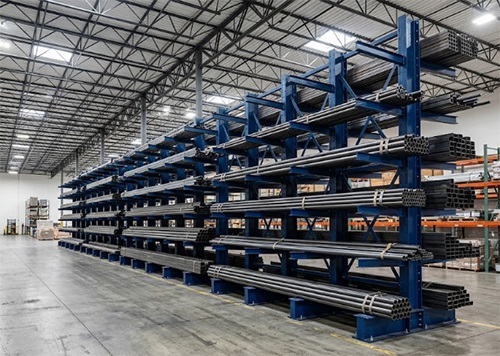
How floor-mounted angle guide rails, column post protectors, and flared rail entries eliminate structural damage in active warehouses.
Key quality verification steps, mill test certificates (MTC), loading inspection plans, and freight optimization strategies.
Trusted by Global Distributors, 3PL Operators & Cold Storage Logistics Partners