75% Density Boost vs. Selective Racking
Nestable carts sitting on low-profile inclined rails eliminate internal aisle space. Store 2 to 6 pallets deep per lane with single-aisle forklift accessibility.
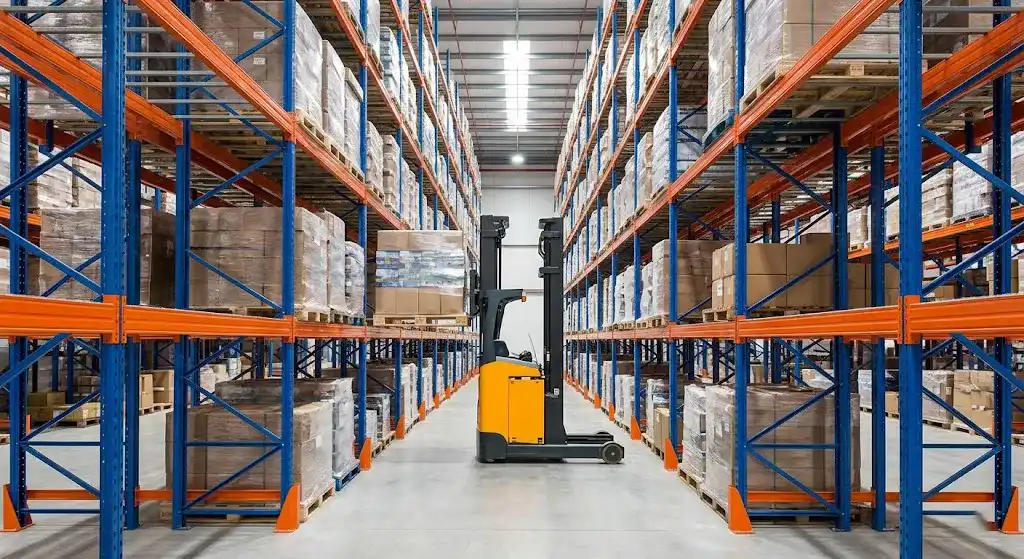
Maximize warehouse floor footprint by 75% with 2 to 6 deep nestable cart racking systems manufactured strictly to AS4084, ANSI RMI MH16.1, and FEM standards.
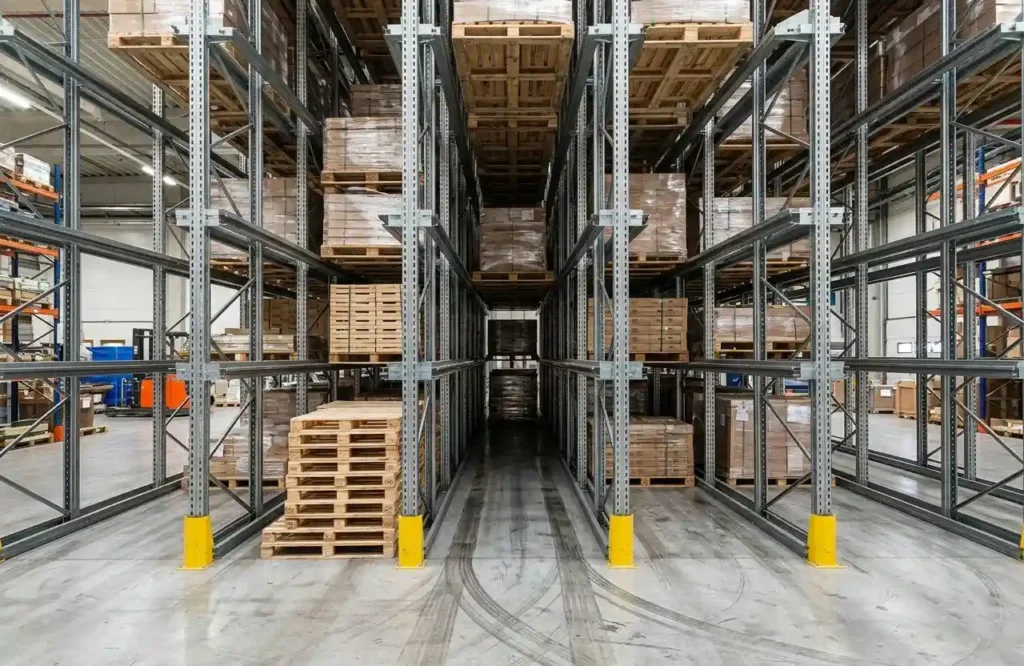
Zero-Aisle Waste Cart Racking Systems
Double your pallet positions without expanding warehouse square footage. Ideal for cold chain, FMCG, and industrial distribution.
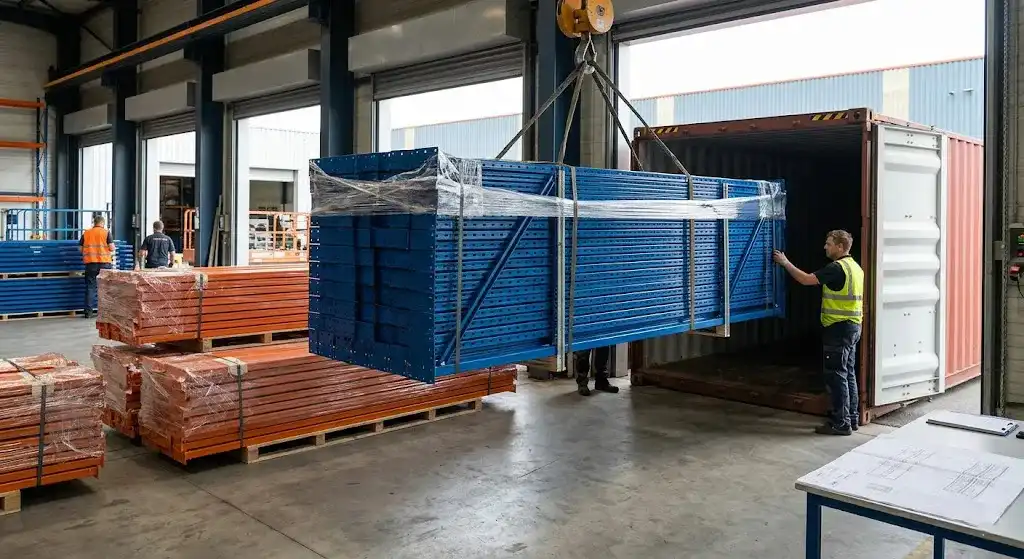
Certified Racking, Shipped Worldwide
Factory-direct engineering from Xiamen, China. Precision roll-formed structural steel shipped to 53+ countries with free CAD layout support.
Nestable carts sitting on low-profile inclined rails eliminate internal aisle space. Store 2 to 6 pallets deep per lane with single-aisle forklift accessibility.
Unlike drive-in systems, forklift operators never enter the rack matrix. Loading and unloading take place at the perimeter aisle, drastically reducing column damage.
Manufactured by SolidFort Storage Equipment Co., Ltd. in a 30,000㎡ plant using high-tensile Q235B/Q355B steel, backed by structural finite element analysis (FEA).
A Push Back Racking System is an engineered high-density dynamic storage solution that combines the selectivity of a selective pallet rack with the volumetric efficiency of a drive-in rack. Operating on a Last-In, First-Out (LIFO) inventory flow dynamic, the system utilizes a series of nested telescoping carts that glide along structural steel inclination rails set at a precise 1.5° to 2.0° pitch angle.
When loading a Push Back Racking System, the forklift operator places the first pallet onto the top nested cart. To load the second pallet, the operator gently pushes the first pallet back with the second unit load, exposing the second cart underneath. This process repeats for configurations ranging from 2-deep, 3-deep, 4-deep, 5-deep, to 6-deep pallet storage. Upon retrieval, gravity automatically moves the remaining nested carts forward to the front aisle edge as each pallet is lifted out, delivering smooth, controlled movement without external power or hydraulic assistance.
At SolidFort Storage Equipment Co., Ltd., every Push Back Racking System is engineered around rigorous structural performance requirements. Unlike low-cost static racking suppliers, our technical design incorporates heavy-duty structural steel components engineered to resist dynamic loading and lateral impact forces:
“By transitioning from standard selective pallet racking to a 4-deep Push Back Racking System manufactured by SolidFort Storage Equipment Co., Ltd., our cold chain distribution center expanded storage capacity from 4,200 to 7,150 pallet positions without expanding our building footprint.”
— Engineering Manager, Global Logistics OperationsSolidFort Storage Equipment Co., Ltd. operates a state-of-the-art 30,000㎡ manufacturing facility in Tongan District, Xiamen, China. Since 2016, we have established ourselves as a premier manufacturer of heavy-duty industrial storage systems, specializing in engineered Push Back Racking Systems, Selective Pallet Racks, Drive-In Racks, Radio Shuttle Systems, and Cantilever Racking.
We combine direct factory manufacturing costs with rigorous structural engineering documentation. Every project undergoes full Finite Element Analysis (FEA) testing and structural load calculations under AS4084, ANSI/RMI MH16.1, and FEM 10.2.02 standards before steel profile rolling begins.
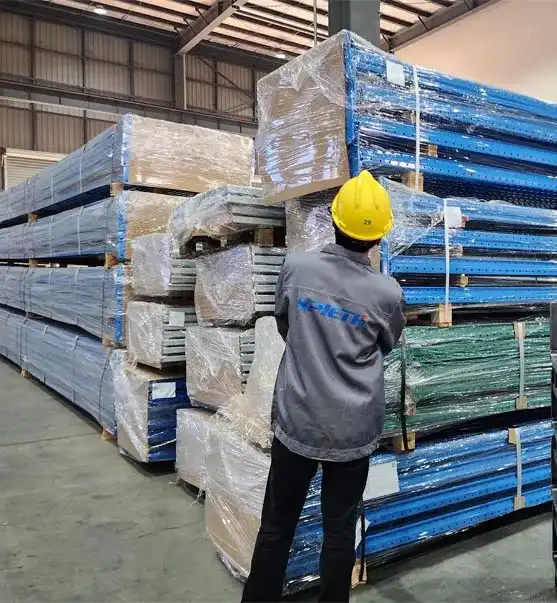
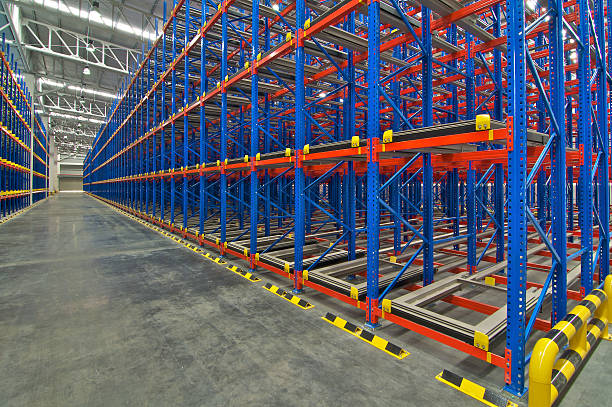
Select the optimal push back cart system tailored to your SKU turnover, pallet dimensions, and structural warehouse ceiling height.
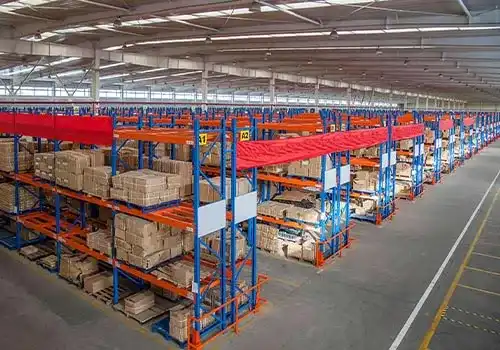
Increases pallet storage density by up to 25-35% compared to selective rack layouts. Uses a single nesting cart per lane.
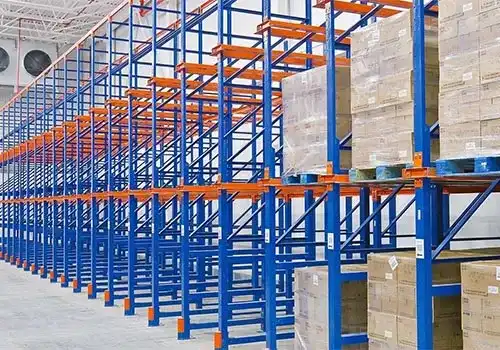
Optimized for medium-turnover SKUs. Eliminates multiple working aisles and maximizes floor square footage usage.
Heavy-duty reinforced structural guide rails designed for massive volume batch storage and bulk logistics centers.
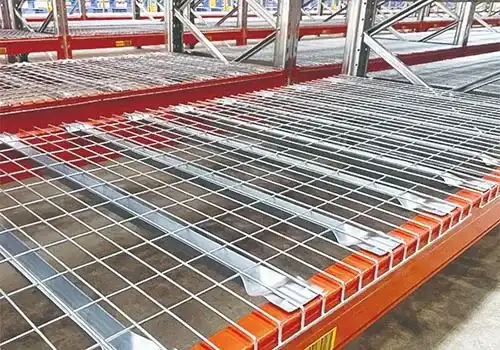
Stainless steel bearing assemblies and hot-dip galvanized rails engineered to resist frost build-up down to -30°C.
An engineering benchmark created by SolidFort Storage Equipment Co., Ltd. to assist procurement teams in selecting the right storage system.
Evaluated across SKU selectivity, labor cycle time, honeycomb losses, and structural capital investment.
| Racking System | Pallet Depth | SKU Selectivity | Forklift Entry | Honeycomb Loss | Labor Speed |
|---|---|---|---|---|---|
| Push Back Racking System | 2 to 6 Deep | High (Per Level) | No Entry (Aisle Only) | Very Low (<10%) | Fast (Single Aisle) |
| Drive-In Racking System | 5 to 10+ Deep | Low (Per Lane) | Full Truck Entry | High (30%–40%) | Slow (Careful Driving) |
| Radio Shuttle Racking | 10 to 30+ Deep | Medium | No Entry (Shuttle Robot) | Low (<10%) | Very Fast (Automated) |
| Selective Pallet Racking | 1 Deep | 100% Direct | Aisle Access | Zero (0%) | Standard |
| Gravity Pallet Flow | 2 to 12 Deep | Medium (FIFO) | Dual Aisle (Load/Unload) | Low (<15%) | Fast (Separate Lanes) |
As global supply chains navigate soaring commercial real estate costs and rising warehouse operational expenditures, procurement strategies for high-density storage are evolving rapidly. Based on industry data analyzed by SolidFort Storage Equipment Co., Ltd., procurement professionals should prepare for four key macro trends:
Modern warehousing is rapidly moving toward hybrid automation. Next-generation Push Back Racking Systems are being engineered with laser-guided positioning targets on front cart frames. This allows Autonomous Mobile Robots (AMRs) and automated reach trucks to dock and push pallets with millimeter precision, eliminating manual forklift human error and accelerating palette handling cycles.
Refrigerated and frozen warehouses carry energy operating costs up to 5 times higher than ambient dry facilities. Because air volume must be continuously chilled, maximizing pallet count per cubic meter is paramount. Cold storage operators are increasingly replacing standard selective rack layouts with 4-deep and 5-deep Push Back Racking Systems manufactured by SolidFort Storage Equipment Co., Ltd., achieving a 40% reduction in refrigerated air space per pallet position.
Historical push back racking installations often suffered from long lead times when custom cart wheels or alignment tracks wore out. Future procurement mandates favor modular push back systems featuring pre-assembled cart cassettes with standardized sealed wheel assemblies. SolidFort's modular cart architecture enables maintenance teams to hot-swap wheel modules in under 15 minutes, ensuring near-zero operational downtime.
Sophisticated global buyers no longer evaluate storage systems strictly on raw steel FOB price. Procurement audits now weigh 10-year Total Cost of Ownership (TCO), factoring in forklift travel time reduction, building insurance savings due to reduced rack-entry collisions, and structural resilience against seismic events. SolidFort’s push back racking systems deliver an average Return on Investment (ROI) period of just 14 to 22 months.
Comprehensive technical answers to the most common queries searched by global logistics directors and warehouse procurement managers.
Push Back Racking Systems allow forklifts to operate exclusively from the perimeter access aisle, eliminating the time-consuming process of driving into narrow storage lanes required by Drive-In systems. This reduces loading and unloading travel times by up to 50%. Furthermore, because each vertical bay level can store a distinct SKU in a Push Back system, honeycomb loss (unutilized empty space caused by incomplete SKU batching) is reduced from 30-40% in Drive-In racks down to less than 10-15% in Push Back configurations.
The structural material cost for an engineered Push Back Racking System typically ranges between USD 110 and USD 240 per pallet position, depending on storage depth (2 to 6 deep), upright frame height, cart load capacity (e.g., 1,000 kg to 1,500 kg per pallet), and protective surface finish (powder coat vs. hot-dip galvanized). While initial capital expenditure is higher than standard selective racking, the dramatic floor space savings and operational throughput gains yield an ROI payback within 14 to 22 months.
Yes. Push Back Racking Systems engineered by SolidFort Storage Equipment Co., Ltd. are fully compatible with standard counterbalanced forklifts, reach trucks, and flexi-articulated trucks. No specialized hydraulic attachments or custom masts are required. Operators simply use the incoming pallet to gently push back the pallets currently occupying the nested carts.
SolidFort Storage Equipment Co., Ltd. solves cold storage challenges by utilizing heavy-duty, low-temperature resistant polyurethane-coated wheels with sealed stainless steel precision bearings. Combined with structural steel guide rails inclined at an engineered 1.5° to 2.0° pitch matrix, our systems resist frost accumulation and guarantee smooth cart rolling down to temperatures of -30°C.
High-density push back systems concentrate heavy cumulative pallet loads on concrete floor slabs. Typically, a reinforced concrete slab of 6 to 8 inches (150 mm to 200 mm) depth with a minimum compressive strength of 3,000 to 4,000 PSI is required. Upright baseplates are anchored using structural wedge anchors or chemical anchors engineered in compliance with ANSI/RMI MH16.1 and local seismic building codes.
SolidFort push back carts feature zero-maintenance factory-sealed bearings. Routine preventative maintenance involves simple semi-annual or annual visual inspections to verify rail debris clearance, check mechanical front end-stop bumpers, test anti-lift cart safety catches, and re-torque floor anchor bolts.
Gravity pallet flow racks operate on a strict First-In, First-Out (FIFO) flow and require two separate aisles (one dedicated loading aisle and one dedicated unloading aisle). Push Back Racking operates on a Last-In, First-Out (LIFO) model utilizing a single aisle. This saves up to 40% more floor space by consolidating loading and retrieval into one perimeter aisle while preserving independent SKU selectivity for every vertical beam level.
All Push Back Racking Systems manufactured by SolidFort Storage Equipment Co., Ltd. are engineered in strict compliance with AS4084 (Australian Standard for Steel Storage Racking), ANSI/RMI MH16.1 (Specification for Industrial Steel Storage Racks), and European FEM 10.2.02 / EN 15512 codes, certified under ISO 9001 quality management systems.
With over a decade of dedicated production experience, SolidFort Storage Equipment Co., Ltd. delivers high-density racking engineered to pass third-party safety audits globally.
Every cart, rail, and beam profile is stress-tested in-house to verify load deflection limits prior to bulk production.
Designed and built under ISO 9001 certified quality controls adhering strictly to AS4084, ANSI/RMI MH16.1, and FEM standards.
Ample inventory of high-tensile coil steel allows rapid manufacturing and container loading for global export shipments.
Complete container loading plans, customized shipping crates, and optional on-site installation guidance worldwide.
Hear from warehouse operations directors who expanded capacity with SolidFort Storage Equipment Co., Ltd.
We replaced our selective pallet racks with 4-deep Push Back Racking Systems manufactured by SolidFort Storage Equipment Co., Ltd. Storage capacity grew by 65% while forklift cycle times dropped significantly. The engineering support was exceptional.

Operating a cold storage freezer at -25°C requires absolute reliability from cart bearings. SolidFort's push back racking carts have been operating smoothly for 3 years without a single hang-up. Highly recommended factory partner.

SolidFort provided comprehensive calculation reports and structural drawings that helped us pass local building permits seamlessly. The cart nesting precision and powder coating finish are top-tier.

Their engineering team understood our seismic zone compliance requirements instantly. They customized baseplate thickness and anchor specs to ensure total structural compliance. Highly professional team.

Contact the engineering team at SolidFort Storage Equipment Co., Ltd. for a free CAD layout, system capacity analysis, and direct factory pricing.
Technical articles published by SolidFort engineers to assist in storage system specification and warehouse safety planning.
Why 1.5° to 2.0° incline angles guarantee smooth gravity roll back without structural cart slamming.
How factory-direct manufacturing reduces total capital expenditure by 20–35% while preserving FEA compliance.
Evaluating wheel bearing longevity and rust prevention in cold storage facilities down to -30°C.
A step-by-step financial model detailing real estate footprint savings over a 10-year facility lease.
Trusted by Logistics Directors & Global OEM Distributors