[email protected] Mon – Sat: 8:30 – 18:00 (GMT+8) · Reply within 24h AS4084 · RMI · FEM · ISO
English
0%

Choosing the right Standard Pallet Racking system in 2026 requires more than comparing prices and beam sizes. Global buyers must examine warehouse height, pallet dimensions, load weights, forklift turning space, and expected stock movement. A system that performs well in a dry European warehouse may need different protection in a humid coastal facility. Small details matter. Upright thickness, beam connectors, floor quality, and corrosion protection can influence safety and service life.

This guide introduces the main Standard Pallet Racking types used across international warehouses. It considers selective racking, drive-in systems, double-deep layouts, pallet flow designs, and mobile configurations. Each option offers practical advantages, but none suits every operation. High-density storage may reduce aisle space, yet it can slow picking and complicate access. Selective racking provides direct pallet access, although it may use valuable floor area less efficiently.

Reliable purchasing decisions should combine supplier drawings, tested load data, installation experience, and clear maintenance procedures. Buyers should also confirm local building, fire, seismic, and workplace requirements before approval. Product labels alone are not enough. Real performance depends on correct installation and disciplined inspections. This is where some planning assumptions deserve a second look. A cheaper quotation may hide installation limits, weak after-sales support, or unsuitable accessories. In the following sections, we compare leading racking types through practical warehouse conditions, helping buyers choose with greater confidence and fewer costly surprises.
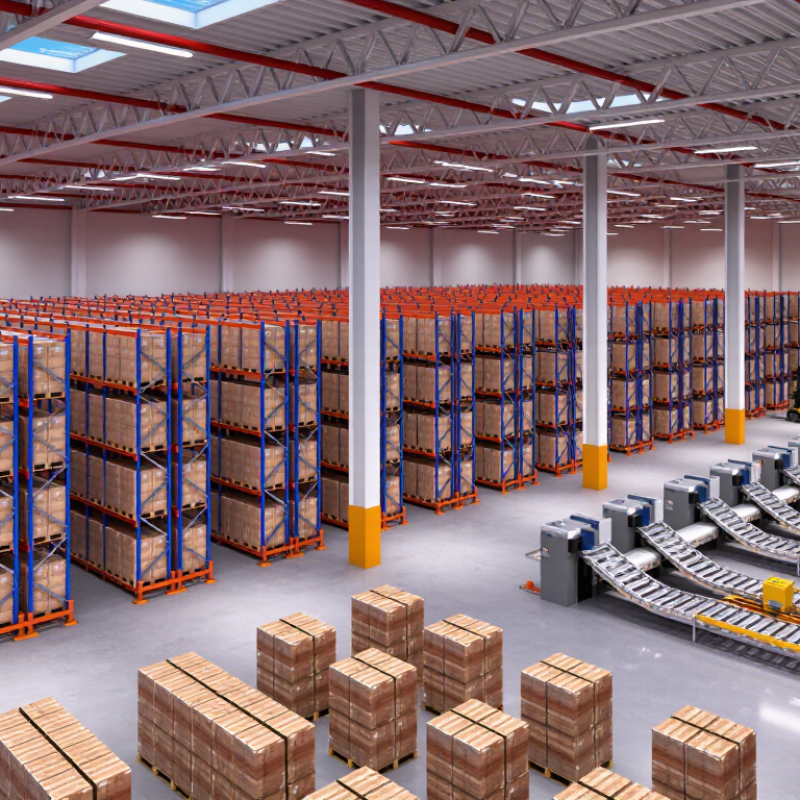
2026 Top Standard Pallet Racking Types for Global Buyers

What Standard Pallet Racking Means in Global Warehouse Operations

2026 Top Standard Pallet Racking Types for Global Buyers

What Standard Pallet Racking Means in Global Warehouse Operations

Standard pallet racking is not one universal structure. It is a practical storage system built around common pallet sizes, forklift access, and repeatable loading patterns. Selective racking remains widely used because every pallet can be reached directly. Drive-in, double-deep, and carton-flow designs serve different space and handling needs.

Global warehouse operations require more than choosing a familiar layout. Teams should confirm pallet dimensions, beam capacity, aisle width, floor strength, and local safety requirements. Seismic activity, wind exposure, fire protection, and forklift turning space can change the specification. In practice, a small measurement error can reduce usable capacity quickly. A neat plan can still fail.

Tips: Measure loaded pallets, not empty ones. Leave clearance above each load. Check upright protection near travel lanes. Ask a qualified engineer to review structural calculations and local requirements. Keep inspection records, even when the rack appears stable. Regular checks often reveal bent frames, loose components, or uneven loading before serious damage develops.

Standard racking also supports operational consistency. Clearly labeled bays help workers locate stock and reduce unnecessary travel. However, standard does not mean permanent. Product sizes, turnover rates, and equipment may change within a year. A flexible layout can cost slightly more initially, but an overly rigid system may create hidden expenses later.

Main Types of Standard Pallet Racking for Different Storage Needs

2026 Top Standard Pallet Racking Types for Global Buyers

Main Types of Standard Pallet Racking for Different Storage Needs

Selective pallet racking remains the most adaptable choice for mixed products and frequent picking. It offers direct access to every pallet, but it needs wider aisles. Drive-in racking uses fewer aisles and higher storage density. It suits uniform products with longer storage cycles, although stock rotation can become less flexible. Double-deep racking adds capacity without fully sacrificing access. It normally requires compatible lifting equipment and careful load planning.

Pallet flow racking supports FIFO rotation through rollers and gravity. It works well for food, beverages, and dated inventory. Push-back racking stores several pallets deep and supports LIFO handling. According to the 2024 MHI Annual Industry Report, 37% of surveyed supply-chain professionals reported using robotics and automation. This suggests growing pressure to design racks around equipment, not only floor space. Yet automation cannot correct poor pallet dimensions or uneven loading. The 2024 Global Warehousing Survey by Peerless Research Group also highlights ongoing labor and space challenges across warehouse operations. No layout is perfect.

Tips: Confirm pallet weight, height, and load center before selecting a system. Check beam deflection, floor capacity, aisle width, and local seismic requirements. Use a qualified engineer for final specifications. Leave practical clearance around sprinklers and emergency routes. A small mistake in pallet data can distort the whole design. Review SKU turnover before choosing FIFO or LIFO.

2026 Top Standard Pallet Racking Types for Global Buyers - Main Types of Standard Pallet Racking for Different Storage Needs

Racking Type Typical Storage Method Pallet Access Inventory Flow Typical Planning Range Best Suited For Main Advantages Key Considerations
Selective Pallet Racking Individual pallets stored on adjustable beams in single-deep bays Direct access to every pallet position FIFO or LIFO, depending on operating practice Usually 2–5 pallet levels; approximately 2.4–12 m rack height; aisles commonly about 2.7–3.7 m for counterbalance or reach-truck operation Warehouses with many SKUs, varied pallet loads, and frequent picking activity Highest selectivity, flexible beam adjustment, simple stock control, and broad equipment compatibility Lower storage density than deep-lane systems; aisle space and load capacity must be engineered for the equipment used
Double-Deep Pallet Racking Two rows of selective rack positioned back-to-back in depth Direct access to the front pallet; rear pallet requires double-deep reach equipment Usually LIFO; FIFO is limited unless carefully managed Commonly 2 pallets deep; approximately 3–6 pallet levels; requires suitable reach-truck mast and fork reach Medium-SKU operations seeking more density without fully adopting compact storage More pallet positions per aisle than single-deep selective rack while retaining reasonable selectivity Requires compatible handling equipment; rear pallets are less accessible and stock rotation needs closer control
Drive-In Pallet Racking Continuous storage lanes supported by guide rails, with forklifts entering the rack structure Access from one side in a drive-in configuration Primarily LIFO Often 4–10 pallets deep per lane; typically several vertical levels; depth and height depend on pallet, truck, and building conditions Large quantities of similar products with relatively low SKU variety High storage density and reduced aisle requirement compared with selective systems Lower selectivity, slower replenishment, greater risk of rack impact, and stricter requirements for pallet quality and forklift operation
Drive-Through Pallet Racking Continuous deep-lane storage with forklift access from both ends Access from both sides of each lane Can support FIFO when loading and unloading are controlled from opposite sides Commonly 4–10 pallets deep per lane; lane depth, height, and capacity must be designed for the specific pallet and truck High-volume products requiring dense storage and improved stock rotation High density with better product flow and accessibility than one-sided drive-in storage Needs two-sided layout access; less suitable for many SKUs or irregular pallet dimensions
Push-Back Pallet Racking Nested carts or rollers allow pallets to be stored several positions deep from one aisle Front-facing access to each lane; pallets move forward as front positions are emptied LIFO Commonly 2–6 pallets deep; generally 2–5 pallet levels; capacity depends on cart, rail, and load design Medium-turnover products with several pallets per SKU Higher density than selective rack, fewer aisles, and faster loading and retrieval than drive-in storage Not ideal for strict FIFO; pallet dimensions, load stability, and cart or roller maintenance are important
Pallet Flow Racking Gravity rollers or wheel tracks move pallets from the loading side to the picking side Loading and picking are performed from opposite sides of the lane FIFO Commonly 2–20 pallets deep per lane; lane depth and roller specification depend on pallet weight and condition Perishable goods, date-sensitive inventory, and high-throughput distribution operations Reliable stock rotation, high picking productivity, and separation of replenishment from order picking Higher initial cost; pallets must be compatible with the rollers, and brakes, guides, and separators require inspection
Pallet Shuttle Racking Battery-powered shuttle carriage transports pallets inside deep storage lanes Forklift delivers and retrieves pallets at the lane entrance; shuttle handles internal movement FIFO or LIFO, depending on lane configuration and operating logic Often 10 or more pallets deep per lane; multiple levels are possible; system capacity depends on shuttle and rack engineering High-volume, high-density storage with repetitive pallet handling Reduced forklift travel, improved operator safety, high density, and efficient use of cold-store or high-cost floor space Higher capital and control-system requirements; batteries, sensors, lane tolerance, and maintenance planning are essential
Mobile Pallet Racking Rack rows mounted on powered bases that open only the required working aisle Direct access after the selected aisle is opened FIFO or LIFO Rack height and bay configuration are similar to selective systems; floor loading, rails, and safety clearances require detailed design Facilities where floor area is limited but individual pallet access is still required High space utilization with near-selective access to stored pallets Higher installation and maintenance cost; aisle-opening time, floor flatness, emergency access, and controls must be considered
Cantilever Pallet Racking Vertical columns with projecting arms support long or irregular loads Front access, normally using a forklift or crane suited to the load Not normally classified by FIFO or LIFO; access depends on load arrangement Arm levels are adjustable; capacity is determined by arm length, column height, spacing, and load distribution Steel sections, timber, pipes, panels, furniture, carpet rolls, and other non-palletized long loads Open-front design, flexible level adjustment, and good visibility for oversized products Requires careful load balancing and impact protection; aisle width and arm capacity must match the handling equipment and product length

Note: Dimensions and capacities shown are typical planning ranges rather than fixed specifications. Final rack height, beam capacity, aisle width, pallet compatibility, seismic requirements, fire protection, and safety clearances should be confirmed by a qualified storage-system engineer according to local regulations and the actual handling equipment.

How to Compare Load Capacity, Dimensions, and Storage Density

2026 Top Standard Pallet Racking Types for Global Buyers

How to Compare Load Capacity, Dimensions, and Storage Density

Selecting pallet racking starts with the actual load, not the catalog image. During warehouse assessments, I record pallet weight, height, width, and bottom clearance. A rack rated for 2,000 kilograms per level may require evenly distributed loads across every beam. Point loading can reduce real safety margins. Always verify the rating with a qualified engineer and the manufacturer’s technical documents.

Dimensions affect both fit and handling speed. Measure the pallet, aisle width, forklift turning radius, ceiling height, and sprinkler clearance. Standard rack depths often suit common pallets, but regional pallet sizes vary. Leave enough beam clearance to prevent contact during placement. I have seen layouts waste space because designers measured the pallet only, ignoring the forklift envelope. That mistake is expensive.

Storage density requires a practical comparison. Selective racking offers fast access to every pallet but uses more aisle space. Drive-in systems increase density but reduce direct access and stock rotation flexibility. Double-deep layouts improve density, yet they need suitable reach equipment and disciplined inventory control. Calculate usable pallet positions, not just floor coverage. A simple ratio helps: stored pallets divided by total floor area. The result is useful, but incomplete. Travel distance, loading frequency, and future expansion also matter. A dense layout can perform poorly when operators queue at one narrow aisle. Test the design with real pallet movements before approval.

Which Racking Systems Suit Different Warehouse Layouts

Choosing pallet racking depends on warehouse geometry, SKU variety, and picking frequency. Selective pallet racking suits layouts with many products and frequent direct access. It works well beside loading docks, especially where aisles support forklifts safely. Double-deep racking increases storage density, but it needs compatible handling equipment and disciplined stock control.

For compact buildings, narrow-aisle racking uses vertical space more effectively. However, turning paths become less forgiving. Drive-in racking fits warehouses holding fewer SKUs in large quantities. Push-back systems provide better selectivity for mixed pallets, while pallet-flow racking supports FIFO operations and works well near dispatch zones.

MHI’s 2024 Annual Industry Report states that 55% of supply-chain leaders plan to increase investment in inventory and network optimization. That figure supports flexible layouts, not simply maximum density. In practice, I have seen dense storage underperform when replenishment routes were ignored.

Tips:

Measure clear height, column spacing, aisle width, and fire protection before choosing a system. Mark a trial bay with tape. Test pallet movement during peak shifts. Also check damaged-pallet rates. A design that looks efficient on paper may create unsafe congestion. The 2024 Warehousing Vision Study from a major logistics research group reports that 73% of warehouse professionals are investing in automation or planning to do so. Yet automation cannot repair poor slotting. Leave room for maintenance, seasonal inventory, and human mistakes.

Safety, Compliance, and Purchasing Factors for International Buyers

2026 Top Standard Pallet Racking Types for Global Buyers

Safety, Compliance, and Purchasing Factors for International Buyers

Selective pallet racking remains the practical choice for mixed stock and frequent access. Drive-in systems suit dense, uniform pallets, but they demand stricter loading discipline. Double-deep and very narrow aisle layouts can increase storage density. They also require compatible equipment and careful emergency planning. According to MHI’s 2024 Annual Industry Report, 55% of supply chain professionals considered disruptive technologies important to future operations. That pressure can encourage rushed automation decisions. It should not replace a verified rack design.

International buyers should request structural calculations, material specifications, load plaques, installation drawings, and inspection procedures. EN 15635 supports systematic rack inspection and maintenance in European operations. ANSI/RMI MH16.1 provides design guidance for steel storage racks in North America. Australian projects may follow AS 4084. These standards are not interchangeable. Local seismic conditions, floor capacity, fire protection, and forklift behavior must be reviewed by a qualified engineer.

Check beam locking devices, upright guards, aisle clearances, pallet condition, and corrosion resistance. Ask whether components are traceable after delivery. Confirm that manuals and warning labels match the installation country’s language. The U.S. Bureau of Labor Statistics reported 5,283 fatal workplace injuries in 2023, showing why warehouse safety cannot remain a paperwork exercise. A weakness remains common: buyers often compare price before lifecycle risk. A cheaper frame may require more inspections, repairs, or replacement parts later.

2026 Top Standard Pallet Racking Types for Global Buyers

Typical clear aisle-width ranges for common pallet racking configurations

Selective, double-deep, drive-in, push-back, and pallet-flow racks are widely used for different storage and handling requirements. The aisle ranges shown are indicative planning values in metres; the final requirement depends on forklift type, pallet dimensions, rack height, load weight, seismic conditions, and local regulations. International buyers should verify structural calculations, supplier documentation, installation quality, inspections, and applicable standards such as EN 15635 or ANSI/RMI MH16.1 before purchasing.

FAQS

Which racking system suits a warehouse with many product types?

Selective pallet racking offers direct access to many different products. It suits frequent picking and forklift movement. Keep aisles clear. It works well near loading docks.

When is drive-in racking a practical choice?

Drive-in racking suits warehouses storing large quantities of fewer product types. It increases density by reducing aisles. Loading discipline becomes essential. Mixed pallets may create confusion.

What are the benefits and limits of double-deep racking?

Double-deep racking stores pallets behind other pallets. It increases density but reduces immediate access. Compatible handling equipment is necessary. Stock control must remain accurate. Density is not everything.

When should a warehouse use narrow-aisle racking?

Narrow-aisle racking suits compact buildings with useful vertical space. It needs accurate forklift operation and careful route planning. Turning paths allow less room for mistakes. Test the layout during busy shifts.

Which system supports FIFO inventory movement?

Pallet-flow racking supports FIFO operations effectively. It works well near dispatch areas. Gravity rollers move older pallets toward picking positions. Regular inspections still matter. The system is not self-managing.

What measurements should buyers check before choosing a rack design?

Measure clear height, column spacing, aisle width, and floor capacity. Check fire protection and forklift turning paths. Mark a trial bay with floor tape. Move real pallets through it. Paper plans can mislead.

What documents should international buyers request?

Request structural calculations, material specifications, load signs, installation drawings, and inspection procedures. Confirm that documents match local conditions and language needs. Ask how components remain traceable after delivery. Missing paperwork creates uncertainty.

How can buyers compare racking prices more responsibly?

Compare the full lifecycle cost, not only the purchase price. Include inspections, repairs, replacement parts, maintenance space, and training. Check beam locks, upright guards, corrosion protection, and pallet condition. A cheaper frame may cost more later. I would review that twice.

Conclusion

Standard Pallet Racking is a practical foundation for global warehouse operations, offering organized, accessible, and scalable storage for palletized goods. Common systems include selective pallet racking for fast access, drive-in racking for high-density storage, double-deep racking for improved capacity, and mobile or pallet-flow solutions for specialized layouts and inventory movement. Each option supports different storage needs, turnover rates, and handling methods.

When selecting a system, international buyers should compare load capacity, beam and frame dimensions, aisle width, ceiling height, and overall storage density. The best choice depends on warehouse size, equipment access, inventory rotation, and future expansion plans. Buyers should also evaluate structural safety, installation quality, inspection procedures, load signage, and compatibility with local building and workplace requirements. Clear technical specifications, reliable documentation, and careful supplier communication can help ensure a safe, efficient, and cost-effective investment.

Charlotte

Charlotte

Charlotte is a professional marketing specialist who combines a strong understanding of the company’s products with a clear, customer-focused approach to communication. She regularly contributes expert articles to the company website, helping readers understand product features, practical......