Deep Lane Pallet Racking stores pallets several positions deep within each storage lane. Instead of giving every pallet its own aisle-facing location, it uses warehouse depth to increase storage capacity. For facilities holding many pallets of similar products, that can make a noticeable difference. A forklift enters the lane, or a compatible shuttle moves pallets along support rails. The exact method depends on the system design.
It sounds simple. The trade-off deserves attention. Deep Lane Pallet Racking can reduce the number of aisles, but workers may have less direct access to individual pallets. In drive-in layouts, the last pallet placed is often the first one retrieved. Drive-through designs can support a different loading and retrieval sequence, depending on how the operation is arranged. These details affect stock rotation, equipment choices, and daily workflow.
Picture a warehouse storing rows of identical cartons on pallets. Deep lanes may suit that pattern better than a layout requiring frequent access to many different items. But product mix, pallet condition, forklift turning space, and inventory movement all matter. A plan based only on maximum capacity can disappoint once real picking begins. Not every warehouse benefits. This guide explains how the system works, where it may fit, and what to check before choosing it. Practical site measurements and advice from a qualified rack designer can help turn a promising layout into a reliable one.
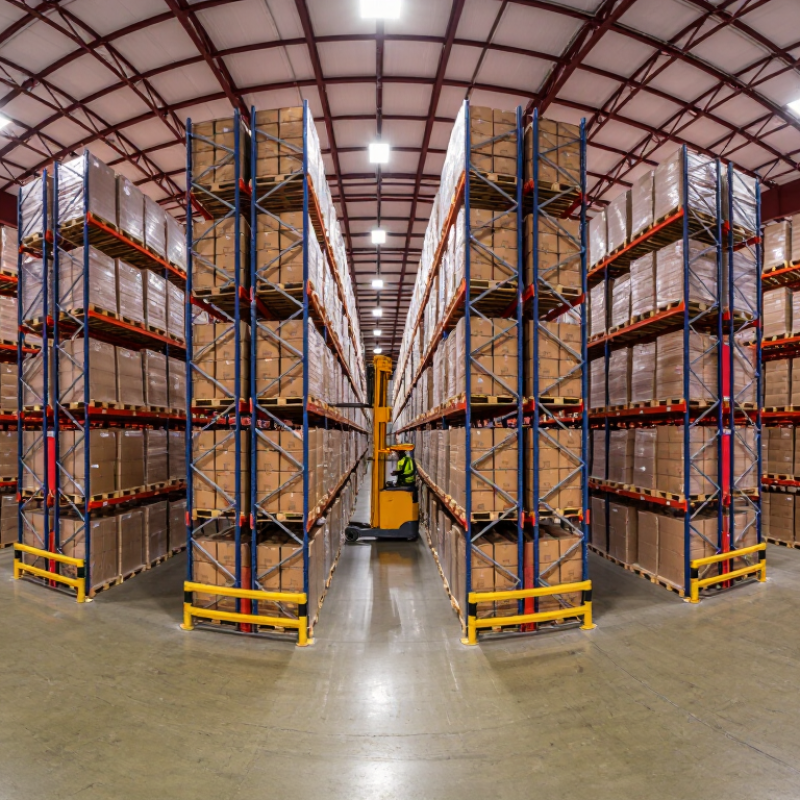
What Deep Lane Pallet Racking Is
Deep lane pallet racking is a high-density storage system that places several pallets behind one another in a single lane. Instead of giving a forklift direct access to every pallet from an aisle, the system uses support rails to hold loads inside each lane. The result is less aisle space and more storage capacity within the same floor area.
A forklift typically enters the lane to place or retrieve pallets. In drive-in layouts, it enters from one end, so the last pallet stored is usually the first one accessible. Drive-through layouts have access at both ends and can support a first-in, first-out flow when managed correctly.
The exact movement depends on the rack design and operating method. Access is more limited than in selective racking.
It suits warehouses holding many pallets of the same product, such as a long run of identical cartons on standard pallets. Operators should check pallet condition, load dimensions, forklift clearance, and rail alignment before choosing a system.
Small inconsistencies matter. A damaged pallet can catch on a rail, and a poorly planned lane may slow retrieval rather than improve it. Deep lanes are not automatically the best choice for mixed stock; that trade-off deserves a close look.
FAQS
Upright frames carry weight to the floor. Horizontal beams and support rails hold pallets several positions deep. Guide rails help forklifts enter straight. Small details matter.
Drive-in lanes usually load and retrieve pallets through one opening, supporting last-in, first-out handling. Drive-through lanes open at both ends and can support first-in, first-out handling. The loading plan must match the intended rotation.
It works well for large quantities of a few products, such as boxed drinks or uniform building materials. Pallets should be sturdy and consistent in size. Mixed cartons and fragile loads are less suitable.
Check that the pallet is stable and within the rack’s rated capacity. Enter slowly, keep the pallet level, and lower it onto the rails. Withdraw the forks without scraping the frame. A damaged bottom board can catch.
Lane depth depends on pallet size, forklift reach, and safe travel clearance. Too little room makes placement awkward; too much can waste capacity. Measure the actual equipment and pallets.
Check pallets, support rails, uprights, and visible damage regularly. A bent support can affect a whole lane. Busy shifts make checks easy to skip, so the inspection routine needs to be practical.
Individual pallets may be harder to reach, especially when older stock sits behind newer loads. Resistance during placement may signal misalignment or debris. Do not force the pallet.
Review product variety, pallet quality, order frequency, and forklift turning space. Dense lanes may help cold stores or high-rent sites reclaim floor area, but access can slow down. Theoretical capacity is not the whole story.
Conclusion
Deep Lane Pallet Racking is a high-density storage system that places pallets several positions deep within dedicated lanes, reducing the number of aisles needed. Its main components include upright frames, support rails, bracing, and clearly defined lane entrances. The rails hold pallets at each storage position while allowing a forklift to travel into the lane to place or remove loads.
During loading, a forklift enters the lane and deposits pallets onto the rails, typically filling positions from the rear toward the entrance. Retrieval depends on the lane design: drive-in configurations generally work on a last-in, first-out basis, while drive-through layouts can allow first-in, first-out handling when access is available at both ends. This system is well suited to warehouses storing large quantities of similar goods with steady demand and limited product variety. It can make efficient use of floor space, though careful lane planning and forklift operation are important.