[email protected] Mon – Sat: 8:30 – 18:00 (GMT+8) · Reply within 24h AS4084 · RMI · FEM · ISO
English
0%

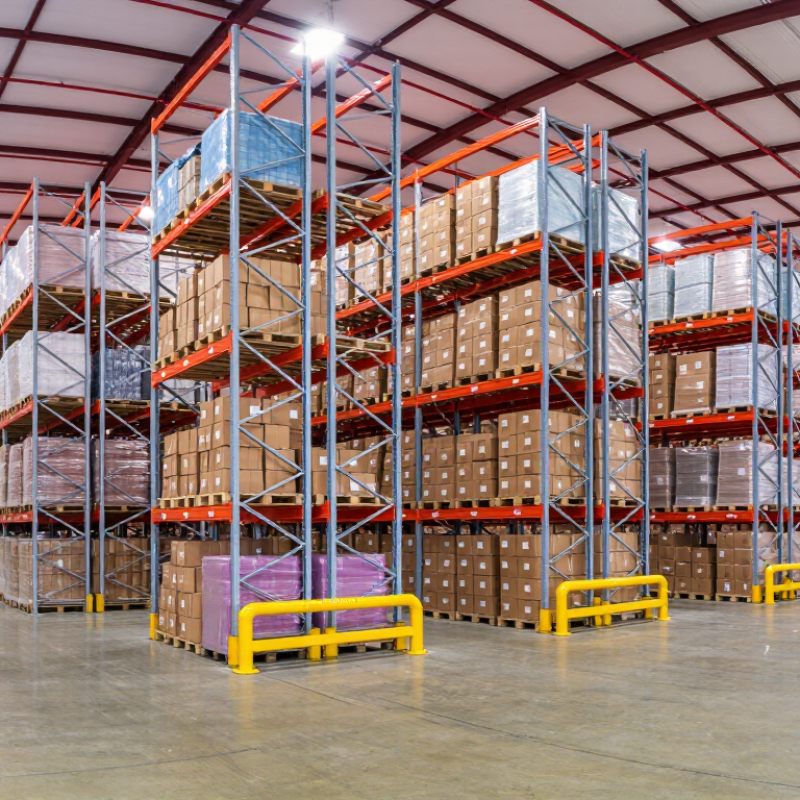
Heavy Duty Pallet Racking is a structured storage system designed for warehouses handling large, heavy, or frequently moved pallet loads. It typically uses steel upright frames, horizontal beams, and adjustable levels. In a busy distribution center, forklifts place pallets several meters above the floor, while clearly marked aisles support safer movement and faster picking. The system uses vertical space efficiently, reducing dependence on costly floor expansion.

Its applications include manufacturing plants, logistics hubs, cold storage facilities, wholesale warehouses, and industrial supply centers. A well-planned installation can store raw materials, finished goods, spare parts, and packaged equipment. However, capacity depends on beam length, pallet dimensions, load weight, rack height, floor conditions, and handling equipment. Manufacturer specifications and professional engineering guidance should always shape the final design.

The details matter.

In practical warehouse work, overloaded beams, damaged uprights, and uneven pallets can create serious operational concerns. Regular inspections help identify bent steel, missing safety pins, and unstable loads before problems grow. Rack protectors, wire decking, back supports, and aisle guards may improve performance when selected correctly. Still, more accessories do not automatically create a safer system. This point is easy to underestimate. Good results require accurate measurements, trained operators, disciplined loading practices, and a realistic understanding of daily warehouse activity. Heavy Duty Pallet Racking is powerful, but it is not a universal answer. Careful planning makes its benefits measurable, reliable, and suitable for long-term storage demands.
What Is Heavy Duty Pallet Racking and What Is It Used For?

Definition and Core Features of Heavy Duty Pallet Racking

Heavy duty pallet racking is a steel storage system designed for high loads, frequent forklift access, and organized pallet handling. It usually includes upright frames, horizontal beams, bracing, and optional wire decking. Unlike light shelving, it supports palletized goods several meters above the floor. The Rack Manufacturers Institute’s ANSI MH16.1 standard addresses rack design, testing, use, inspection, and repair. That matters because capacity depends on beam length, frame height, pallet weight, and load placement.

Core features include adjustable levels, strong structural frames, and direct access to individual pallets. Selective configurations suit warehouses with many stock-keeping units and moderate quantities per item. Higher-density layouts can store more pallets, but they may reduce picking speed.

MHI’s 2024 Annual Industry Report states that 55% of surveyed supply-chain professionals expected to increase technology and innovation investment. Storage density is one part of that decision, not the whole answer.

Real installations need clear load signs, upright protection, stable pallets, and routine inspections. A rack may look oversized and still be incorrectly loaded. That is the uncomfortable part. Operators should check beam deflection, damaged braces, loose connections, and forklift impact marks. The U.S. Occupational Safety and Health Administration emphasizes maintaining storage racks and keeping aisles clear. Good practice also leaves enough clearance for turning, sprinklers, lighting, and emergency movement. Capacity labels should reflect the actual configuration, not a sales estimate.

Main Components and Structural Design

Heavy Duty Pallet Racking: Main Components and Structural Design

Heavy duty pallet racking uses steel frames to store loaded pallets vertically. Its main components are uprights, horizontal beams, bracing, base plates, anchors, and safety guards. Uprights transfer weight to the floor. Beams support pallets across each storage level. Diagonal bracing keeps the frame stable under movement and impact.

Wire decking can reduce pallet shifting. Row spacers maintain consistent gaps between back-to-back frames. Column protectors help limit damage from forklifts. Load plaques should show the permitted weight for each beam level. This detail matters. A rack is not automatically safe because it looks strong.

Structural design begins with pallet dimensions, load weight, lifting equipment, aisle width, and building conditions. Engineers must also assess floor capacity, seismic activity, beam deflection, and required clearance. The Rack Manufacturers Institute recommends designing systems around verified component capacities and documented installation conditions. The 2024 MHI Annual Industry Report found that 55% of surveyed supply-chain organizations currently use cloud computing. That trend supports digital inspection records and load tracking, but software cannot replace physical checks.

In practical warehouses, damage often starts with a bent upright or loose anchor. Small defects can become serious. Some specifications still rely on assumed pallet weights, which deserves review. Actual loads may vary by product density and stacking pattern. A competent design therefore combines calculations, site measurements, trained installation, and scheduled inspections. During operation, workers should report impact damage immediately and keep aisles clear.

What Is Heavy Duty Pallet Racking and What Is It Used For?

Heavy duty pallet racking is a steel storage system designed for warehouse pallets and high-load applications. Its main structural components include upright frames, horizontal beams, bracing, base plates, anchors, and pallet support decking.

The chart shows representative beam-level load capacities commonly specified for selective pallet-racking systems at different beam spans. Actual safe working loads depend on steel grade, upright geometry, beam design, connection type, pallet configuration, seismic requirements, and the manufacturer’s engineering calculations. Never exceed the rated load shown on the system’s safety plate.

How Heavy Duty Pallet Racking Works

Heavy duty pallet racking stores large, loaded pallets in vertical levels. Its frame uses steel uprights, horizontal beams, and bracing components. Uprights carry the weight downward. Beams support each pallet position across the bay. This simple structure saves floor space, but only when every part works together.

How does it work? A forklift places pallets onto the beams or approved decking. The load transfers from the pallet to the beams, then into the uprights and floor anchors. Each bay has a rated capacity based on beam length, pallet weight, and frame height. In warehouse practice, operators must place pallets evenly and avoid sudden impacts. A rack may look solid. That does not prove it is correctly configured. Bent frames, loose anchors, or overloaded beams can reduce stability without obvious warning. Regular inspections help identify these problems early.

Tips: Keep load labels visible. Center pallets carefully. Leave clear forklift aisles. Never mix untested components. Inspect damaged uprights immediately, even when the rack remains usable. A qualified professional should verify capacity before changing beam levels or adding storage height. The real weakness is often poor loading habits, not the steel itself. Teams should also record inspections, repairs, and training, because memory is unreliable during busy shifts.

Common Warehouse Applications and Storage Uses

Heavy-duty pallet racking is designed for storing high-load pallets across multiple vertical levels. It typically supports several hundred to several thousand kilograms per pallet position, depending on the steel profile, beam length, and floor conditions. In distribution warehouses, selective racking provides direct access to every pallet, making it suitable for mixed products, changing stock levels, and frequent picking. Aisles may hold forklifts, but poor clearance planning can quickly reduce productivity.

Common applications include beverage storage, building materials, automotive components, food distribution, and manufacturing warehouses. Drive-in systems suit large quantities of identical products, while push-back racks support several pallet depths without requiring every pallet to be individually accessible. Cold-storage facilities also use heavy-duty racks to maximize expensive cubic space. The 2024 MHI Annual Industry Report reported that 55% of supply-chain professionals planned to increase technology investment, which encourages better integration between racking, scanners, and inventory systems.

Racking layout directly affects picking accuracy and travel time. WERC’s DC Measures study commonly benchmarks order-picking accuracy near 99.5% among surveyed operations, showing how small layout errors matter. A rack plan can look efficient on paper and still fail during peak demand. Pallet dimensions change. Workers need safer turning space. Regular inspections, load labels, damaged-frame reporting, and documented training remain essential. More storage is not always better storage.

What Is Heavy Duty Pallet Racking and What Is It Used For? - Common Warehouse Applications and Storage Uses

Racking Type Typical Storage Method Typical Load Capacity per Level Best-Suited Warehouse Application Main Advantages Important Considerations
Selective Pallet Racking Single-deep pallet storage with direct access to every pallet position Approximately 500–5,000 kg per beam level, depending on design General warehouses, distribution centers, retail replenishment, and mixed-SKU inventory High accessibility, flexible configuration, and straightforward stock rotation Requires more aisles than high-density systems and must be engineered for the actual load
Drive-In Racking Forklifts enter storage lanes supported by rails or arms Often designed for approximately 500–1,500 kg per pallet position High-density storage of large quantities of the same or similar products Excellent floor-space utilization and reduced aisle requirements Lower selectivity, greater forklift skill requirements, and limited suitability for strict FIFO rotation
Double-Deep Racking Two pallet positions are stored behind each other Commonly approximately 800–2,000 kg per pallet position Seasonal goods, reserve inventory, and warehouses seeking more density than selective racking Higher storage density while retaining reasonable access to inventory Requires reach equipment and may increase handling time for rear pallets
Push-Back Racking Pallets are loaded and retrieved from one aisle using carts or inclined rails Usually approximately 500–1,500 kg per pallet position Medium- to high-density storage with multiple pallets per SKU Good use of space, faster loading than drive-in systems, and reduced aisle count Usually operates on a last-in, first-out basis and has less direct access than selective racking
Adjustable Pallet Racking Beam levels can be repositioned to accommodate different pallet heights Capacity is project-specific; commonly several hundred to several thousand kilograms per level Warehouses with changing product dimensions, varied pallet loads, or expanding inventories Flexible storage layout and efficient use of vertical space Beam positions should be adjusted only according to the approved load chart and design limits
Heavy-Duty Cantilever Racking Long products rest on projecting arms rather than standard pallet beams Often approximately 250–2,000 kg per arm level, depending on arm length and spacing Steel sections, timber, pipes, profiles, panels, carpet rolls, and other oversized materials Open front design supports long, bulky, and irregularly shaped items Requires careful load distribution, stable bases, and protection against impact
Carton Flow Racking Cartons move on rollers from the replenishment side to the picking side Typically intended for carton or tote loads rather than full pallets Order picking, e-commerce fulfillment, grocery distribution, and fast-moving small items Supports FIFO rotation, organized picking, and efficient product presentation Roller condition, carton dimensions, and replenishment frequency affect performance
Mobile Pallet Racking Entire rack rows move on floor-mounted rails to open a working aisle Load capacity varies widely; it is engineered for the rack height, depth, and stored goods Cold storage, document archives, high-value inventory, and facilities with limited floor area High space utilization while maintaining access to stored pallets Higher installation cost, slower access when rows must move, and greater floor requirements

Note: Load capacities are typical planning ranges only. Actual safe working loads depend on rack dimensions, beam and upright specifications, pallet condition, floor capacity, seismic requirements, forklift type, and local safety regulations. A qualified engineer should verify the final system design.

Key Factors for Choosing the Right Racking System

What Is Heavy Duty Pallet Racking and What Is It Used For?

Choosing heavy duty pallet racking starts with the load, not the lowest quotation. Record each pallet’s weight, height, width, and bottom condition. Include the pallet itself. A 1,000-kilogram load may need different beams than two 500-kilogram loads.

The rack must also match forklift reach, aisle width, ceiling height, floor capacity, and sprinkler clearance. In practice, one overlooked measurement can reduce usable storage quickly.

Safety deserves equal attention. The U.S. Bureau of Labor Statistics reported a 4.8 injury and illness incidence rate per 100 full-time workers in warehousing and storage during 2023. Poorly protected rack ends, damaged uprights, and overloaded beams increase avoidable exposure.

Use engineered load signs, frame guards, back stops, and routine inspections. OSHA guidance also requires stored materials to remain stable and secure. Local seismic and fire requirements may change the design.

Future demand matters. MHI’s 2024 Annual Industry Report identifies labor availability and operational efficiency as continuing supply-chain pressures.

Selective racking offers direct access to every pallet, while drive-in systems provide higher density with less selectivity. Automated handling may improve throughput, but it also requires accurate locations and consistent pallet quality.

A perfect system rarely exists. I would test the proposed layout with real pallets and forklift movements before approval. That practical check often exposes assumptions hidden in drawings.

FAQS

What is heavy-duty pallet racking used for?

It stores heavy, palletized goods several meters above the floor. Forklifts access individual pallets directly. It suits frequent warehouse movement.

What are the main parts of a pallet rack?

Key parts include upright frames, beams, braces, base plates, anchors, and safety guards. Wire decking may reduce pallet movement. Small parts matter.

How is rack capacity determined?

Capacity depends on beam length, frame height, pallet weight, and load placement. Floor strength and equipment also affect the design. Never trust appearance alone.

Why are load signs important?

Load signs show permitted weights for each beam level. They should match the installed configuration. A sales estimate may be wrong.

What should engineers check before installation?

They should check pallet sizes, lifting equipment, aisle width, floor capacity, building conditions, and required clearances. Seismic movement may also matter.

How can workers identify rack damage?

Look for bent uprights, damaged braces, loose anchors, beam deflection, and forklift impact marks. Report damage immediately. Small defects can worsen.

Do denser rack layouts always improve storage?

No. Higher density can reduce picking speed and forklift access. More pallets are not always better. The trade-off needs honest review.

How should pallets be loaded safely?

Place stable pallets evenly on the beams or decking. Confirm the actual load weight and stacking pattern. Assumed weights can mislead.

What clearances are needed around pallet racking?

Leave space for forklift turning, sprinklers, lighting, and emergency movement. Keep aisles clear. Crowded aisles create avoidable problems.

Can digital records replace physical rack inspections?

No. Digital records can track inspections and loads, but workers must still examine the steel. Software cannot see every bent upright.

Conclusion

Heavy Duty Pallet Racking is a robust warehouse storage system designed to hold large, heavy, and palletized goods safely and efficiently. Its main structure typically includes upright frames, horizontal beams, braces, pallet supports, and protective accessories. These components work together to create stable storage levels, allowing forklifts to place and retrieve pallets while making effective use of vertical and floor space. The system can be configured with different load capacities, shelf heights, and aisle layouts to suit various warehouse environments.

Commonly used in distribution centers, manufacturing facilities, logistics operations, and inventory storage areas, Heavy Duty Pallet Racking supports organized access and improved stock management. When choosing the right system, businesses should consider pallet dimensions, total load weight, available building height, aisle requirements, retrieval frequency, safety needs, and future expansion plans. A suitable design should balance capacity, accessibility, durability, operational efficiency, and compliance with applicable safety standards.

Amelia

Amelia

Amelia is a marketing professional with a strong understanding of the company’s products and the needs of the people who use them. She regularly contributes expert blog articles to the company website, turning product knowledge into clear, useful guidance. Her writing explores product features,......