[email protected] Mon – Sat: 8:30 – 18:00 (GMT+8) · Reply within 24h AS4084 · RMI · FEM · ISO
English
0%

In 2026, global buyers need pallet storage that fits their products, equipment, and warehouse conditions. Selective Pallet Racking remains a practical option when teams need direct access to individual pallets. It can suit facilities with varied stock and frequent picking. But a system that works in one building may not fit another.

This guide examines leading selective racking options through criteria buyers can verify: load capacity, beam adjustability, finish, installation support, and compatibility with forklifts. A narrow aisle may save floor space, yet leave too little room for safe truck movement. A beam level set too high can also slow daily handling. Small details matter.

Check the pallet dimensions and loaded weights before comparing quotations. Ask suppliers for capacity data, installation drawings, and clear guidance on inspections and maintenance. Floor condition, building height, local seismic considerations, and applicable regional standards can change the specification. Requirements vary by location. Confirm them with qualified local professionals.

There is no universal “best” rack. Product listings may emphasize price or capacity, while overlooking access, future expansion, or service availability. Those gaps deserve a second look. The comparisons ahead are intended to help buyers ask sharper questions, not replace site measurements or engineering review. A dependable choice starts with the warehouse’s real operating needs.
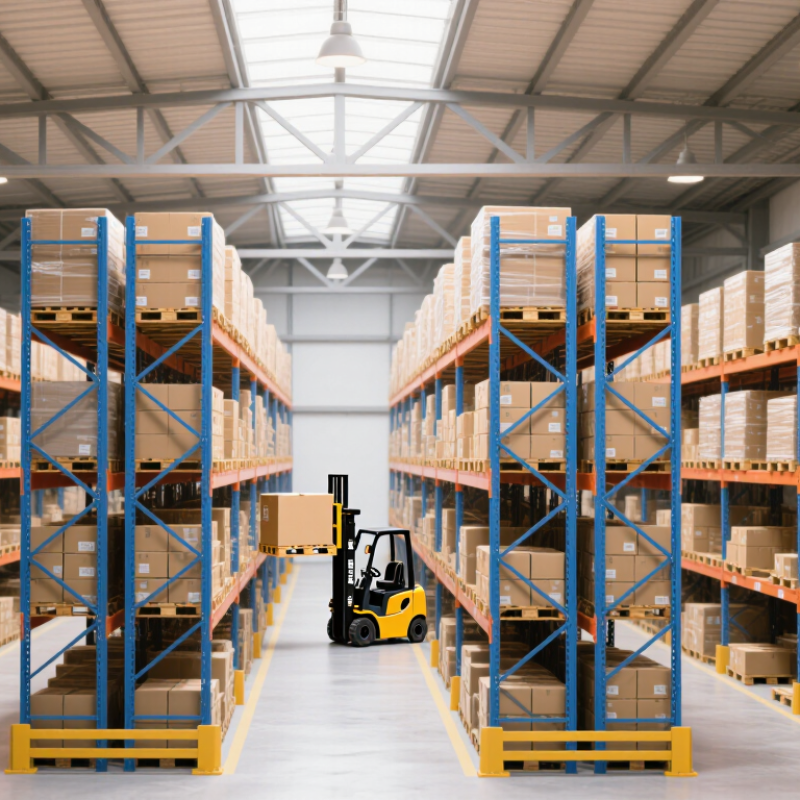
2026 Top Selective Pallet Racking Systems for Global Buyers

What Selective Pallet Racking Is and How It Works

2026 Top Selective Pallet Racking Systems for Global Buyers

What Selective Pallet Racking Is and How It Works

Selective pallet racking is a steel storage system designed for direct access to every pallet position. Upright frames carry vertical loads, while horizontal beams support pallets across each bay. Forklifts enter the aisle, lift one pallet, and place it on the selected beam level. No pallet sits behind another. That simple geometry supports fast picking and accurate stock rotation.

In practical warehouse planning, aisle width matters as much as rack height. A narrow aisle may increase storage density, but it can reduce forklift flexibility and slow replenishment. Buyers should check pallet dimensions, load weight, beam capacity, floor condition, seismic exposure, and local safety rules. OSHA requires stored materials to remain secure against sliding, falling, or collapse. Requirements differ by country, so a local structural review is essential.

MHI’s 2024 Annual Industry Report states that 83% of supply-chain professionals expect higher technology and innovation investment within five years. Selective racks remain useful because they work with manual, semi-automated, and automated handling methods. Yet higher density is not always better. A dense layout can create congestion, awkward turning, and hidden damage. I have seen warehouse plans look efficient on paper, then lose productivity after real forklift traffic begins. Beam deflection, uneven loading, and damaged uprights also deserve attention. Small details matter.

Key Components and Their Roles in Storage

2026 Top Selective Pallet Racking Systems for Global Buyers

Key Components and Their Roles in Storage

Selective pallet racking depends on several components working as one safe storage structure. Upright frames carry vertical loads, while horizontal beams support pallet weight across each bay. Beam connectors must lock securely and allow practical height adjustment. Wire decking helps distribute loads and reduces the risk of misplaced pallets falling through open levels.

Pallet guards protect frames from forklift impacts, especially near busy loading aisles. Row spacers maintain consistent gaps between back-to-back rows. Floor anchors resist movement, but their specification should match the slab, seismic conditions, and local engineering rules. Load plaques show permitted capacities. They are small, yet often ignored.

The 2024 MHI Annual Industry Report states that 55% of surveyed supply-chain professionals currently use cloud computing, while 63% expect adoption within one or two years. This shift can connect rack locations with warehouse software and improve inventory visibility. However, digital tracking cannot correct a bent upright or overloaded beam. Physical inspections still matter.

Global buyers should verify pallet dimensions, forklift clearance, corrosion exposure, and regional safety standards before selecting a system. A neat layout can still fail when pallet weight is estimated poorly. I would not treat a supplier’s drawing as final evidence. Independent engineering review, installation records, and routine damage checks provide stronger assurance. Small oversights become expensive.

How to Match a System to Warehouse Requirements

2026 Top Selective Pallet Racking Systems for Global Buyers

How to Match a System to Warehouse Requirements

Choosing selective pallet racking starts with warehouse facts, not catalog photos. Measure clear height, aisle width, floor condition, and available loading zones. Record pallet dimensions, weights, and daily movement patterns. A system that fits one building may waste space in another.

Forklift type matters. Reach trucks can serve narrower aisles than counterbalance trucks, but they need accurate operating clearances. Check beam levels against pallet height and sprinkler spacing. Add protection where forklifts turn or reverse frequently. Adjustable beams support changing inventory, while fixed layouts may suit stable product lines. Do not overlook access.

Safety engineering must guide the final design. Rack frames should match expected loads, impact risks, floor capacity, and local inspection requirements. Qualified professionals should review anchoring, bracing, and installation details. Global buyers also need clear load plaques, maintenance procedures, and replacement-part access. Reliable documentation reduces mistakes during expansion.

Real warehouses rarely behave perfectly. I have seen storage plans fail because fast-moving pallets were placed too far from dispatch. Another common error is selecting maximum height without checking lifting equipment. Leave practical room for damaged pallets, uneven floors, and human judgment. A small clearance today may prevent an expensive redesign later. Recheck the plan after one operating month. Data often challenges the original assumption.

Safety, Compliance, and Installation Across Markets

2026 Top Selective Pallet Racking Systems for Global Buyers

Safety, Compliance, and Installation Across Markets

Safety, Compliance, and Installation Across Markets

Selective pallet racking remains practical for mixed pallets and direct forklift access. Global buyers should treat safety as a design requirement, not a final inspection. OSHA estimates that forklifts cause about 85 workplace deaths and 34,900 serious injuries each year in the United States. Poor aisle planning can increase impact risks. Every bay needs visible load limits, stable pallets, upright protection, and clear clearance zones.

Compliance changes by market. European projects often reference EN 15635 and FEM guidance for rack inspection and maintenance. US projects commonly use ANSI/RMI MH16.1 alongside local building and seismic codes. Australian installations may follow AS 4084 requirements. These standards address design, anchoring, tolerances, and inspection duties differently. A rack designed for one country may not transfer safely to another. I would not treat a universal specification as truly universal. Installation teams must check floor strength, anchor torque, beam locking, and aisle width. Commissioning should include a documented handover and trained operators.

Tips: Request stamped calculations for local conditions. Verify every beam label after installation. Photograph anchor points before loading. Schedule visual checks after impacts and at least monthly. Do not rely on appearance alone; hidden frame distortion can develop slowly. A perfect checklist is useful, but it cannot replace an experienced site inspection.

2026 Buying Factors for Global Pallet Racking Buyers

For global buyers, the right selective pallet racking starts with the load, not the catalogue. Record pallet dimensions, maximum weight, beam levels, and the heaviest expected load. Then check forklift turning space and clear height. A small aisle error can reduce usable capacity or slow daily picking. Measure twice.

MHI and Deloitte’s 2024 Annual Industry Report found that 55% of surveyed supply-chain leaders planned to increase technology investment. That makes future compatibility worth checking, even for conventional racks. Confirm whether the layout can accommodate later changes, such as wider loads or scanning equipment. Ask suppliers for beam and upright capacities, loading assumptions, and installation drawings. Compare these details, not just price per bay.

Floor conditions matter. Ask a qualified engineer to review slab capacity, anchoring, and local seismic requirements before installation. For cross-border projects, confirm steel specifications, corrosion protection, replacement-part availability, and delivery lead times in writing. A coating suited to a dry warehouse may disappoint in humid or coastal storage. And documents can miss practical details: verify clearances at the actual site, with the intended forklift and pallets.

FAQS

What is selective pallet racking?

It is a steel storage system providing direct forklift access to every pallet position. Upright frames carry vertical loads, while horizontal beams support pallets. No pallet sits behind another.

How does selective pallet racking work?

A forklift enters the aisle, lifts one pallet, and places it on the selected beam level. This supports fast picking and accurate stock rotation. Simple movement matters.

What information should buyers collect before choosing a system?

Record pallet dimensions, maximum weight, beam levels, and the heaviest expected load. Also measure clear height and forklift turning space. Measure twice.

Why is aisle width important?

Narrow aisles can increase storage density, but they may reduce forklift flexibility. Tight turning areas can slow replenishment and create congestion. More storage is not always better.

What safety checks are necessary before installation?

A qualified engineer should review floor capacity, anchoring, seismic exposure, and local safety requirements. Stored materials must resist sliding, falling, or collapse. Small failures become serious.

How can buyers compare different rack proposals?

Compare beam capacity, upright capacity, loading assumptions, installation drawings, and replacement-part availability. Do not compare price per bay alone. Documents can miss site realities.

Can selective racking support future warehouse changes?

Usually, yes. Check whether the layout can handle wider loads, scanning equipment, or different handling methods later. Future compatibility deserves attention. Plans change.

What practical problems may appear after installation?

Uneven loading, beam deflection, damaged uprights, and awkward forklift traffic can reduce productivity. A layout may look efficient on paper, then perform poorly. I may overvalue density sometimes.

Conclusion

This article explains how Selective Pallet Racking gives warehouses direct access to individual pallet locations, making it a flexible option for operations with varied inventory and frequent picking. It introduces the main components—frames, beams, bracing, and connectors—and describes how each contributes to load support, stability, and usable storage space. Readers will learn how to assess warehouse dimensions, pallet sizes, load requirements, handling equipment, and inventory turnover when choosing a configuration.

The guide also highlights the importance of safe design, suitable installation, clear operating procedures, and checking applicable local requirements in each market. For global buyers in 2026, it outlines practical factors such as product quality, capacity documentation, adaptability, delivery and installation planning, maintenance, and long-term value. Together, these considerations help buyers compare systems and select a solution that fits their facility, workforce, and changing storage needs.

Charlotte

Charlotte

Charlotte is a professional marketing specialist who combines a strong understanding of the company’s products with a clear, customer-focused approach to communication. She regularly contributes expert articles to the company website, helping readers understand product features, practical......