CE Certified Automated Pallet Storage System Manufacturer & Suppliers
High-Density ASRS, 4D Radio Shuttle Integration & Precision Heavy-Duty Steel Pallet Racking Engineered for Global Supply Chains
Enterprise Product Catalog
High-Performance Automated & Heavy-Duty Pallet Racking Systems
Engineered to precise EN, FEM, and ANSI/RMI MH16.1 structural compliance. Direct factory supply from our 30,000㎡ manufacturing base in Xiamen, China.
Dynamic Flow
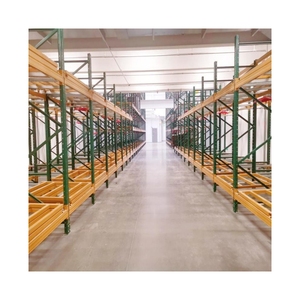
Custom Push Back Pallet Racking System With Nested Rails
High-density LIFO storage system utilizing heavy-duty nested carts on inclined guide rails. Eliminates forklift aisle entry while storing up to 6 pallets deep.
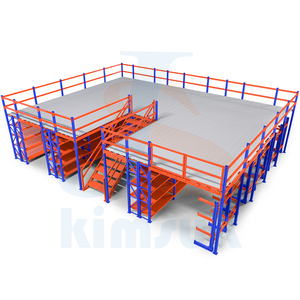
Multi-tier structural warehouse platform using heavy-duty pallet rack frames as main support columns. Multiplies usable floor area by 200% to 300% without structural modification.
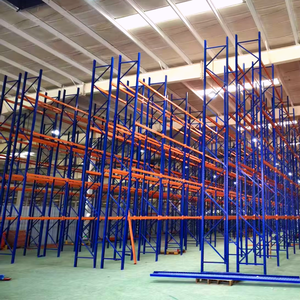
Precision cold-rolled selective rack system designed for rapid-turnover e-commerce hubs. Integrated with guided VNA forklifts or automated conveyor interfaces for 100% selectivity.
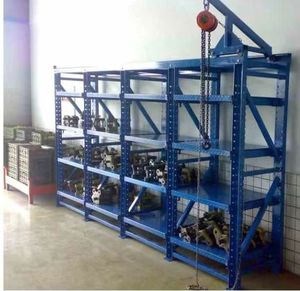
Heavy-Duty Pallet Pull-Out Extension Units (1000kg Capacity)
Transform beam levels into heavy-duty drawer units. Allows operators to pull fully loaded pallets (up to 1,000kg) outward for safe, ergonomic pick access without reaching into rack bays.
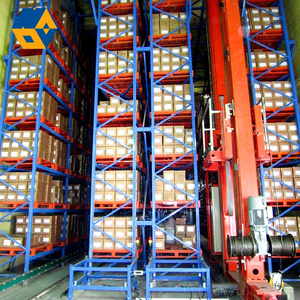
Full-Automated Storage & Retrieval System (AS/RS Stacker Crane)
Turnkey AS/RS solution combining high-bay racking up to 40 meters with automated stacker cranes, WMS/WCS software, and conveyor systems for unmanned 24/7 material handling.
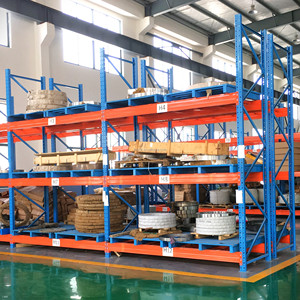
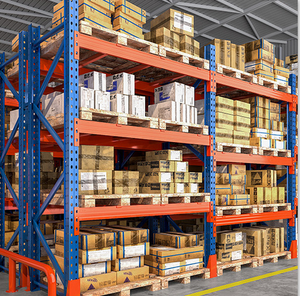
Industrial Heavy-Duty Push-Back Racking with Wire Mesh Decking
Ultra-capacity system boasting 30,000kg overall bay structure limits. Integrated with galvanized steel wire mesh decks to prevent drop-through and comply with fire sprinkler regulations.
Enterprise Architectural Overview: Why Global Supply Chains Choose SolidFort
As a leading China-based CE-certified automated pallet storage system manufacturer, SolidFort Storage Equipment Co., Ltd. operates a state-of-the-art 30,000 square meter production center in Tongan Park, Xiamen. Unlike regional trading intermediaries, we control the entire lifecycle of industrial rack production—from cold-roll forming of high-tensile structural steel profiles to precision automated robotic welding and electrostatic powder coating.
Engineered to rigorous international engineering baselines including Australia’s AS4084-2012, America’s ANSI/RMI MH16.1, and Europe’s FEM 10.2.02 / EN 15635 standards, SolidFort equipment delivers structural safety, seismic resilience, and operational reliability for logistics operators, 3PL providers, cold chain hubs, and industrial automation integrators across 53+ countries.
Q355B Cold-Rolled SteelHigh yield strength ensuring maximum buckling resistance.
Free CAD & 3D ModelingCustom slab-to-ceiling layout engineering with capacity calculations.
Next-Generation Technology Trends in Automated Storage Systems
The modern logistics landscape is undergoing a radical transformation driven by labor shortages, soaring industrial real estate costs, and the demand for sub-24-hour order fulfillment. Modern warehousing has moved far beyond static storage; automated pallet storage systems (APSS) are now central intelligent nodes within global supply chains.
1. Rise of 4D Radio Shuttle Fleet Automation
Unlike traditional 2D shuttles confined to single lanes, 4D multi-directional pallet shuttles traverse both longitudinal racks and cross-aisles. Integrated with lift mechanisms, 4D shuttles adjust dynamically to throughput spikes, offering higher flexibility than fixed-rail AS/RS stacker cranes.
2. IoT Telemetry & Structural Health Monitoring
Modern CE-certified automated storage installations now embed strain gauge sensors, wireless vibration telemetry, and optical deflection scanners directly into rack uprights. Real-time data feeds into Digital Twin software, alerting managers to accidental forklift impact or micro-deflections before structural failure occurs.
3. Ultra-High-Bay AS/RS Structures (Up to 40 Meters)
Land availability constraints are pushing warehouse footprints upward. SolidFort designs self-supporting clad-rack buildings where the AS/RS pallet rack structure itself forms the load-bearing skeleton for the warehouse wall cladding and roofing, dramatically lowering total building construction costs.
4. WMS / WCS Seamless Cloud API Integration
Hardware automation is only as strong as its control layer. Automated pallet storage systems now natively connect with ERP systems (SAP, Oracle, Manhattan) via standardized RESTful APIs, orchestrating pallet movement based on real-time order priority, SKU velocity, and battery charge cycles.
Global Procurement Trends: Strategic Sourcing Insights for 2026 and Beyond
Procurement directors and warehouse infrastructure engineers are shifting their evaluation models when purchasing high-density racking. Sourcing decisions are no longer based on upfront steel weight costs alone; instead, buyers are evaluating multi-year Total Cost of Ownership (TCO), compliance risk, and supply chain adaptability.
Procurement Metric
Traditional Sourcing Approach
Modern Strategic Sourcing Trend
SolidFort Advantage
CapEx vs OpEx Model
Lowest initial steel bid purchase cost
TCO over 15-year operational lifecycle
Optimized steel weight-to-strength ratio lowers initial cost & wear
Regulatory Compliance
Self-declared local supplier claims
Mandatory third-party CE, ISO, EN15635 audits
Full CE compliance & third-party structural calculation reports
Ample raw steel stock & high-speed automated roll-forming lines
Furthermore, localized permit requirements in regions like North America (RMI / City Permits) and Europe (CE Mark / EN Standards) require manufacturers to supply rigorous engineered structural calculation packages. SolidFort works hand-in-hand with EPC contractors and automation integrators to deliver fully documented engineering submittals, including seismic dynamic analyses for active earthquake zones.
Why is CE Certification crucial for automated pallet storage systems?
CE certification confirms that an automated storage system complies with strict European Union health, safety, and environmental protection standards (including Machinery Directive 2006/42/EC and EN 15635 structural standards). For importers, buying CE-certified machinery ensures smooth customs clearance, simplified local building permit approvals, and protection against operational liability in automated facilities.
How is beam deflection calculated, and what is the allowable limit?
Under international standards (such as FEM 10.2.02 and RMI), beam deflection under maximum Uniformly Distributed Load (UDL) should not exceed L/200 for standard pallet racking (where L is the clear beam length). For automated AS/RS and shuttle systems requiring tighter mechanical tolerances, deflection is engineered to stricter limits, typically L/300 or L/400, to prevent stacker crane misalignments.
What warehouse floor slab requirements are needed for heavy-duty pallet racking?
Concrete slab thickness must be evaluated based on point load forces transmitted through base plates. Standard selective racking usually requires a reinforced concrete slab of at least 150mm to 200mm thickness with a compressive strength of 25–30 MPa. High-bay AS/RS systems require specialized super-flat floors (EN 15620 / TR34 Category DM) to ensure laser-guided crane positioning operates without vibration or lateral drift.
Can static pallet racks be retrofitted for automated radio shuttles?
Yes, provided the structural upright frames feature compatible geometry and adequate load ratings. Retrofitting involves replacing standard step or box beams with engineered galvanized shuttle guide rails and positioning stops. SolidFort engineers can review your existing CAD layout to evaluate frame stability and design custom retrofit rail profiles.
What lead time and shipping terms does SolidFort offer for export orders?
Standard pallet rack orders are produced and packed for ocean freight within 10 to 15 business days, while complex, engineered AS/RS projects typically require 30 days. We support FOB Xiamen, CIF, CFR, and DDP (Delivered Duty Paid) shipping terms, providing complete container loading drawings to maximize shipping volume and prevent transit damage.
How often must industrial pallet racking undergo safety inspection?
Under EN 15635 guidelines, a formal inspection by a qualified racking inspector must be conducted at least once every 12 months. Additionally, warehouse supervisors should conduct weekly visual checks to detect damaged uprights, unseated safety pins, or overloaded beam levels. Damaged components should be isolated and replaced immediately with factory-certified spare parts.
Accelerate Your Logistics Efficiency with SolidFort Engineering
Connect directly with our engineering department today for free CAD warehouse layout design, structural load calculations, and competitive direct-factory pricing.