Featured Pharmaceutical & High-Density Racking Systems
Certified industrial warehouse storage solutions optimized for regulatory compliance, zero cross-contamination, and maximum cubic space utilization.
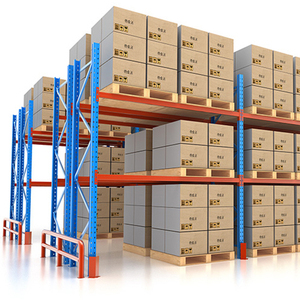
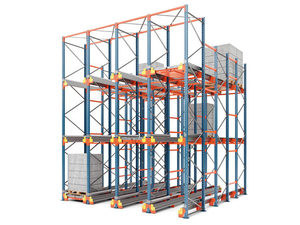
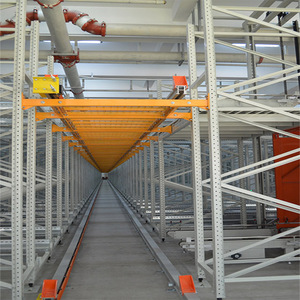
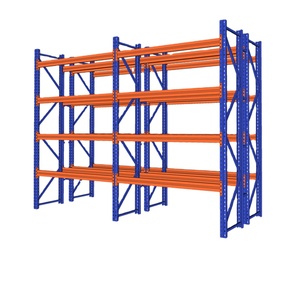
Engineered Excellence for Pharmaceutical & Bio-Logistics Storage
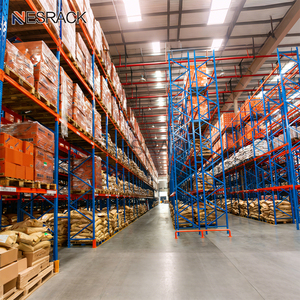
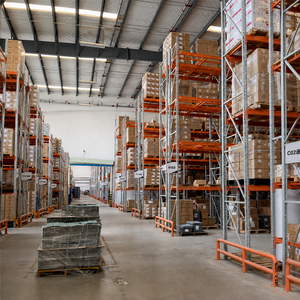
Pharmaceutical logistics and cold-chain warehousing demand strict compliance with global quality and safety mandates. As a direct manufacturer operating a 30,000㎡ production center in Xiamen, SolidFort engineers certified high-density storage rack systems structured to withstand demanding pharmaceutical operations. From raw material holding areas to ambient finish-goods distribution centers and controlled cleanrooms, our racking systems conform strictly to CE directives, AS4084 (Australian Standard), RMI (ANSI MH16.1 - US Standard), and FEM 10.2.02 (European Industrial Standard) guidelines.
Technical Information Gain: Unlike generic industrial warehousing, pharmaceutical storage requires strict adherence to cGMP (Current Good Manufacturing Practice) standards. Frame perforations, beam connectors, and surface treatments must eliminate dust collection traps, prevent particulate shedding, and support complete wipe-down sanitization protocols.
cGMP Cleanroom Integration & Surface Treatment Engineering
Pharmaceutical storage systems must maintain high chemical resistance and mechanical endurance. Standard liquid paint can flake or off-gas organic vapors, compromising cleanroom environment integrity. SolidFort utilizes advanced thermosetting epoxy-polyester electrostatic powder coating and continuous hot-dip galvanizing (HDG) to ensure superior surface finish integrity.
- Anti-Microbial Powder Finish: Custom electrostatic coatings impregnated with silver-ion antimicrobial agents to inhibit bacterial growth (tested against E. coli and S. aureus).
- Smooth Weld Seams: Robotic MIG welding ensures non-porous, crevice-free joint connections that prevent moisture aggregation and chemical trapped residues during washdowns.
- Corrosion Class C4/C5 High-Durability Options: Recommended for cold storage environments operating at temperatures down to -30°C and humidity-controlled active API laboratories.
| Storage Specification | Standard Industrial Racking | SolidFort Pharmaceutical Grade |
|---|---|---|
| Structural Standards | Generic local steel codes | AS4084, RMI ANSI MH16.1, FEM 10.2.02, CE Certified |
| Surface Finish & Roughness | Standard acrylic/alkyd paint (> Ra 6.3 µm) | Antimicrobial epoxy powder coat (< Ra 1.6 µm) / HDG |
| Cleanroom Compatibility | Not compliant (High shedding risk) | ISO Class 6–8 Compatible (Minimizes particulate build-up) |
| Seismic & Load Verification | Estimated load charts | Certified LARC (Load Application & Rack Configuration) drawings |
| Sub-Zero Cold Chain Use | Standard steel (Embrittlement risk) | Low-temperature structural steel Q355B/Q235B with high impact toughness |
Structural Safety, Anchoring & Seismic Calculation Benchmarks
Under strict ANSI/RMI MH16.1 and international structural engineering frameworks, pharmaceutical pallet racking systems are engineered based on specific slab capacities, anchor bolt embedment depths, and seismic zone dynamics (Category A through F). SolidFort provides fully validated engineering dossiers for facility permits, including vertical beam deflection calculations (capped at L/240 for automated systems and L/180 for standard pallet racks).
Future Procurement Trends in Bio-Pharma Logistics (2025–2030)
Key strategic shifts transforming how procurement managers, supply chain executives, and facility engineers select pharmaceutical storage systems.
1. Rapid Adoption of 4-Way Radio Shuttle Automation
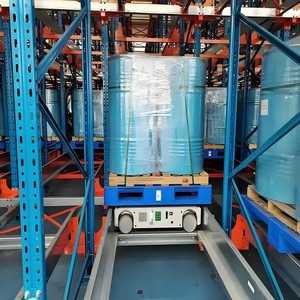
High-density automated pallet shuttles (4-Way Shuttles) are replacing traditional drive-in racking. This transition delivers 100% automated pallet routing, reduces forklift collisions in cold storage rooms, and increases space utilization up to 85% while fully preserving FIFO/LIFO tracking essential for batch-controlled pharmaceuticals.
2. Strict Traceability & Material Passport Verification
Global regulatory bodies (FDA, EMA, TGA) increasingly require complete mill test certificates (MTC) proving steel chemistry (SS400, Q235B, Q355B), structural yield strength, and non-toxic powder coating compliance. OEM racking suppliers must provide transparent raw material origin data.
3. Modular & Hybrid High-Bay AS/RS Integration
Pharmacies and 3PL fulfillment hubs are migrating toward automated storage and retrieval systems (AS/RS). Modern racking structures act as the load-bearing skeleton for stacker cranes, requiring precision manufacturing tolerances within ±1.5 mm across heights exceeding 24 meters.
Pharmaceutical Industry Storage Development Outlook
Driven by strict GDP (Good Distribution Practice) regulations and the growth of biologic therapies requiring deep-freeze storage (-80°C to -20°C), industrial rack manufacturing has evolved from basic steel rolling into high-precision structural engineering.
Key technological shifts driving modern production include:
- Cold Chain Energy Efficiency Optimization: High-density shuttle systems compress storage footprints by up to 50%, directly cutting refrigeration energy consumption and operational overhead for cold room facilities.
- Integrated Safety Protection Systems: Modern pharmaceutical installations prioritize complete rack protection, incorporating heavy-duty floor guardrails, frame protectors, safety mesh, and back-stops to prevent drop damage to high-value medical supplies.
- Sustainable Green Steel Manufacturing: Procurement teams increasingly prioritize low-carbon manufacturing footprint. SolidFort optimizes sheet metal nesting, recycles powder coating over-spray up to 98%, and uses energy-efficient automated continuous roll-forming lines.
Frequently Asked Questions (FAQ) - Technical & Procurement
Direct responses to common questions regarding engineering certifications, pricing per pallet position, load calculations, and global delivery terms.
What certifications are mandatory for pharmaceutical pallet racking systems?
Pharmaceutical racking installations must meet rigorous structural standards including CE certification (EU market conformity), RMI ANSI MH16.1 (North America), AS4084 (Australia), and FEM 10.2.02 (Europe). Additionally, manufacturing plants must hold ISO9001 quality system certification. SolidFort supplies full material traceability and structural calculation reports compliant with all regional codes.
What is the average cost per pallet position for heavy-duty racking systems?
Standard selective pallet racking generally averages USD 50–100 per pallet position depending on raw steel market indices and load capacity specifications. High-density automated systems, such as Radio Shuttle or Push Back racking, range from USD 100–250 per position. Custom cleanroom-grade finishes or hot-dip galvanized anti-corrosion options add a modest premium proportional to surface specification requirements.
Do pharmaceutical warehouse pallet racks require floor anchoring?
Yes. ANSI/RMI MH16.1, AS4084, and global safety codes require every rack upright baseplate to be securely anchored to the concrete slab using certified expansion or wedge anchor bolts. Anchoring prevents frame displacement caused by forklift contact, preserves verticality tolerances, and provides seismic resistance. Anchor size and embedment depth are validated based on concrete slab thickness and soil class reports.
How is the safe working load capacity calculated for pallet racks?
Load capacity calculation involves two crucial metrics: Pair Beam Capacity (uniformly distributed load that a pair of horizontal beams can safely carry without exceeding maximum deflection limits) and Upright Frame Capacity (which decreases as the vertical distance between beam levels increases). Never estimate rack limits—always refer to manufacturer Load Application & Rack Configuration (LARC) drawings and display official load capacity plaques at the end of every rack aisle.
What are standard pallet racking dimensions for international shipments?
For standard US GMA pallets (40" x 48"), upright frame depths are typically 42 inches (allowing a 3-inch overhang front and back) with 96-inch (8 ft) beam spans designed for two pallets per level. For European standard pallets (1200 x 800 mm or 1200 x 1000 mm), frames are configured at 1100 mm depth with 2700 mm beam spans. Custom upright heights range from 3 meters to over 15 meters based on ceiling clearance and material handling equipment reach.
What is the typical production lead time and shipping availability?
Standard pallet rack orders are manufactured and dispatched within 10 to 15 business days. Large custom-engineered projects, high-bay shuttle installations, or complex cleanroom installations take approximately 30 days. SolidFort exports globally under FOB, CIF, or DDP terms, providing full container loading plans to minimize ocean freight costs.
Why select SolidFort as your OEM/ODM racking supplier in China?
SolidFort combines factory-direct manufacturing pricing with complete technical validation. Operating a modern 30,000㎡ factory with automated roll-forming and robotic welding, we provide free initial CAD layouts, certified load calculations, sample components upon request, low MOQs, and reliable after-sales support across 53+ countries.
SolidFort Factory-Direct Advantages & Engineering Credentials
SolidFort Storage Equipment Co., Ltd. is a dedicated industrial storage solution manufacturer based in Tongan District, Xiamen, China. Operating a modern 30,000㎡ plant, our team has designed, manufactured, and delivered heavy-duty warehousing systems since 2016 for distributors, warehouse logistics providers, medical companies, and industrial facilities across more than 53 countries.
Key factors that set SolidFort apart include:
- Engineer-Led Consultation: Every storage layout proposal is designed directly by structural engineers who analyze building slab load limits, forklift turning radii, ceiling clear heights, and seismic zones.
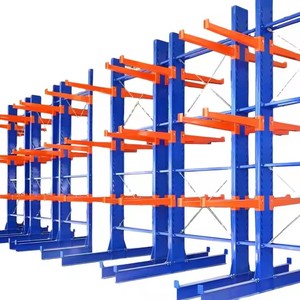
- Complete Turnkey Solutions: From Selective Pallet Racking, Drive-In, and Radio Shuttle systems to Cantilever Racks, Wire Mesh Decking, Mezzanines, and Safety Barriers—we supply everything required for complete facility fit-outs.
- Factory-Direct Value & Short Lead Times: In-house continuous roll forming, automated welding, and powder coating lines allow us to maintain fast 10–15 day standard delivery times without middleman markups.
- Free CAD Engineering & Sample Program: We provide complimentary CAD warehouse layout designs, pallet capacity calculations, and material samples prior to full production runs.