Industrial Space-Efficient Racking Systems
Explore our flagship CE-certified pallet storage architectures designed to double volumetric storage efficiency while preserving structural safety under heavy loading.
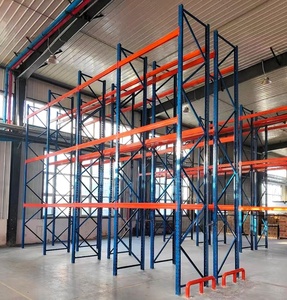
Lower Cost Higher Capacity Blue and Orange Selective High Bay Storage Heavy Duty Pallet Racking System with ISO CE
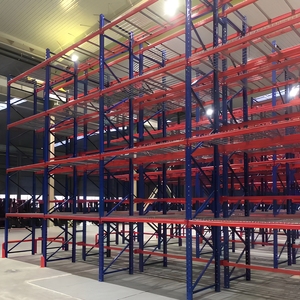
Heavy Duty 5 Layer Metal Drive-In Pallet Racking with Corrosion Protection High Density Industrial Warehouse Bulk Storage Racks
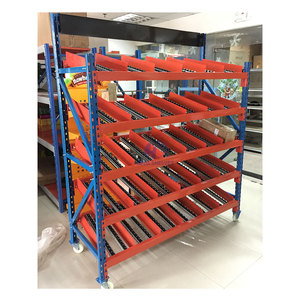
Customized Warehouse Storage Rack Pallet Flow Rack Shelving Lineside Roller Flow Rack Gravity Carton Flow Racking
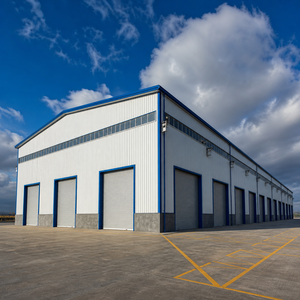
Reach Truck Aisle Steel Warehouse Building Narrow Racking High Capacity Galvanized Steel Frame System
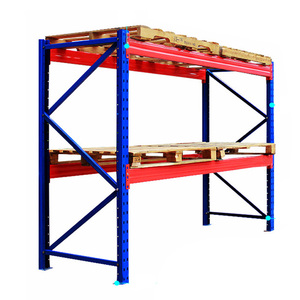
Outdoor Pallet Racking Metal Storage Organizer Rack For Warehouse Store Factory 1000KG 2000KG 3000KG Pounds Tons
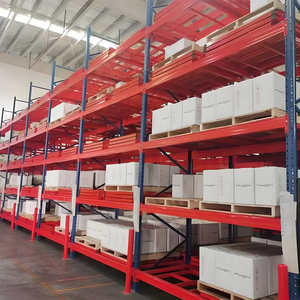
Safe Stable Heavy Duty Push Back Pallet Racking Storage System CE/ISO Certification 1000-2000kg Capacity Corrosion Pallet
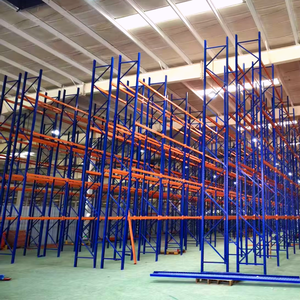
2-5 Tier Wide Aisle Heavy Load Pallet Racking for Automated Warehouse Online Order Fulfillment Hub
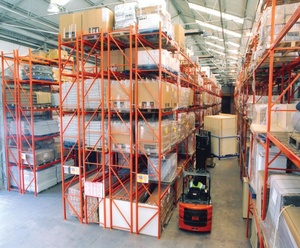
Double Deep Pallet Racking High Capacity Storage System Suitable for Reach Truck Forklift Optimize Warehouse Space Utilization
Why Global Logistics Leaders Partner with SolidFort
Operating a state-of-the-art 30,000㎡ manufacturing facility in Xiamen, China, SolidFort Storage Equipment Co., Ltd. delivers engineered racking systems complying strictly with AS4084, RMI (ANSI MH16.1), and FEM standards.
Certified Structural Engineering
Every column profile and step beam calculation is verified through Finite Element Analysis (FEA) to maintain a safety factor exceeding 1.65 under peak load conditions.
High-Grade Certified Steel
Manufactured exclusively using Q235B and Q355B cold-rolled structural steel with mill test certificates (MTC), guaranteeing high yield strength and crack resistance.
CE & ISO Quality System
Automated continuous roll forming lines, robotic welding stations, and automated electrostatic epoxy powder coating guarantee anti-corrosion finishes lasting decades.
10–15 Day Fast Execution
Standard stock inventory and streamlined roll-forming lines enable rapid turnaround times, backed by professional 3D CAD modeling and load calculations.
Engineering Whitepaper: Maximizing Volumetric Efficiency via CE Certified Racking
In modern industrial logistics, floor space represents one of the highest operational expenditures. Transitioning from standard floor stacking to engineered high-bay pallet racking systems allows industrial facilities to increase storage density by 100% to 300% without expanding the physical building footprint. However, selecting the appropriate structural configuration requires balancing accessibility (selectivity), SKU velocity, structural deflection specs ($L/200$), and building seismic conditions.
Technical Insight: According to EN 15512 and RMI ANSI MH16.1 guidelines, upright frame capacity is non-linear and decreases exponentially as vertical beam pitch increases. Selecting the optimal profile thickness (ranging from 1.5mm to 2.5mm cold-rolled steel) is vital for ensuring long-term structural integrity.
System Architecture Technical Comparison Matrix
This authoritative technical matrix synthesizes key engineering metrics across primary heavy-duty rack configurations to support procurement teams and warehouse architects in making data-driven decisions:
| Racking Architecture | Space Utilization | SKU Selectivity | Inventory Handling | Forklift Compatibility | CE / Structural Standard |
|---|---|---|---|---|---|
| Selective Pallet Racking | 40% – 50% | 100% (Direct Access) | FIFO / LIFO | Standard Counterbalance / Reach Truck | EN 15512 / RMI / AS4084 |
| Drive-In Racking | 75% – 85% | 20% – 30% (Bulk Storage) | LIFO (Last-In, First-Out) | Specialized Reach / Deep Entry Forklift | FEM 10.2.02 / CE |
| Push-Back Racking | 70% – 80% | 40% – 60% (2-6 Deep) | LIFO (Nested Carts) | Standard Counterbalance | ANSI MH16.1 / CE Compliance |
| Radio Shuttle Racking | 80% – 90% | Medium / High Bulk | Automated FIFO / LIFO | Standard Forklift + Automated Shuttle | ISO 9001 / CE / Automated Standards |
| Double Deep Racking | 60% – 65% | 50% (Pair Pallets) | LIFO | Pantograph Reach Truck | AS4084 / EN Standards |
| Very Narrow Aisle (VNA) | 85% – 90% | 100% Direct Access | FIFO | VNA Turret Truck / Articulated Forklift | FEM 10.2.02 High Bay |
Future Procurement & Development Trends in Pallet Racking
As global supply chains shift toward automation, sustainability, and real-time inventory visibility, warehouse infrastructure is undergoing significant structural innovation.
1. Transition to Radio Shuttle & AS/RS Systems
Traditional static drive-in racks are increasingly giving way to semi-automated Radio Shuttle and fully automated AS/RS racking. Buyers demand higher throughput velocity with zero manual driver risks within channels, driving automated rack procurement up by 35% annually.
2. Eco-Friendly Powder Coatings & Carbon Footprint Tracking
Environmental compliance regulations in Europe and North America now require low-VOC, heavy-metal-free electrostatic powder coatings. Procurement managers actively favor suppliers offering carbon-neutral recycled Q235B/Q355B steel frames and energy-efficient roll forming manufacturing.
3. Seismic-Resistant Engineering & Dynamic Sensors
With stricter global building codes (such as US IBC and Australian AS4084-2023 updates), future procurement prioritizes enhanced seismic baseplate designs, dynamic impact protectors, and IoT-enabled strain gauges that detect structural rack overloading in real time.
4. Modular Standardized Components & Quick-Ship Stock
To adapt to rapid e-commerce expansion, enterprises require standardized tear-drop or 50mm/75mm adjustable pitch beam connectors that allow rapid reconfiguration, paired with fast 10-15 day manufacturing lead times from certified exporters.
Optimize Your Warehouse Footprint with Certified Engineers
Receive a complimentary custom 2D/3D CAD layout, load capacity calculation, and formal engineering proposal within 24 hours.
Get CatalogFrequently Asked Procurement & Engineering FAQs
Clear, authoritative technical answers to common questions asked by warehouse buyers, facility engineering teams, and logistics managers.
What is the standard cost of pallet racking per pallet position?
Cost varies based on steel market pricing, load capacity requirements per level, beam length, and structural type. Standard Selective Pallet Racking typically ranges from USD 50 to USD 100 per pallet position. High-density systems such as Drive-In or Push-Back racking range from USD 100 to USD 250 per position, whereas automated Radio Shuttle systems range higher due to mechanical shuttles. These figures reflect FOB material supply; installation, shipping, and floor slab anchoring are estimated per project layout.
Do pallet rack upright columns always require anchor bolts to the slab?
Yes. Under ANSI/RMI MH16.1, EN 15512, and AS4084 regulations, every single column baseplate must be securely anchored into the concrete slab using certified expansion or wedge anchors. Floor anchoring resists lateral forces, prevents accidental rack displacement caused by forklift collisions, and ensures structural stability under seismic stress. Anchor embedment depth must be verified against concrete slab compressive strength (typically 3,000 PSI minimum).
How is maximum load capacity determined for upright frames and step beams?
Load capacity calculation consists of two distinct parts:
1. Beam Capacity: Calculated based on uniformly distributed loads (UDL) across a pair of beams, designed with maximum allowable vertical deflection of L/200 (Length divided by 200).
2. Upright Frame Capacity: Derived from vertical beam spacing (pitch distance). Unbraced length affects buckling risk—as vertical beam spacing increases, overall upright load capacity decreases. Always refer strictly to the manufacturer's LARC (Load Application & Rack Configuration) plaques.
What are standard pallet rack dimensions for GMA and Euro Pallets?
For standard North American 40" x 48" GMA pallets, upright frame depth is typically 42 inches (providing a 3-inch pallet overhang front and rear), with beam lengths of 96 inches (8 ft) or 108 inches (9 ft) for 2-pallet side-by-side positioning. For standard 1200mm x 800mm or 1200mm x 1000mm Euro pallets, frame depths of 1000mm or 1100mm with beam lengths of 2700mm are standard.
How frequently should warehouse racking systems undergo inspection?
Per EN 15635 standards, formal inspections by a qualified rack inspector should occur at least once every 12 months. In addition, internal maintenance personnel should perform weekly visual inspections to identify bent column guards, sheared safety pins, deflected beams, or floor anchor damage. Any structurally compromised component must be isolated and replaced immediately.
What is SolidFort’s manufacturing lead time and available export shipping terms?
Standard racking component orders ship within 10 to 15 business days from our Xiamen plant. Large-scale engineered projects requiring custom powder-coating colors or complex high-density components average 25 to 30 days. We export under FOB, CIF, CFR, and DDP (Delivered Duty Paid) Incoterms, complete with standardized export container bundling and loading blueprints.
Which international quality certifications do SolidFort racking systems comply with?
All SolidFort warehouse rack components are engineered in compliance with Australian standard AS4084-2023, American RMI standard ANSI MH16.1, European standard EN 15512 / FEM 10.2.02, and manufactured under ISO 9001 certified quality management. CE conformity certificates and Mill Test Reports (MTC) are supplied with all official shipments.
Ready to Transform Your Warehouse Capacity?
Connect directly with SolidFort storage experts for instant structural recommendations, custom product catalogs, and factory direct quotations.
Get Catalog