High-Density Automated Storage & Retrieval Infrastructure
An authoritative technical evaluation of structural engineering standards, stacker crane integration tolerances, and future-ready intralogistics procurement strategies.
High-Performance Storage Racking Systems
Explore our export-grade warehouse storage equipment, designed for heavy-duty load profiles, seamless crane integration, and extreme operational durability.
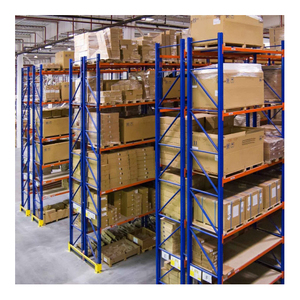
Peterack CE Certified Warehouse Storage Steel Heavy Duty Stacking Racks Shelves Selective Pallet Racking System
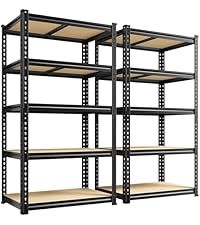
5 Layer Industrial Storage Shelving Racks Heavy Duty Adjustable Boltless Rivet Rack Corrosion Protection Warehouse Powder Coated
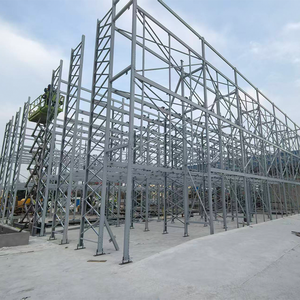
Multi-Scene Universal 5-Layer Heavy Duty Corrosion Protection Seismic Steel Warehouse Rack Cold Forming Firm Structure
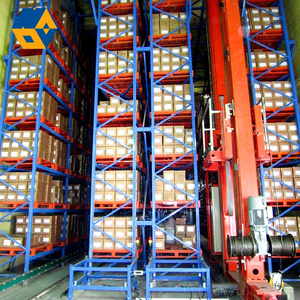
NOVA Automated Storage and Retrieval System ASRS Stacker Crane Pallet Warehouse Animation Rack System
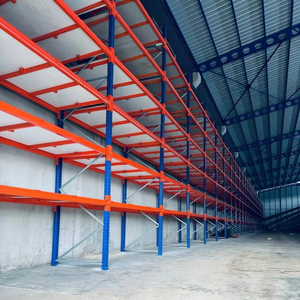
Peterack CE Certified Heavy Duty Stacking Shelf Racks Pallet Rack Multi Layer Shelf Garage Stacking Shelf Warehouse Storage Rack
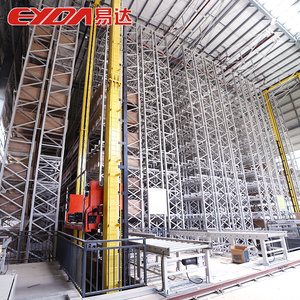
EYDA ASRS Warehouse System Stack Crane Automated Storage Retrieval System Free Design Intelligent Cold Storage Shuttle Rack High
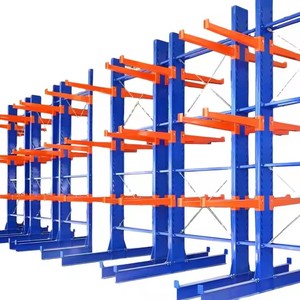
Industrial Heavy Duty OEM ODM Storage Racks Wall Mounting Tube Racking Gavenized Cantilever Rack For Warehouse
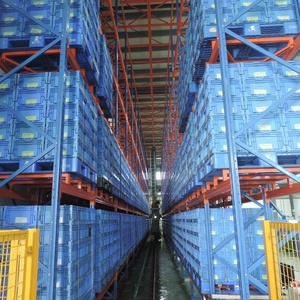
Automatic Storage and Retrieval System Pallet Racking Automated Warehouse ASRS System Stacker Crane
Why Tier-1 Global Buyers Partner with SolidFort
Combining OEM/ODM manufacturing agility with rigorous structural engineering to deliver reliable, high-bay warehouse infrastructure across 53+ countries.
30,000m² Certified Manufacturing Plant
Direct factory production located in Tongan District, Xiamen, China. Equipped with high-precision continuous roll-forming lines, automated robotic welding cells, and eco-friendly powder coating systems.
Multi-Standard Structural Compliance
Engineered strictly to AS4084 (Australian Standard), RMI / ANSI MH16.1 (USA), and FEM 10.2.02 (Europe) guidelines. Supported by verified structural calculation reports and CE documentation.
Precision Engineering & CAD Integration
In-house structural engineers evaluate building slab capacity, forklift turning radii, seismic zone accelerations, and crane deflection tolerances to issue customized LARC (Load Application and Rack Configuration) drawings.
10–15 Day Production Lead Times
Optimized supply chain management with robust high-grade steel inventory (Q235B & Q355B structural steel). Standard selective & stacker crane racks produced and containerized within 10 to 15 business days.
Export Loading & Freight Optimization
Custom loading plans engineered for 40ft High Cube containers. Heavy-duty wrapping, edge protectors, and specialized steel strapping maximize volume utilization while ensuring zero transit damage.
End-to-End Lifecycle Technical Support
From initial preliminary CAD layout conceptualization to third-party structural audit compliance, installation supervision guidance, and long-term spare component provisioning.
Engineering Standards for Stacker Crane Racking Systems (AS/RS Infrastructure)
In modern automated logistics facilities, the racking structure serves a dual purpose: it acts as the primary load-bearing matrix for stored goods and functions as the geometric guiding framework for high-speed Automated Storage and Retrieval System (AS/RS) Stacker Cranes (Storage Retrieval Machines - SRMs). Unlike conventional forklift-serviced pallet racking, stacker crane racking requires significantly tighter manufacturing tolerances, controlled sway metrics, and precise dynamic deflection calculations.
1. Critical Tolerances: Standard Racking vs. Stacker Crane AS/RS Racking
When integrating single-mast or double-mast stacker cranes operating at horizontal travel speeds exceeding 240 m/min and vertical lift speeds over 90 m/min, structural deflection can lead to crane mast collisions, positioning faults, or optical sensor misreads. According to FEM 10.2.02 and EN 15620 (Class 100 & Class 200) standards, alignment tolerances must be maintained within tight parameters:
| Engineering Metric | Standard Selective Pallet Racking | AS/RS Stacker Crane Racking (EN 15620 Class 100) |
|---|---|---|
| Max Height Capability | Up to 12.5 meters (Forklift reach limit) | Up to 45.0+ meters (Rack-Supported Buildings) |
| Upright Plumbness Tolerance (δx) | H / 350 (approx. ±25 mm for 10m height) | H / 1000 or ±5 mm total (whichever is stricter) |
| Beam Level Levelness (δy) | L / 200 under maximum UDL | L / 400 or max 3.0 mm total deflection under full load |
| Guide Rail Alignment Deviation | Not Applicable | ±1.5 mm along entire aisle trajectory |
| Operating Method | Manual / VNA Turret Truck | Fully Autonomous Stacker Crane (PLC / WCS Control) |
| Storage Density | Moderate (30-40% footprint efficiency) | Ultra-High (up to 85% footprint utilization) |
Engineering Insight: High-Yield Steel Selection (Q355B vs. Q235B)
For stacker crane installations exceeding 18 meters in height, SolidFort utilizes Q355B high-yield strength structural steel for upright profiles. The higher yield strength (355 MPa vs 235 MPa) reduces overall steel profile wall thickness while significantly increasing stiffness, resisting dynamic horizontal impact forces exerted when stacker cranes decelerate rapidly at top beam levels.
2. Structural Mechanics of Stacker Crane Top & Bottom Rails
Stacker cranes do not run directly on the facility slab without structural anchoring integration. A complete AS/RS racking rack structure incorporates two structural rail subsystems:
- Bottom Crane Rail (Running Rail): Heavy-duty ground-anchored rail profiles (such as A75, A100 crane rails or machined square steel bars) installed over high-strength non-shrink grout beds. These carry 90%+ of the combined crane mass and payload weight.
- Top Guide Rail (Stabilizing Rail): Mounted directly to the top ties of the racking structures on both sides of the aisle. The top guide rail absorbs lateral sway forces generated during acceleration and braking cycles, transferring horizontal forces into the racking structure's top portal bracings and floor-anchored diagonal sway trusses.
3. Rack-Supported Building Systems (Clad-Rack Architecture)
For ultra-high-bay applications (25m to 45m), constructing a traditional concrete/steel frame building first and installing racking inside is often cost-prohibitive. SolidFort specializes in Rack-Supported Buildings, where the CE-certified stacker crane racking framework itself serves as the structural skeleton supporting the building's exterior wall cladding, roof trusses, insulation layers, and drainage systems.
This cladding-integrated system reduces overall civil engineering project schedules by 30-40% and provides exceptional seismic resilience under regional building code parameters (such as US IBC/RMI, Australian AS1170.4, and Eurocode 8).
Future Procurement Trends in Automated Storage Infrastructure
Key technological shifts shaping how enterprise supply chain managers, warehouse developers, and procurement executives source storage racking solutions.
1. Convergence of AS/RS & 4-Way Radio Shuttles
Traditional fixed-aisle stacker cranes are increasingly combined with multi-directional 4-way autonomous shuttles. Procurement budgets are shifting toward hybrid rack structures capable of accommodating both heavy vertical crane lifters and horizontal shuttle paths across deep-lane configurations, drastically improving throughput versatility for e-commerce micro-fulfillment centers.
2. Modular Standardized Cold-Formed Profiles
To reduce international ocean freight costs and shorten installation lead times, enterprise buyers favor modular, boltless-assembly racking components. Advanced cold-roll forming technology allows manufacturers to press variable-pitch beam connector slots into structural uprights, enabling on-site height adjustability without sacrificing seismic shear load ratings.
3. Predictive Structural Health Sensors
Modern AS/RS stacker crane racking installations now integrate IoT strain gauges and vibration sensors into critical beam-to-column joints and ground anchor footings. Real-time structural monitoring alerts facility operators to accidental crane mast contacts or localized slab settlement before structural fatigue or alignment drift occurs.
4. Sustainability & Zero-VOC Coatings
Global logistics operators are enforcing strict ESG metrics across facility equipment procurement. Leading manufacturers are transitioning to heavy-metal-free thermosetting epoxy-polyester powder coatings applied via automated electrostatic lines, achieving 500+ hour salt spray corrosion resistance without hazardous volatile organic compound (VOC) emissions.
Frequently Asked Questions
Detailed technical answers addressing floor slab specs, certification compliance, capacity calculations, and factory lead times.
Cost depends heavily on total height, dynamic load requirements, and system integration complexity. Standard selective pallet racking typically averages USD 50–100 per pallet position. For high-density automated systems (such as stacker crane AS/RS or radio shuttle racking), structural racking steelwork ranges between USD 120–280 per pallet position.
Note: These figures cover structural steel racking components, top/bottom guide rail ties, and base assemblies; stacker crane equipment (SRM units), electrical control systems, and civil floor slab preparation are quoted separately based on project specifications.
Yes, absolutely. Stacker crane racking systems transmit concentrated point loads through baseplates to the building foundation. Standard industrial floors are generally insufficient for high-bay AS/RS structures over 15 meters.
According to DIN 15185 and TR34 (Category Superflat / VDMA guidelines), slabs must satisfy strict levelness and flatness tolerances (F-min numbers or Class 1 levelness). Floor thickness typically ranges from 250 mm to 450+ mm with heavy double-layer steel reinforcement to resist punch shear and dynamic overturn moments generated during crane travel.
Load capacity calculation involves two distinct structural engineering checks:
- Beam Pair Capacity: Calculated as Uniformly Distributed Load (UDL) capacity based on maximum permissible bending stress and deflection limits (typically L/300 to L/400 for automated crane pick-and-place accuracy).
- Upright Frame Load Capacity: Determined via 3D finite element analysis (FEA) taking into account unbraced vertical beam clearance heights, sway stability factors, dynamic horizontal braking forces, and local seismic acceleration coefficients under ANSI/RMI MH16.1 or EN 15512 rules.
Never estimate capacity manually—always rely on manufacturer-issued Load Application and Rack Configuration (LARC) drawings and structural plaque data.
SolidFort racking systems are engineered, manufactured, and inspected in strict adherence to international standards:
- Australia: AS4084-2023 (Steel Storage Racking)
- United States: RMI (ANSI MH16.1 - Specification for Design, Testing and Utilization of Industrial Steel Storage Racks)
- Europe: FEM 10.2.02 / EN 15512 / EN 15620 (Execution of Steel Structures & Tolerances for AS/RS)
- Quality Management: ISO 9001:2015 certified factory production with CE Declaration of Conformity available for European market imports.
Standard orders for selective pallet racks and stacking frames are manufactured and packaged for export within 10 to 15 business days. Engineered multi-tier AS/RS stacker crane rack structures generally require 25 to 35 days depending on total tonnage and custom hot-dip galvanizing requirements.
We support global shipping terms including FOB (Xiamen / Shanghai / Shenzhen), CIF, CFR, and DDP (Delivered Duty Paid) with complete container loading optimization drawings provided with every order.
Formal structural audits by qualified racking engineers should take place at least once every 12 months in accordance with EN 15635 standards. Furthermore, automated sensor diagnostics and visual inspections of guide rail fasteners, safety pins, column baseplate anchors, and top portal ties should be conducted monthly by facility maintenance personnel.
Accelerate Your High-Bay Automated Storage Project
Connect directly with SolidFort senior structural engineers for complimentary CAD warehouse space planning, structural calculations, and factory-direct OEM pricing quotes.