Featured Industrial Racking Systems
Engineered to global AS4084, RMI, and FEM standards. Certified factory-direct high-density storage solutions manufactured in Xiamen, China.
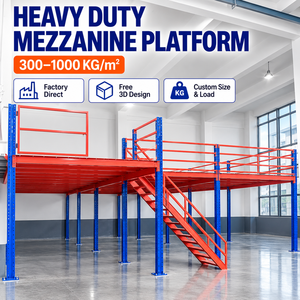
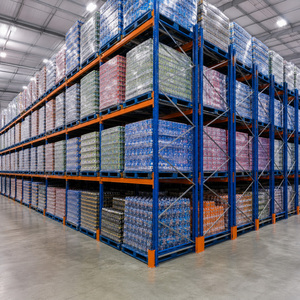
Heavy Duty Warehouse Rack Warehouse Storage Rack Q235B Steel For Logistics Hubs With High Load Capacity
Send an Inquiry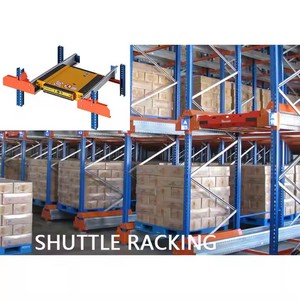
High-Density Automatic Four Way Shuttle Rack Radio Shuttle Rack System With Shuttle System
Send an Inquiry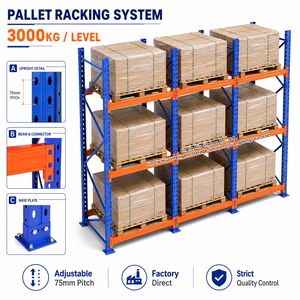
3 Pallet Levels Heavy Duty Steel Warehouse Rack Selective Pallet Racking System 3000KG
Send an Inquiry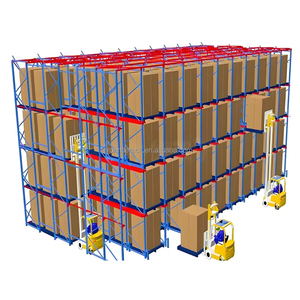
Drive-In Pallet Racking Heavy Duty Warehouse Storage Rack High Density Industrial Storage System Customized
Send an Inquiry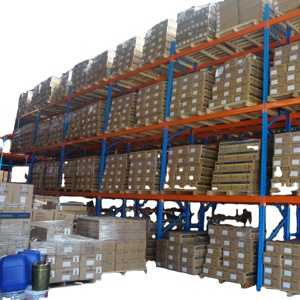
China Manufacturer Heavy Duty Warehouse Shelving/Storage Pallet Rack /Selective Heavy Duty Racking System
Send an Inquiry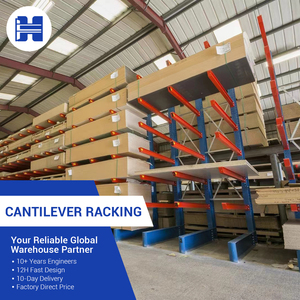
Why Source Pallet Racking Direct from SolidFort China
Combining structural integrity, advanced metallurgical engineering, and factory-direct pricing to power modern logistics nodes globally.
Structural Steel Rigidity (Q235B & Q355B)
Utilizing high-yield certified cold-rolled coil steel. Precision roll-forming ensures upright columns and step beams exhibit exceptional strength-to-weight ratios and strict deflection limits ($L/180$).
Triple-Standard Global Compliance
Engineered strictly aligned with Australia’s AS4084:2023, America's RMI (ANSI MH16.1), and Europe's FEM 10.2.02. Backed by full seismic calculations and certified load application plaque design.
Automated Direct Manufacturing
In-house continuous roll-forming lines, automated robotic welding stations, and zero-emission electrostatic powder coating systems enable a fast 10–15 day turnaround on standard orders.
Comprehensive Engineering Guide: Navigating Industrial FIFO Pallet Racking Sourcing in China
In modern industrial logistics, cold-chain operations, e-commerce fulfillment centers, and high-throughput manufacturing distribution nodes, floor area utilization and inventory control dynamics govern profitability. Material handling engineers and procurement directors globally face the double challenge of scaling cubic storage density while retaining strict control over stock rotation. Among the foundational inventory paradigms, First-In, First-Out (FIFO) material handling represents the benchmark strategy for perishable goods, date-sensitive pharmaceuticals, high-turnover FMCG (Fast-Moving Consumer Goods), and component sub-assemblies.
Sourcing high-density FIFO pallet racking systems directly from qualified Chinese manufacturing hubs like SolidFort Storage Equipment Co., Ltd. (operating out of a 30,000㎡ production facility in Tongan District, Xiamen, China) provides international enterprises with a competitive advantage. This white paper breaks down structural mechanics, system selection matrices, global compliance standards (AS4084-2023, RMI ANSI MH16.1, FEM 10.2.02), future automated warehouse trends, and total cost of ownership (TCO) considerations.
1. The Mechanics of FIFO vs. LIFO Storage Paradigms
Before issuing requests for quotation (RFQs) to pallet rack manufacturers, warehouse architects must evaluate the operational trade-offs between FIFO (First-In, First-Out) and LIFO (Last-In, First-Out) configurations. The core operational differential dictates how pallets are loaded, picked, and rotated through the system profile.
First-In, First-Out (FIFO) Systems
Under FIFO management, the first pallet loaded into a dedicated lane or rack structure is the first pallet retrieved. This requires separate loading faces (replenishment side) and picking faces (discharge side). FIFO racking architectures prevent stock aging, eliminate manual pallet re-shuffling, and enforce absolute SKU batch traceabilities. Primary FIFO racking architectures include:
- Gravity Live Pallet Flow Racking: Utilizes inclined roller tracks (typically 3% to 4% gradient) with internal centrifugal speed controllers and magnetic brake rollers. Pallets travel via gravity from the loading aisle to the picking aisle.
- Automated 4-Way Radio Shuttle Racking: Employs self-propelled, low-profile robotic shuttles running on specialized dynamic channels. Shuttles navigate along X and Y axes to deposit and retrieve pallets, seamlessly operating under either FIFO or LIFO software configurations.
- Drive-Thru Racking: A structural variant of drive-in racking featuring open access on both ends, permitting forklifts to drive through the system structure to load from one side and retrieve from the opposite.
- Selective Pallet Racking: Offers 100% immediate selectivity to every pallet position. While cubic density is lower due to aisle requirements, FIFO handling is easily maintained by warehouse management software (WMS).
Last-In, First-Out (LIFO) Systems
Conversely, LIFO architectures utilize a single aisle for both loading and picking. The newest pallet loaded blocks access to older inventory until it is removed. LIFO systems—such as standard Drive-In Racking, Push-Back Racking (telescoping carts or inclination rails), and single-entry Shuttle Racks—deliver extreme space density but are unsuited for goods prone to decay, shelf-life expiration, or frequent design iteration changes.
| Racking Architecture | Inventory Flow | Cubic Density Utilization | SKU Selectivity % | Throughput Rate (Pallets/Hr) | Relative CAPEX / Pallet Position |
|---|---|---|---|---|---|
| Selective Pallet Rack | FIFO (WMS Managed) | 40% – 50% | 100% Selectivity | Very High (Direct Access) | Baseline ($50 – $100) |
| Gravity Live Flow Rack | Pure Mechanical FIFO | 75% – 85% | Medium (Lane Level) | High (Dedicated Aisles) | High ($180 – $320) |
| 4-Way Radio Shuttle | Software FIFO / LIFO | 80% – 90% | High (Programmed) | Extreme (Automated) | Advanced ($200 – $400) |
| Drive-Thru Rack | Structural FIFO | 70% – 80% | Low (Block Storage) | Moderate (Forklift Entry) | Low-Medium ($90 – $160) |
| Push-Back Rack | Strict LIFO | 65% – 75% | Medium (2-6 Deep) | Moderate-High | Medium ($120 – $220) |
| Drive-In Rack | Strict LIFO | 70% – 80% | Low (Block Storage) | Slow-Moderate | Low-Medium ($80 – $140) |
2. Structural Engineering & Metallurgical Specifications
Industrial pallet racking is an engineered steel structure subject to static loads, dynamic forklift impacts, frame eccentricities, and environmental seismic forces. Sourcing from a premier Chinese factory direct manufacturer requires thorough inspection of cold-roll profile geometries, steel grades, surface coatings, and connection mechanics.
Steel Grade Selection: Q235B vs. Q355B Structural Steel
The core structural integrity of heavy-duty pallet racking hinges on the yield strength ($f_y$) and ultimate tensile strength ($f_u$) of the raw strip steel:
- Q235B Cold-Rolled Steel: Equivalent to ASTM A36 or EN10025 S235JR. Yield strength $f_y \ge 235 \text{ MPa}$. Standard choice for horizontal step beams, box beams, and standard capacity upright frames where beam bending moment governs design.
- Q355B High-Strength Alloy Steel: Equivalent to ASTM A572 Grade 50 or EN10025 S355. Yield strength $f_y \ge 355 \text{ MPa}$. Utilized for heavily loaded upright columns (e.g., frame loads exceeding 15,000 kg), high-bay Automated Storage and Retrieval Systems (AS/RS), and seismic zone installation sites.
Upright Column Geometries & Cold-Roll Forming Precision
SolidFort utilizes multi-stage continuous roll-forming machines to shape open omega ($\Omega$) upright profiles featuring 8 to 13 structural bends. Additional cold-worked ribbing increases buckling resistance along both the major ($X-X$) and minor ($Y-Y$) axes. Column teardrop or teardrop-compatible pitch patterns (e.g., 50mm, 75mm, 76.2mm or 3-inch pitch) enable toolless beam height adjustability.
Surface Protection: Electrostatic Powder Coating vs. Galvanization
To prevent oxidation, wear, and steel degradation in various storage climates, SolidFort applies a strict surface treatment process:
- Pre-treatment: 9-stage automatic chemical washing, degreasing, rust removal, and zinc-phosphating pretreatment.
- Electrostatic Powder Coating: Thermosetting epoxy-polyester powder applied electrostatically and cured at 180°C–200°C. Standard coating thickness ranges from 60 to 90 microns, providing impact resistance and smooth aesthetic finishes.
- Hot-Dip Galvanizing (HDG): Required for outdoor installations, high-humidity processing facilities, or corrosive cold-room environments (-25°C). Immersing raw steel into molten zinc at ~450°C forms a protective iron-zinc alloy layer exceeding 60–80 microns, giving decades of corrosion protection.
3. Global Racking Standards & Regulatory Compliance
When importing structural steel racking systems into North America, Australia, or Europe, engineering teams must ensure compliance with regional structural building codes. Reputable Chinese suppliers provide full calculation packs verified against these standards:
Australian Standard AS4084:2023 (Steel Storage Racking)
Updated in 2023, AS4084 dictates stringent structural testing protocols for racking installed across Australia and New Zealand. Key requirements include non-linear frame stability analysis, strict limits on vertical frame out-of-plumbness ($\theta \le 1/200$), mandatory baseplate floor anchoring with chemical dynamic anchors, and high-visibility capacity plaques mounted on every racking run.
RMI ANSI MH16.1 (Specification for Industrial Steel Storage Racks)
Published by the Rack Manufacturers Institute (RMI) and recognized by the American National Standards Institute (ANSI), this specification governs US warehouse racking installations. It sets design rules for cold-formed steel structural members, frame bracing stability, column baseplate sizing, and seismic resistance factors under ASCE 7 building codes.
European Standard FEM 10.2.02 / EN 15512
The Federation Européenne de la Manutention (FEM) 10.2.02 standard mandates advanced limit state design principles (LRFD). It incorporates global imperfections, beam end connector stiffness ($k_i$) testing, and lateral torsional buckling constraints to ensure high safety margins under peak working loads.
4. Future Sourcing & Tech Trends in Pallet Racking (2026–2030)
The industrial storage industry is undergoing a digital transformation driven by rising labor costs, land scarcity, and the expansion of automated logistics networks. Procurement managers sourcing from China must align their capital expenditure with these forward-looking trends:
1. Expansion of 4-Way Radio Shuttle Automation
While traditional 2-way radio shuttles move only forward and backward within a single lane, 4-Way Radio Shuttle Systems represent the next step in automated FIFO/LIFO high-density storage. Navigating across transverse channels via integrated lifting mechanisms, 4-Way shuttles communicate via 5G/Wi-Fi mesh networks with Warehouse Execution Systems (WES). They allow full 3D matrix movement, dynamically shifting lanes and levels via vertical lifters without human forklift entry.
2. Integration of Autonomous Mobile Robots (AMR) & AGVs
Rack structural designs are evolving to accommodate forklift-free environments. Low-level beam profiles are engineered with specialized guide rails, ground positioning targets, and wide-entry apertures tailored for Autonomous Mobile Robots (AMRs) and Automated Guided Vehicles (AGVs).
3. IoT Structural Health Monitoring & Smart Impact Sensors
Modern distribution centers are embedding micro-electro-mechanical impact sensors (MEMS) onto critical aisle upright columns. These IoT sensors monitor frame vibrations, detect dynamic forklift collisions in real time, and alert facility managers when structural deflection thresholds are exceeded, automating preventative maintenance.
4. Sustainable Green Manufacturing & Decarbonized Supply Chains
Top-tier Chinese suppliers are transitioning to green manufacturing lines powered by rooftop solar arrays, water-based degreasers, and closed-loop powder coating reclamation systems. International buyers now receive carbon footprint metrics per metric ton of fabricated rack, simplifying corporate Scope 3 emission reporting.
Frequently Asked Sourcing & Technical Questions
Direct technical answers from our structural engineering team to simplify your overseas procurement process.
Q: What is the realistic cost per pallet position when sourcing racking from China?
Material costs vary based on raw steel market index prices and system complexity. As a baseline reference for standard orders: Selective Pallet Racking averages USD $50 to $100 per pallet position; Drive-In / Drive-Thru Racking ranges from USD $80 to $140; Gravity FIFO Live Flow Racking ranges from USD $180 to $320; and Automated 4-Way Radio Shuttle Racking (including shuttle robotics) ranges from USD $200 to $400 per position. Final FOB/CIF pricing depends on vertical height, pallet load ratings, dynamic seismic factors, and surface finish (powder coat vs. HDG).
Q: Are pallet racks required to be anchored to the floor slab by law?
Yes. Under ANSI/RMI MH16.1, AS4084:2023, and FEM 10.2.02 standards, every baseplate of every rack column must be securely anchored to the concrete floor slab with tested anchor bolts (wedge mechanical anchors or chemical epoxy anchors). Floor anchoring prevents frame displacement caused by loading forces, resists uplift moments, and ensures structural stability during seismic events. Minimum concrete slab specifications (typically 150mm to 250mm thickness with 25–30 MPa compressive strength) must be verified prior to rack installation.
Q: How do engineers calculate allowable load capacity for upright frames and beams?
Load capacity calculations are divided into two structural parameters:
1) Beam Capacity: Calculated as a uniformly distributed load (UDL) based on the section modulus ($Z$) of the step/box beam profile and allowable bending deflection limits ($L/200$ or $L/180$).
2) Upright Frame Capacity: Upright frame capacity is not a static number; it decreases as the maximum unsupported vertical spacing between beam levels (unbraced length $L_k$) increases. Calculations account for total bay load, frame height, seismic zone factor, and forklift impact factors. Never estimate capacity—always refer to manufacturer Load Application & Rack Configuration (LARC) drawings.
Q: What is the standard lead time and container packing process for global export?
At SolidFort's 30,000㎡ Xiamen manufacturing plant, standard selective and drive-in racking orders ship within 10 to 15 days following drawing sign-off. Complex engineered projects or custom automated shuttle systems typically require 25 to 35 days. All structural steel components undergo specialized export packing: upright frames and beams are bundled with steel strapping, wrapped in protective bubble film, fitted with corner edge protectors, and loaded onto wood/steel pallets optimized for 40ft High Cube (40HC) sea containers to maximize freight volume and prevent transit damage.
Q: How do I determine whether FIFO or LIFO is right for my warehouse layout?
The choice depends on product shelf-life and SKU density. Select FIFO (First-In, First-Out) if you store food, beverages, pharmaceuticals, cold-chain perishables, or products with batch/serial expiration dates. FIFO ensures old inventory clears first. Select LIFO (Last-In, First-Out) if you store bulk homogeneous raw materials, construction products, or non-perishable goods with low SKU counts where maximizing cubic density takes priority over rotation tracking.
Q: Can SolidFort engineer custom racking profiles for non-standard pallets or unique loads?
Absolutely. While standard designs cater to GMA (40" x 48"), Euro (1200 x 800mm), and Australian (1165 x 1165mm) pallets, our in-house R&D engineering team routinely customizes beam spans, frame depths, roll-formed profile gauges, and specialized accessories (such as coil cradles, drum supports, wire mesh decking, cantilever arms, and drop-in pallet support bars) tailored to your exact payload geometries.
Optimize Your Warehouse Footprint Today
Get a free engineering consultation, custom CAD warehouse layout drawing, and factory-direct quotation within 24 hours.