Cold Storage & Heavy-Duty Pallet Racking Systems
Custom-engineered structural steel racks tested for extreme low-temperature stability (-30°C to -50°C).
Technical Whitepaper: Sub-Zero Engineering & Structural Metallurgy in Cold Storage Racking
Operating a cold storage or deep-freeze warehouse facility entails severe thermodynamic and mechanical challenges that ambient warehouse facilities never encounter. In environments maintaining temperatures from -18°C down to ultra-low blast freezing conditions of -30°C to -50°C, commercial-grade structural carbon steel undergoes physical structural transformations. As temperatures drop below the Ductile-to-Brittle Transition Temperature (DBTT), ordinary commercial steel (such as standard low-carbon cold-rolled sheet steel) experiences severe loss of impact toughness, increasing its susceptibility to micro-cracking and sudden brittle failure under forklift impact loads or cyclic loading.
As a leading OEM/ODM China freezer pallet racking manufacturer and exporter, SolidFort Storage Equipment Co., Ltd. addresses sub-zero structural vulnerability through advanced micro-alloy metallurgy, specialized thermomechanically controlled processing (TMCP), and anti-corrosive epoxy-polyester powder coating systems engineered to withstand continuous moisture condensation, thermal expansion/contraction cycles, and high-frequency pallet impacts.
Engineering Core Insight: In sub-zero freezer applications, column load ratings cannot rely on ambient yield strength specifications. SolidFort utilizes high-yield structural steel grades (such as Q355D and Q355E micro-alloyed structural steels) certified with high V-notch Charpy impact values down to -40°C in strict accordance with ISO 148-1 and EN 10025 structural steel standards.
Material Selection: Q235B vs. Q355D Steel in Low-Temperature Operations
Structural steel integrity hinges on the chemistry of the raw steel coil. The table below illustrates the metallurgical differences and mechanical parameters governing steel selection for ambient, refrigerated, and deep-freeze industrial racking systems manufactured by SolidFort:
| Operating Environment | Recommended Steel Grade | Yield Strength (fy) | Charpy V-Notch Impact Energy | Primary Failure Risk Mitigated |
|---|---|---|---|---|
| Ambient (15°C to 40°C) | Q235B Structural Carbon Steel | ≥ 235 MPa | 27 Joules at +20°C | General Yielding & Flexural Buckling |
| Chilled / Cool Room (0°C to 10°C) | Q355B / High-Strength Low-Alloy | ≥ 355 MPa | 27 Joules at 0°C | Cyclic Fatigue & Humidity Fluctuation |
| Freezer Storage (-18°C to -25°C) | Q355D Micro-Alloyed Steel | ≥ 355 MPa | 27 Joules at -20°C | Brittle Fracture & Micro-Cracking |
| Blast Freezing (-30°C to -50°C) | Q355E / EN 10025 S355NL | ≥ 355 MPa | 27 Joules at -40°C | Catastrophic Brittle Structural Collapse |
Surface Treatment & Anti-Corrosion Finishing in Cold Vaults
Freezer facilities experience moisture ingress during door openings, defrost cycles, and product transfers, leading to immediate frost deposition followed by condensation during maintenance warm-ups. Standard structural paint rapidly degrades, peels, and rusts under these humidity oscillations. SolidFort employs a multi-stage electrostatic thermosetting powder coating process consisting of:
- Automatic Zinc-Phosphate Pre-treatment: 9-stage degreasing and pickling to achieve superior surface etching and micro-roughness.
- Sub-Zero Formulated Epoxy-Polyester Powder Coating: Applied at a uniform dry film thickness (DFT) of 80–110 microns to preserve film elasticity down to -40°C.
- Hot-Dip Galvanizing (HDG) Option: For severe-humidity cold environments, components undergo hot-dip galvanizing to ASTM A123 standards, delivering a protective zinc barrier exceeding 65–85 microns for lifetime corrosion defense.
Key Engineering Advantages of SolidFort Racking Systems
Custom structural engineering tailored to maximum cubic density, structural safety, and high operational throughput.
FEA Structural Optimization
Finite Element Analysis (FEA) computer simulations model static dead loads, dynamic forklift impacts, and seismic movement under localized cold room temperature gradients to ensure dynamic stability.
High-Density Storage Systems
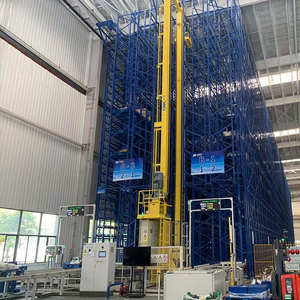
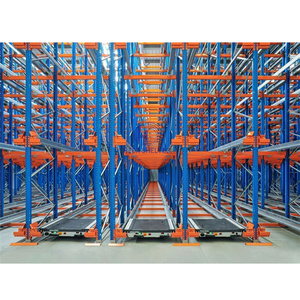
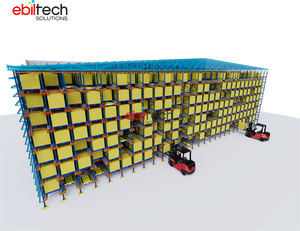
Maximize thermal power efficiency per pallet position using semi-automated Radio Shuttle, Drive-In, Push-Back, and 4-Way AS/RS high-density layouts engineered specifically for freezer rooms.
Global Compliance Certified
Manufactured under ISO 9001:2015 quality control, fully compliant with Australian Standard AS4084-2012, US RMI (ANSI MH16.1), European FEM 10.2.02, and CE safety directives.
Future Procurement & Technological Trends in Cold Storage Racking (2025–2030)
Cold chain logistics operations worldwide are facing skyrocketing refrigeration electricity tariffs, rising urban industrial land costs, and severe labor shortages in sub-zero working environments. Procurement managers, logistics engineers, and warehouse directors must evaluate several transformative structural trends when investing in new freezer racking infrastructure:
1. Transition from Manual Forklift Access to Automated Shuttle & ASRS Vaults
Traditional selective pallet racking requires wide working aisles (typically 3.0 to 3.5 meters), resulting in lower space utilization where up to 60% of the refrigerated volume is occupied by empty air aisles. In modern cold storage design, single-deep selective racking is rapidly giving way to Semi-Automated Radio Shuttle Systems and Fully Automated Storage and Retrieval Systems (AS/RS). By using automated stacker cranes or 4-way shuttles operating in dense storage tunnels, working aisles are virtually eliminated, increasing pallet density by 80% to 150% within the exact same structural footprint.
2. Thermal Efficiency Optimization & Cubic Energy Metrics
Modern ESG (Environmental, Social, and Governance) compliance standards mandate measuring warehouse operational efficiency by Kilowatt-Hours (kWh) consumed per pallet position per year. High-density rack configurations directly minimize the internal cubic volume of the cold vault that requires active cooling, reducing overall refrigeration power consumption by up to 35-45%. Furthermore, rack-clad building structures—where structural racking uprights serve as the primary load-bearing frame holding insulated sandwich panels—are gaining rapid adoption due to their speed of construction and optimized thermal envelope performance.
3. Integration of Structural Health Monitoring (SHM) & IoT Sensors
Because structural inspection inside -30°C cold rooms is physically demanding for maintenance personnel, smart racking systems are now incorporating wireless vibration, strain, and tilt sensors. Mounted directly on critical upright frames and load-bearing beam connectors, these low-power IoT sensors monitor structural deflection, detecting micro-deformations or unrecorded forklift impacts in real-time before structural failure occurs.
Enterprise Superiority: Why Global Cold Chain Buyers Partner with SolidFort
SolidFort Storage Equipment Co., Ltd. operates a modernized 30,000 square-meter production complex in Tongan District, Xiamen, China. Backed by over a decade of dedicated manufacturing experience, SolidFort provides high-performance warehouse racking solutions to over 53 countries across North America, Europe, Australia, the Middle East, and Southeast Asia.
Advanced Production Facilities
Equipped with automatic continuous roll-forming lines, robotic CNC welding stations, laser beam profiling machines, and an automatic electrostatic powder coating line capable of processing high-volume export orders with tight manufacturing tolerances.
Engineering & Design Autonomy
Our in-house engineering team provides complete 2D warehouse CAD layout schematics, 3D structural modeling, load application calculations, and structural safety documentation prior to production start, ensuring zero error during on-site installation.
Stringent Quality Assurance Protocols
Every batch of raw steel coils entering our facility undergoes ultrasonic flaw detection, chemical composition analysis, and tensile strength testing. Finished racking components undergo rigid dimensional checks, powder coat adhesion cross-hatch testing (ISO 2409), and salt spray corrosion tests (ASTM B117) to guarantee long-term performance under harsh freezer room conditions.
Frequently Asked Questions for Cold Room Pallet Racking
Expert answers from SolidFort's chief structural engineers on cold chain racking selection, safety compliance, and logistics procurement.
What structural adjustments are necessary when installing pallet racking in a freezer (-20°C to -30°C)?
How does pallet racking cost per pallet position vary between Selective, Drive-In, and Radio Shuttle systems?
Are SolidFort racking systems certified for international building codes and seismic zones?
What is the standard manufacturing lead time and container shipping protocol for international orders?
How often should cold storage racking systems be inspected for structural safety?
Can wire mesh decking or steel decking be used inside cold storage freezer rooms?
Optimize Your Cold Storage Facility with Factory-Direct Engineering
Connect with SolidFort's senior structural racking engineers today to receive a comprehensive CAD layout plan, structural load calculations, and an instant factory quote.
Get a Quote