High Density Pallet Racking Systems & Solutions
Explore heavy-duty storage configurations custom-engineered for maximum cubic space utilization, cold storage compliance, and heavy industrial load profiles.
China Sourcing Whitepaper: Selecting High Density Pallet Racking Factories
Modern industrial supply chains face unprecedented pressure regarding real estate costs, SKU density optimization, and operational efficiency. In response, global procurement managers, 3PL logistics architects, and facility directors increasingly look to China for high density pallet racking factories capable of delivering enterprise-grade structural steel storage systems. SolidFort Storage Equipment Co., Ltd. stands at the forefront of this industrial manufacturing sector, operating a state-of-the-art 30,000 square meter plant located in Tongan Park, Tongan District, Xiamen, Fujian Province, China.
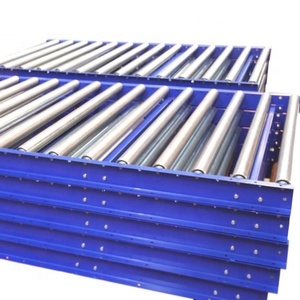
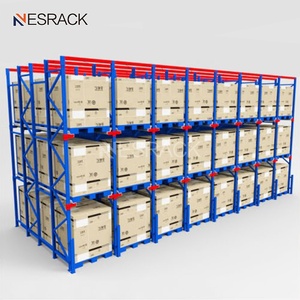
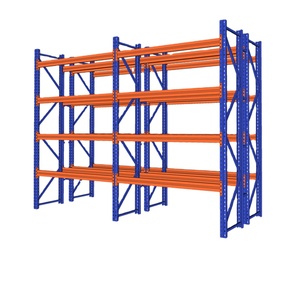
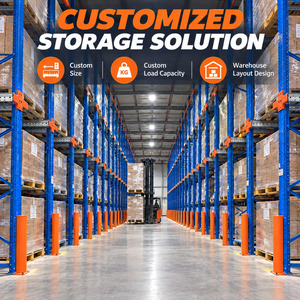
When evaluating high density storage racking suppliers, structural integrity, material provenance, and compliance with international engineering design codes are paramount. Unlike standard selective racking systems that prioritize 100% immediate SKU accessibility at the expense of footprint efficiency, high density racking systems—including Drive-In/Drive-Thru, Radio Shuttle (2-Way and 4-Way AS/RS), Push-Back, and Pallet Flow Gravity Racking—eliminate operational aisles to push volumetric storage utilization up to 85% of total warehouse capacity.
Information Gain Engineering Note: Transitioning a 5,000-pallet facility from standard selective racking (3.0m aisle width requirement) to a radio shuttle high density system can reduce footprint requirements by 42% while lowering operational HVAC energy costs in cold storage facilities by up to 35%.
Why Tier-1 Importers Partner with SolidFort Storage Equipment Co., Ltd.
Founded in 2016, SolidFort has established a robust track record exporting high density heavy-duty pallet rack systems to over 53 countries across North America, Australia, Europe, the Middle East, and Southeast Asia. Manufacturing excellence at our Xiamen production base is backed by an ISO 9001 quality management framework and strict engineering design basis adherence:
- Certified Structural Engineering Compliance: Structural design and load application calculations reference key international benchmarks, including Australia's AS 4084:2023 (Steel Storage Racking), the US Rack Manufacturers Institute code ANSI MH16.1 (RMI), European standard FEM 10.2.02 / EN 15512, and CE compliance documentation.
- Raw Material Integrity: We utilize prime structural cold-rolled steel grades Q235B and high-yield Q355B (equivalent to ASTM A36 and Grade 50) sourced directly from premier steel mills (Baosteel, Shougang Group). Certificates of mill test reports (MTR) verifying chemical composition and yield strength are supplied with every export shipment.
- Advanced Roll-Forming & Robotic Fabrication: Operating 16 continuous cold roll-forming lines, automated laser tube profiling, multi-station punching presses, and robotic MIG welding cells ensures dimensional tolerances within ±0.5mm across frame heights exceeding 12 meters.
- Durable Surface Protection: Automated 8-stage pre-treatment wash combined with heavy-duty electrostatic thermosetting epoxy-polyester powder coating guarantees coating adhesion and salt-spray resistance, essential for ambient warehouses, humid tropical installations, and sub-zero cold storage facilities down to -30°C.
High Density Racking System Technical Advantages
Advanced structural modeling, customized seismic design, and automated component integration.
High Volumetric Ratio
Maximizes cubic storage volume by reducing aisle space, doubling storage capacity per square meter of expensive industrial real estate.
Seismic Load Engineering
Columns, heavy-duty floor anchor plates, and diagonal bracing frames engineered using Finite Element Analysis (FEA) to withstand high seismic zone acceleration forces.
Cold Store Optimization
Specialized low-temperature steel formulations (Q355E) resist embrittlement in deep-freeze environments, maximizing density in high-energy consumption zones.
Custom Load Profiling
Bespoke beam profiles (box beams, step beams, structural channel beams) designed specifically around pallet dimensions (GMA, Euro, ISO, Australian standard pallets).
Rapid Assembly System
Precision-punched teardrop, diamond, or omega upright patterns combined with safety locking pins ensure fast, error-free field erection and beam level adjustment.
Export Logistics Efficiency
Custom steel packaging racks, corner protection, and optimized container loading plans maximize freight utilization and protect powder-coated finishes during oceanic transit.
Selecting the Optimal High-Density System Architecture
Engineers and buyers must match operational inventory flow (FIFO vs. LIFO), SKU throughput, forklift operator skill levels, and capital investment budgets with the right high-density storage rack design. The table below summarizes key structural characteristics:
| Racking Architecture | Space Efficiency | Inventory Flow | Max Pallet Depth | Forklift Risk | Target Applications |
|---|---|---|---|---|---|
| Drive-In / Drive-Thru | Very High (75-85%) | LIFO (Drive-In) / FIFO (Drive-Thru) | Up to 10+ Deep | Moderate to High | Homogeneous bulk goods, seasonal storage, cold rooms |
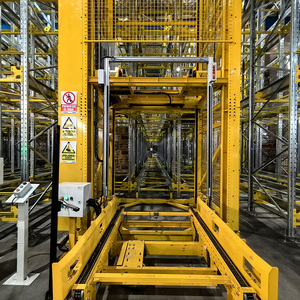
| Radio Shuttle System | Ultra High (85%+) | FIFO or LIFO Selectable | Up to 40+ Deep | Very Low | Food & Beverage, 3PL centers, high-volume automated warehouse |
| Push-Back Racking | High (70-75%) | Strict LIFO | 2 to 6 Deep | Low | Medium SKU velocity, staging areas, distribution centers |
| Pallet Flow (Gravity) | High (75-80%) | Strict FIFO | 2 to 20 Deep | Low | Perishable commodities, pharmaceuticals, manufacturing buffering |
| 4-Way Automated AS/RS | Maximum (90%+) | Fully Automated Dynamic | Variable / Matrix | Zero (Automated) | Lights-out automated factories, dark warehouses, smart cold chain |
Future Trends in High-Density Pallet Racking Sourcing
1. Widespread Adoption of Autonomous 4-Way Radio Shuttles
While traditional 2-way radio shuttles travel only along a single longitudinal channel, 4-way shuttle technology represents the next paradigm shift in high density warehouse racking. Modern 4-way shuttles can change lanes vertically and horizontally via intelligent elevator lifts. China's top racking factories are increasingly integrating precise rack manufacturing tolerances (±1.0mm cumulative tolerance across 50-meter runs) required to ensure seamless 4-way robot travel, positioning sensors, and automated busbar power charging rails.
2. Transition to Ultra-High Tensile Cold-Formed Steel
With raw material steel prices fluctuating globally, structural engineering in high density rack factories is shifting toward micro-alloyed, cold-formed high-tensile steels. By utilizing structural steels with yield strengths exceeding 420–550 MPa, rack designers can reduce overall rack component deadweight without sacrificing uniform distributed load (UDL) ratings or flexural rigidity. This decrease in total steel mass yields lower freight costs per pallet position while supporting environmental sustainability initiatives.
3. IoT Integration and Structural Health Monitoring
Forklift impact damage remains the leading cause of rack collapse in high density drive-in storage installations. Sourcing trends reveal growing demand for intelligent racking systems equipped with embedded IoT impact sensors, strain gauges, and optical deflection monitoring. SolidFort collaborates with system integrators to supply custom upright guards and structural columns pre-fitted with mounting points for early warning rack monitoring telemetry.
4. Demand for Modular, Boltless Hybrid Racking Configurations
Global supply chain volatility requires warehouse facilities to adapt quickly. Standard welded structural drive-in channels are progressively being replaced by heavy-duty boltless modular assemblies. Fully adjustable beam levels, clip-in guide rail supports, and standardized component geometry allow warehouse managers to reconfigure pallet lane depths and beam clear heights without requiring major structural demolition.
Frequently Asked Questions (FAQ)
Essential structural, financial, and logistical insights for buyers importing high density pallet racking from China.
What is the typical cost per pallet position for high density racking?
Cost varies based on raw steel market indices, rack height, load capacity per pallet, and system automation. Standard selective pallet racking averages USD 50–100 per pallet position. High density systems such as Drive-In or Push-Back racking range between USD 100–250 per position, while fully automated Radio Shuttle racking or AS/RS structures range from USD 200–450+ per position (excluding shuttle robotics). Direct manufacturer pricing from China provides substantial cost savings on large-scale projects exceeding 2,000 pallet positions.
Do high density pallet racks require concrete slab anchoring and specialized foundations?
Yes. Compliance with ANSI/RMI MH16.1, AS 4084, and FEM standards mandates that every rack upright column must be securely anchored to a concrete slab using approved wedge or chemical anchors. Anchor diameter (typically M12 to M16) and embedment depth depend on slab thickness (typically minimum 150mm–250mm, 28-day compressive strength ≥ 25–30 MPa) and seismic zone acceleration factors specified by local structural engineers.
How is the load capacity of high density pallet racking calculated?
Capacity is governed by two critical calculations: beam pair capacity (uniform distributed load / UDL) and frame column buckling capacity. Upright frame load-carrying capacity is not fixed; it decreases significantly as unbraced vertical beam spacing increases. Designers use Finite Element Analysis (FEA) modeling and physical destructive testing to generate Load Application and Rack Configuration (LARC) drawings and official capacity plaques supplied with each system.
What are standard dimensions for high density pallet racking components?
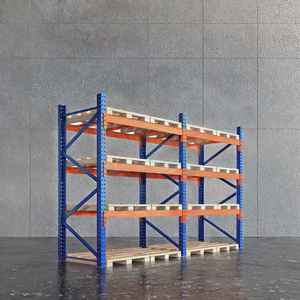
For standard 40" x 48" GMA or 1200mm x 1000mm Euro pallets, frame depths typically range from 900mm to 1100mm, while beam lengths for 2-pallet bays measure 2300mm to 2700mm clear span. Upright heights range from 3,000mm up to 15,000mm. SolidFort custom fabricates frame profiles (80mm, 90mm, 100mm, 120mm, 140mm column face widths) and beam sections tailored to specific client storage requirements.
How often should industrial pallet racking undergo structural inspection?
Formal structural racking inspections by a qualified racking engineer should take place at least once every 12 months in accordance with AS 4084 and EN 15635 guidelines. Furthermore, warehouse operations personnel should execute weekly visual safety checks. Any bay exhibiting column deformation exceeding allowable tolerances (e.g., 3mm bend over a 1000mm length) must be immediately unloaded and isolated until replacement components are installed.
What production lead times and shipping terms does SolidFort support?
Standard racking order manufacturing is completed within 10 to 15 days. Complex engineered project orders (including bespoke radio shuttle systems or hot-dip galvanized finishes) typically ship within 25 to 30 days from layout approval. SolidFort supports FOB (Xiamen Port), CIF, CFR, and turnkey DDP (Delivered Duty Paid) shipping terms, providing complete container loading drawings to ensure safe sea transport.
Can China high density racking factories accommodate OEM and ODM structural customization?
Yes. SolidFort specializes in OEM and ODM structural rack fabrication. Our engineering team converts customer CAD drawings, floor plans, and material specifications into structural production files, providing custom beam profiles, special baseplates, seismic ties, and custom color powder coating matching corporate brand palettes.
Transform Your Warehouse Storage Density Today
Connect directly with SolidFort's structural engineering team for a complimentary CAD warehouse layout design, load capacity calculation, and direct factory price quote.