Featured Industrial Multi-Level & High-Density Racking Systems
Direct-from-factory engineered solutions manufactured under strict compliance with AS4084-2012, RMI (ANSI MH16.1), and FEM 10.2.02 international standards.
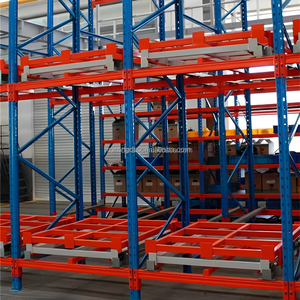
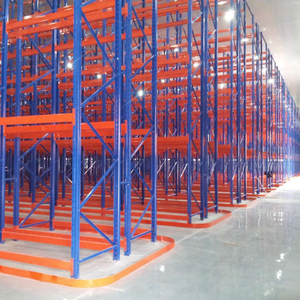
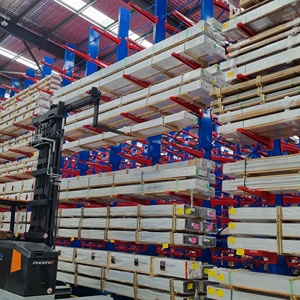
SolidFort Manufacturing Superiority & Global Footprint
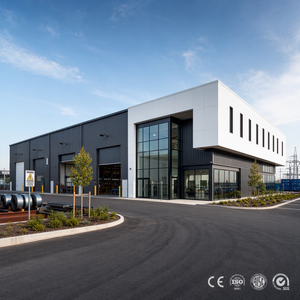
Operating out of a modern 30,000㎡ manufacturing complex in Tongan District, Xiamen, SolidFort Storage Equipment Co., Ltd. has established itself as an authoritative leader among China's top multi-level pallet racking factories. We bridge the gap between heavy industrial roll-forming execution and high-precision structural engineering.
Certified Structural Integrity
Every structural upright frame, step beam, and mezzanine decking profile is fabricated from high-yield cold-rolled steel (Q235B and Q355B grades). All calculations adhere rigorously to AS4084-2012, RMI (ANSI MH16.1), and FEM 10.2.02 design codes.
Turnkey Export Logistics
From custom CAD line layouts and structural Finite Element Analysis (FEA) to container loading optimization, we quote transparent FOB, CIF, or door-to-door DDP terms with guaranteed lead times of 10 to 15 days for standard stock orders.
Full Customization & OEM Support
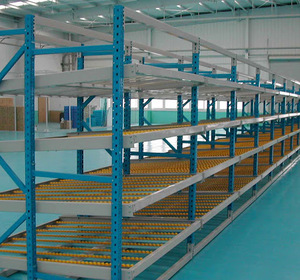
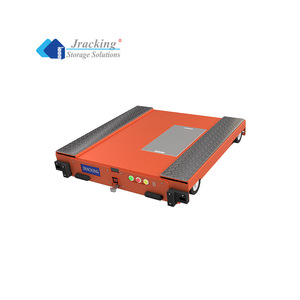
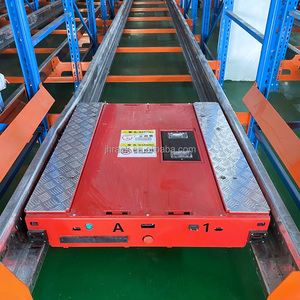
Whether configuring multi-tier pallet rack platform walkways, integrated carton flow tracks, seismic base plates, or automated shuttle guides, our engineering staff delivers custom component tooling with low minimum order quantities.
Engineering Whitepaper: Technical Architecture of Multi-Level Racking
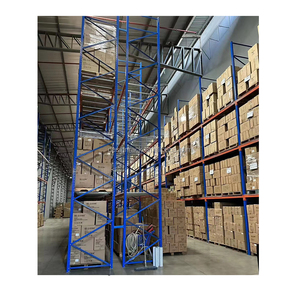
In modern supply chain engineering, maximizing cubic space utilization (Volumetric Efficiency) is paramount. Multi-level pallet racking—encompassing rack-supported mezzanines, tiered picking structures, and high-bay VNA architectures—allows fulfillment centers to expand upward without increasing their physical real estate footprint.
Key Structural Components & Load Vector Dynamics
Multi-level storage structures transform vertical air space into usable floor area. Unlike single-tier selective racking, multi-tiered systems transfer combined dead loads (structural steel, steel mesh decks, walkway grating) and live loads (operators, pallet jacks, inventory stock, dynamic impact forces) vertically to the building slab.
- Cold-Formed Upright Profiles: Engineered with 80mm to 140mm face widths, utilizing continuous teardrop or omega slotting. Cold-rolling Q355B steel yields structural stability under high axial buckling loads.
- Interlocking Step Beams: Heavy-duty roll-formed profiles featuring 3-hook or 4-hook connector brackets with automatic safety locks, mitigating dynamic uplift caused by forklift maneuvering.
- Structural Walkway Joists & Floor Decking: Option of perforated anti-skid steel plates, heavy-duty wire mesh decking, or high-density timber decking supported by secondary steel structural purlins.
- Cross-Bracing & Portal Frames: Diagonal and horizontal frame bracing paired with top portal ties to absorb lateral sway, wind loads (for external systems), and seismic shear forces ($S_d$ coefficients).
Technical Specification Matrix: Single-Tier vs. Multi-Level Racking
| Performance Metric | Selective Pallet Racks | Multi-Level Rack Mezzanine | Automated Radio Shuttle Racking | Very Narrow Aisle (VNA) |
|---|---|---|---|---|
| Volumetric Space Utilization | 40% – 50% | 75% – 85% | 80% – 90% | 65% – 75% |
| Selectivity (Direct Access) | 100% | 100% (Manual Tier Levels) | LIFO / FIFO Bulk Stock | 100% |
| Maximum Clear Height | Up to 12 Meters | Up to 15 Meters (3–4 Tiers) | Up to 25 Meters | Up to 18 Meters |
| Typical Beam Load Capacity | 1,000 – 4,000 kg / Pair | 300 – 1,000 kg / m² (Decking) | 1,500 kg / Pallet Position | 1,000 – 3,500 kg / Pair |
| Forklift Aisle Requirement | 3.5 – 4.0 Meters | Integrated Staging & Stairways | 3.0 – 3.5 Meters (Front Only) | 1.6 – 1.8 Meters |
| Steel Grade & Finish | Q235B Epoxy Powder Coat | Q355B Structural + Hot-Dip Galv. | Q235B / Q355B Precision Rails | Q355B Cold-Formed High Strength |
Future Procurement Trends for Multi-Level & High-Density Systems
As global logistics shifts toward automated fulfillment and micro-distribution centers, procurement managers and project integrators are adjusting their sourcing strategies. Sourcing directly from top Chinese racking manufacturers provides strategic advantages:
1. Shift Toward Hybrid Shuttle-Mezzanine Architectures
Modern procurement is moving away from purely manual static shelving toward hybrid systems. Facilities combine multi-level picking floors on lower tiers with automated 4-Way Radio Shuttle tracks on upper levels, achieving rapid split-case picking and dense bulk pallet storage under one roof.
2. Stringent Sustainability & Decarbonized Coating
Global brands demand compliance with strict environmental standards. Leading factories utilize non-toxic, TGIC-free electrostatic powder coatings with zero VOC emissions and partner with green steel mills producing low-carbon footprint cold-rolled coil steel.
3. Modular "Plug-and-Play" Pre-Engineered Kits
To lower costly on-site labor and minimize installation downtime, procurement managers are sourcing factory-pre-assembled frame trusses, snap-in floor joists, and boltless handrail connectors designed for quick site deployment.
4. Total Cost of Ownership (TCO) Prioritization
Initial purchase cost is no longer the sole decision metric. Structural durability, resistance to forklift impact, modular reconfigurability, and availability of standardized replacement parts dictate long-term project ROI.
Technological Development Trends in Industrial Pallet Racking
The industrial storage equipment sector is undergoing a technology-driven evolution. Racking is no longer passive steelwork; it is an active structural element within automated smart logistics ecosystems.
1. High-Strength Ultra-Thin Steel Profiling
Advances in cold-roll forming technology allow manufacturers to work with higher yield strength steels (Q355B and Q460 steel grades). By optimizing post geometry, ribbing, and stiffening flanges, structural engineers achieve higher load-bearing capacity while using less raw steel, reducing dead weight and freight costs.
2. AMR & AGV Interface Integration
As Autonomous Mobile Robots (AMRs) replace traditional forklift trucks, rack designs are incorporating precision floor-guided tracks, magnetic strip channels, and laser-reflective target points directly onto upright footplates and shelf levels.
3. Smart IoT Structural Health Monitoring
Next-generation multi-level racking systems can be retrofitted with wireless strain gauges, tilt sensors, and impact detection nodes. These IoT sensors alert warehouse managers instantly if an upright column experiences a severe forklift impact or structural overload beyond specified deflection limits ($L/200$).
Frequently Asked Procurement & Engineering Questions (FAQ)
Detailed technical guidance for warehouse managers, structural engineers, and global procurement teams.
Pricing depends heavily on system configuration, load specification, steel market pricing, and surface treatment. Standard Selective Pallet Racking typically ranges from USD $50 to $100 per pallet position. High-density storage solutions such as Push-Back or Drive-In Racking range from USD $100 to $250 per position. Automated systems like Radio Shuttle Racking typically range from USD $200 to $400+ per position (including shuttle shuttle cart units). Multi-tier rack mezzanines are calculated on a square-meter basis, typically averaging USD $80 to $180 / m² depending on floor loading capacity.
Yes, absolute anchoring is mandatory under international building codes (including ANSI/RMI MH16.1, AS4084-2012, and FEM guidelines). Every single upright post must be securely base-plated and anchored to the concrete floor slab using heavy-duty expansion or chemical anchor bolts (typically M10 to M16 anchor bolts). Anchoring prevents lateral displacement from forklift impacts, resists overturning moments under heavy top loads, and secures the structure against seismic ground motion.
Load capacity calculation is divided into two parameters:
1. Beam Capacity: The Uniformly Distributed Load (UDL) capacity per pair of beams, governed by maximum allowable deflection specs (typically capped at $L/200$, where $L$ is beam clear span length).
2. Upright Frame Capacity: Calculated based on total bay loading, unbraced vertical beam clearance height, and structural column section geometry. As vertical space between beam levels increases, overall frame load capacity decreases due to increased buckling length. Always refer to official Load Application and Rack Configuration (LARC) drawings provided by SolidFort engineers.
For standard North American GMA Pallets (40" × 48" / 1016mm × 1219mm), typical frame depth is 42 inches (1067mm), allowing a 3-inch pallet overhang front and back. Standard beam lengths are 96 inches (2438mm) for 2-pallet positions or 144 inches (3658mm) for 3-pallet positions.
For Euro Pallets (1200mm × 800mm or 1200mm × 1000mm), frame depth is usually engineered at 1100mm with beam lengths configured at 2700mm (holding 3 Euro pallets side-by-side).
To generate an accurate CAD layout and load matrix, please provide:
1. Architectural warehouse layout drawing (DWG or PDF) with building clear height, column spacing, and door locations.
2. Concrete slab thickness, compressive strength (e.g., 25-30 MPa), and rebar reinforcement data.
3. Pallet physical dimensions, including maximum loaded pallet height and maximum weight per pallet load.
4. Forklift specifications (minimum aisle turning radius, maximum mast reach height).
5. Local design standard compliance requirements (e.g., AS4084, RMI, FEM) and seismic rating zone.
Request a Custom Engineering Design & Direct Factory Quote
Connect directly with SolidFort's structural racking engineers. Receive complimentary CAD floor plan optimization, load calculations, and competitive factory-direct pricing within 24 hours.