High-Density Storage & Industrial Racking Systems
Precision-engineered cold-rolled steel racking systems manufactured in our 30,000㎡ Xiamen facility for worldwide distribution.
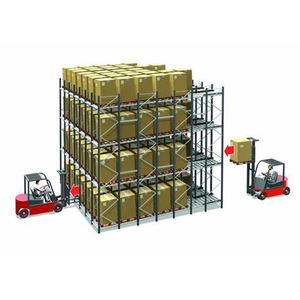
Warehouse High Density Gravity Roller Pallet Flow Racking
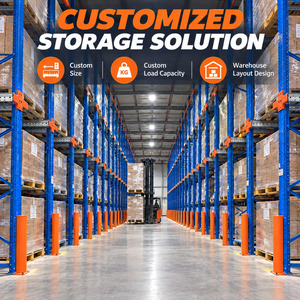
ODM OEM Q235 Steel Heavy Duty Coldroom Drive-In Through Pallet Racking
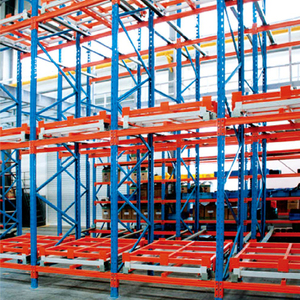
Custom 5 Layer Steel Push Back Racking System Heavy Duty Industrial Racks
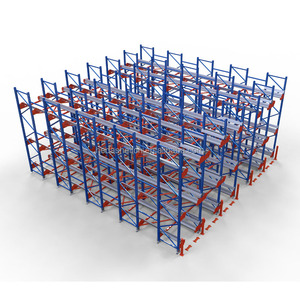
Heavy Duty Radio Shuttle Pallet Racking System for High-Density Storage
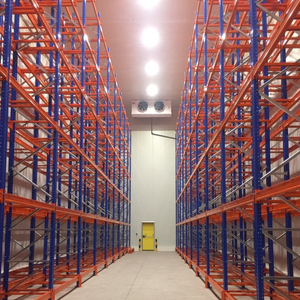
Double Deep Pallet Racking System for Dual Row Warehouse Configurations
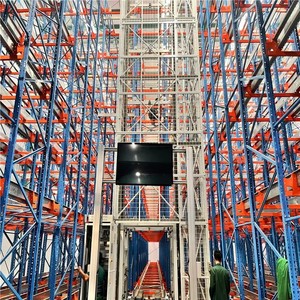
Intelligent Four-Way Steel Shuttle Rack System CE/ISO Certified Automated Racking
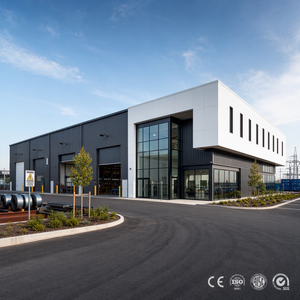
Customized Prefabricated Steel Structure Logistics Warehouse Storage Building
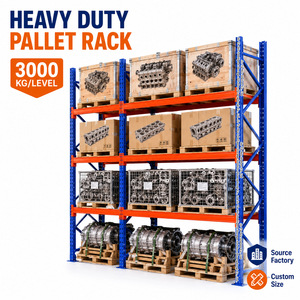
3000KG Heavy Duty Warehouse Shelf Rack 4 Levels For Pallet and Heavy Storage
Engineering Blueprint: Very Narrow Aisle (VNA) & High-Density Racking
An authoritative analysis of spatial optimization, load mechanics, structural integrity standards, and ROI metrics for global logistics hubs.
In modern industrial logistics, floor space represents one of the most significant recurring capital expenditures. As industrial land values across North America, Europe, Australia, and the Middle East continue to escalate, warehouse operators and supply chain executives must optimize cubic utilization rather than expanding physical building footprints. Very Narrow Aisle (VNA) Pallet Racking Systems represent the pinnacle of static warehouse density optimization, compressing operational aisle widths down to 1.5 to 1.8 meters—a stark reduction compared to standard selective racking aisles of 3.5 to 4.0 meters.
By transitioning from standard selective racking to VNA or semi-automated high-density architecture (such as Radio Shuttle or Gravity Flow systems), logistics managers can realize a 40% to 70% increase in usable pallet storage positions within the exact same structural envelope. However, implementing narrow aisle racking requires rigorous structural engineering, precise floor flatness adherence (FF/FL numbers per ASTM E1155 or DIN 15185), and specialized material handling equipment integration.
Aisle Width Compression
Reduces operating aisles from 3.8m to 1.6m using VNA turret trucks or wire-guided reach forklifts, releasing up to 45% floor footprint back into active storage.
Vertical Height Utilization
Engineered up to 16+ meters in height with ultra-stiff cold-rolled upright profiles to maximize high-bay clearance without structural sway or deflection.
100% SKU Selectivity
Unlike drive-in racking, VNA system architecture preserves absolute 100% direct access to every pallet position—ideal for high-SKU, rapid-turnover distribution operations.
SolidFort Storage Equipment Co., Ltd.
Operating out of a modern 30,000㎡ industrial facility in Tongan District, Xiamen, China, SolidFort has established itself as an engineering-driven OEM/ODM manufacturer of high-density steel pallet racking and automated warehouse storage structures. We don't just sell steel; we engineer fully certified structural solutions.
Structural Steel Compliance
Manufactured using high-tensile Q235B and Q355B cold-rolled structural steel. All engineering calculations strictly adhere to AS4084-2023 (Australian Standard), RMI ANSI MH16.1 (US Standard), and FEM 10.2.02 (European Code).
Surface Finishing & Durability
State-of-the-art automated electrostatic powder coating line applying 60–80μm thermosetting epoxy-polyester resin powder. Pre-treatment chemical bath ensures superior adhesion, scratch resistance, and cold-room anti-corrosion protection.
High-Density Storage System Architecture Comparison
Evaluate parameters across density, selectivity, forklift operational requirements, and structural investment ratios to match your operational intent.
| Racking System Type | Aisle Width (mm) | Floor Space Efficiency | SKU Selectivity | Stock Flow (FIFO/LIFO) | Structural Load Rating |
|---|---|---|---|---|---|
| Narrow Aisle (VNA) Racking | 1,500 – 1,800 | High (85%) | 100% Direct | FIFO or LIFO | Up to 4,500 kg / level |
| Radio Shuttle Racking | Building Dependent | Ultra-High (90%) | Batch / Deep Lane | FIFO & LIFO (Selectable) | 1,500 kg / pallet position |
| Drive-In / Drive-Thru Racking | Single Access Aisle | High (80%) | Low (Homogeneous) | LIFO (Drive-In) / FIFO (Drive-Thru) | 2,000 kg / pallet position |
| Push Back Racking System | Standard Forklift Aisle | Medium-High (75%) | Medium (2-6 Deep) | LIFO (Self-Dumping Carts) | 1,500 kg / cart level |
| Gravity Pallet Flow Racking | Loading & Unloading Aisles | High (85%) | Lane Selective | Strict FIFO (Gravity Rollers) | 1,200 kg / roller lane |
| 4-Way Automated Shuttle (AS/RS) | Zero Operational Aisles | Maximum (95%) | Software Controlled | Dynamic Intelligent FIFO/LIFO | 2,000 kg / dynamic shuttle |
Emerging Procurement Trends in Pallet Racking (2026–2030)
Key technological transformations driving capital expenditure decisions for global logistics managers, supply chain directors, and factory owners.
Convergence with Autonomous Mobile Robots (AMRs)
Traditional static racking is increasingly retrofit for AMR and 4-way shuttle integration. Future procurement heavily favors open-bottom beam profiles, guide-rail embedding, and high-precision laser-welded uprights that accommodate robotic positioning sensors.
Cold Chain & Cold Store High-Density Mandates
With global pharmaceutical and frozen food logistics expanding rapidly, the energy cost of cooling empty cubic space is unsustainable. Procurement is shifting towards Radio Shuttle and Drive-In Racking using specialized low-temperature alloy steel (Q355ND) engineered to withstand embrittlement down to -30°C.
Carbon-Neutral & Green Steel Sourcing
International buyers, particularly in North America and Western Europe, require environmental product declarations (EPD). Direct factory sourcing from manufacturers utilizing zero-emission powder coatings, recyclable packaging, and verified low-carbon steel mills is becoming a mandatory audit item.
From CAD Layout to Container Shipment: 5-Step Process
How SolidFort guarantees zero-error manufacturing and seamless installation for international engineering projects.
Requirement Audit
We collect warehouse architectural drawings, floor slab thickness data, forklift turn radii, and pallet load profiles.
Free 3D/CAD Engineering
Our structural engineers generate optimized CAD layouts, LARC (Load Application & Rack Configuration) drawings, and density calculations.
Precision Roll-Forming
Cold-roll forming of upright posts and step beams, automated CNC punching, robot welding, and thermosetting powder coat finish.
QC & Container Packing
Ultrasonic weld testing, paint thickness measurement, bundle strapping with corner protectors, and dense container loading plans.
Installation & Warranty
Comprehensive installation manuals, video walkthroughs, remote engineering support, and multi-year structural warranties.
Frequently Asked Questions by Industrial Buyers
In-depth technical answers regarding racking standards, load safety, pricing, and structural engineering.
What is the typical cost per pallet position for Narrow Aisle and High-Density Racking?
The baseline material cost for standard Selective Pallet Racking generally averages USD $45 to $85 per pallet position. For Very Narrow Aisle (VNA) systems, which require higher vertical tolerance and specialized guide rails (magnetic or steel floor angles), costs range between USD $60 and $110 per position. High-density semi-automated systems such as Radio Shuttle Racking or 4-Way Intelligent Shuttle Racking range from USD $120 to $250+ per pallet position, factoring in the specialized dynamic shuttle carts, charging docks, and heavy-duty structural steel profiles.
Why must pallet rack columns be anchored to the floor slab?
Under international structural mandates including ANSI/RMI MH16.1, AS4084-2023, and FEM 10.2.02, every single racking upright column baseplate must be securely anchored to the reinforced concrete floor slab using certified mechanical wedge anchors or chemical anchor bolts. Floor anchoring prevents frame displacement caused by forklift impact, resists uplift forces under wind or seismic loading, and ensures structural equilibrium under maximum beam deflection limits (typically L/200 or L/300).
How is the allowable load capacity of a pallet rack upright frame calculated?
Upright load capacity is not a static number stamped on a column; it is a variable function governed by the unbraced vertical distance between beam levels (also known as maximum beam elevation pitch). As the vertical distance between beam levels increases, the column's effective slenderness ratio increases, reducing its Euler buckling capacity. Load capacity calculations must account for uniformly distributed loads (UDL), seismic zone factors, frame depth, and column profile geometry (e.g., 80×60mm, 90×70mm, 100×70mm, or 120×95mm profiles with thicknesses from 1.5mm to 2.5mm).
What floor flatness standards are required for Very Narrow Aisle (VNA) racking?
Because VNA turret trucks operate at extreme lift heights (up to 16+ meters) within tight lateral tolerances, minor floor imperfections are amplified exponentially. VNA installations strictly require high floor flatness and levelness ratings. According to international standards, floors must conform to Super Flat (SF) standards per ACI 117, or achieve specific FF (Flatness) / FL (Levelness) values (typically FF 50 / FL 45 or higher) and comply with DIN 15185 or TR34 (VDMA) guidelines.
What is the lead time for factory-direct racking shipments from China?
SolidFort maintains an expansive raw steel coil inventory (Q235B and Q355B grades) at our Xiamen plant. Standard high-density pallet racking orders (5 to 15 container loads) have a manufacturing lead time of 10 to 15 business days. Complex, custom-engineered projects involving integrated automated shuttles, mezzanines, or heavy structural steel warehouses require approximately 25 to 30 days for full production, testing, electrostatic coating, and export container packing.
What compliance documentation is provided for international building permits?
We supply complete technical documentation required by municipal building inspectors and third-party safety auditors. This includes mill test certificates (MTC) verifying steel chemistry and tensile strength, certified CAD structural assembly drawings, Load Application & Rack Configuration (LARC) plaques, ISO9001/ISO14001 quality certificates, CE conformity certificates, and structural calculation reports compliant with AS4084, RMI, or FEM codes.
Optimize Your Warehouse Density Today
Send us your warehouse dimensions, ceiling clear height, pallet dimensions, and max load requirements. Our structural engineering team will deliver a complimentary 2D/3D CAD layout and detailed technical proposal within 24 hours.