Precision-Engineered Pallet Racking & Protection Systems
Explore our heavy-duty roll-formed selective pallet racks, heavy upright frame guards, and integrated safety barrier solutions manufactured in our 30,000㎡ ISO-certified facility.
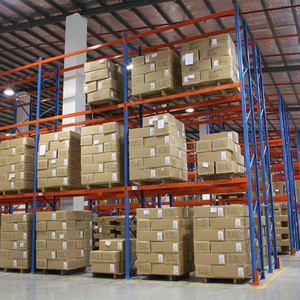
Reinforced Steel Selective Pallet Racking with Safety Guard for Project Warehouse
Send an Inquiry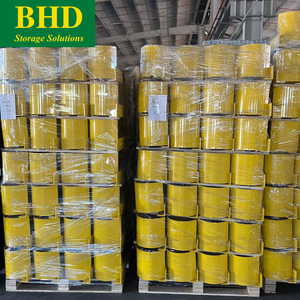
BHD Heavy Duty Foot Protection Barrier Pallet Rack Upright Frame Protector Security Barriers RAL1023
Send an Inquiry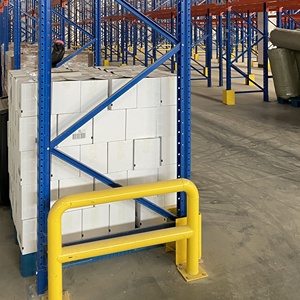
Heavy Duty Steel Pallet Rack Upright Frame Protector Stackable Safety Barrier for Warehouse Use
Send an Inquiry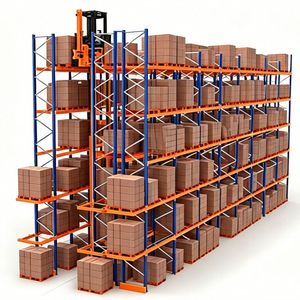
Professional Grade Heavy Duty 5-Layer Steel Powder Coated Storage Racking-Industrial Pallet System High Density
Send an Inquiry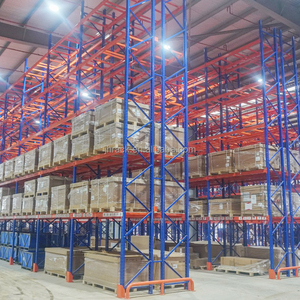
Heavy-Duty Corrosion Protected Pallet Racking Systems For Warehouse And Factory Storage
Send an Inquiry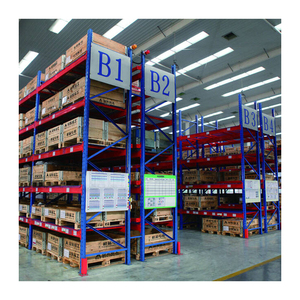
Industrial Pallet Racking System Spliced Steel Drop-Over Deck Panel Warehouse Storage Rack 2000kg Heavy Duty
Send an Inquiry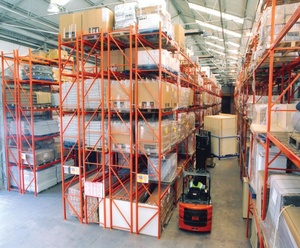
Double Deep Pallet Racking High Capacity Storage System Suitable for Reach Truck Forklift
Send an Inquiry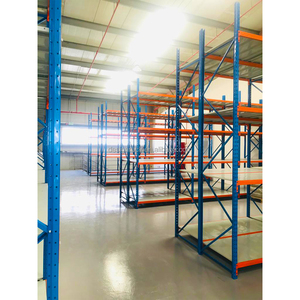
Adjustable Roll Formed Steel Beam Rack High Weight Capacity 5 Boltless Shelving Designed for Safe Palletized Storage
Send an InquiryIndustry Whitepaper: The Critical Mechanics of Pallet Racking & Integrated Safety Barriers
In modern industrial logistics and material handling facilities, continuous pallet throughput requires heavy-duty industrial storage racks operating at maximum vertical clearance. However, high-density storage environments inherently increase the structural risk associated with material handling equipment (MHE) collisions. Forklift truck impacts against unprotected rack upright frames represent over 85% of catastrophic warehouse structural failures globally. Consequently, evaluating China Best Pallet Racking With Safety Barriers Factories & Suppliers has evolved from a simple commodity sourcing task into a rigorous structural engineering audit.
Information Gain Engineering Benchmark: Under international safety standards including FEM 10.2.02, ANSI/RMI MH16.1, and AS4084-2012, an unshielded steel upright frame subjected to a lower-column impact from a 3.5-ton reach truck traveling at just 5 km/h suffers irreversible plastic deformation, reducing total frame axial load capacity by up to 60%.
1. Structural Anatomy of Heavy-Duty Pallet Racking Systems
Heavy-duty selective pallet racking consists of precision cold-rolled upright frames connected by interlocking horizontal step beams or box beams. Cold-formed high-tensile carbon steel profiles (Q235B and Q355B structural grades) provide the strength-to-weight ratio mandatory for high-bay storage reaching beyond 12 meters in height. The integrity of the racking assembly depends on three vital structural interactions:
Column Profile Geometry
Omega (Ω) and teardrop profile geometry with continuous ribbing increases the section radius of gyration, resisting local buckling under severe compressive loads.
Multi-Hook Beam Locks
5-hook cold-stamped connectors with safety lock pins prevent accidental dislodgement caused by upward forklift boom strikes during high-level pallet placement.
Impact Kinetic Dissipation
Heavy-duty column guards and tubular aisle end protectors absorb and redirect impact energy into the heavy concrete slab rather than transferring energy directly into column uprights.
2. Engineering Classification of Pallet Rack Safety Barriers
Safety barriers integrated into warehouse pallet racking systems serve as the first line of defense. Leading Chinese manufacturing plants engineer three distinct levels of protective barriers designed for specific vulnerable points inside distribution centers:
A. Column Foot Guard Protectors (Upright Protectors): Installed directly in front of individual aisle uprights, these U-shaped or L-shaped heavy steel shields (typically 4mm to 8mm thick Q235 steel) are anchored to the floor slab using M12/M16 chemical expansion bolts. Finished in safety RAL 1023 Traffic Yellow, they absorb low-level outrigger impacts from counterbalanced forklifts.
B. Heavy-Duty Aisle End Barriers (Frame Guards): Positioned at the intersection of main cross aisles and racking rows where forklift turning radius overlap is tightest. Constructed from continuous heavy structural steel channels or dual tubular beam profiles, these barriers prevent devastating side-swiping collisions that could cause entire rack row collapse.
C. Post-Mounted Rubber/Polymer Bumpers: Designed to clip onto the front column face, acting as energy-absorbing shock cushions that dissipate minor everyday bumps from pallet staging operations without adding floor footprint.
Enterprise Manufacturing Capabilities & Quality Assurance: The SolidFort Standard
When sourcing pallet racking with safety barriers direct from manufacturers in Xiamen, China, verified production infrastructure separates world-class OEM suppliers from standard trading agents. SolidFort Storage Equipment Co., Ltd. operates a specialized 30,000㎡ industrial manufacturing hub in Tongan District, Xiamen, housing continuous roll-forming production lines, fully automated robotic welding cells, and eco-friendly electrostatic thermosetting powder coating tunnels.
Certified Metallurgy & Material Traceability
Every batch of steel coil undergoes strict tensile strength verification. Standard uprights utilize cold-rolled steel with yield strengths meeting or exceeding 235 to 355 MPa, accompanied by Mill Test Certificates (MTC).
Automated Surface Pretreatment & Powder Coating
Automated 9-stage acid washing, phosphating, and electrostatic epoxy-polyester powder baking ensure a coating thickness of 60–90 microns, delivering high corrosion resistance suitable for cold storage environments (-30°C).
Free CAD & Finite Element Analysis (FEA)
In-house structural engineers conduct FEA simulations on custom rack configurations to verify stress distribution, seismic shear resistance, and structural stability before physical mass production.
By enforcing an ISO-certified quality management protocol across raw material procurement, roll-forming tolerances (within ±0.5mm accuracy), beam connector stamping, and container loading, factory-direct shipments maintain zero-defect standards for global logistics projects across Europe, North America, Australia, and the Middle East.
Global Procurement Trends: Future Insights for Pallet Racking & Barrier Systems (2025–2030)
Driven by rapid e-commerce expansion, automated warehouse integration, and strict occupational safety regulations, global procurement of pallet racking systems is undergoing four major technological shifts:
1. AGV/AMR Compatible Magnetic & Laser-Reflective Barriers: As automated guided vehicles (AGVs) and autonomous mobile robots (AMRs) replace manual forklifts in smart distribution centers, safety barriers are evolving. Next-generation barriers feature low-profile magnetic guide channels and non-glare yellow powder coatings designed to avoid interfering with optical LIDAR sensors while providing physical protection for low-height AGV drive tracks.
2. Smart IoT Impact-Sensing Safety Protectors: Strategic logistics operators are replacing passive steel guards with IoT-enabled smart frame guards equipped with tri-axial accelerometers. When a forklift collision occurs, embedded sensors instantly transmit real-time telemetry to warehouse management software (WMS), flagging the affected column for immediate structural inspection under EN 15635 protocol.
3. Steel-Polymer Hybrid Crash Protection Systems: Modern safety barriers increasingly adopt hybrid engineering. High-density polyethylene (HDPE) or polyurethane outer shells encase structural steel cores. The polymer shell flexes to absorb kinetic energy without permanently deforming during light bumps, while the internal steel core halts heavy high-speed impacts.
4. High-Yield Low-Alloy (HSLA) Steels for Carbon Reduction: Environmental mandates push top manufacturers in China to utilize thinner, higher-yield strength HSLA steels (S355/Q355). This reduces steel consumption per pallet position by 12–15% without sacrificing beam load capacities, directly supporting corporate ESG carbon-reduction goals.
Structural System Benchmarking Matrix
Selecting the optimal industrial storage framework requires balancing space utilization against operational accessibility and impact vulnerability. Below is an engineering comparison matrix designed for procurement directors:
| Racking System Type | Selectivity (%) | Storage Density | Forklift Impact Risk | Barrier Protection Priority | Optimal Industry Application |
|---|---|---|---|---|---|
| Selective Pallet Racking | 100% Direct Access | Standard (40-50%) | High (Aisle exposure) | Critical (Column Guards + End Barriers) | FMCG, Multi-SKU E-Commerce, 3PL Warehouses |
| Drive-In / Drive-Thru | Low (LIFO / FIFO) | Very High (up to 85%) | Extreme (Internal drive-in lanes) | Mandatory (Floor Guide Rails + Entry Guards) | Cold Storage, Beverage Bulk Stacking |
| Radio Shuttle Racking | Medium (High Volume) | Ultra High (85%+) | Low (Shuttle operates inside) | High (Entry Frame Protectors) | Food Production, Chemical Warehousing |
| Double Deep Racking | 50% Immediate Access | High (up to 65%) | Medium-High | High (Reinforced Base Plates + Guards) | High-Density General Logistics |
| Cantilever Racks | 100% for Long Loads | Medium | Medium (Long load swing) | Essential (Base Arm Protectors) | Lumber, Pipe, Extrusion & Sheet Steel Storage |
Procurement FAQ: Structural Engineering, Compliance & Sourcing
Direct technical answers to the most common questions raised by warehouse operations heads and procurement officers when sourcing racking systems from China factories.
Why are upright frame safety barriers mandatory for high-bay pallet racking installations?
Under ANSI/RMI MH16.1, FEM 10.2.02, and AS4084-2012 codes, rack uprights are engineered under axial compressive loads. Impact from a moving forklift causes localized buckling at the base section. Without heavy-duty steel safety barriers anchored directly into the concrete floor, a single column failure can cascade into an catastrophic collapse of adjacent bays.
How do Chinese factory standards align with AS4084, RMI ANSI MH16.1, and FEM 10.2.02?
Premier manufacturers like SolidFort design structural profiles in accordance with international cold-formed steel structural design codes. Mill test reports (MTC), certified steel grades (Q235B/Q355B), and load calculations guarantee that frame axial load metrics and beam deflection ratings (limited to L/200 under full load) equal or exceed Western regional standards.
What is the typical load capacity per pallet position for selective racking systems?
Standard selective pallet racking is engineered to support uniformly distributed loads (UDL) ranging from 1,000 kg (2,200 lbs) up to 4,500 kg (10,000 lbs) per pair of step or box beams. Upright frame total capacity depends heavily on vertical beam spacing (unbraced length), ranging from 8,000 kg to over 24,000 kg per frame assembly.
What is the standard lead time for factory-direct production and export shipping?
Standard order manufacturing lead time at our Xiamen production base ranges between 10 to 15 business days. Large custom-engineered projects requiring specialized roll forming or hot-dip galvanizing take approximately 30 days. Shipments are packed with container space optimization to reduce ocean freight expenses.
Do upright column guards need to be anchored into concrete slabs independently?
Yes. Heavy-duty column foot guards and aisle end protection barriers must be anchored into the concrete floor slab independently using mechanical wedge anchors or chemical anchors (embedment depth ≥ 80mm). This structural separation prevents impact forces from transmitting into the rack frame column.
Can safety barriers be retrofitted onto third-party existing warehouse racking?
Absolutely. Independent floor-anchored steel guards, wrap-around column protectors, and tubular aisle end frames are universally compatible across all standard pallet rack brands, including teardrop, Dexion, Speedlock, and Stow profiles, provided aisle clearance is maintained.
Partner with China’s Leading Storage Rack & Safety Barrier Manufacturer
Optimize your distribution center with engineered pallet racking systems, precision CAD layout designs, and heavy-duty protective barriers delivered direct from our Xiamen manufacturing center.