Featured Seismic-Resistant Racking Systems
Heavy-duty cold-formed structural steel racking certified to international seismic codes (AS4084, RMI ANSI MH16.1, FEM 10.2.02). Designed to absorb dynamic kinetic force and prevent collapse during high-magnitude earthquake events.
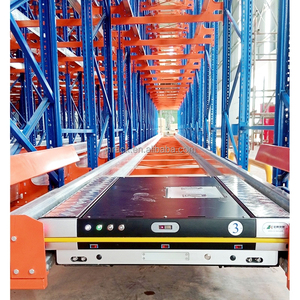
Customized High Density Storage LIFO Pallet Shuttle Racking Galvanized Warehouse Racks Series Pallet Radio-Shuttle Rack System
Automated radio shuttle system with integrated seismic bracing, hot-dip galvanized rails, and high-density deep-lane storage capacity.
Get Catalog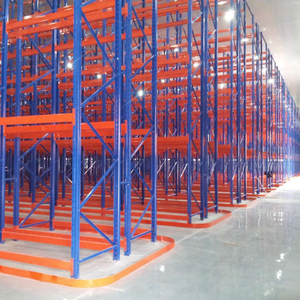
Stable Very Narrow Aisle Rack System for Palletized Cargo Warehousing with Seismic Resistant Structural Reinforcement
Ultra-tall VNA racking configuration with heavy-duty portal ties, high structural rigidity, and floor-anchored guide rails.
Get Catalog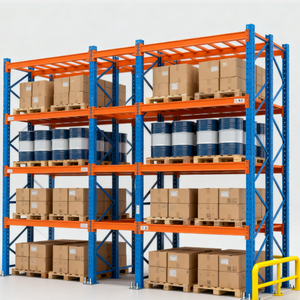
Factory-Direct Wholesale Rates Seismic-Resistant Pallet Rack Shelving Rack
Versatile selective pallet rack with reinforced teardrop or boxed upright frames engineered specifically for active earthquake zones.
Get Catalog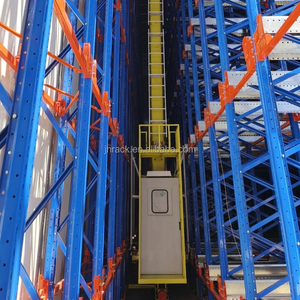
Intelligent ASRS Chain Pallet Conveyor System Industrial Automatic Pallet Racks Shelf Storage Warehouse Racking Systems
High-bay automated storage and retrieval system featuring rack-supported building structures calculated for extreme dynamic lateral loads.
Get Catalog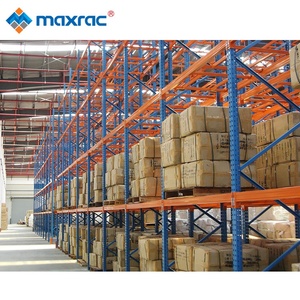
Maxrac Pallet Racking System Seismic Design
Engineered beam-to-column locking connectors combined with enlarged seismic baseplates for maximum uplift and shear displacement control.
Get Catalog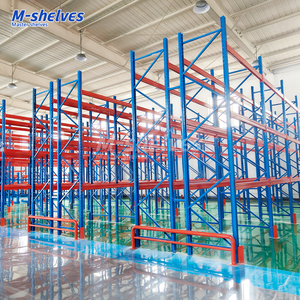
Warehouse Shelves Pallet Racking System Storage Heavy Duty Shelving Rack Pallet Racking Warehouse Racks
Heavy-duty industrial rack framing constructed from Q355B cold-rolled steel with custom safety pinning and lateral bracing nodes.
Get Catalog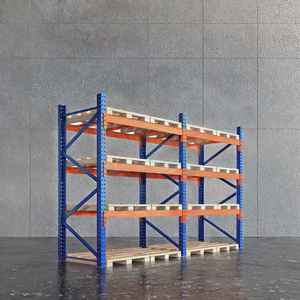
Seismic Resistant Stacking Beam Pallet Rack Professional Warehouse Pallet Racking System Heavy Duty Beam Racks
Multi-tier structural racking with high-moment connection clips, designed for dynamic load stabilization during ground accelerations.
Get Catalog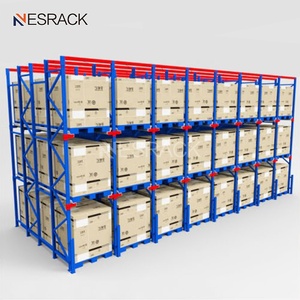
Drive-In Heavy Duty Steel Pallet Rack with 2000kg Load Capacity Seismic Reinforcement for Warehouse Storage
High-capacity drive-in storage racking featuring top horizontal X-bracing, back vertical framing, and 2,000 kg per pallet payload design.
Get CatalogWhy Seismic Engineering Matters in Modern Warehousing
Industrial pallet racks act as unrestrained elevated flexible structures during an earthquake. Standard static rack designs often suffer catastrophic shear failures, column buckling, or anchor pull-out when subjected to peak ground acceleration (PGA). China's leading exporters implement advanced finite element analysis (FEA) to guarantee operational continuity and life safety.
Ductile Framing & FEA Modeling
Custom-engineered cold-formed upright profiles using high-yield Q355B structural steel. FEA dynamic simulations verify energy dissipation without plastic hinge formation in primary load columns.
Global Code Compliance
Racking systems calculated strictly according to AS4084:2023 (Australia), RMI ANSI MH16.1 (USA), FEM 10.2.02 / Eurocode 8 (Europe), and ISO 16647 seismic loading specifications.
Reinforced Base Anchoring
Extended footplates featuring multi-anchor hole geometry to distribute tension and shear forces. Standardized post-installed chemical anchors ensure concrete slab embedment integrity.
Seismic Pallet Racking Design Methodology: Engineering Principles for Risk Mitigation
In high-seismic zones—such as the Pacific Rim of Fire, western North America, New Zealand, and parts of Southern Europe and South America—industrial pallet racking systems must withstand severe horizontal ground motions. Unlike conventional steel-frame buildings, selective pallet racking is characterized by high mass concentrated at upper levels, low natural damping, and semi-rigid beam-to-column moment connections.
When selecting a Chinese manufacturer or exporter for seismic-resistant storage systems, procurement managers and structural consultants must evaluate several key structural variables:
1. Spectral Acceleration ($S_{ds}$) & Response Modification Factors ($R$)
Seismic design forces are governed by peak ground acceleration and localized soil profile coefficients. According to ANSI/RMI MH16.1 and AS4084, racking calculations evaluate the seismic response factor ($R$), which reflects the system's ability to undergo inelastic deformation without collapsing. Standard unbraced rack frames usually utilize an $R$-value of 4.0 to 6.0 in the down-aisle direction depending on connection ductility, whereas cross-braced heavy-duty systems require precise structural stiffness balancing to prevent brittle weld shear.
2. Connection Rotational Stiffness & Beam Locking Hooks
The beam-to-column connector is the critical damping mechanism in down-aisle rack dynamics. Under lateral cyclic loading, the hook-and-slot engagement acts as a semi-rigid joint. High-quality Chinese seismic racks incorporate multi-tooth forged beam end-connectors with heavy-gauge safety locks. This design maximizes rotational stiffness while permitting controlled micro-yield flexure, absorbing kinetic seismic wave energy without tearing column walls.
Seismic Performance Characteristics Across Racking Typologies
Structural comparison of industrial storage formats operating under high peak ground acceleration (PGA ≥ 0.3g):
| Racking System Type | Seismic Risk Level | Primary Bracing Mechanism | Max Height Limit | Structural Ductility Index |
|---|---|---|---|---|
| Selective Pallet Racking | Low–Medium | Semi-rigid connectors + Floor anchors | 12.5 Meters | High (Good flexural yield) |
| Drive-In / Drive-Thru | High Risk | Top horizontal & rear vertical X-bracing | 10.0 Meters | Moderate (Requires heavy portal ties) |
| Radio Shuttle System | Low | Monolithic grid framing & tie-beams | 18.0 Meters | Very High (Distributed spatial mass) |
| Very Narrow Aisle (VNA) | Medium | Top portal frame ties + Guide rails | 16.0 Meters | High (Controlled frame sway) |
| Automated ASRS Clad-Rack | Low–Medium | Integrated structural building trusses | 40.0+ Meters | Engineered (Custom dynamic damping) |
3. Concrete Slab Anchor Embedment and Shear Cones
Anchor failure is the primary failure mode observed in post-earthquake warehouse inspections. Under seismic overturning moments, wind loads, and upright rocking, baseplates transmit high uplift loads ($T$) and horizontal shear ($V$) directly into the concrete floor slab. Premier Chinese exporters mandate double-anchor baseplates with engineered edge distances, ensuring anchor tension cones do not overlap or break out the underlying slab edge.
Factory-Direct Precision from Xiamen, China
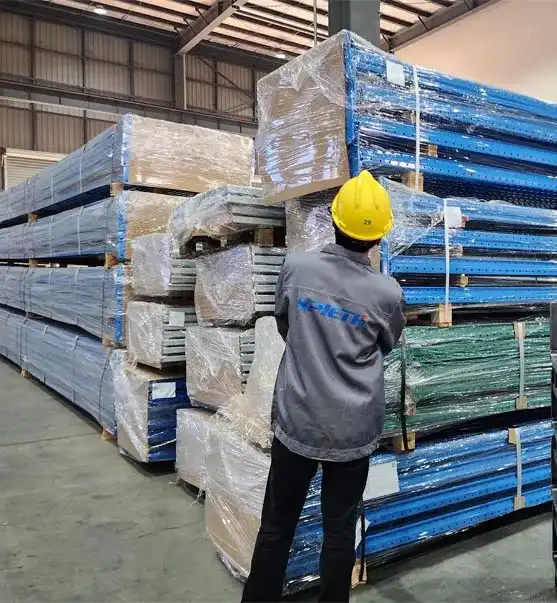
SolidFort Storage Equipment Co., Ltd. is a premier factory-direct manufacturer operating a modern 30,000㎡ production center in Tongan Park, Xiamen. We specialize in designing and exporting heavy-duty seismic pallet racking, radio shuttle systems, and warehouse mezzanines engineered to rigorous international building codes.
- In-House Manufacturing: Automated roll-forming, robotic welding, and continuous electrostatic powder coating.
- Free Engineering CAD & LARC: Professional Load Application and Rack Configuration drawings with every quote.
- Certified Compliance: Full verification against AS4084, RMI ANSI MH16.1, FEM 10.2.02, and ISO 9001 standards.
- Rapid Global Logistics: Standard orders ship within 10–15 days; FOB, CIF, or DDP terms with container loading optimization.
Future Sourcing & Architectural Trends in Seismic Racking
As global supply chains expand into earthquake-prone regions and automated logistics hub density increases, the procurement strategy for pallet racking is undergoing rapid technological evolution. Global buyers are moving away from basic commodity steel towards smart, resilient structural eco-systems.
1. High-Yield AHSS Materials
Adoption of Advanced High-Strength Steels (AHSS) such as Q460 and high-yield cold-rolled coils. Higher material yield strength enables reduced gauge thickness while maintaining dynamic yield moment capacity.
2. Base Isolation Integration
Integration of elastomeric or friction-pendulum base isolators underneath rack footplates. Base isolation decouples upper rack mass from high-frequency earthquake vibrations, cutting structural drift by up to 70%.
3. Digital Twin & IoT Monitoring
Embedded IoT strain gauges and accelerometer sensors on critical upright columns. Real-time dynamic health monitoring alerts warehouse managers to structural plastic deformation or post-seismic anchor loosening.
Frequently Asked Questions (FAQ)
Expert answers to common engineering, compliance, and purchasing questions regarding seismic racking exported from China.
Optimize Your Warehouse for Maximum Seismic Safety & Density
Connect directly with SolidFort's senior structural engineering team. Receive free CAD warehouse layouts, load calculation reports, and factory-direct pricing within 24 hours.