Featured Heavy-Duty Static & High-Density Racking Systems
Engineered for maximum volumetric efficiency, structural safety under extreme point loads, and seamless forklift integration.
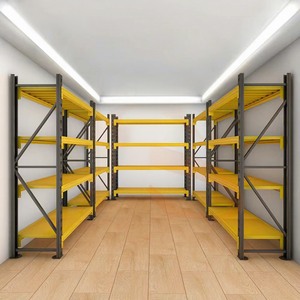
Extra Layer 1200*D400 Warehouse Pallet System Industrial Shelves
Heavy-duty selective static rack designed for high SKU diversity and 100% direct pallet accessibility.
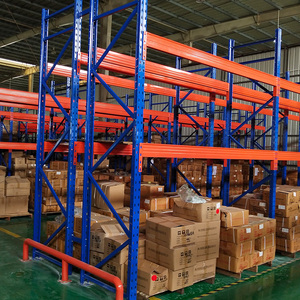
Gravity Rack Foldable Shelving Carton Live Rack Storage VNG Racking
Dynamic gravity-fed live racking optimized for FIFO inventory flow and rapid order picking.
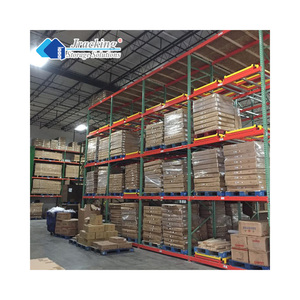
Jracking Heavy Duty Pallet Rack System Push Back Steel Rack
Nested cart system permitting 2–6 pallet deep storage, operating on LIFO principle for cold storage efficiency.
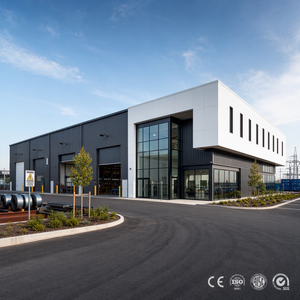
Customized Prefabricated Steel Structure Industrial Workshop Logistics Building
Turnkey prefabricated metal building engineering integrated with structural mezzanine floors and rack supports.
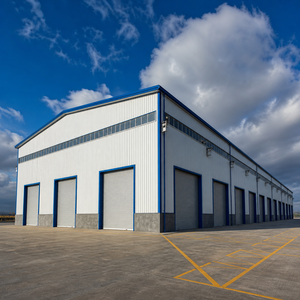
Reach Truck Aisle Narrow Racking High Capacity Galvanized Frame
Very Narrow Aisle (VNA) static storage maximizing vertical clear height while narrowing working aisles to 1.6m.
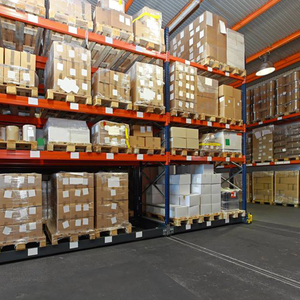
Heavy Duty Metal Storage Rack Adjustable Pallet Racking System
Certified structural steel rack frames featuring 75mm/76.2mm pitch adjustability and heavy beam profiles.
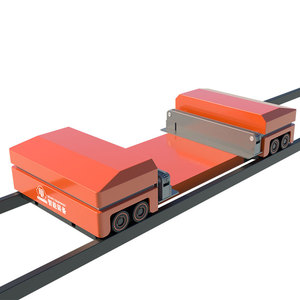
Radio Shuttle Cruiser RGV Rail Guided Vehicle Pallet Conveyor System
Semi-automated deep-lane static channel racking utilizing autonomous shuttle carts for ultra-high density.
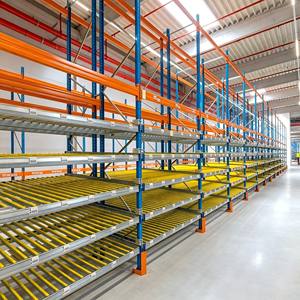
Gravity Carton Flow Racking Adjustable Roller Shelving FIFO for E-Commerce
Slanted aluminum roller beds engineered for fast-moving split-case picking in high-volume fulfillment centers.
Technical Engineering Whitepaper: Strategic Procurement & Structural Design of Static Pallet Racking in Modern Logistics
In global supply chain management, the static pallet rack remains the structural backbone of modern warehousing. While warehouse automation, Automated Guided Vehicles (AGVs), and Autonomous Mobile Robots (AMRs) continue to evolve, high-performance cold-formed steel static racking systems provide the foundational framework required to sustain high-density cubic storage. Selecting qualified Chinese pallet racking manufacturers requires understanding steel structural mechanics, international regulatory compliance (AS4084, RMI ANSI MH16.1, FEM 10.2.02), metallurgical quality control, and localized environmental stress considerations such as seismic shear coefficients and floor slab settlement limits.
1. Structural Metallurgy and Engineering Design Principles
The structural integrity of static pallet racking relies on the mechanical properties of cold-formed steel profiles. Leading Chinese manufacturers utilize continuous cold roll-forming lines to process high-tensile hot-rolled strip steel. Upright frames are engineered with geometric stiffening ribs along the profile corners, significantly enhancing the critical buckling stress limit ($\sigma_{cr}$) under vertical axial compression.
Box beams and step beams are manufactured by interlocking two C-sections or roll-forming single profile beams with continuous robotically welded beam end connectors (claws). The design of the connector claw—typically 3-hook or 4-hook configurations—is critical. The tapered mechanical engagement creates a rigid wedging action against the upright teardrop or omega perforations. This stiffness directly reduces beam deflection under Uniformly Distributed Loads (UDL), ensuring compliance with the maximum deflection ratio threshold of $L/200$ specified in international standards.
| Racking System Type | Direct Access (%) | Storage Density | Pallet Flow (FIFO/LIFO) | Ideal Application Profile |
|---|---|---|---|---|
| Selective Pallet Racking | 100% Access | Standard (35%–40%) | FIFO or LIFO | High SKU variety, fast pick cycles, distribution hubs |
| Drive-In / Drive-Thru | Low (20%–30%) | Very High (65%–75%) | LIFO (Drive-In) / FIFO | Bulk homogeneous inventory, cold storage facilities |
| Push Back Racking | Medium (40%) | High (55%–65%) | LIFO (2–6 deep) | Medium turnover SKUs, staging areas, food & beverage |
| Radio Shuttle Racking | Selective per Lane | Maximum (75%–85%) | Flexible FIFO / LIFO | High-throughput automation, seasonal stockpiling |
| Cantilever Racks | 100% Access | Customized | Non-Palletized | Steel pipes, timber, aluminum extrusions, sheet metal |
2. Global Structural Safety Compliance: AS4084, RMI ANSI MH16.1, and FEM
For global logistics directors, procurement safety requires strict adherence to regional structural codes. Chinese OEM manufacturers such as SolidFort design and calculate racking structures using rigorous mathematical modeling in reference to:
- AS 4084:2023 (Australia): Sets global benchmarks for structural design, testing protocols, shear connector stiffness, and rack tolerances under full operational load.
- RMI ANSI MH16.1 (United States): Standard for the design, testing, and utilization of industrial steel storage racks, establishing load application guidelines, baseplate anchor shear stresses, and seismic zone factors ($S_s, S_1$).
- FEM 10.2.02 (Europe): Specifies European structural design criteria for static steel pallet racking, focusing on frame destabilizing effects, global sway, and beam-to-upright connection moment capacity.
Every structural rack installation must display Load Application and Rack Configuration (LARC) plaques. These permanent placards detail maximum allowable unit loads per beam level, maximum total bay load, beam elevation spacing, and floor anchoring specifications to ensure operational safety during forklift loading.
3. Enterprise Advantages: SolidFort Manufacturing Capabilities & Quality Control
Situated in the Tongan District of Xiamen, China, SolidFort Storage Equipment Co., Ltd. operates a state-of-the-art 30,000㎡ industrial manufacturing complex. Operating since 2016, SolidFort has established a vertically integrated manufacturing ecosystem that delivers factory-direct cost efficiency without compromising engineering precision.
Key manufacturing differentiators include:
- Precision CNC Roll Forming: Multi-stage automatic cold-roll forming mills guarantee pitch tolerances within ±0.5mm across 12-meter continuous upright lengths.
- Robotic Welding Workstations: Automatic double-sided robotic MIG welding for beam connector claws eliminates manual welding fatigue defects and guarantees deep joint penetration.
- Strict Metallurgical Testing: Raw coil steel undergoes yield point ($\sigma_y$), ultimate tensile strength ($\sigma_b$), and elongation tests prior to roll forming.
- Turnkey CAD Engineering & Export Lead Time: In-house structural engineers provide 3D warehouse layout optimization, building slab load assessments, and complete container loading plans. Standard export orders ship within 10 to 15 days on FOB, CIF, or DDP terms.
4. Product Development & Technological Trends in Static Storage
The static racking industry is undergoing a structural transition driven by warehouse space inflation, labor scarcity, and e-commerce velocity:
- Integration with Mobile Automation (AMRs & AGVs): Modern static racking frames are now engineered with widened lower guide channels, specialized baseplate gussets, and magnetic floor strip cutouts to facilitate autonomous pallet truck entry.
- Hybrid Radio Shuttle Storage Channels: Static racking lanes are increasingly retrofitted with heavy-duty cold-rolled guide rails to support semi-automated radio shuttle carts. This hybrid architecture bridges the gap between static selective racks and fully automated AS/RS systems.
- Galvanized Surface Finishing for Sustainable Cold Chains: In cold storage and high-humidity environments, pre-galvanized and hot-dip galvanized (HDG) steel components are replacing traditional painted surfaces, extending structural service life to over 25 years without rust degradation.
5. Global Procurement Trends: Total Cost of Ownership (TCO) Analysis
Procurement officers are moving away from evaluating initial material price per kilogram toward analyzing the Total Cost of Ownership (TCO). Evaluating a racking manufacturer requires factoring in container volume optimization, freight density, speed of installation, and long-term repairability.
By partnering directly with a Chinese OEM manufacturer that offers pre-assembled upright frames or knockdown frames packed with custom shipping pallets, logistics operations reduce ocean freight costs by up to 30%. Furthermore, standardizing frame profiles ensures off-the-shelf availability of replacement column guards, row spacers, and safety beam pins, reducing downtime from accidental forklift collisions.
Pallet Racking Procurement FAQ
Direct technical answers from structural engineers regarding load ratings, floor anchoring, pricing benchmarks, and standards compliance.
Q1What is the average cost per pallet position for static pallet racking?
Material cost for standard selective pallet racking typically averages USD $50 – $100 per pallet position depending on beam length, height, frame depth, and steel thickness. High-density systems such as Drive-In or Push-Back range from USD $100 – $250 per position. Final quotes vary based on prevailing steel coil pricing, surface finish (powder coat vs hot-dip galvanized), and localized seismic design requirements.
Q2Do static pallet racks require mechanical anchoring to the concrete floor slab?
Yes. Under ANSI/RMI MH16.1, AS4084:2023, and building code specifications, every single rack column footplate must be anchored to the concrete slab using certified wedge anchors or chemical anchors. Floor anchoring prevents base movement during forklift loading, transfers vertical compression and overturning moments into the slab, and ensures structural stability during seismic disturbances.
Q3How are beam load capacity and upright frame capacity calculated?
Beam capacity is determined by evaluating the Maximum Uniformly Distributed Load (UDL) sustained by a pair of horizontal beams without exceeding the bending deflection limit of $L/200$. Upright frame capacity depends on the vertical distance between adjacent beam levels (unsupported length). As beam level spacing increases, the allowable axial frame capacity decreases due to Euler column buckling dynamics.
Q4What are the standard sizes for industrial selective pallet racking?
For standard 40" x 48" GMA or 1200 x 1000mm Euro pallets, upright depth is commonly 42 inches (1050mm) to allow a 3-inch (75mm) pallet overhang front and back. The standard beam length for a two-pallet wide bay is 96 inches (2700mm or 2500mm), providing adequate aisle side clearance between pallets and upright columns.
Q5What lead times and shipping terms are standard when importing from China?
Standard static racking orders are roll-formed, powder-coated, and packaged within 10 to 15 days at the factory. Engineered projects requiring customized mold tooling take approximately 30 days. Manufacturers support FOB (Free on Board), CIF (Cost, Insurance, Freight), and DDP (Delivered Duty Paid) terms with detailed container packing lists and CAD loading diagrams.
Q6How frequently should static pallet racking undergo structural inspection?
Formal structural inspections by a qualified racking engineer should be performed at least once every 12 months in accordance with AS4084 and European EN 15635 standards. Furthermore, warehouse safety managers must perform routine weekly visual checks to detect column dents, twisted diagonal braces, missing safety beam locking pins, or floor slab cracking.