Industrial Grade High-Density Storage Products
Engineered for extreme structural integrity, high volumetric efficiency, and rapid warehouse throughput.

Customized Prefabricated Steel Structure Warehouse Metal Industrial Workshop Logistics Storage Building Design Service
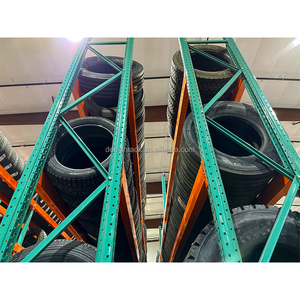
Beam Pallet Rack Q235B Steel Adjustable Heavy Duty Warehouse Storage Rack Custom Design Standard High Density 3 Year Warranty
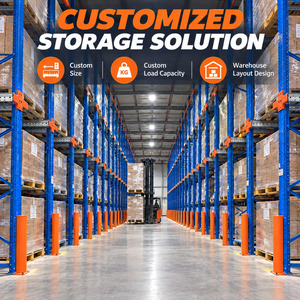
ODM OEM Q235 Steel Heavy Duty High Density Coldroom Coldstore Drive-in Through Pallet Racking Warehouse Storage System
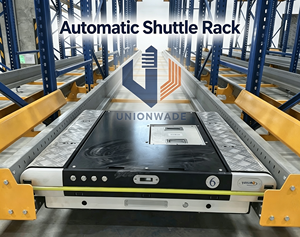
Industrial Automatic Shuttle Rack Storage System for High Density Warehouse
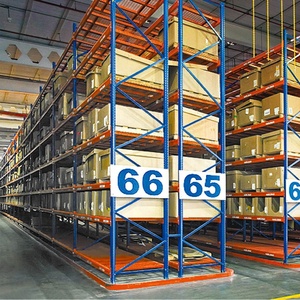
Narrow Aisle VNA Pallet Racking System Adjustable Heavy Duty Cold Rolled Steel Powder Coated High-Density Logistics E-commerce
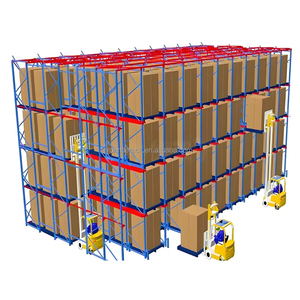
Drive-In Pallet Racking Heavy Duty Warehouse Storage Rack High Density Industrial Storage System Customized
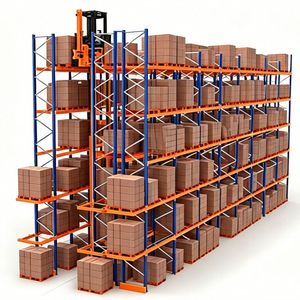
Professional Grade Heavy Duty 5-Layer Steel Powder Coated Storage Racking-Industrial Pallet System High Density Warehouse
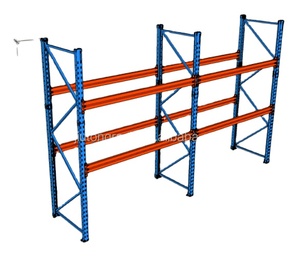
Double Deep Pallet Rack System for Reach Truck High Density Storage Solution for Warehouse
High-Density Warehouse Storage Engineering: Technical Dynamics & Sourcing Guide
An operational breakdown of structural load dynamics, cold-formed steel manufacturing, compliance standards, and space optimization metrics for global supply chain procurement.
1. The Structural Physics of High-Density Warehouse Storage
Modern industrial supply chains face escalating real estate expenditures, driving logistics managers and enterprise procurement teams toward high-density storage configurations. Unlike standard selective racking—which dedicates upwards of 60% of total footprint to working forklift aisles—high-density warehousing architecture eliminates redundant aisle space to unlock structural yield efficiency ratios exceeding 85%.
However, high-density storage systems place extraordinary structural loads upon both the upright frame assembly and the underlying concrete slab floor. Achieving high density without sacrificing operational safety requires strict adherence to structural engineering fundamentals: finite element analysis (FEA), elastic-plastic beam section calculations, and column buckling resistance optimization under continuous dynamic loadings.
Engineering Core Concept (Deflection Ratio L/200): Under standard RMI (Rack Manufacturers Institute) and AS4084 engineering codes, heavy-duty pallet rack beam profiles must maintain a horizontal deflection limit not exceeding $L/200$ under maximum uniformly distributed loading (UDL). Failure to meet these criteria accelerates structural fatigue and increases forklift strike risk during high-bay elevation lifts.
Technical Comparison: Density vs. Selectivity Performance Matrix
Selecting the optimal storage methodology requires balancing SKU variety, throughput speed, structural investment, and accessibility. The comparative technical matrix below highlights the core performance attributes across major high-density storage architectures manufactured in China factories:
| Storage System Type | Volumetric Space Utilization | Pallet Selectivity Ratio | Inventory Flow Logic | Ideal Operational Application |
|---|---|---|---|---|
| Selective Pallet Racking | 35% - 40% (Standard) | 100% Direct Access | FIFO / LIFO Flexible | High SKU variety, fast fulfillment, e-commerce centers |
| Drive-In / Drive-Thru | 75% - 85% (High) | 15% - 20% Low Access | LIFO (Drive-In) / FIFO (Drive-Thru) | Cold storage, homogeneous bulk goods, food & beverage |
| Double Deep Racking | 55% - 65% (Medium-High) | 50% Direct Access | LIFO Operational Flow | Cold rooms, medium SKU count with double-deep reach trucks |
| Radio Shuttle System | 80% - 90% (Maximum) | Semi-Automated Channel Access | Software Configurable (FIFO/LIFO) | High-throughput automation, cold storage, fast-moving consumer goods |
| Very Narrow Aisle (VNA) | 60% - 70% (High Volumetric) | 100% Direct Access | FIFO Strict Compliance | High ceiling warehouses, articulated/turret truck fleets |
2. Material Science & Structural Steel Specification in China Factories
The structural reliability of high-density pallet storage systems relies heavily on steel metallurgy and cold-roll forming precision. Top-tier Chinese racking manufacturers utilize premium Q235B and Q355B structural grade steel coils sourced from state-owned steel mills (such as Baosteel or Ansteel).
Key metallurgical properties governing racking integrity include:
- Q235B Cold-Rolled Carbon Steel: Yield strength $\ge 235\text{ MPa}$, Tensile strength $370–500\text{ MPa}$. Ideal for standard heavy-duty structural uprights, step beams, and structural tie bracing.
- Q355B High-Tensile Structural Steel: Yield strength $\ge 355\text{ MPa}$, Tensile strength $470–630\text{ MPa}$. Specified for high-bay racking systems exceeding 10 meters, heavy-duty cantilever arms, and dynamic radio shuttle structural rails.
- Surface Finish Technology: Electrostatic thermosetting powder coating (60–80 micron thickness) complying with ISO 9227 salt spray corrosion testing standards, or hot-dip galvanizing (complying with EN ISO 1461) specifically engineered for sub-zero cold storage facilities down to $-30^\circ\text{C}$.
3. Structural Integrity Standards & Global Compliance Compliance
To safely export to North America, Australia, Europe, and the Middle East, high-density storage factories in China must strictly adhere to regional structural engineering standards. Importers must verify that structural engineering calculations incorporate dynamic impact factors, pattern loading variations, and localized seismic acceleration parameters ($Z$-factors).
- RMI (ANSI MH16.1) - North America: Focuses on column stability, torsional-flexural buckling resistance, baseplate load distribution, and concrete anchor shear capacity.
- AS4084:2023 - Australia: Enforces rigorous testing protocols for beam-to-upright connector stiffness, sway testing, shear connector safety locks, and strict load plaques display.
- FEM 10.2.02 / EN 15512 - Europe: Utilizes limit state design (LSD) principles, accounting for global frame tolerances, structural imperfecations, and finite element stress verification.
At SolidFort Storage Equipment Co., Ltd., every engineered proposal includes Load Application and Rack Configuration (LARC) drawings developed in-house by structural engineers to ensure seamless local building permit approvals.
Why Source High-Density Systems from SolidFort?
Direct factory production, engineering accountability, and end-to-end quality assurance built for global B2B procurement partners.
30,000㎡ Direct Manufacturing Base
Operated out of Tongan District, Xiamen, China, our advanced facility houses continuous roll-forming lines, automated robotic welding cells, and an automated electrostatic powder-coating plant.
Free Structural CAD & LARC Engineering
Every quote includes detailed CAD layout proposals, pallet clearance verification, slab point-load calculations, and 3D structural simulations before steel cutting commences.
10–15 Day Production & Export Lead Time
With massive raw steel coil stocks and automated punch presses, standard custom racking orders ship in 10–15 days on FOB, CIF, or DDP terms, complete with container packing optimization.
Certified Quality Control Protocols
Certified under ISO 9001 quality systems with structural testing compliance referencing AS4084, RMI (ANSI MH16.1), and FEM standards. Backed by written structural warranties.
Tailored OEM/ODM Custom Accessories
Full capability to engineer custom drop-in wire decking, heavy-duty frame column protectors, row spacers, pallet support bars, and custom cold-room structural configurations.
24/7 Global Engineering Support
Direct technical communication with senior structural engineers across global time zones, providing installation guidance drawings, video walk-throughs, and site support.
Future Trends in Warehouse High-Density Procurement (2025–2030)
Key technological shifts re-shaping global warehouse design, automated high-density storage, and sustainable structural manufacturing.
1. The Rise of Semi-Automated Four-Way Radio Shuttle Technology
Traditional manual Drive-In racking is rapidly evolving toward semi-automated and fully automated Radio Shuttle storage systems. While Drive-In systems require forklift trucks to drive physically inside rack bays—increasing structural collision risks and cycle times—Radio Shuttle systems utilize self-powered robotic carts controlled via RF remote or WMS software. The shuttle transports pallets along dedicated guide rails inside storage channels, enabling maximum cubic density with zero forklift rack insertion.
2. Integration of WMS/WCS with Automated High-Bay Racking (AS/RS)
Future high-density procurement increasingly favors Automated Storage and Retrieval Systems (AS/RS). Modern China racking factories are supplying high-precision crane-guided rack structures capable of reaching vertical heights up to 40 meters. These cold-rolled structural frames require manufacturing tolerances under $\pm 1\text{ mm}$ over vertical runs to allow stacker cranes to travel seamlessly at high speeds.
3. Eco-Friendly Powder Coating & Sustainable Green Steel
Environmental standards in logistics procurement are prioritizing zero-VOC powder coating processes and recycled content high-grade structural steel. Energy-efficient thermosetting ovens and zero-wastewater pretreatment processes enable compliant Chinese storage factories to offer certified low-carbon racking solutions for LEED-certified distribution facilities worldwide.
Technical Procurement FAQ
Direct structural engineering answers to common technical queries raised by logistics engineers and warehouse buyers.
Cost per pallet position varies based on global steel prices, structural system selection, load capacity ratings, and surface finish. Standard selective pallet racking generally averages USD 50 – USD 100 per pallet position. High-density storage systems like Drive-In, Push-Back, or Radio Shuttle systems range between USD 100 – USD 250 per position due to heavier steel gauge uprights, specialized guide rails, and automated shuttles. Prices typically cover raw material and fabrication; freight, anchoring, and installation are calculated based on job site location.
Yes. Under ANSI/RMI MH16.1, AS4084, and FEM 10.2.02 building safety codes, every single pallet rack column footplate must be secured to the concrete floor using heavy-duty expansion or concrete screw anchors. Anchoring prevents horizontal shifting during forklift placement, resists uplift or overturning forces from wind/seismic events, and stabilizes frames during minor forklift impact loads. Anchor bolt diameter and embedment depth must be verified by a structural engineer based on slab compressive strength (typically minimum 3,000 PSI concrete) and seismic zone coefficients.
An upright frame's load capacity is not a static number—it decreases substantially as the vertical distance between beam levels increases (known as unbraced height). For example, a heavy-duty upright frame rated for 15,000 kg total capacity at a 1,200 mm beam elevation spacing may drop to 11,000 kg capacity if the first beam elevation is raised to 2,000 mm. This reduction occurs due to column buckling dynamics. Never adjust vertical beam levels without consulting the manufacturer's LARC (Load Application and Rack Configuration) drawing.
For standard GMA (40" × 48" / 1016 mm × 1219 mm) industrial pallets, standard selective frame depths are 42 inches (1067 mm), allowing a safe 3-inch pallet overhang front and back. Standard beam lengths are 96 inches (2438 mm) for 2-pallet positions or 144 inches (3658 mm) for 3-pallet positions. For Euro pallets (1200 mm × 800 mm) or Asian metric pallets (1100 mm × 1100 mm), frame depths are customized to 1000 mm or 1100 mm with appropriate beam clear spans.
Formal safety inspections by a certified rack inspector must occur at least once every 12 months. In addition, internal warehouse safety teams should conduct weekly or monthly visual checks to identify damaged upright columns, twisted bracing, missing safety beam pins, or deflected step beams. Damaged components must be cordoned off and unloaded immediately to prevent structural collapse.
Standard pallet rack orders are manufactured and containerized within 10 to 15 days upon final approval of CAD shop drawings. Large custom-engineered projects (such as multi-tier mezzanines or automated AS/RS systems) require approximately 30 days. Most Chinese manufacturers support FOB, CIF, CFR, or DDP (Delivered Duty Paid) shipping terms, accompanied by professional container loading software plans to maximize sea-freight volume efficiency.
Optimize Your Warehouse Footprint Today
Speak directly with senior structural engineers at SolidFort. Get a complimentary warehouse CAD layout, structural load calculation report, and factory-direct price quotation within 24 hours.
Inquire Now