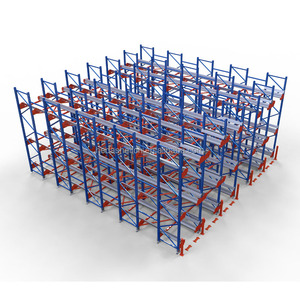
Hot Popular Radio Shuttle Racking Shuttle Pallet Racking System Heavy Duty Pallet Racks
Aisle Compatibility: Counterbalance / Reach
Load Capacity: Up to 1,500 kg/Pallet
Storage Density: Ultra-High (85%+)
Heavy-duty warehouse pallet racking systems manufactured in China for high-capacity 3-wheel and 4-wheel counterbalance forklift truck operations.
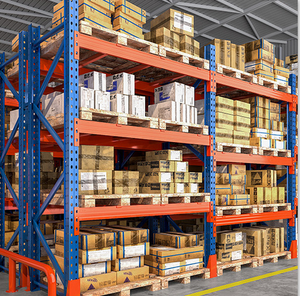
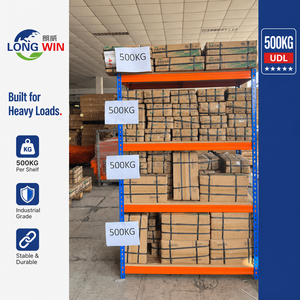
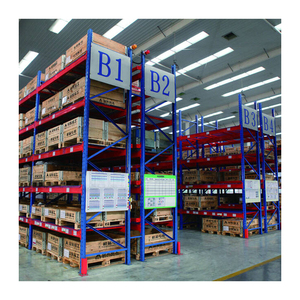
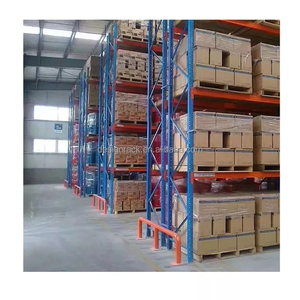
When selecting industrial racking systems for logistics hubs, manufacturing plants, and distribution centers operating **Counterbalance Forklift Trucks (CBFT)**, supply chain directors and warehouse managers face unique structural and geometric demands. Unlike Reach Trucks or Very Narrow Aisle (VNA) equipment that operate within tightly constrained guide rails or narrow 1.6-meter aisles, counterbalance forklifts—available in 3-wheel electric, 4-wheel electric, LPG, and heavy diesel configurations—require significantly wider operational turning radiuses (typically **3.4 meters to 4.2 meters** depending on load center and chassis length).
Because counterbalance trucks carry heavy rear ballast weight to balance front fork loads, their momentum during aisle maneuvers, right-angle stacking, and acceleration poses elevated risks of impact on vertical rack columns. As a premier **China counterbalance forklift racking manufacturer and direct factory supplier**, SolidFort Storage Equipment designs engineered selective racking, drive-in racking, radio shuttle platforms, and push-back rack systems specifically structural-calculated to withstand dynamic force distributions, resist forklift impacts, and optimize volumetric storage density.
Counterbalance forklift racking systems are subject to both static dead loads (rack material weight) and severe live dynamic loads (loaded pallet placement, deceleration vibration, and potential fork collision). SolidFort’s structural engineering team adheres strictly to **AS4084-2012 (Australian Standard for Steel Storage Racking)**, **ANSI MH16.1 (RMI Specifications in the USA)**, and **FEM 10.2.02 (European Code)** to guarantee mechanical reliability.
SolidFort utilizes premium high-tensile Q235B and Q355B structural steel coils. Upright columns feature multi-stage cold-roll-formed profiles with up to 12-14 bending resistance ribs per post, substantially elevating the section modulus ($Z_x$) and radius of gyration ($r$). This structural design prevents local buckling when heavy counterbalance trucks deposit loads exceeding 4,000kg per beam level.
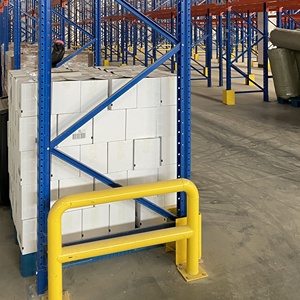
Because counterbalance forklifts turn sharply into rack aisles, lower frame sections are highly vulnerable to impact. SolidFort incorporates mandatory safety enhancements into all counterbalance warehouse layouts:
Choosing the ideal industrial warehouse racking layout involves evaluating SKU diversity, throughput velocity, inventory handling protocols (FIFO vs. LIFO), and available clear building height. The technical matrix below highlights how various racking configurations interface with standard counterbalance forklifts:
| Racking Architecture | Required Aisle Width (AST) | Pallet Access (Selectivity) | Space Utilization | Counterbalance Operational Fit |
|---|---|---|---|---|
| Selective Pallet Racking | 3.4m – 3.8m | 100% Direct Access | 40% – 50% | Excellent: Maximum maneuverability; ideal for multi-SKU high turnover. |
| Radio Shuttle Racking | 3.2m – 3.5m (Staging Area) | High-Density LIFO/FIFO | 80% – 88% | Superior: Forklifts load only at outer staging lanes; zero risk inside storage channels. |
| Drive-In / Drive-Thru | 3.1m – 3.4m (Entry Channel) | Bulk LIFO | 75% – 85% | Moderate / Requires Guarding: Truck enters rack lanes; floor guide rails are essential. |
| Push-Back Racking | 3.4m – 3.8m | LIFO (2-6 Deep) | 70% – 75% | High Efficiency: Truck stays in the main aisle, placing pallets on nested rolling carts. |
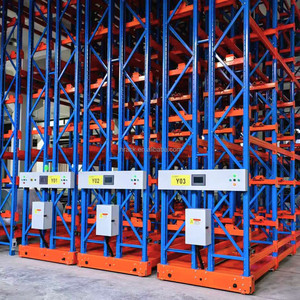
| Electric Mobile Racking | 3.5m (Single Dynamic Aisle) | 100% Selective on Demand | 85% – 90% | Maximum Density: Motorized racks move to open a dedicated counterbalance aisle. |
As a leading Chinese direct-factory manufacturer based in Tongan Park, Xiamen, SolidFort Storage Equipment Co., Ltd. spans a state-of-the-art **30,000 square meter production facility**. Over the past decade, SolidFort has established a robust track record exporting high-durability pallet storage systems to **over 53 countries** across North America, Europe, Australia, the Middle East, and Southeast Asia.
SolidFort operates fully automated continuous roll-forming lines, robotic welding stations, and an environmentally compliant dual-station electrostatic powder coating system. Every batch of steel raw materials undergoes yield point testing, tensile strength verification, and salt-spray corrosion resistance auditing.
Whether you require standard 8-foot (96") step beams for GMA 40x48 pallets or engineered box beams carrying 4,500kg per pair, our factory maintains pre-punched coil stock to fulfill tight production windows within **10 to 15 days**.
From initial structural layout drafting to final container shipment, SolidFort offers end-to-end support for procurement officers, logistics consultants, and general contractors:
The global industrial warehouse landscape is undergoing rapid technological transformation. Procurement directors sourcing counterbalance forklift racking from Chinese suppliers must position their facilities for emerging technological shifts over the next decade:
Manual counterbalance forklift fleets are increasingly augmented or replaced by **Autonomous Counterbalance AGVs**. Automated vehicles rely on high-precision laser triangulation, LiDAR, and floor magnetic tape navigation. This trend demands rack manufacturing tolerances of millimeter-level precision. Beam deflection limits are shifting from standard $L/180$ to stricter $L/200$ or $L/250$ formulas to prevent automated pallet overhang errors during robotic placement.
Environmental regulatory shifts toward net-zero supply chains are accelerating the adoption of green manufacturing technologies. SolidFort leads this movement by incorporating non-VOC thermosetting powder coatings and ultra-thin nano-zirconium pre-treatment washes that replace traditional toxic phosphate baths. Furthermore, high-strength low-alloy (HSLA) steel profiles allow thinner wall gauges without compromising structural load ratings, significantly reducing logistics freight mass and embodied carbon footprints.
To combat under-reported forklift damage in high-throughput distribution centers, future racking installations integrate wireless micro-electromechanical (MEMS) piezoelectric sensors into upright columns. These battery-powered IoT devices instantly log impact magnitude and beam deflection anomalies directly to warehouse management software (WMS), enabling proactive preventative maintenance prior to structural frame failure.
Below are authoritative responses to critical engineering and procurement queries regarding counterbalance forklift racking sourcing:
Contact SolidFort's senior structural engineering team for a free warehouse CAD layout, technical load calculation report, and factory-direct quotation within 24 hours.