Featured Heavy-Duty Industrial Racking Systems
Explore our engineered pallet racking lineup manufactured with Q235B/Q355B high-tensile cold-rolled steel, designed for maximum load stability and spatial efficiency in global warehouse environments.
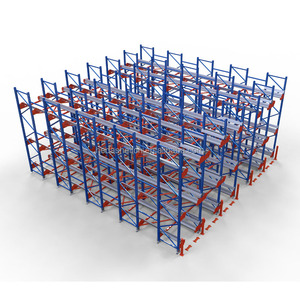
Radio Shuttle Racking System Heavy Duty Shuttle Pallet Racks
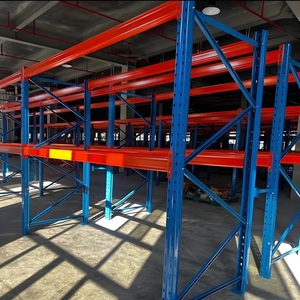
Industrial Heavy Duty Beam Rack Roll Formed Steel Storage System
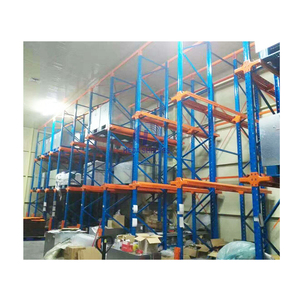
Compact Drive-In Pallet Racking System With LIFO Flow
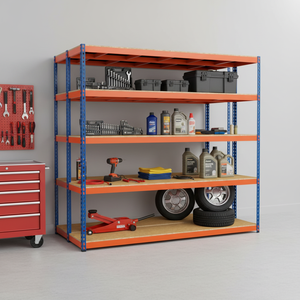
4-Tier Industrial Boltless Heavy Duty Warehouse Shelves
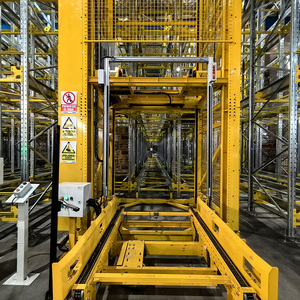
High Density Four-Way Shuttle Automated ASRS Pallet Racks
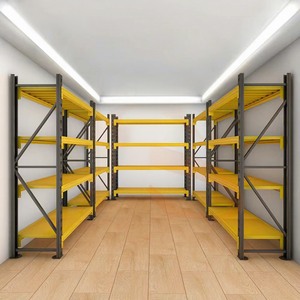
Extra Layer Custom 1200*D400 Industrial Warehouse Pallet Shelving
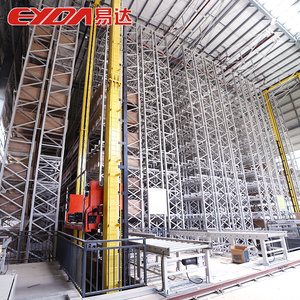
Intelligent ASRS Stacker Crane Automated Storage System
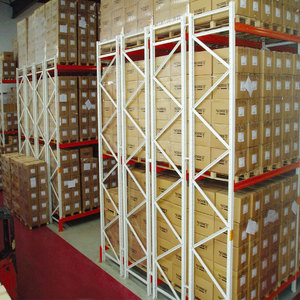
5-Layer Double Deep Reinforced Steel Pallet Racking System
Engineering Rigor & Standard Compliance
Calculated strictly under AS4084-2023, ANSI MH16.1 (RMI), and FEM 10.2.02 codes. Full structural finite element analysis (FEA) provided for local building permit compliance.
Q235B & Q355B Steel Cold-Forming
100% continuous cold-roll forming using premium structural coil steel from Baosteel. High yield strength ensures structural stability under maximum uniform distributed loads.
10–15 Day Fast Delivery & FOB/DDP Terms
Integrated manufacturing plant spanning 30,000㎡ delivers standardized selective orders in 10-15 days, with direct container loading and worldwide door-to-door customs clearance.
Engineering Whitepaper: Specifying Heavy-Duty Custom Pallet Racking Systems
Selecting an industrial pallet racking supplier requires balancing structural integrity, spatial footprint utilization, operational throughput, and capital expenditure (CapEx). As global logistics networks evolve toward higher vertical storage densities and automation integration, procuring low-grade structural rack systems exposes enterprise warehouses to severe liability, operational bottlenecks, and safety risks. This whitepaper details the engineering mechanics, global regulatory compliance standards, procurement criteria, and future automation integration trends essential for supply chain leaders purchasing custom pallet racking systems directly from OEM manufacturers in China.
Core Procurement Rule: Standard industrial steel racking must never be evaluated solely on weight-per-ton pricing. Structural safety depends on roll-forming profile design, cold-work hardening characteristics, upright teardrop/omega section geometry, beam-to-frame connector lock tightness, and precise anchor embedment into reinforced concrete slabs.
1. Structural Mechanics & International Compliance Standards
Industrial selective and high-density pallet racking systems operate under complex multi-directional load conditions, including dead weight (shelf components), live weight (pallets and stored inventory), dynamic impact force (forklift positioning), and environmental load vectors (seismic shear forces and wind load for rack-clad structures).
1.1 Major International Technical Standards
Top-tier Chinese racking exporters design, manufacture, and verify structural profiles according to three primary global engineering standards:
- AS4084-2023 (Australian Standard - Steel Storage Racking): Defines rigorous test procedures for column compression, beam end connectors, shear connectors, and floor plate anchoring. Requires mandatory 12-month structural integrity audits.
- RMI ANSI MH16.1 (Rack Manufacturers Institute - USA): Specifies the design, testing, and utilization of industrial steel storage racks, establishing strict safety factors for frame buckling, beam deflection limits (L/180 or L/240), and column impact guards.
- FEM 10.2.02 & EN 15512 (European Federation of Materials Handling): European standards focused on limit state design philosophy, finite element modeling (FEA), and strain energy absorption mechanisms for automated storage retrieval systems (AS/RS).
1.2 Metallurgy & Cold-Formed Steel Specifications
High-grade structural racking utilizes structural coil steel complying with ASTM A1011 or GB/T 700 standards. Premium Chinese racking manufacturers select targeted steel grades depending on section engineering requirements:
| Steel Grade Standard | Yield Strength (Fy) | Tensile Strength (Fu) | Primary Component Application |
|---|---|---|---|
| Q235B (ASTM A36 Equiv.) | ≥ 235 MPa | 370–500 MPa | Standard Step Beams, Box Beams, Wire Mesh Decking Channels |
| Q355B (ASTM A572 Gr 50) | ≥ 355 MPa | 470–630 MPa | Heavy-Duty Upright Columns, High-Bay Stacker Crane Frames |
| Pre-Galvanized Coil (Z275) | ≥ 250 MPa | 330–450 MPa | Drive-In Guide Rails, Pallet Support Bars, Outdoor Rack Shells |
2. High-Density Storage Architecture & System Selection
Modern industrial facilities must select rack structural typologies aligned with their specific Stock Keeping Unit (SKU) profile, inventory turnover velocity, and materials handling equipment (MHE).
2.1 Selective Pallet Racking (100% SKU Accessibility)
Selective racking remains the foundational choice for e-commerce fulfilment hubs and general distribution centers. Configured in single or double-entry rows, it provides 100% direct access to every pallet position. Standard upright depths for GMA 40" x 48" pallets are engineered at 42 inches (1,050 mm) to maintain a standard 3-inch (75 mm) pallet overhang front and rear, maximizing structural stability and visibility for forklift drivers.
2.2 Drive-In & Drive-Thru High-Density Systems
By eliminating intermediate operating aisles, Drive-In racking increases storage density by up to 75% compared to selective rack layouts. Forklifts drive directly into vertical storage bays to deposit goods onto continuous horizontal cantilever rails. Operates primarily on a Last-In, First-Out (LIFO) material flow, making it ideal for cold storage applications, homogeneous beverage distribution, and seasonal bulk inventory.
2.3 Radio Shuttle & 4-Way Automated Pallet Systems
Radio shuttle systems combine heavy-duty racking with self-propelled motorized shuttles that traverse inner storage channels. The remote-controlled or WMS-guided shuttle independently transports pallets from loading faces to internal storage depths, allowing channels exceeding 30 pallets in depth. This eliminates forklift entry into the rack structure, drastically reducing structural damage risk while maximizing throughput speed.
3. Global Sourcing & Procurement Trends (2026–2030)
The global industrial storage equipment market is experiencing structural technology shifts driven by warehouse automation, labor scarcity, and stringent supply chain ESG (Environmental, Social, and Governance) targets. Key procurement trends shaping China’s export landscape include:
3.1 Hybrid AS/RS and Shuttle Integration
Traditional static storage racks are increasingly replaced by automated hybrid setups. Procurement managers are prioritizing rack manufacturers capable of producing high-precision tolerance profiles (+/- 0.5 mm variance per bay height) required for automated stacker cranes and 4-way shuttle runners. Automated integration demands zero column twist and ultra-flat floor anchor interfaces.
3.2 Advanced Powder Coating & Environmental Finishing
Leading Chinese exporters are replacing traditional solvent-based painting with automated multi-stage electrostatic epoxy powder coating lines. Pre-treatment chemical washing incorporating zinc-phosphate or zirconium nano-coatings ensures 500+ hours of salt-spray corrosion resistance (ASTM B117 compliant), extending surface operational life in high-humidity and cold-chain environments while emitting zero Volatile Organic Compounds (VOCs).
3.3 Seismic-Resistant Engineering & Finite Element Modeling
As global distribution centers expand in seismically active regions (such as the Pacific Rim, Latin America, and Southern Europe), procurement contracts mandate dynamic seismic analysis. Top Chinese rack manufacturers utilize ANSYS structural simulation tools to evaluate base-plate shear transfer, dynamic frame sway, anchor bolt tensioning, and horizontal bracing geometries under simulated Richter-scale ground accelerations.
4. SolidFort Manufacturing Capabilities & OEM Excellence
SolidFort Storage Equipment Co., Ltd. operates as a direct manufacturer and global exporter of engineered warehouse racking systems from its modern 30,000㎡ industrial complex in Xiamen, China. Operating since 2016, SolidFort combines metallurgical engineering, automated roll forming, and structural CAD design to deliver turnkey industrial storage systems to over 53 countries worldwide.
Factory OEM Advantage: SolidFort operates 12 continuous steel roll-forming lines, automated robotic welding cells for beam end connectors, and an automated continuous powder-coating tunnel, achieving a monthly production output exceeding 3,000 metric tons of finished rack components.
4.1 End-to-End Engineering Control Process
Every custom pallet racking order passes through a controlled structural lifecycle:
- Warehouse CAD Layout & Slab Evaluation: Technical analysis of building floor slab compressive strength (FC'), expansion joint locations, forklift mast collapse heights, and clear height under joists.
- LARC Drawing Generation: Publication of formal Load Application and Rack Configuration (LARC) engineering drawings detailing allowable uniform distributed beam loads (UDL) and frame load capacities.
- In-Line Metallurgical Quality Assurance: Raw coil thickness checks via micrometer, tensile coupon testing, weld penetration ultrasonic verification, and powder coating dry-film thickness (DFT) checks (60–90 microns standard).
- Container Consolidations & Export Packing: Heavy-duty bundle packaging with protective corner guards, steel strapping, and wooden skids optimized for high-cube container utilization without transit damage.
Frequently Asked Procurement & Technical Questions
Clear engineering answers addressing cost metrics, structural safety compliance, floor slab anchoring, and custom production timelines.
Pallet rack pricing varies based on raw material steel rates, system complexity, frame heights, and load capacities. Standard Selective Pallet Racking generally ranges from USD $50 – $100 per pallet position (materials only). High-density systems such as Drive-In, Push-Back, or Radio Shuttle Racking typically range from USD $100 – $250+ per position. Engineered AS/RS rack structures involving strict millimetric tolerances carry specialized project pricing based on structural weight and engineering requirements.
Yes. Under ANSI/RMI MH16.1, AS4084-2023, and international building safety codes, every single rack column base plate must be anchored securely to the concrete slab using certified expansion or wedge anchors. Floor anchoring prevents column dislocation during accidental forklift impacts, resists overturning moments from high-bay loading, and maintains lateral stability during seismic events. Anchor diameter, embedment depth, and shim plate allowances are calculated based on slab thickness and concrete psi rating.
Load capacity is defined by two distinct engineering limits:
- Beam Pair Capacity: Calculated as Uniformly Distributed Load (UDL) per beam level (e.g., 2,500 kg across a pair of 2,700 mm beams) with a maximum vertical deflection limit of L/200.
- Upright Frame Capacity: Upright capacity is dynamic and decreases as the vertical distance between beam levels increases (unbraced length). Never assume frame capacity; always verify against the manufacturer’s Load Application and Rack Configuration (LARC) drawings and structural load plaques.
For standard GMA pallets (40" W x 48" L / 1,016 mm x 1,219 mm):
- Frame Depth: Standardized at 42 inches (1,050 mm), allowing a 3-inch overhang front and back.
- Beam Length: Standard 96-inch (2,438 mm) or 108-inch (2,743 mm) length to accommodate two pallets with proper clearance.
- Frame Heights: Ranging from 8 feet (2.4m) up to 36+ feet (11m+), dictated by building clear ceiling height and forklift reach limit. Euro pallet systems (1200 x 800mm) utilize 1,100 mm depth frames and custom length beams.
Standard selective pallet racking orders are typically manufactured, powder coated, and loaded for export within 10 to 15 days. Large-scale engineered projects, automated shuttle systems, or specialized cold-chain systems usually require 25 to 35 days depending on raw material coil schedules. We support FOB (Xiamen/Shanghai), CIF (Destination Port), and DDP (Delivered Duty Paid) shipping terms with full container loading plans provided for maximum freight efficiency.
SolidFort racking systems are designed and tested according to AS4084-2023, ANSI MH16.1 (RMI), and FEM 10.2.02 guidelines. Production facilities operate under certified ISO 9001:2015 Quality Management and ISO 14001:2015 Environmental Management systems. Mill test reports (MTR) for Q235B/Q355B steel coils, raw powder coating safety data sheets, and CE compliance documentation are supplied with export documentation packages.
Optimize Your Warehouse Footprint Today
Request a complimentary CAD layout design, structural load calculation report, or direct factory quotation from our senior logistics engineers.