Featured Industrial LIFO & Heavy-Duty Storage Racks
Direct factory solutions engineered for max cubic utilization, high throughput, and structural resilience under demanding warehouse conditions.
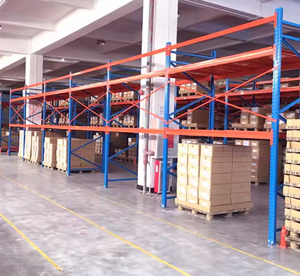
OEM Factory Wholesale Heavy-Duty Large Capacity Steel Pallet Racking System
Heavy-duty structural iron rack engineered for high dynamic load capacity and maximum beam level height flexibility.
Get a Quote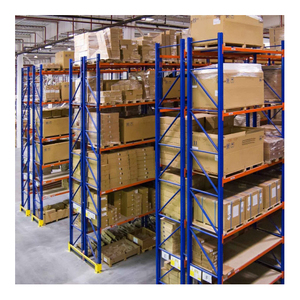
Peterack CE Certified Warehouse Storage Steel Heavy Duty Stacking Racks
CE-certified modular selective steel racking system designed for fast forklift access and scalable bay expansion.
Get a Quote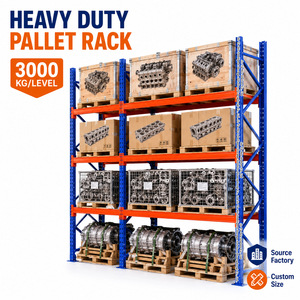
3000KG Heavy Duty Warehouse Shelf Rack For Pallet And Carton Storage (4 Levels)
High-capacity 4-level hybrid shelf rack capable of bearing up to 3000kg per tier, optimized for dual pallet and carton operations.
Get a Quote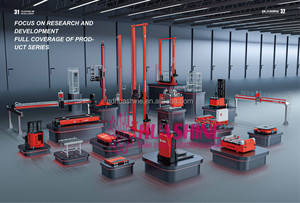
HEAVY DUTY HUASHINE ASRS Automatic Storage Racking System with Stacker Crane/AGV
Fully automated high-bay storage integrating 4-way shuttles, AGVs, and stacker cranes for raw material & finished goods buffers.
Get a Quote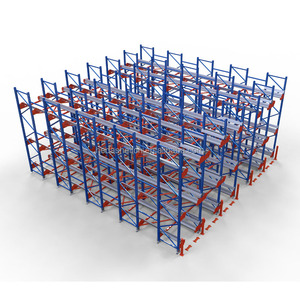
Hot Popular Radio Shuttle Racking Shuttle Pallet Racking System
Semi-automated LIFO/FIFO radio shuttle rack system maximizing lane depth while minimizing forklift travel time.
Get a Quote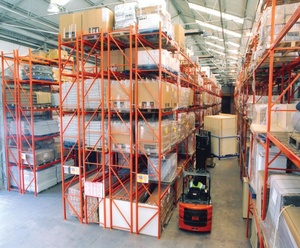
Double Deep Pallet Racking High Capacity Storage System for Reach Truck Forklift
Engineered for deep-reach trucks to store two pallets deep, reducing aisle footprint by up to 30% compared to standard selective setups.
Get a Quote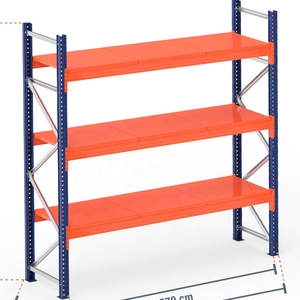
Heavy Duty Industrial Warehousing Racking Systems
Robust cold-rolled steel racking engineered with structural cross-bracing and impact-resistant upright frames.
Get a Quote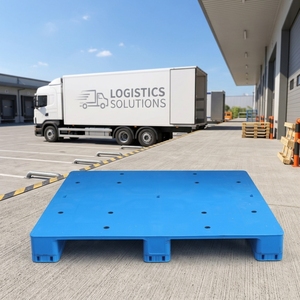
NEXARA Mould Racking 1400*1400*160mm Heavy-Duty Logistics Pallet System
Precision-molded flat surface 4-way turnover pallet system designed for seamless automated roller and racking integration.
Get a Quote1. LIFO Storage Systems: Engineering Architecture & Mechanics
In modern industrial material handling, Last-In, First-Out (LIFO) pallet racking represents the apex of high-density spatial economy. Designed primarily around two core mechanical frameworks—Drive-In Racking and Push-Back Racking Systems—LIFO configurations eliminate internal maintenance and travel aisles, consolidating structural footprints to achieve storage density gains of 60% to 80% over standard 100%-selective single-deep layouts.
As a leading China LIFO pallet racking manufacturer and exporter, SolidFort constructs these systems using high-tensile cold-rolled steel (Q355B equivalent grade). In a typical LIFO setup, forklift trucks either deposit loads onto inclined nested cart systems (Push-Back) or drive directly into structural lanes equipped with continuous side support rails (Drive-In). When a new pallet is loaded into a Push-Back lane, it pushes the preceding pallet back up a gentle 2% to 3% incline. Upon retrieval, gravity seamlessly feeds the next sequential pallet to the front picking face.
The structural mechanics require strict adherence to section modulus calculations, horizontal frame tolerance, and torsional rigidity. Because LIFO environments involve repeated loading forces and deep lane entries, unbraced column lengths must be rigorously computed in accordance with global standard bodies including ANSI/RMI MH16.1 in North America, AS4084:2012 in Australia, and FEM 10.2.02 across Europe.
2. SolidFort Manufacturing Capabilities & Engineering Advantage
Headquartered in Tongan Park, Tongan District, Xiamen, China, SolidFort Storage Equipment Co., Ltd. operates a state-of-the-art 30,000㎡ manufacturing plant dedicated to engineering, rolling, welding, and finishing heavy-duty warehouse racking systems. Unlike intermediary trading firms, SolidFort provides direct-from-factory accountability, fully integrated CAD project design, and structural calculation reporting.
Automated Roll Forming
Continuous cold roll-forming lines deliver tight dimensional tolerances on upright posts (76.2mm, 90mm, 100mm, 120mm profiles) and beam section channels up to 4.5mm steel thickness.
Certified Structural Compliance
All engineered LIFO frameworks are tested and compliant with AS4084-2012, FEM 10.2.02, and ANSI MH16.1 standards, backed by third-party CE documentation and ISO 9001 factory audits.
Customized Engineering & CAD
Every system order includes custom warehouse floor slab assessment, 3D spatial layout generation, clear height optimization, and precise Load Application and Rack Configuration (LARC) drawings.
SolidFort’s surface finishing utilizes a multi-stage automated pre-treatment bath followed by an electrostatic epoxy-polyester powder coat baked at 200°C. This guarantees exceptional impact resistance, scratch defense against forklift outriggers, and anti-corrosion protection even inside high-humidity cold storage environments (-30°C to -40°C freezers).
3. Industrial Racking Systems Technical Matrix & Selection Guide
Selecting the optimal warehouse racking system requires matching operational throughput against density and capital investment parameters. Below is a comparative technical synthesis compiled by SolidFort’s engineering division:
| System Architecture | Operational Flow | Selectivity Rate | Density Efficiency | Forklift Requirement | Optimal Application |
|---|---|---|---|---|---|
| Selective Pallet Rack | FIFO / LIFO | 100% Direct Access | Standard (40-50%) | Standard Counterbalance | High SKU variety, fast pick turn |
| Drive-In / Drive-Thru | Strict LIFO / FIFO | Low (20-30%) | Very High (75-85%) | Counterbalance / Reach Truck | Bulk homogeneous items, cold rooms |
| Push-Back Racking | Dynamic LIFO | Medium (40-60%) | High (65-75%) | Standard Reach Truck | 2 to 6 pallets deep per lane storage |
| Radio Shuttle Racking | LIFO or FIFO | Medium (50-70%) | Ultra High (80-90%) | Lift Truck + Shuttle Bot | High-throughput FMCG & Cold Chain |
| Double-Deep Selective | LIFO | 50% Direct Access | Medium-High (60-65%) | Deep-Reach Pantograph Truck | Balanced SKU count with medium turn |
4. Strategic Procurement Trends in Global LIFO Racking Systems
Global logistics procurement for warehouse infrastructure is experiencing structural shifts driven by rising industrial real estate costs, supply chain volatility, and automation maturity. Key trends reshaping LIFO procurement include:
A. Total Cost of Ownership (TCO) Shift to Modular LIFO: Supply chain managers are shifting away from static standard racking toward modular push-back and shuttle-ready LIFO systems. Buyers now prioritize racks that can be reconfigured from 3-deep push-back cart configurations into semi-automated radio shuttle lanes as operational volume grows, avoiding costly teardowns.
B. Factory-Direct OEM Sourcing & Supply Chain Disintermediation: International contractors and 3PL providers in North America, Australia, Europe, and the Middle East are increasingly bypassing regional intermediaries to work directly with audited Chinese manufacturers like SolidFort. This direct engagement yields a 25% to 40% reduction in material costs while securing custom roll-formed profiles tailored to specialized pallet footprints (e.g., GMA 40x48", Euro 1200x800mm, Australian 1165x1165mm).
C. Sustainability & Decarbonized Steel Procurement: Environmental, Social, and Governance (ESG) criteria are entering heavy equipment tenders. Tier-1 buyers demand structural steel produced via modern electric arc furnaces (EAF) or low-emission blast furnaces, alongside non-toxic powder coating processes certified zero-VOC. SolidFort leads this transition by utilizing fully recyclable steel stock and energy-efficient manufacturing lines.
5. Technological Innovations & Development Trends in LIFO Racking
The technological trajectory of LIFO pallet storage systems is moving beyond passive structural steel frames toward intelligent, sensor-monitored, and hybrid-automated storage ecosystems.
IoT Structural Health Monitoring
Next-generation LIFO push-back and drive-in uprights are being integrated with wireless strain gauge sensors and impact detectors. These micro-sensors alert warehouse managers immediately if a forklift strike damages a critical load-bearing column post, preventing progressive structural collapse.
Low-Friction Telescopic Cart Systems
Advances in cart-on-rail dynamics utilize stainless steel precision bearings and ultra-high-molecular-weight (UHMW) polyethylene wheels. This reduces push-back resistance down to under 1.5%, allowing forklifts to insert 6-deep heavy pallets with minimal fuel and hydraulic strain.
Seismic-Damped Baseplate Designs
Engineered for earthquake-prone regions (e.g., US Pacific Northwest, New Zealand, Japan), advanced LIFO systems feature energy-dissipating baseplates and heavy-duty anchor bolt assemblies designed to handle extreme shear and uplift forces during seismic events.
6. Frequently Asked Procurement & Technical Questions (FAQ)
Clear engineering insights addressing common buyer queries during technical specification and procurement phases:
What does LIFO pallet racking cost per pallet position?
Pallet racking costs vary depending on system type, load rating per level, and prevailing raw steel prices. Standard selective racking typically averages USD $50 – $100 per pallet position. High-density LIFO systems such as Push-Back Racking range from USD $100 – $220 per position due to nested cart assemblies and specialized slope rails. Drive-In racking generally averages USD $80 – $150 per position. Quotes cover factory hardware; shipping, engineering stamps, and installation vary by site geography.
Do LIFO pallet racks need to be anchored to the floor slab?
Yes, absolutely. Under ANSI/RMI MH16.1 and international structural building codes, every racking column footplate must be mechanically secured to a reinforced concrete slab using approved wedge anchors or chemical anchors. Floor anchoring resists dynamic overturning moments, prevents frame displacement caused by forklift contact, and maintains vertical plumb tolerances under full static loads.
How is the maximum load capacity of a LIFO rack calculated?
Load capacity calculation requires evaluating two distinct failure modes: Beam Pair Uniformly Distributed Load (UDL) Capacity and Upright Frame Axial Load Capacity. Frame capacity depends heavily on the maximum unbraced vertical distance between beam levels. Never calculate capacity by simple linear addition; engineers must generate a specific Load Application and Rack Configuration (LARC) drawing considering seismic factors, slab thickness, and dynamic impact safety margins (typically 1.65 structural safety factor).
What are the standard dimensions for LIFO pallet rack bays?
For standard GMA pallets (40" W × 48" L), typical upright depths are 42" or 44" to allow a 3-inch overhang. Standard step beam lengths for 2-pallet wide configurations are 96" (8 ft) or 108" (9 ft). For European 1200mm × 800mm pallets, frame depths of 1100mm with beam lengths of 2700mm are common. Heights range from 8 ft to over 35 ft, governed by forklift mast reach and building clear height below sprinklers.
How often should LIFO warehouse racking be inspected for safety?
Comprehensive safety standards (such as EN 15635 and AS4084) stipulate that a formal visual inspection by a qualified expert must occur at least once every 12 months. In addition, internal staff should complete weekly or monthly visual checks to detect bent uprights, dislodged safety pins, beam deflections exceeding L/180 of span, or damaged floor anchor bolts.
What are your manufacturing lead times and international shipping terms?
SolidFort maintains standard production lead times of 10 to 15 business days for standard selective and LIFO drive-in components. Complex, highly engineered push-back or automated radio shuttle projects take approximately 30 days. We support FOB (Xiamen Port), CIF, CFR, and DDP (Delivered Duty Paid) shipping terms with full container loading (FCL) optimization to minimize ocean freight costs.
Which international structural design standards do SolidFort racks satisfy?
SolidFort systems are designed, calculated, and manufactured in alignment with AS4084:2012 (Australian Standard for Steel Storage Racking), RMI ANSI MH16.1 (Specification for the Design, Testing and Utilization of Industrial Steel Storage Racks), FEM 10.2.02 (European Code), and ISO 9001 quality system criteria. CE certification documents are provided upon request for European deployments.
Optimize Your Warehouse Footprint with SolidFort Engineering
Request a comprehensive CAD layout design, structural load analysis, and competitive factory-direct price quotation within 24 hours.
Get a Quote