Industrial Storage Systems & High-Density Racking Solutions
Designed and manufactured to international structural engineering standards (RMI ANSI MH16.1, FEM 10.2.02, and AS4084-2012) for heavy-duty industrial environments.
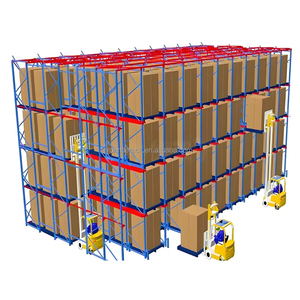
Drive-In Pallet Racking Heavy Duty Warehouse Storage Rack High Density Industrial Storage System Customized
Send an Inquiry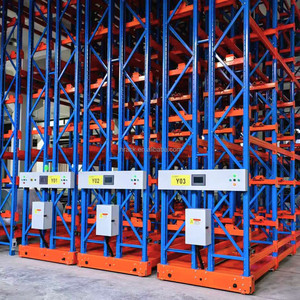
Industrial Heavy Duty High Efficiency Warehouse Electric Mobile Storage Shelf Automatic Mobile Racking System Pallet Rack
Send an Inquiry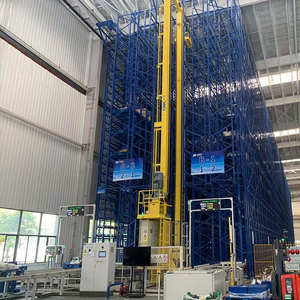
PTERIS Intelligent Stacker Crane Automated Storage Retrieval System Steel ASRS Racking for Exercise Stacking Racks Shelves
Send an Inquiry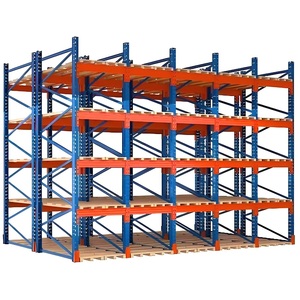
Wholesale Heavy Duty Steel Pallet Racking System for Warehouse Storage
Send an Inquiry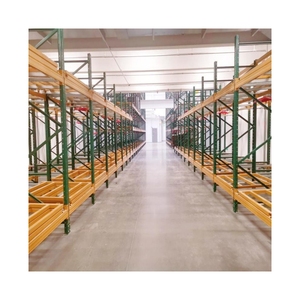
Custom Storage System Stacking Racks Shelves Warehouse Rack Push Back Pallet Racking With Guide Rail
Send an Inquiry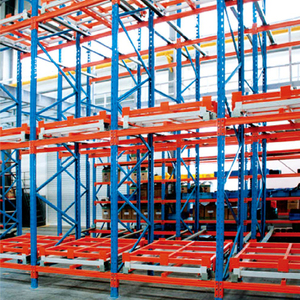
Custom 5 Layer Steel Push Back Racking System Heavy Duty Powder Coated Industrial Pallet Racks for Factory Storage
Send an Inquiry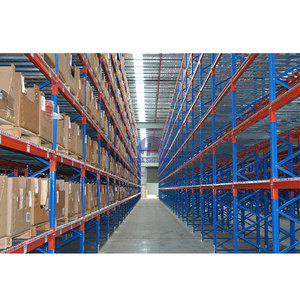
High Performance Heavy Duty Logistics Shelves Stocking Warehouse Storage Rack Pallet Rack for Heavy-Duty Reticulated Shelf
Send an Inquiry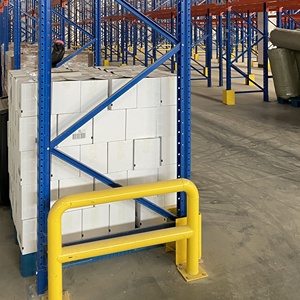
Heavy Duty Steel Pallet Rack Upright Frame Protector Stackable Safety Barrier for Warehouse Use
Send an InquiryThe Evolution of High-Density Automation: Multi-Way Shuttle Racking Systems
How 2D and 3D multi-directional shuttle technologies are revolutionizing cold storage, e-commerce fulfillment, and FMCG logistics globally.
Modern supply chain dynamics mandate maximum cubic storage utilization, low operational costs, and near-zero error rates in material handling. Traditional high-density systems—such as Drive-In racking or static Push-Back racks—offer superior volumetric density but suffer from structural vulnerability due to frequent forklift impacts, rigid FIFO/LIFO capabilities, and localized throughput bottlenecks. Multi-Way Shuttle Racking Systems represent the technological pinnacle of automated high-density pallet storage, decoupling vertical lifting from horizontal transport.
Engineered with low-alloy high-strength Q355B cold-rolled structural steel, multi-way shuttle systems utilize autonomous vehicles that navigate along specialized guide rails across both longitudinal (X-axis) and transverse (Y-axis) directions. Integrated with vertical reciprocating lifters (elevators) that manage level transitions (Z-axis), the entire rack matrix transforms into a dynamic, 3D intelligent warehouse node capable of handling up to 1,500 kg per unit payload with sub-millimeter positioning accuracy.
Information Gain Analysis: Decoupling Lifters & Shuttle Vehicles
Unlike conventional AS/RS stacker cranes, where a single mechanical failure halts an entire storage aisle, Multi-Way Shuttle Racking employs distributed fleet architecture. If a shuttle vehicle requires maintenance, the Warehouse Control System (WCS) seamlessly reroutes neighboring autonomous vehicles while vertical lifters continue operating. This structural redundancy delivers 99.9% uptime for mission-critical logistics facilities.
Comparative Matrix: Multi-Way Shuttle vs. Conventional Storage Systems
An objective engineering comparison evaluating space utilization, CAPEX/OPEX efficiency, and throughput capabilities.
| System Architecture | Cubic Volume Utilization | SKU Flexibility (FIFO / LIFO) | Forklift Risk Profile | Scalability & Throughput |
|---|---|---|---|---|
| Multi-Way Shuttle System (2D/3D) | Ultra-High (85%–92%) | Full Dynamic (FIFO & LIFO) | Zero (External Loading Bay Only) | Autonomous Fleet Scalable |
| Radio Single-Way Shuttle | High (75%–85%) | Semi-Flexible (Per Lane) | Low (Aisle Face Loading) | Linear Vehicle Dependent |
| Drive-In Racking | Medium-High (65%–75%) | Strict LIFO Only | High (Forklifts Enter Rack Structure) | Constrained by Driver Speed |
| Selective Pallet Racking | Low-Medium (40%–50%) | 100% Direct Access | Moderate (Aisle Navigation) | High Selectivity / Low Volume |
| Unit-Load AS/RS Crane | High (80%–88%) | Full FIFO / LIFO | Zero (Fully Automated) | Rigid (Single Crane Per Aisle) |
Why Global Procurement Leaders Partner with SolidFort
Combining factory-direct price advantages with rigorous structural engineering, certified quality control, and end-to-end export support.
In-House Cold-Roll Forming
Operating continuous automated roll-forming lines with high-precision punching dies, ensuring consistent profile geometry for continuous long-run upright frames and specialized shuttle tracks.
Rigorous Standards Compliance
Engineered and tested strictly in accordance with AS4084-2012, ANSI/RMI MH16.1, and European FEM 10.2.02 standards. Structural safety factors are verified under finite element analysis (FEA).
Global Engineering & CAD Support
Our engineering team delivers full turnkey layout proposals, 3D structural rendering, slab loading calculations, and LARC (Load Application & Rack Configuration) documentation free of charge.
Future Procurement Trends in Multi-Way Shuttle Racking Systems
Key technological shifts shaping the next decade of automated warehousing equipment investments.
As global supply chains shift toward hyper-fulfillment and automated cold-chain logistics, procurement managers must evaluate racking assets not merely as static steel hardware, but as dynamic digital infrastructure. The next generation of shuttle racking systems integrates three critical trends:
1. Swarm Intelligence & AI Fleet Routing
Modern WCS software utilizes real-time machine learning algorithms to distribute shuttle traffic dynamically across the racking grid. Autonomous path selection avoids localized congestion and automatically optimizes pallet layout based on SKU velocity metrics.
2. Ultra-Low Temperature Supercapacitor Energy
Traditional lithium battery storage often experiences rapid capacity degradation inside deep-freeze warehouses (-25°C to -30°C). Future multi-way shuttles utilize hybrid supercapacitor modules offering 10-second fast charging during level transitions and 10+ year service lifespans.
3. Modular Steel Framework Standardizations
To shorten global installation cycles, manufacturers are standardizing modular rack connections. Interlocking boltless beam brackets, pre-punched utility channels, and universal rail splices dramatically reduce on-site assembly labor costs.
Frequently Asked Procurement & Engineering Questions
Direct technical answers to help engineering and logistics teams validate structural, operational, and financial requirements.
Because multi-way shuttle systems store pallets in high-density multi-tier configurations, the concrete floor slab must meet strict structural load-bearing and surface flatness criteria. Typically, a slab thickness of 200mm to 300mm with double-layer steel reinforcement mesh is specified, capable of supporting concentrated upright point loads ranging from 80 kN to 150 kN per baseplate. Furthermore, floor flatness must comply with DIN 18202 Table 3 Line 4 or ASTM E1155 F-Min standards to ensure smooth shuttle vehicle tracking and vertical lifter alignment.
For most medium-to-large distribution hubs, the capital payback period ranges between 18 to 36 months. The financial return is driven by a 40%–60% reduction in warehouse building footprint costs, a 70% decrease in manual forklift operational labor, zero forklift structural damage expenditures, and up to 30% electrical energy savings in cold storage environments due to reduced refrigerated volume.
SolidFort manufactures cold-storage specific shuttle systems using low-temperature grade structural steels (such as Q355D or Q355E) designed to prevent cold-embrittlement. Electrical drive components, sensors, and cables utilize cold-rated IP65 enclosures. Shuttle power systems feature internal thermal management and specialized low-viscosity synthetic lubricants operating continuously down to -30°C.
Yes. The Warehouse Control System (WCS) controlling the shuttle fleet features open API architectures supporting RESTful web services, TCP/IP, and OPC-UA communication protocols. It interfaces natively with major enterprise platforms including SAP EWM, Oracle WMS, Manhattan Associates, and custom proprietary ERP networks.
Exported storage structures are customized to match local building codes. For North American destinations, engineering calculations adhere to RMI ANSI MH16.1 and IBC (International Building Code). European projects conform to EN 16681 (Seismic Design of Steel Pallet Racking), while Australian and New Zealand installations are engineered according to AS4084-2012 and NZS 4219 seismic guidelines.
Transform Your Warehouse Logistics Efficiency Today
Consult directly with our senior rack structural engineers for customized CAD layout designs, load application calculations, and factory-direct project quotes.
Send an Inquiry