Factory-Direct Structural Pallet Racking Showcase
Heavy-duty storage solutions customized for warehouse density, load parameters, and forklift accessibility.
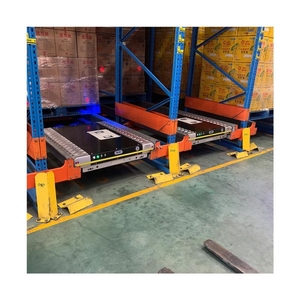
Blue Orange Customizable Colors Industrial Stacking Racks Heavy Duty Steel Pallet Rack System Warehouse Storage Shuttle Racking
Get a Quote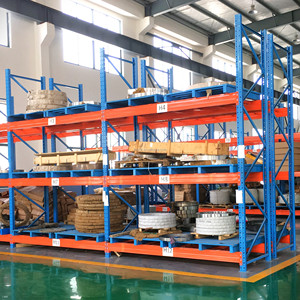
OEM Factory Wholesale Warehouse Racking Industrial Racks Customized Pallet Racking System Heavy Duty Steel Racks For Storage
Get a Quote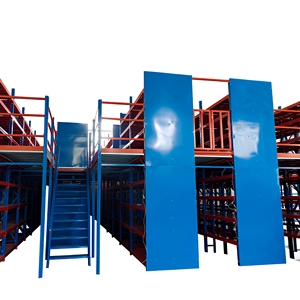
Custom Corrosion Protected Adjustable Pallet Rack Steel Structure Mezzanine Floor Heavy Duty Warehouse Loft Platform Racking
Get a Quote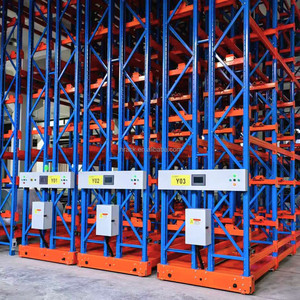
Industrial Heavy Duty High Efficiency Warehouse Electric Mobile Storage Shelf Automatic Mobile Racking System Pallet Rack
Get a Quote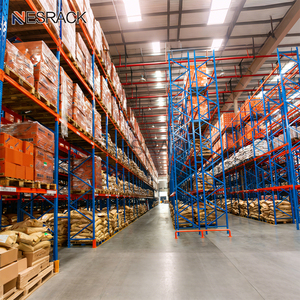
High Density Heavy Duty Galvanized Steel Adjustable Durable Double Deep Industrial Warehouse Pallet Racking System
Get a Quote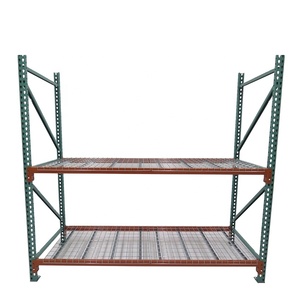
Heavy Duty CE Certificate Warehouse Storage Heavy Duty Pallet Rack US Teardrop Pallet Racking Industrial Racks
Get a Quote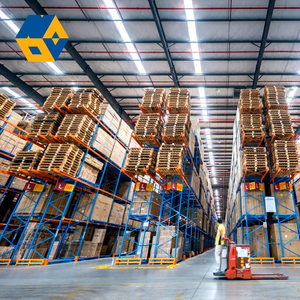
Heavy Duty 2000KG Per Layer Large Capacity Racking System Warehouse Storage High Duty Beam Stacking Pallet Rack Shelving Unit
Get a Quote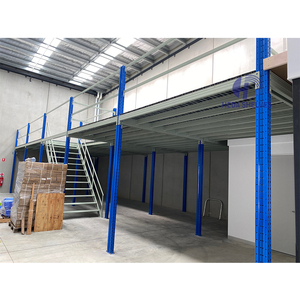
Mezzanine Beam Pallet Rack Steel Structure Mezzanine Floor Warehouse Storage Heavy Duty Loft Platform Mezzanine Racking
Get a QuoteThe Definitive Technical Guide to Structural Pallet Racking Sourcing from China
In modern industrial logistics and high-density fulfillment centers, structural pallet racking serves as the backbone of supply chain infrastructure. Selecting the right structural pallet racking system requires rigorous structural analysis, precise load calculation, and a deep understanding of steel metallurgical properties. As one of China's premier structural pallet racking manufacturers and exporters, SolidFort Storage Equipment Co., Ltd. presents this authoritative engineering whitepaper to assist procurement officers, warehouse operations directors, and logistics engineers in evaluating structural rack integrity, compliance frameworks, and long-term total cost of ownership (TCO).
1. Engineering Mechanics: Structural Steel vs. Roll-Formed Pallet Racking
A critical decision in facility design is choosing between structural C-channel steel racking and cold-rolled formed steel racking. While roll-formed racking offers flexibility and lower initial capital expenditure, heavy-duty industrial environments often demand structural steel's resilient characteristics.
- Material Composition & Yield Strength: Structural racking is manufactured from hot-rolled structural C-channel steel shapes (typically Q235B or Q355B grades under Chinese GB/T 700 standards, equivalent to ASTM A36 or ASTM A572 Grade 50). This delivers high ductility and exceptional frame impact resistance against lift-truck collisions.
- Beam-to-Frame Connection: Structural beams connect to upright frames using heavy-duty structural bolts (Grade 8.8 or Grade 5 high-strength bolts) rather than friction-fit teardrop clips. This rigid bolting mechanism drastically reduces torsional twisting under dynamic loading.
- Lower Maintenance Overhead: In high-throughput operations or cold-storage environments operating multi-shift cycles, forklift damage to cold-rolled columns accounts for up to 70% of rack repairs. Structural racking's thicker flange sections withstand shear forces significantly better, extending operational life to 20+ years.
Engineering Parameter Matrix: System Comparison
| Performance Metric | Structural C-Channel Racking | Standard Roll-Formed Racking | Radio Shuttle High-Density |
|---|---|---|---|
| Steel Member Gauge Thickness | 3.0mm – 6.0mm Hot-Rolled | 1.5mm – 2.5mm Cold-Rolled | 2.0mm – 4.0mm High-Tensile |
| Point Impact Load Resistance | Extremely High (Resists Forklift Shear) | Moderate (Requires Post Protectors) | High (Reinforced Guide Channels) |
| Seismic Shear & Flexural Rigidity | Superior (Rigid Bolted Nodes) | Standard Hook Connection | High (Integrated Diagonal Bracing) |
| Max Capacity Per Bay Position | Up to 5,000 kg (11,000 lbs) | Up to 3,000 kg (6,600 lbs) | Up to 2,000 kg per shuttle cart |
| Ideal Industry Application | Freezers, Heavy Manufacturing, 3PL | E-Commerce, FMCG, Light Industrial | Cold Storage, Beverage Distribution |
2. Future Procurement Trends in Industrial Storage & Racking Systems
Global logistics demand is undergoing structural shifts driven by automation, space optimization costs, and environmental mandates. When sourcing structural pallet racking from Chinese exporters, buyers must align procurement strategies with several rising trends:
A. Acceleration of Automation-Ready Structural Hybrid Racking
Traditional manual pallet storage is rapidly integrating with Automated Storage and Retrieval Systems (AS/RS) and Autonomous Mobile Robots (AMR). Structural racking systems are now designed with precise manufacturing tolerances (straightness tolerances within 1/1000 of span length) to allow seamless mounting of top-guide crane rails, shuttle tracks, and sensor arrays. Buying structural racking that can retroactively host Radio Shuttles or AS/RS cranes safeguards facility infrastructure investment against premature obsolescence.
B. Total Cost of Ownership (TCO) Prioritization over Initial CapEx
International enterprise buyers are shifting procurement metrics from upfront material cost per pallet position to 15-year TCO. Factors such as lower annual structural repair budgets, zero downtime from bent uprights, and superior residual steel value make heavy-duty structural C-channel systems far more cost-effective over long operational lifecycles.
C. Decarbonization and Sustainable Surface Coatings
Regulatory frameworks in Europe (CBAM) and North America require complete visibility into embodied carbon. Leading manufacturers are transitioning to eco-friendly thermosetting epoxy-polyester powder coatings free of VOCs, alongside energy-efficient automated powder recovery lines. Additionally, hot-dip galvanized finishes complying with ISO 1461 are increasingly preferred for cold-chain facilities to eliminate rust flakes in sanitary food environments.
3. Key Technological Development Trends in Structural Racking
The manufacturing landscape for pallet racking systems in China has evolved from simple steel fabrication to high-precision structural engineering. Technical advancements shaping modern production include:
- Finite Element Analysis (FEA) Simulation: Advanced 3D FEA computational modeling is utilized prior to manufacturing to evaluate dynamic bucking modes, sway deflection under seismic accelerations (P-Delta effects), and stress concentrations at beam-to-column connection plates under asymmetrical loading.
- Automated Robotic Welding Cells: Structural connector plates, footplates, and channel stiffeners are welded using multi-axis robotic welding stations. This guarantees full-penetration structural welds with zero void inclusion, meeting AWS D1.1 structural welding code requirements.
- High-Strength Micro-Alloy Steel Grades: Transitioning from standard carbon steel to micro-alloyed niobium-titanium high-yield steels allows manufacturers to optimize member profiles, reducing overall rack deadweight while enhancing load carrying limits.
Manufacturer Excellence & Engineering Competence
Delivering precision-manufactured structural storage equipment directly from our Xiamen production base.
30,000㎡ Modern Production Base
Equipped with automated roll-forming machines, laser tube cutters, and robotic welding cells capable of processing over 3,000 tons of structural steel monthly.
Global Compliance Certified
All structural designs strictly adhere to international engineering standards, including Australian standard AS4084-2012, US RMI (ANSI MH16.1), and European FEM 10.2.02.
Free Technical CAD & Engineering Layout
Our structural engineers provide complimentary 2D warehouse CAD layout planning, 3D structural rendering, and LARC (Load Application & Rack Configuration) documentation.
Container Loading Optimization
Custom steel bundling and professional export packing protocols maximize container volume utilization, minimizing ocean freight costs per unit.
Frequently Asked Questions for Buyers & Engineers
Comprehensive technical and commercial answers regarding structural pallet racking selection, installation, and export logistics.
What does structural pallet racking cost per pallet position?
Costs vary based on current raw steel market prices, rack height, load capacity, and seismic factors. Standard selective structural racking generally ranges between USD 50 to USD 100 per pallet position. High-density structural systems (such as Push Back, Drive-In, or Radio Shuttle systems) typically average USD 100 to USD 250 per position. These estimates reflect FOB factory material costs; structural engineering stamps, freight, and ground installation are quoted based on site specifics.
Do structural pallet racks require heavy-duty floor anchoring?
Yes. Compliance under ANSI/RMI MH16.1 and AS4084 requires every structural rack column footplate to be firmly anchored to the reinforced concrete slab using heavy-duty wedge anchors or chemical epoxy bolts. Baseplate dimensions, anchor diameter, and embedment depth are strictly specified based on slab thickness (typically 150mm–250mm minimum), concrete compressive strength (28-day f'c ≥ 25–30 MPa), and regional seismic zone accelerations.
How is maximum load capacity calculated for structural pallet racking?
Load capacity is evaluated across two structural components: Beam Uniformly Distributed Load (UDL) capacity and Upright Frame Load capacity. Beam capacity is determined by maximum allowable flexural bending stress and vertical deflection limits ($L/200$ ratio). Frame capacity depends heavily on unbraced vertical beam spacing—as vertical beam distance increases, column buckling strength decreases. Always consult manufacturer Load Application & Rack Configuration (LARC) drawings rather than estimating capacity manually.
What are standard dimensional specifications for GMA and Euro pallet racking?
For standard North American 40" x 48" GMA pallets, upright frame depth is typically 42 inches (allowing a 3-inch pallet overhang front and rear), while standard beam length is 96 inches (8 feet) or 108 inches (9 feet) to hold two pallets per level. For European 1200mm x 800mm or 1200mm x 1000mm Euro pallets, frame depths of 1100mm and beam lengths of 2700mm are standardized. Custom heights ranging up to 12+ meters are engineered upon request.
What inspection and maintenance protocols apply to structural racks?
Facility operators should conduct weekly visual inspections for missing hardware, sheared safety pins, or direct forklift collisions. A thorough annual inspection must be executed by a certified rack inspector under EN 15635 or RMI guidelines. Out-of-plumb vertical limits must not exceed $1/240$ of height. Damaged bays must be immediately isolated, unloaded, and repaired using original factory components.
What is the standard production lead time and available trade terms?
Standard orders ship within 10 to 15 business days following final CAD layout sign-off. Large-scale engineered structural projects typically require 25 to 30 days. We support international commercial shipping terms including FOB (Xiamen Port), CIF, CFR, and DDP (Delivered Duty Paid), providing complete container packing lists and customs documentation.