High-Performance Cold Storage Racking Systems
Engineered to withstand temperatures down to -30°C with maximum cubic space utilization and certified structural compliance.
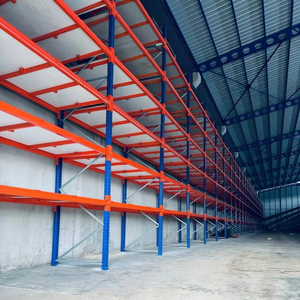
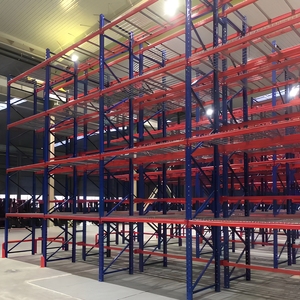
Engineering Expertise for Sub-Zero Logistics
SolidFort combines factory-direct manufacturing power with advanced metallurgical science to deliver cold storage systems that reduce total cost of ownership (TCO).
Custom Steel Metallurgy
We utilize low-temperature structural steel grades (such as Q355D and Q355E) specifically formulated to resist ductile-to-brittle transition down to -40°C, ensuring structural integrity without micro-cracking.
Advanced Surface Protection
Our hot-dip galvanizing (HDG) compliant with ISO 1461 and low-temperature electrostatic powder coatings prevent micro-fissure condensation corrosion in high-humidity thaw cycles.
International Compliance
Every rack framework engineered by SolidFort meets or exceeds strict AS4084-2023 (Australia), RMI ANSI MH16.1 (USA), and FEM 10.2.02 (Europe) design standards with full structural audit reporting.
Technical White Paper: Architectural & Engineering Requirements for Cold Storage Racking
Cold storage facilities operate in some of the most punishing industrial environments. Operating temperatures ranging from 0°C to -30°C (and blast freezing down to -40°C) impose extreme thermal and physical stresses on storage structures. When sourcing from China wholesale cold storage pallet racking suppliers & exporters, B2B procurement managers and structural engineers must evaluate technical variables that go far beyond standard dry-ambient warehouse racking systems.
The Core Metric: Energy Density Ratio ($/m³)
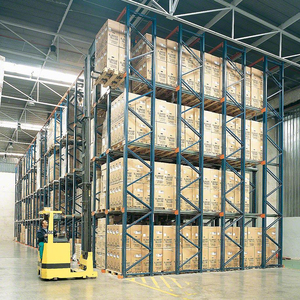
Refrigerated and frozen cubic space can cost 3× to 5× more to operate than ambient storage. The primary objective of cold storage design is to maximize cubic utilization while preserving forced-air thermal circulation. Selecting high-density rack configurations (such as Radio Shuttle, Drive-In, or Double-Deep) directly drops your operating power consumption per pallet position.
1. Low-Temperature Steel Embrittlement & Material Selection
At ambient temperatures, structural carbon steel (like standard Q235B) exhibits ductile behavior. However, as temperatures drop below freezing, carbon steel undergoes a microstructural shift known as the Ductile-to-Brittle Transition Temperature (DBTT). Under sub-zero conditions, standard steel loses impact toughness and can suffer catastrophic brittle fractures under sudden loads (such as forklift placement or accidental column impact).
To mitigate embrittlement, SolidFort utilizes certified Q355D and Q355E high-strength alloy steels for upright columns and load beams operating under -20°C. These steel grades undergo Charpy V-Notch impact testing down to -40°C, ensuring high energy absorption and structural elasticity under severe thermal stress.
2. Moisture Condensation, Frost Heave & Anti-Corrosion Systems
Cold storage facilities undergo periodic thermal cycling during maintenance, defrosting, or loading door cycles. Moisture in the air rapidly condenses on cold steel surfaces, creating aggressive localized micro-environments that cause rust under conventional powder coatings.
- Hot-Dip Galvanizing (HDG): Recommended for sub-zero freezer environments (-18°C to -30°C). Steel components are submerged in molten zinc at 450°C, creating a thick (minimum 65–85 µm) zinc-iron alloy barrier that provides self-healing galvanic protection.
- Thermal-cured Electrostatic Powder Coating: Applied with specialized low-temperature epoxy-polyester formulas that maintain flexibility, preventing micro-fissuring and flaking when structural steel expands and contracts.
3. Structural Anchoring & Slab Thermal Protection
Anchoring racking to concrete slabs inside cold facilities presents unique civil engineering challenges. Expansion anchor bolts can loosen due to concrete micro-shrinkage in freezing conditions. Furthermore, frost heave beneath non-insulated floor slabs can shift rack alignment. SolidFort specifies high-grade chemical anchor studs or specialized low-temperature mechanical anchors certified under ETAG 001 for cold room applications.
Comparative Blueprint: Cold Storage Racking Architecture Selection
Selecting the optimal structural framework requires balancing SKU volume, pallet turnover rate, and inventory handling principles (FIFO vs. LIFO):
| Racking Architecture | Cubic Density | Selective Access | Inventory Flow | Forklift Entry | Optimal Cold Storage Application |
|---|---|---|---|---|---|
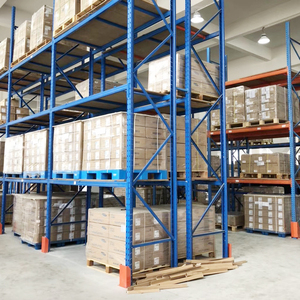
| Selective Pallet Racking | Standard (~40-50%) | 100% Direct Access | FIFO / LIFO | No (Aisle Only) | High SKU count, low-volume distribution centers |
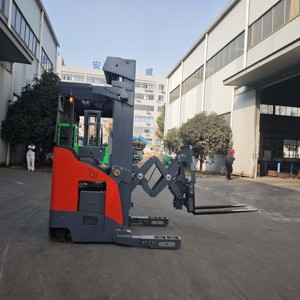
| Double-Deep Racking | High (~60-65%) | 50% Direct Access | LIFO | No (Pantograph Reach) | Medium SKU diversity with paired pallet movement |
| Drive-In / Drive-Thru | Very High (~75-85%) | Low (Block Access) | LIFO / FIFO | Yes (Enters Rack Lanes) | Bulk storage of single SKUs, seasonal produce, butter, meat |
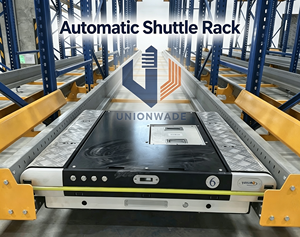
| Automated Radio Shuttle | Maximum (~85-90%) | Medium (By Lane) | FIFO or LIFO | No (Shuttle Automation) | High-throughput frozen food, ice cream, beverage distribution |
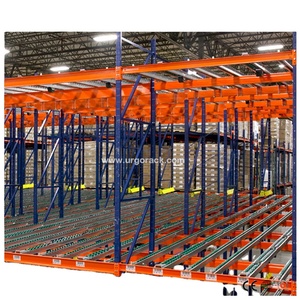
| Gravity Pallet Flow | Very High (~80%) | Medium (Face Load) | Strict FIFO | No (Gravity Roller Track) | Fast-moving perishable goods with strict expiration control |
Future Procurement & Technological Trends in Cold Chain Storage (2026–2035)
The global cold chain logistics market is undergoing rapid evolution driven by energy costs, labor scarcity, and stringent food safety regulations. Buyers looking for reliable suppliers in China must align with these dynamic technological shifts:
1. Convergence of Radio Shuttle Automation with AS/RS
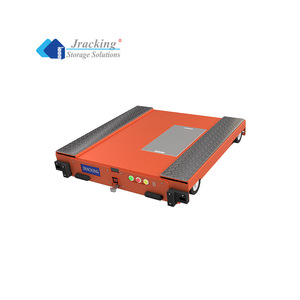
Labor efficiency in sub-zero environments (-25°C) is a primary pain point for warehouse operators. Forklift drivers cannot work extended shifts in low temperatures without frequent rest breaks. Future procurement is pivoting strongly toward Automated 4-Way Radio Shuttle Systems and AS/RS (Automated Storage and Retrieval Systems). These systems replace manual driving inside cold rooms with computerized shuttles, reducing labor overhead by up to 70% while maximizing vertical bay height up to 30+ meters.
2. Dynamic Airflow & Thermal Efficiency Modeling
Legacy racking designs often obstructed evaporative cooler airflow, leading to "hot spots" where food safety could be compromised. Next-generation cold storage racking integrates Computational Fluid Dynamics (CFD) airflow modeling into the structural design. Beam profiles and pallet spacing are engineered to facilitate optimal thermal convection, reducing refrigeration energy loads by 12% to 18%.
3. IoT Structural Monitoring & Real-Time Strain Gauges
As cold storage facilities grow taller and denser, structural health monitoring becomes critical. Modern high-bay installations are increasingly equipped with embedded IoT strain sensors and laser tilt detectors. These devices alert warehouse management software (WMS) to micro-deflections, accidental forklift impacts, or slab shifts caused by sub-floor thermal contraction before structural failure occurs.
Optimize Your Cold Storage Footprint Today
Get direct access to certified engineers, custom CAD warehouse layouts, and factory-direct pricing for your sub-zero project.
Request Engineering Layout & QuoteFrequently Asked Questions (FAQ) - Cold Storage Procurement
Here are expert answers to critical questions faced by warehouse managers, engineers, and international buyers when procuring cold storage pallet racking systems from China exporters.
What steel grade should be specified for cold storage environments below -20°C?
For temperatures below -20°C, standard Q235B structural steel is susceptible to low-temperature embrittlement. We strongly recommend specifying Q355D or Q355E high-strength structural steel. These grades are produced with low carbon equivalents and fine grain structures that undergo Charpy V-notch impact testing at -20°C to -40°C, ensuring structural ductility and safety under impact loads.
Hot-Dip Galvanizing vs. Electrostatic Powder Coating: Which is better for freezers?
Hot-Dip Galvanizing (HDG) is superior for deep-freeze environments (-18°C to -30°C) and environments with high humidity fluctuations during defrost cycles. HDG provides a metallurgical zinc bond (65-85 µm thick) that protects against rust even if scratched. Powder coating is suitable for cool rooms (0°C to +5°C) or controlled low-humidity freezers, provided a low-temperature flexible epoxy resin formula is used.
How does temperature affect pallet rack load capacity calculations?
Temperature itself does not reduce the yield strength of structural steel, but cold environments decrease ductility and toughness. Consequently, safety factors must be adjusted according to ANSI/RMI MH16.1 or FEM 10.2.02 guidelines. Structural engineers must account for accidental impact loads from forklifts, which carry higher destructive force against brittle steel at sub-zero temperatures.
Why is Radio Shuttle Racking preferred over Drive-In Racking for cold rooms?
While Drive-In racking is cost-effective, it requires forklift trucks to enter the storage structure, increasing thermal loss through open doors, risking structural collision, and slowing down operational throughput. Radio Shuttle racking keeps forklifts in main aisles while automated shuttles carry pallets deep into lanes, doubling handling speed, eliminating structural impact risks, and maximizing volume utilization.
What container shipping protection is used to prevent rust during transit?
During ocean transit from China across climate zones, condensation ("container rain") can damage unpackaged steel. SolidFort protects exports by wrapping pallet rack components in heavy-duty waterproof plastic film, securing metal bundles with steel strapping over protective corner guards, adding industrial-grade silica gel desiccant packs inside sealed containers, and using hot-dip galvanized coating on structural fasteners.
What technical parameters are required to generate a custom CAD rack proposal?
To prepare an accurate engineering layout and structural calculation report (LARC), please provide: (1) Warehouse building floor plan with ceiling clear height and column grid, (2) Floor slab concrete thickness and reinforcement spec, (3) Pallet specifications including width, depth, height, and gross load weight, (4) Operating temperature range, and (5) Forklift model, turning radius, and maximum lift height.
Ready to Engineer Your Cold Storage Facility?
Contact SolidFort’s senior engineering team to receive complimentary technical consultation, CAD designs, and competitive wholesale pricing within 24 hours.
Contact Us