Engineered Heavy Duty Warehouse Racking Systems
Precision cold-rolled structural steel rack configurations tailored for maximum cubic utilization, high load capacity, and seamless intralogistics.
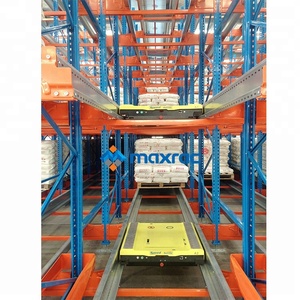
Steel Pallet Shuttle Racking System with 4-Layer Snap-In Installation and Space-Saving Design for Compact Storage
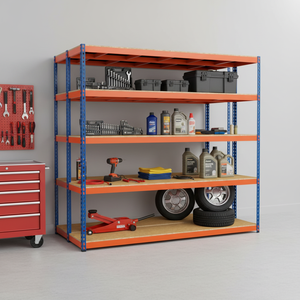
4 Tier Industrial Heavy Duty Boltless Racking Garage Workshop Shelving Warehouse Shelves
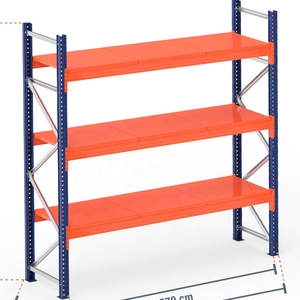
Heavy Duty Warehousing Racking Systems
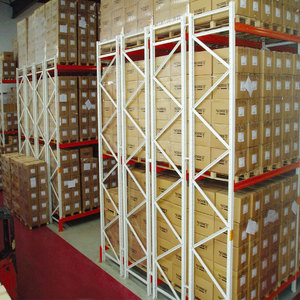
High Density 5 Layer Steel Double Deep Racks Reinforced Heavy Duty Pallet Racking for Industrial Warehouse Bulk Storage
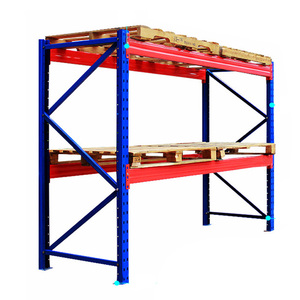
Outdoor Pallet Racking Metal Storage Organizer Rack For Warehouse Store Factory 1000KG 2000KG 3000KG Pounds Tons
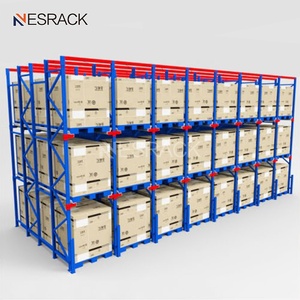
Drive-In Heavy Duty Steel Pallet Rack with 2000kg Load Capacity Seismic Reinforcement for Warehouse Storage
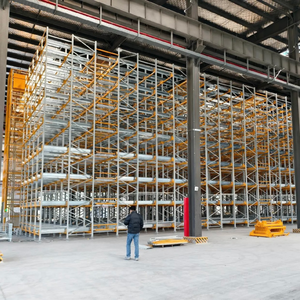
Heavy-Duty Four-Way Shuttle Storage System Automated Pallet Racks for Industrial Warehousing & Intralogistics
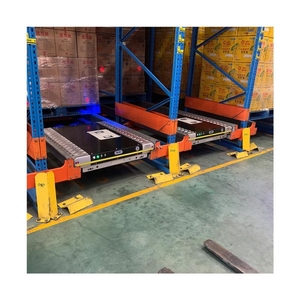
Blue Orange Customizable Colors Industrial Stacking Racks Heavy Duty Steel Pallet Rack System Warehouse Storage Shuttle Racking
Why Partnering Direct with SolidFort Drives Operational Value
Bridging Chinese engineering scale with international structural standards to deliver high-performance, cost-optimized racking systems.
High-Grade Steel Sourcing
We exclusively utilize certified prime cold-rolled structural steel (Q235B & Q355B) sourced from Tier-1 state steel mills (Baosteel/Shougang). This ensures consistent yield strength, structural elasticity, and minimal deflection under heavy continuous loads.
Certified Standards Compliance
Every system engineered by SolidFort complies strictly with global standards including AS4084-2023 (Australia), RMI ANSI MH16.1 (USA), and FEM 10.2.02 (Europe). We issue full Load Application & Rack Configuration (LARC) drawings for local permitting.
End-to-End CAD & Engineering
Our in-house structural engineers evaluate concrete slab thickness, seismic zone requirements, forklift turning radiuses, and SKU velocity to generate 3D CAD layouts and stress simulation models before production commences.
Pallet Racking Structural Specification Comparison
A buyer’s technical cheat sheet for evaluating pallet storage system metrics, load limitations, and operational suitability.
| Racking System Type | Selectivity | Density Rating | Standard Upright Profiles | Beam Load Capacity (Pair) | Optimal Application Scenario |
|---|---|---|---|---|---|
| Selective Pallet Racking | 100% Direct Access | Standard (40-50%) | 80×60, 90×70, 100×70 mm | 1,000 kg – 4,500 kg | FMCG, High SKU Count, E-commerce Fulfillment |
| Drive-In / Drive-Thru | Low (LIFO / FIFO) | Very High (75-85%) | 90×70, 100×70, 120×95 mm | 1,000 kg – 2,000 kg/pallet | Cold Storage, Homogeneous Bulk Goods, Seasonal Stock |
| Radio Shuttle Racking | Medium (LIFO / FIFO) | Ultra High (85-90%) | 90×70, 100×70, 120×95 mm | 500 kg – 2,000 kg/pallet | Beverage Processing, Sub-Zero Logistics, High Velocity |
| Double-Deep Racking | 50% Immediate Access | High (60-65%) | 90×70, 100×70 mm | 1,000 kg – 3,500 kg | General Manufacturing, Medium SKU Diversity |
| 4-Way Shuttle Automated | High (AS/RS Integrated) | Maximum (90%+) | Engineered Custom Columns | 500 kg – 1,500 kg/pallet | Smart Warehouses, Fully Automated Intralogistics |
Industry Whitepaper: The Strategic Sourcing Guide for Heavy-Duty Pallet Racking Systems
As modern distribution centers transition toward higher vertical clearances and denser storage footprints, selecting a qualified China heavy duty pallet racking manufacturer is no longer just a purchasing transaction—it is a critical engineering decision impact safety, structural durability, and intralogistics efficiency. Global buyers face fluctuating raw material costs, strict regional building codes (such as RMI in North America or AS4084 in Australia), and complex shipping logistics. This document outlines the key structural considerations, steel metallurgy benchmarks, and procurement trends driving the industry.
1. Metallurgy and Cold Roll-Forming Precision
The structural integrity of a pallet racking frame relies heavily on the mechanical properties of its steel feed line and the continuous cold roll-forming process. SolidFort utilizes high-tensile steel structural profiles engineered to yield strength benchmarks:
- Q235B Grade Steel: Yield strength $\sigma_y \ge 235 \text{ MPa}$, ideal for standard ambient selective racking beams and medium-duty frame structures.
- Q355B / Q355D High-Strength Steel: Yield strength $\sigma_y \ge 355 \text{ MPa}$, mandatory for high-bay upright columns, heavy-duty drive-in rails, and sub-zero cold storage operations down to -30°C where impact resistance and low-temperature ductility are essential.
Precision roll-forming with up to 18-24 pass stations ensures tight dimensional tolerances on tear-drop, omega, and diamond-hole profile punching. This prevents torsional buckling under heavy vertical compression and eccentric loading.
2. Structural Safety Factors & Beam Deflection Criteria
In accord with ANSI/RMI MH16.1 and AS4084-2023, pallet rack beams must be designed to withstand maximum uniformly distributed loads (UDL) without exceeding vertical deflection limits of $\frac{L}{240}$, where $L$ represents clear beam span. For a standard 2700mm (9ft) beam holding two 1,500kg GMA pallets, maximum allowable vertical deflection under full design load is strictly constrained to 11.25mm.
Furthermore, upright frames must maintain a structural safety factor of 1.65 against yield failure, incorporating seismic factors ($S_a$ coefficients), sway stability checks, and baseplate anchor shear stresses calculated for specified concrete slab compressive strengths (minimum 25-30 MPa recommended).
Global Sourcing Trends & Future Developments in Warehouse Racking
The global intralogistics landscape is evolving rapidly under the pressure of rising real estate costs, labor shortages, and environmental sustainability mandates. Industrial buyers sourcing wholesale heavy-duty racking from China must align their procurement strategies with four key future developments:
1. Convergence of Radio Shuttle & AS/RS Automation
Traditional static storage systems (such as manual selective or drive-in racking) are progressively giving way to automated and semi-automated hybrid systems. 4-Way Radio Shuttle Racking and Automated Storage and Retrieval Systems (AS/RS) allow warehouses to achieve up to 90% space utilization while eliminating human forklift error inside storage channels.
2. Green Steel Fabrication & Eco-Powder Coatings
Global supply chain carbon accounting (Scope 3 emissions) is pushing buyers toward eco-friendly storage equipment. Leading Chinese manufacturers are incorporating recycled scrap content in steel melting and transitioning to VOC-free electrostatic epoxy-polyester powder coating lines with zero heavy-metal runoff.
3. Modular Boltless Assembly & Reduced On-Site Labor
With installation labor costs skyrocketing across Western markets, modular pallet racks engineered with 4-layer snap-in connectors, pre-assembled upright frames, and toolless safety locks significantly cut on-site construction timelines by up to 35%.
4. Advanced Anti-Corrosion Finishing for Harsh Environments
Outdoor storage racks, chemical warehouses, and high-humidity coastal facilities demand specialized corrosion barriers. Pre-galvanized profiles, hot-dip galvanizing (HDG according to ISO 1461), and zinc-rich primer basecoats are becoming standard requirements for high-durability infrastructure projects.
Frequently Asked Questions for Sourcing Racking from China
Technical clarity on pricing models, concrete floor requirements, standard lead times, and regulatory compliance.
Cost varies based on system design, total storage height, and load rating. Standard selective pallet racking typically ranges between USD 45 and USD 85 per pallet position for materials. High-density semi-automated systems (such as Radio Shuttle or Push-Back racking) range from USD 95 to USD 220 per pallet position, inclusive of shuttle carts and guide rails. Volume orders directly from SolidFort benefit from factory-direct raw steel pricing tier structures.
Yes. Under ANSI/RMI MH16.1 and AS4084, every upright baseplate must be anchored into the concrete slab using mechanical wedge anchors or chemical epoxy bolts. Standard heavy-duty installations require an uncracked concrete slab thickness of at least 150mm to 200mm (6–8 inches) with a minimum compressive strength of 3,000 PSI (25 MPa) to withstand baseplate shear and uplift forces.
SolidFort provides comprehensive design documentation including Load Application and Rack Configuration (LARC) drawings, structural finite element analysis (FEA) calculation sheets, and mill test certificates (MTC) proving steel yield strength. Third-party testing reports from SGS, TÜV, or local structural engineer sign-offs (PE Stamp in the US or CPEng in Australia) are available upon request for municipal building permits.
Standard order manufacturing takes approximately 10 to 15 business days for standard selective racking component runs at our Xiamen plant. Large-scale engineered projects requiring custom colors or automated shuttle integration take 25 to 30 days. Ocean freight delivery to North America, Europe, or Australia typically ranges from 18 to 35 transit days depending on destination port choice.
All upright frames, beams, and shelf panels are bundled using heavy-duty steel strapping, protective corner edge protectors, industrial plastic wrapping, and timber dunnage blocks. Components are optimized to fit 40ft High Cube (40HC) shipping containers using customized container loading plans to prevent shift damage and minimize ocean freight cost per unit volume.
Ready to Optimize Your Warehouse Storage Footprint?
Contact our senior structural racking engineers today for a complimentary CAD layout drawing, structural load calculation report, and factory-direct wholesale quotation.