Featured Smart Storage & Heavy-Duty Pallet Systems
Direct factory engineering from SolidFort. Compliant with AS4084:2023, RMI (ANSI MH16.1), and FEM 10.2.02 international safety standards.
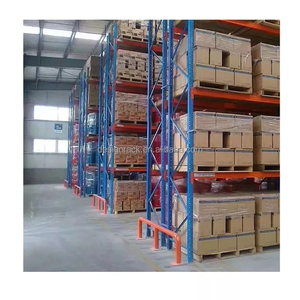
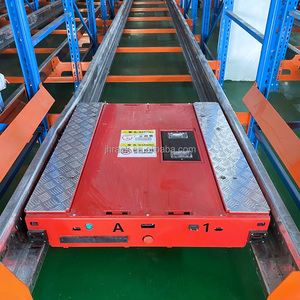
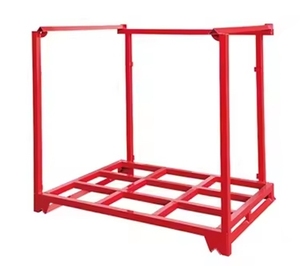
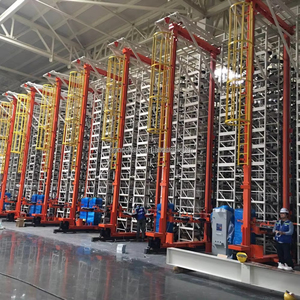
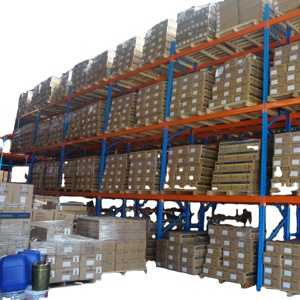
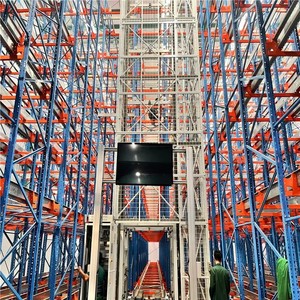
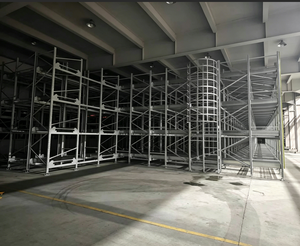
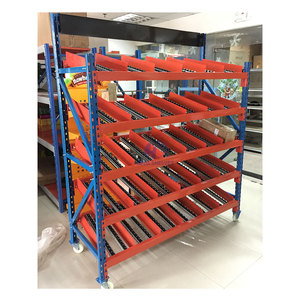
Engineering Excellence: SolidFort Storage Equipment Infrastructure
SolidFort Storage Equipment Co., Ltd. stands as a premier direct-factory manufacturer specializing in structural steel pallet racking systems and automated intralogistics infrastructure. Operating out of a state-of-the-art 30,000㎡ manufacturing complex in Tongan District, Xiamen, China, SolidFort bridges the gap between cost-effective Chinese steel fabrication and rigorous Western engineering compliance.
Unlike trading intermediaries, SolidFort controls the entire value chain—from high-yield raw steel roll forming and robotized MIG welding to electrostatic thermosetting powder coating and containerized packing. Every rack layout is vetted by in-house structural engineers utilizing Finite Element Analysis (FEA) to simulate load stress, elastic deformation, and seismic resilience prior to manufacturing.
Custom FEA Engineering
Every structural column and beam profile is modeled for specific pallet dimensions, unit loads, dynamic forklift impacts, and local seismic zone requirements under ANSI MH16.1 and FEM 10.2.02 codes.
ISO & CE Quality Control
Raw materials utilize high-tensile Q235B and Q355B structural steel. In-line ultrasonic weld testing, paint thickness gauges, and load-deflection test rigs ensure 100% traceably certified output.
Optimized Export Logistics
Custom loading plans maximize 40ft High Cube container volumetric capacity. Component bundles are wrapped with protective edge boards and anti-moisture barrier films for ocean shipping.
Architectural Matrix: Modern Warehouse Racking Systems Compared
Selecting the optimal pallet storage configuration requires balancing selectivity, floor area utilization, SKU diversity, and capital expenditure (CapEx). Below is an engineering evaluation matrix designed for supply chain managers, warehouse operations leaders, and industrial general contractors.
| Racking System Type | Selectivity (%) | Volume Utilization | Handling Speed | Floor Space Efficiency | Capital Expenditure |
|---|---|---|---|---|---|
| Selective Pallet Racking | 100% Direct | 35% – 45% | High | Standard Aisle (3.2–3.8m) | Low (Base CapEx) |
| Radio Shuttle Racking | 20% – 30% (Filtered) | 75% – 85% | Very High | Ultra-Dense (No Aisles) | Medium-High |
| Four-Way Shuttle AS/RS | 100% Automated | 85% – 92% | Automated Continuous | Maximum Cubic Footprint | High (Automation) |
| Drive-In / Drive-Thru | 10% – 15% (LIFO) | 60% – 75% | Slow-Medium | High Density (Drive-in Lanes) | Low-Medium |
| Gravity Pallet Flow | FIFO Controlled | 70% – 80% | High (Self-Paced) | Dedicated Load/Unload Aisles | Medium |
| Cantilever Racking | 100% (Long Stock) | Variable | High | Specialized Linear Storage | Medium |
Engineering Rule of Thumb: When warehouse land cost exceeds $120/sqm or cold storage energy expenses dominate operating budgets, transitioning from Selective Pallet Racking to a Radio Shuttle or Four-Way AS/RS System yields a payback period (ROI) of 14 to 22 months via cubic footprint compression.
Future Trends in Global Warehouse Pallet Racking Sourcing
The global industrial storage landscape is undergoing a paradigm shift driven by e-commerce velocity, labor shortages, and stringent ESG (Environmental, Social, and Governance) targets. As global buyers turn to Chinese manufacturing hubs for smart racking infrastructure, key procurement trends are defining the market for 2026 and beyond.
1. The Convergence of Cold-Formed Steel and IoT Automation
Traditional passive pallet racks are rapidly evolving into integrated structural node networks. Smart racking now incorporates load-bearing sensor arrays, wireless vibration detectors, and photoelectric positioning targets directly integrated into beam connectors. This hardware layer interfaces with Warehouse Control Systems (WCS) and Warehouse Management Systems (WMS), enabling real-time structural health monitoring, automated pallet counting, and predictive maintenance alerts when forklift collisions occur.
2. Transition from Drive-In Racking to Semi-Automated Radio & Four-Way Shuttles
While traditional Drive-In racking provided high volumetric density, its reliance on forklifts driving inside steel channels created significant maintenance costs due to frame damage, alongside lower operational speeds. Modern wholesale buyers are replacing Drive-In systems with Radio Shuttle and Intelligent Four-Way Steel Shuttle platforms. By deploying autonomous battery-powered carts inside high-density channels, operators achieve faster throughput, eliminate forklift-structure impact risks, and seamlessly support FIFO/LIFO inventory switching.
3. Seismic Resilience & Advanced Code Compliance (AS4084-2023 & RMI ANSI MH16.1)
International regulatory authorities have raised building code requirements for industrial steel storage racks. Modern project tenders mandate strict adherence to dynamic seismic response spectral analysis. Overseas buyers are requiring Chinese suppliers to deliver complete calculations verifying frame buckling limits, beam-to-column connector moment resistance, and baseplate anchor bolt embedment depths tailored to concrete slab compressive strength (e.g., minimum 28-day 30MPa concrete).
4. Sustainable Manufacturing & Low-VOC Thermosetting Finishes
Corporate sustainability directives demand carbon footprint reduction throughout the supply chain. Wholesale factories in China are adopting ultra-efficient continuous powder-coating lines utilizing closed-loop water recovery and zero-VOC epoxy-polyester formulations. Furthermore, high-yield steel alloys (such as Q355B grade steel replacing legacy low-carbon steel) allow engineers to decrease structural steel gauge weight without compromising uniformly distributed load (UDL) ratings, reducing freight emissions per pallet position.
B2B Buyer Sourcing Guide: Mitigating Risks When Purchasing Racking from China
Procuring wholesale warehouse racking direct from Chinese factories provides up to 30%–50% cost savings compared to domestic Western distributors. However, ensuring structural safety and project execution demands a rigorous procurement protocol. Below is the technical audit checklist developed by SolidFort senior engineers for enterprise procurement managers:
1. Material Specification Audit
Verify that raw steel plates conform to certified chemical and mechanical properties. Insist on Mill Test Certificates (MTC) proving yield strength (≥235 N/mm² for Q235B; ≥355 N/mm² for Q355B). Ensure cold-roll forming profiles maintain uniform wall thickness tolerances within ±0.1mm across upright columns.
2. Structural Weld Quality (AWS D1.1)
Upright frame bracing, beam connector plates, and baseplates must be welded under standardized process controls. Ensure your factory partner utilizes automated robotic welding arms with constant voltage monitoring to prevent undercut, porosity, or insufficient throat thickness at high-stress joints.
3. Surface Treatment & Salt Spray Resistance
Inspect the pre-treatment phase of the powder coating line. A 9-stage degreasing and iron-phosphate washing cycle is critical to prevent future flaking and rust under humid warehouse conditions. For cold storage (-25°C) or outdoor applications, specify hot-dip galvanizing compliant with ISO 1461 standards.
4. Load Application & Rack Configuration (LARC)
Never accept generic spec sheets. Every factory quotation should be accompanied by clear LARC drawings specifying maximum beam pair capacities, allowable beam deflection ratios (typically restricted to L/200), total bay loads, and recommended anchor bolt torque specifications.
Frequently Asked Procurement & Engineering Questions
Technical answers to common questions asked by supply chain engineers, factory buyers, and warehouse managers.
Optimize Your Warehouse Cubic Storage Density Today
Get a complimentary 2D/3D CAD layout design, structural engineering load calculation report, and factory-direct pricing quote within 24 hours.
Send an Inquiry