Industrial Heavy-Duty Coil & Warehouse Storage Racking Solutions
Factory-direct engineered systems optimized for high concentrated loads, maximum storage density, and operational safety.
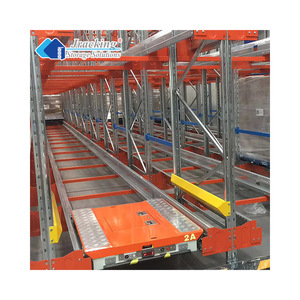
Jracking Heavy Duty CE Certified Radio Shuttle Rack for Automated Logistics
Send an Inquiry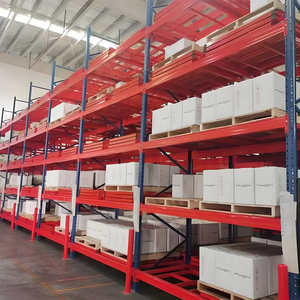
Heavy Duty Push Back Pallet Racking Storage System (1000-2000kg Capacity)
Send an Inquiry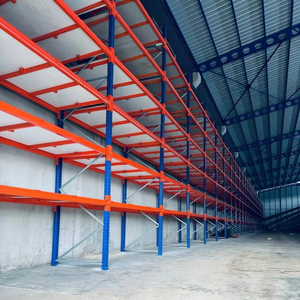
Peterack Heavy Duty Stacking Shelf Racks Multi-Layer Warehouse Storage
Send an Inquiry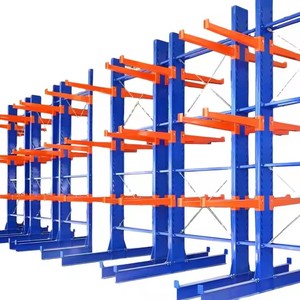
Industrial OEM/ODM Galvanized Cantilever Racking for Heavy Coil & Pipe Storage
Send an Inquiry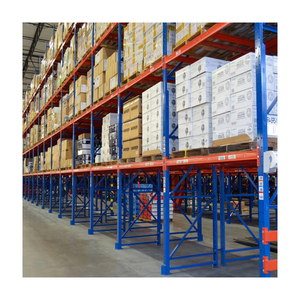
Heavy Duty Warehouse Stacking Selective Steel Pallet Racking Systems
Send an Inquiry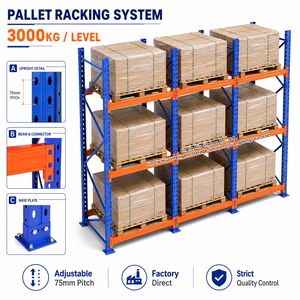
3-Level Heavy Duty Selective Pallet Racking System (3000KG Load Per Level)
Send an Inquiry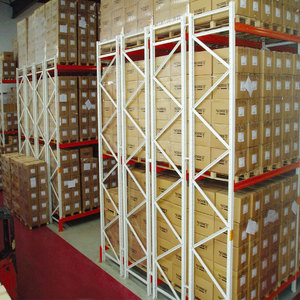
High Density 5-Layer Double Deep Reinforced Heavy Duty Pallet Racking
Send an Inquiry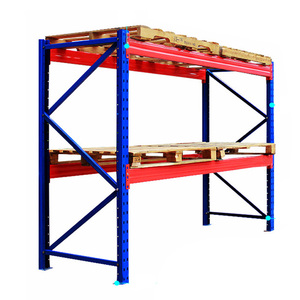
Outdoor Weatherproof Heavy-Duty Metal Pallet Racking (1-3 Ton Capacity)
Send an InquiryEngineering Whitepaper: Heavy-Duty OEM Coil Storage & Racking Architecture
A comprehensive technical evaluation of structural physics, load distribution, and custom OEM manufacturing standards for industrial coil management.
1. The Mechanical Challenges of Storing Heavy Industrial Coils
In modern industrial logistics, metal coil storage—spanning cold-rolled steel coils, hot-dipped galvanized strip, copper coils, and aluminum rolls—presents structural engineering challenges distinct from standard palletized warehousing. Traditional selective pallet racking is optimized for Uniformly Distributed Loads (UDL). Conversely, steel coils represent extreme Concentrated Point Loads (CPL). A single master coil can weigh anywhere from 5 to 35 metric tons (11,000 to 77,000 lbs), resting entirely on a minimal contact footprint.
Without custom OEM structural design, placing heavy cylindrical loads directly onto standard rack beams creates severe flexural shear stresses, excessive beam deflection, dynamic roll hazards, and permanent frame buckling. To mitigate catastrophic structural failure, high-volume metal processing centers, automotive stamping facilities, and steel service centers rely on specialized Custom Heavy-Duty Coil Storage Pallet Racking Systems equipped with integrated V-cradles, saddle supports, and anti-roll locking pins.
2. Structural Physics & FEA Deflection Modeling for Coil Saddles
Engineering robust coil racking systems requires precision Finite Element Analysis (FEA) to simulate static stress distribution and localized impact dynamic loads under real-world operating conditions:
- Beam Deflection Control ($L/300$ Limit): Standard rack systems allow a maximum beam deflection ratio of $L/200$. However, heavy coil storage systems engineered by SolidFort strictly enforce a maximum deflection limit of $L/300$ to $L/400$. This prevents residual beam sagging and ensures that adjacent coils remain securely centered within their designated saddles without shifting toward the center of the bay.
- Structural Column Punching & Flexure: Upright frames must absorb both vertical dead loads and dynamic lateral impact during crane or forklift placement. SolidFort utilizes high-tensile Q355B cold-rolled structural steel for heavy-duty columns, featuring heavy-gauge diagonal and horizontal bracing to maximize torsional resistance.
- Custom Saddle Geometry & Lining: Coils must be securely seated inside custom V-shaped or curved steel saddles. To prevent surface scratches, indentation, and galvanic corrosion on high-finish stainless steel or aluminum coils, saddles are lined with heavy-duty polyurethane (PU), high-density polyethylene (HDPE), or vulcanized rubber sleeves.
Custom OEM V-Saddle Designs
Precision-welded steel cradles designed for specific coil diameters (from 600mm to 2200mm) and weight capacities up to 35,000kg per level.
Surface Protection Systems
Polyurethane and rubber saddle linings safeguard delicate copper, aluminum, and polished cold-rolled steel coils from surface damage during loading.
Full Regulatory Compliance
Fully engineered to adhere strictly to international standards including AS4084:2023, RMI (ANSI MH16.1), FEM 10.2.02, and ISO 9001 quality systems.
3. Comprehensive Comparison: Standard Pallet Racking vs. Custom OEM Coil Storage Racks
Selecting the optimal storage methodology directly impacts warehouse safety, throughput efficiency, and storage density. The technical table below outlines the core operational differences between standardized pallet racks and specialized OEM coil racking systems:
| Engineering Attribute | Standard Selective Pallet Rack | Custom OEM Steel Coil Saddle Rack | Heavy Stacking Coil Cradle Racks |
|---|---|---|---|
| Primary Load Profile | Uniformly Distributed Load (UDL) | Concentrated Point Load (CPL) | Modular Concentrated Stack Load |
| Max Capacity per Level | 1,000 kg – 4,500 kg | 5,000 kg – 35,000 kg | 3,000 kg – 15,000 kg |
| Anti-Roll Protection | None (Requires wooden pallets) | Integrated Steel V-Chocks & Pins | Interlocking Cradle Base Frames |
| Coil Surface Scratch Protection | Not Included | PU / HDPE / Rubber Lined Saddles | Coated Steel or Polyurethane Pads |
| Handling System Integration | Standard Counterbalance Forklift | C-Hook Cranes / Heavy Forklifts | Overhead Bridge Cranes / Forklifts |
| Seismic & Structural Safety Factor | 1.5 : 1 (Standard Dynamic) | 1.8 : 1 to 2.0 : 1 (Heavy Dynamic) | 1.65 : 1 (Interlocking Structural) |
4. Future Sourcing Trends: The Evolution of Industrial Coil Storage (2026–2030)
As global manufacturing shifts toward automation, sustainability, and real-time inventory visibility, enterprise procurement teams are adopting new technical criteria when sourcing coil storage infrastructure:
- Integration with AS/RS & AGV Coil Transporters: Modern steel processing facilities are replacing manual forklifts with Automated Guided Vehicles (AGVs) and Automated Storage and Retrieval Systems (AS/RS). Custom OEM coil racks must feature ultra-precise manufacturing tolerances (within $\pm 1.5\text{mm}$) and laser-guided locating sensors to facilitate smooth robotic coil pickup and placement.
- Decarbonization & Green Steel Supply Chains: In line with global ESG directives, buyers increasingly require racking manufacturers to utilize low-carbon recycled steel and eco-friendly zero-VOC electrostatic powder coatings that exceed 1,000-hour salt spray corrosion resistance tests.
- Smart Load & Deflection Monitoring: Next-generation coil racking incorporates embedded strain gauges and IoT deflection sensors that provide real-time structural health alerts to warehouse managers, preventing overloading before structural fatigue occurs.
5. Frequently Asked Questions (FAQ) for Sourcing Coil Storage Systems
Key technical considerations addressed by SolidFort's chief engineering team to assist global purchasing managers during technical evaluations:
Ready to Optimize Your Heavy Coil Warehouse Layout?
Get in touch with SolidFort's structural racking engineers today. Receive free CAD drawings, comprehensive FEA load calculations, and competitive factory-direct pricing tailored to your custom OEM requirements.
Send an Inquiry