Featured Industrial Pallet Racking Systems
Explore our OEM certified heavy-duty storage racks engineered for extreme volumetric density, seismic stability, and maximum payload capacity.
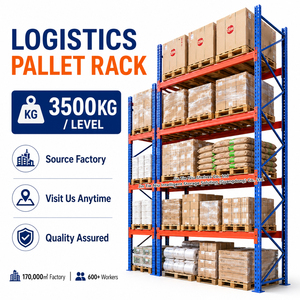
3500kg Super Heavy Duty Logistics Warehouse Pallet Beam Racking Source Factory High Load Storage Rack
Get Catalog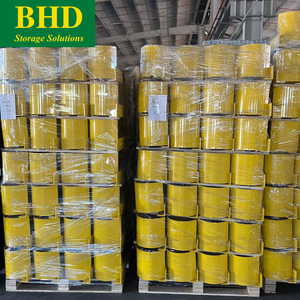
BHD Heavy Duty Foot Protection Barrier Pallet Rack Upright Frame Protector Security Barriers Storage Stacking Racks RAL1023
Get Catalog
High-Density, Flexible, Intelligent ASRS Warehouse Storage WITH BOX Smart Pallet Four-Way Shuttle System HUASHINE INTELLIGENT
Get Catalog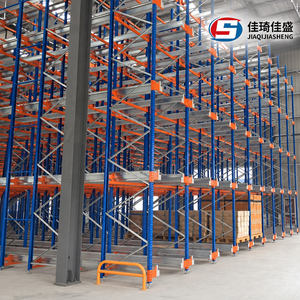
Multi-Level Automatic Warehouse Racking River-Type Pallet Two-way Radio Shuttle Rack for Storage Iron Steel Material
Get Catalog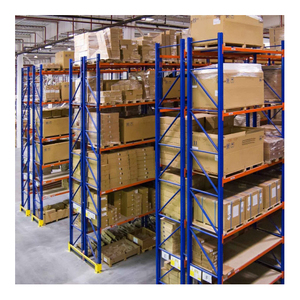
Peterack CE Certified Warehouse Storage Steel Heavy Duty Stacking Racks Shelves Selective Pallet Racking System
Get Catalog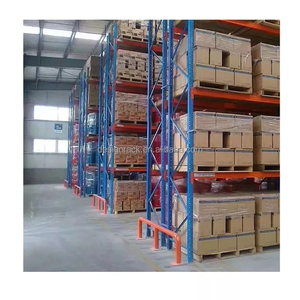
Factory Warehouse Storage Rack 800KG Boltless Rack Heavy Duty Teardrop Pallet Racking
Get Catalog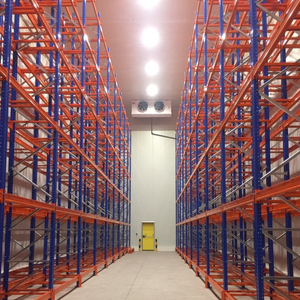
Double Rack Designed To Increase Storage Capacity With Stable Dual Row Configuration For Warehouses Needing Efficient Space
Get Catalog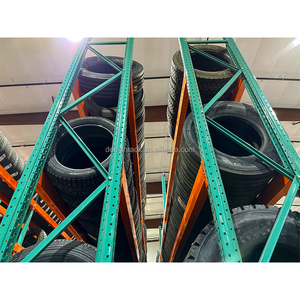
Beam Pallet Rack Q235B Steel Adjustable Heavy Duty Warehouse Storage Rack Custom Design Standard High Density 3 Year Warranty
Get CatalogEngineering Principles of Drive-In Pallet Racking Systems
Drive-in pallet racking represents the apex of high-density storage geometry for warehouses managing uniform SKU batches. Unlike standard selective racking systems requiring access aisles between every upright frame, drive-in systems operate on the Last-In, First-Out (LIFO) storage management methodology, allowing forklifts to drive directly into the structural storage lanes to deposit or retrieve unit loads.
By eliminating conventional forklift aisles, custom OEM drive-in rack configurations elevate floor space utilization by up to 75% to 85% compared to standard selective setups. Our engineering framework integrates high-tensile cold-rolled steel profiling (Q235B and Q355B structural grades), utilizing specialized cantilever support arms and continuous top-tie cross bracing to compensate for the elimination of horizontal shelf beams along the entry lane.
Structural Load Application Specs
Every custom OEM project undergoes Finite Element Analysis (FEA) to ensure ultimate safety under extreme mechanical and environmental stresses.
- Compliance Standards: AS4084-2012, RMI ANSI MH16.1, FEM 10.2.02
- Upright Section Depths: 80mm to 120mm Cold-Formed Omega Profiles
- Pallet Support Rail: 2.0mm–3.0mm Heavy-Duty Galvanized Formed Sections
- Seismic Resistance: Engineered for Zone 1 through Zone 4 Compliance
- Thermal Limits: Rated for Cold Storage down to -30°C (-22°F)
Why Supply Chain Leaders Trust Our Custom Manufacturing
In-House Roll Forming & Tooling
Equipped with 18 automated roll-forming lines, robotic welding stations, and an eco-friendly electrostatic powder coating line. We maintain total quality control over raw steel selection, punch pattern precision, and surface durability.
Custom Dimensional OEM Adaptation
We tailor upright frame depths, pallet support arm thickness, floor anchor plates, and top-bracing configurations to seamlessly align with your specific warehouse ceiling heights, floor slab PSI, and forklift turning radii.
Rapid Container Freight Engineering
Our logistics team prepares custom container loading layouts for every shipment on FOB, CIF, or DDP terms. Component bundling minimizes shipping volume and prevents freight damage during long-distance maritime transit.
Industrial Warehouse Storage System Comparison
Evaluate how OEM Drive-In Pallet Racking compares against alternative high-density warehouse storage architectures.
| Racking Architecture | Storage Density | Selectivity | Inventory Flow | Cold Storage Efficiency | Relative Cost / Pallet Position |
|---|---|---|---|---|---|
| Custom OEM Drive-In | Very High (75-85%) | Low (LIFO Batch) | Last-In, First-Out | Optimal (Maximum Cube) | Economical ($$) |
| Drive-Thru Racking | Very High (75-85%) | Medium (LIFO/FIFO) | First-In, First-Out | High | Moderate ($$$) |
| Selective Pallet Rack | Low (35-40%) | 100% Direct Access | Any Flow Strategy | Low (Wasted Volume) | Lowest ($) |
| Radio Shuttle Racking | Maximum (85-90%) | Automated Batch | LIFO / FIFO Automated | Superior | Premium ($$$$) |
| Push-Back Racks | High (60-70%) | Medium per Lane | Last-In, First-Out | Moderate | Moderate-High ($$$) |
Future Sourcing & Technology Trends in Drive-In Racking
The global industrial warehousing sector is experiencing a structural paradigm shift driven by rising industrial land costs, cold-chain expansion, and supply chain automation. Procurement managers and OEM buyers must anticipate the following trends over the next decade:
1. Hybrid Shuttle-Ready OEM Frame Conversions
Modern enterprise logistics buyers are increasingly specifying "future-proofed" OEM Drive-In structures. Frame uprights and support arms are pre-punched to allow easy retrofit conversion into semi-automated Radio Shuttle systems without needing complete structural tear-down when warehouse automation budgets scale.
2. Advanced Metallurgical & Eco-Coating Standards
Environmental ESG regulations and harsh cold-chain condensation demand superior steel alloys and surface treatments. The market is shifting towards pre-galvanized pallet rails paired with heavy-metal-free, zero-VOC electrostatic powder coatings that resist micro-fracturing in freeze-thaw environments.
3. Integrated Seismic & Structural Health Sensor Monitoring
Next-generation drive-in installations are beginning to incorporate smart impact-detection sensors along entry upright columns. These IoT devices alert warehouse managers to forklift strikes that could compromise column buckling resistance, reducing catastrophic rack collapse risks.
Drive-In Racking Procurement & Engineering FAQs
In-depth answers from our senior engineering team addressing structural safety, layout planning, and OEM manufacturing protocols.