[email protected] Mon – Sat: 8:30 – 18:00 (GMT+8) · Reply within 24h AS4084 · RMI · FEM · ISO
English

Custom OEM Four Way Shuttle Racking System Manufacturer & Factories

Architecting High-Density Automated Pallet Storage (ASRS) with Millimetric Precision & Dynamic Fleet Intelligence

Direct Factory Catalog

Featured Four-Way Shuttle & Automated Racking Systems

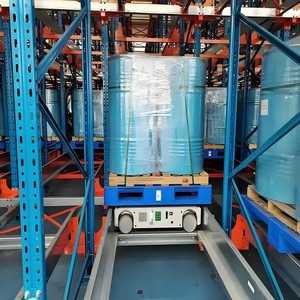
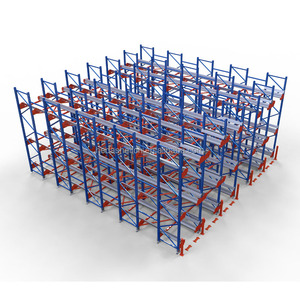
Heavy-Duty ASRS Jracking Automatic Warehouse System Four Way Shuttle Rack

Jracking Automatic Warehouse System Factory Direct Sale High Intelligent Automated Pallet Runner Four Way Radio Shuttle Rack

  • Payload: 1,500 kg/Pallet
  • Operation: 2D/4D Intelligent Runner
  • Standard: FEM 10.2.02 / RMI
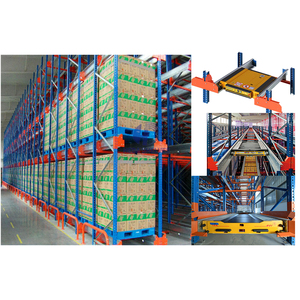
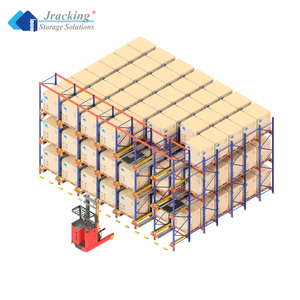
High Intelligence Wholesale Custom Automated Pallet Runner Radio Four Way Shuttle Rack

Wholesale Custom High Intelligent Automated Pallet Runner Radio Four Way Shuttle Rack Warehouse Storage Rack System

  • Travel Speed: Up to 1.2 m/s (Loaded)
  • Battery: Lithium Titanate / Fast Charge
  • Control: WCS / Wi-Fi 5G Mesh
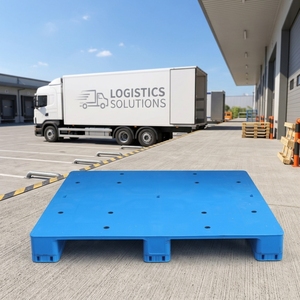
Euro Logistics NEXARA Recycled Material Mould Racking Euro 4-Way Turnover

NEXARA Recycled Material Mould Racking 1414 1400*1400*160mm Flat Surface Logistics Pallet Euro 4-Way Three Runner Turnover

  • Pallet Fit: 1400x1400mm / Euro Specs
  • Structure: Reinforced Steel / Decking
  • Application: Heavy Mould & Turnovers
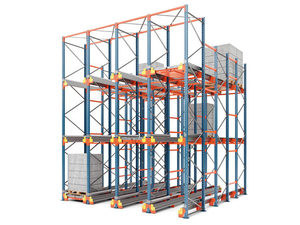
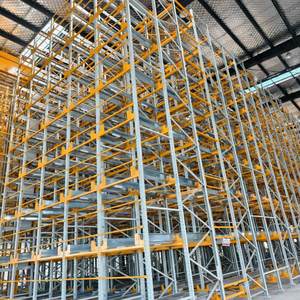
FIFO / LIFO Mode Heda Shelves 4-Way Shuttle Racking System Asrs Radio Shuttle

Heda Shelves 4-Way Shuttle Racking System Asrs Radio Shuttle Rack Four Way for LIFO FIFO Automated Storage System

  • Access Mode: Dynamic LIFO & FIFO
  • Density Gain: +85% Volume Efficiency
  • Safety: Laser Anti-Collision Sensors
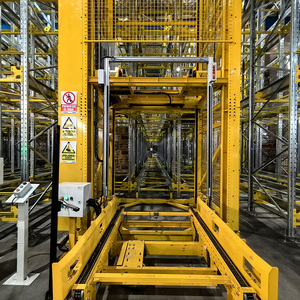
High Efficiency 4 Way Pallet Shuttle Racking System Automation

The 4 Way Pallet Shuttle Racking System Is the Efficient, Fast and Reliable Way to Automate Your Pallet Warehouse

  • Elevator Integration: Vertical Reciprocating
  • Aisle Width: Zero Forklift Working Aisles
  • Certification: CE / ISO 9001:2015
Popular OEM Choice Hot Popular Radio Shuttle Racking Heavy Duty Pallet Racks

Hot Popular Radio Shuttle Racking Shuttle Pallet Racking System Heavy Duty Pallet Racks

  • Upright Steel: Q355B High-Tensile Cold Formed
  • Beam Pitch: 50mm / 75mm Adjustable
  • Surface: Epoxy Powder Coating
Corrosion Protected Customizable Four-Way Shuttle Racking System CE ISO

Customizable Four-Way Shuttle Racking Automated Warehouse Shelving System CE/ISO Certification Corrosion Protection Steel

  • Environment: Cold Storage Down to -25°C
  • Protection: Pre-Galvanized / Hot-Dip Galv
  • Compliance: AS4084-2012 Standard
OEM/ODM Factory High Density Four Way Shuttle Rack Automated Warehouse System

High Density Four Way Shuttle Rack Automated Warehouse Pallet Storage System Heavy Duty Steel ASRS Rack OEM Supplier

  • Capacity: 10,000+ Pallet Positions
  • Lead Time: 10–15 Days Fast Dispatch
  • Engineering: Free 3D CAD / FEA Analysis
Engineering Whitepaper

The Technical Evolution of Custom OEM Four-Way Shuttle Systems

Analyzing the shift from rigid 2D shuttles to dynamic 4D multi-directional robot fleets in automated pallet warehousing.

3D Spatial Mobility

Unlike traditional 2-way radio shuttles confined to single channels, a custom 4-way shuttle executes X-axis and Y-axis traversal across continuous rack cross-beams, seamlessly interfacing with vertical lifters to reach any storage level dynamically.

Decentralized Redundancy

If a single shuttle unit requires maintenance, software instantly re-routes work orders to parallel vehicles. Eliminates single-point system failures common in legacy stacker crane (AS/RS) installations.

Cubic Footprint Optimization

By removing heavy forklift aisles, 4-way shuttle racking elevates storage density to 85–90% of structural building volume, reducing land acquisition costs and cold-chain refrigeration footprint dramatically.

Information Gain Insight: Modern 4-Way Shuttle Racking decouples storage capacity from throughput performance. Facility managers can add more shuttle vehicles to increase pallet turns per hour without modifying the structural steel rack footprint—offering unprecedented operational elasticity for seasonal demand spikes.
30,000㎡
Factory Plant Area
53+
Export Destination Countries
10-15 Days
Standard Order Lead Time
±1.0 mm
OEM Rail Profile Tolerance
Architectural Evaluation

Comparing Pallet Automated Storage Technologies

A engineering framework for logistics directors selecting optimal high-density racking systems.

Storage Technology Space Efficiency Throughput Flexibility Capital Expenditure (CAPEX) Single Point of Failure Risk Cold Storage Efficiency (-25°C)
4-Way Shuttle Racking (4D ASRS) ★★★★★ (85%-92%) ★★★★★ (Highly Scalable) Moderate to High Extremely Low (Multi-vehicle redundancy) Optimal (Lithium Titanate Tech)
2D Radio Shuttle Racking ★★★★☆ (75%-85%) ★★☆☆☆ (Forklift Bound) Low to Moderate Low Good
AS/RS Stacker Crane System ★★★★☆ (80%-88%) ★★★☆☆ (Fixed per Aisle) High to Very High High (Aisle down if crane fails) Moderate (High thermal loss)
Very Narrow Aisle (VNA) Selective ★★☆☆☆ (50%-60%) ★★★☆☆ (Manual Operator) Low Moderate Poor (High wasted volume)
Industry Foresight

Future Sourcing & Technological Trends in 4-Way Shuttle Systems

What enterprise procurement teams must know when evaluating contracts for 2026–2030 automation projects.

1. AI-Powered Dynamic Fleet Management Systems (FMS)

Next-generation 4-way shuttle procurement is shifting from hardware-centric purchases to integrated hardware-software ecosystems. OEM manufacturers now embed edge-computing algorithms inside shuttle control units, enabling self-optimizing collision avoidance, automated dynamic path planning, and automatic battery health balancing without clogging WCS networks.

2. Hybrid Supercapacitor & Fast-Charging Lithium Batteries

Cold storage facilities (-25°C to -30°C) are phasing out traditional lead-acid and basic lithium-ion packs due to thermal degradation. Modern OEM 4-way shuttles utilize Lithium Titanate (LTO) or supercapacitor energy systems capable of charging from 10% to 90% in under 3 minutes during vertical lifter transfers, supporting 24/7 continuous operation.

3. High-Precision Cold-Formed OEM Steel Rail Specifications

Because 4-way shuttles travel at speeds up to 1.5 m/s across horizontal beams, structural steel tolerances must meet ultra-strict international guidelines. OEM manufacturers are adopting automated roll-forming lines with laser-guided punching to achieve straightness tolerances under 1/1000, reducing wheel wear and vibration-induced sensor errors.

4. Modular OEM Customization for Hybrid Pallet Dimensions

Global supply chains handle non-standard loads—from 1200x1000mm GMA pallets to Euro 1200x800mm, plastic mold trays, and heavy machinery bases. Leading OEM factories are standardizing modular rack structures with adjustable rail profiles and dual-wheel shuttle chassis capable of auto-adjusting track width on the fly.

Factory Direct Advantage

Why Partner with SolidFort Storage Equipment Co., Ltd.

30,000㎡ In-House Production Plant

Operating from Tongan Park, Xiamen, China, our specialized manufacturing plant houses automated cold roll-forming lines, robotic welding stations, and zero-emission powder coating lines to control quality from raw coil steel to finished racking.

International Code Compliance

Engineered strictly in accordance with Australian Standard AS4084-2012, American RMI (ANSI MH16.1), European FEM 10.2.02, and ISO 9001:2015 quality standards. Complete structural calculations (FEA) provided for local building permits.

Global Supply Network (53+ Countries)

Supplying system integrators, 3PL providers, and distributors worldwide. Efficient container packing layouts reduce shipping costs, backed by standard order production cycles of just 10–15 days.

Turnkey OEM/ODM Engineering

Our engineering team provides complimentary CAD drawings, structural FEA analysis, pallet flow simulations, and customized accessories (column protectors, guide rails, wire mesh decking) customized to your project specs.

Engineering Specifications

Standard Four-Way Shuttle & Racking Parameters

Rigorous benchmark figures for warehouse integration and engineering validation.

Technical Parameter Specification Range Custom OEM Options
Rated Load Capacity 500 kg to 1,500 kg per pallet position Heavy-duty custom up to 2,000 kg
Unloaded / Loaded Speed 1.2 m/s (Unloaded) / 1.0 m/s (Loaded) High-speed variants up to 1.5 m/s
Positioning Accuracy ± 2.0 mm via Laser & Encoder feedback ± 1.0 mm for ultra-high bay ASRS
Operating Temperature Standard: -10°C to +45°C / Cold: -25°C to -30°C Thermal insulation & active battery heating
Battery Chemistry & Life Lithium Iron Phosphate (LiFePO4) / LTO Quick-swap battery trays or supercapacitors
Communication Protocol Industrial Wi-Fi (2.4G/5G) / 5G Private Network Modbus TCP, CANbus, WCS API Integration
Racking Steel Material High-tensile cold-rolled Q235B / Q355B steel Galvanized, Epoxy Powder Coat, Color Matching
Procurement Knowledge Base

Frequently Asked Questions (FAQ)

Addressing critical engineering, operational, and financial queries from warehouse buyers.

1. What main structural components differentiate 4-Way Shuttle Racking from 2-Way Radio Shuttle Racking? +

While 2-Way radio shuttles travel exclusively along longitudinal channels (requiring forklifts to move shuttles between lanes), a 4-Way Shuttle system integrates transversal cross-rails and internal wheel-shifting mechanisms within the shuttle chassis itself. This enables 3D movement across all grid locations on a single level. Furthermore, 4-Way systems incorporate Vertical Reciprocating Conveyors (VRC lifters) to transfer vehicles dynamically between rack tiers, achieving complete warehouse automation without forklift entry into storage bays.

2. What slab flatness (FF/FL) and floor loading requirements must be met before installing 4-Way Shuttle Racking? +

Due to elevated travel speeds (up to 1.5 m/s) and narrow structural tolerances, concrete slab flatness must comply with ASTM E1155 (FF 45 / FL 35 minimum) or DIN 18202 Table 3, Line 4. High-bay 4-way systems over 10 meters in height typically require FF 50 superflat slabs. The concrete slab thickness generally ranges between 200mm and 300mm with double-layer rebar reinforcement capable of supporting concentrated point loads from rack upright baseplates (often exceeding 80–120 kN per post).

3. How does a 4-Way Shuttle System perform inside cold storage (-25°C) facilities? +

SolidFort cold-chain 4-way shuttles are engineered specifically for sub-zero operation. Key modifications include low-temperature resistant synthetic lubricants, IP65-rated sealed electronic enclosures, anti-condensation optical sensor heaters, and Lithium Titanate (LTO) battery packs. LTO chemistry retains over 85% charge efficiency at -30°C compared to conventional lithium-ion batteries which suffer severe voltage drop under freezing conditions.

4. What happens if a 4-Way Shuttle vehicle breaks down deep inside a high-density rack lane? +

System reliability is maintained through multiple recovery protocols. First, the Warehouse Control System (WCS) triggers a secondary "Rescue Shuttle" command; an adjacent operational shuttle travels to the stranded vehicle, couples via a mechanical tow hook, and transports it to an outer maintenance platform adjacent to the elevator. Second, all structural rack tiers feature emergency manual walk-catwalks and manual release brake controls, allowing technicians to safely pull the vehicle out within minutes.

5. How does the initial ROI of a 4-Way Shuttle system compare to traditional manual racking or stacker cranes? +

While 4-Way Shuttle racking carries a higher initial CAPEX than manual selective racking, it delivers a typical payback period of 24 to 36 months through drastic OPEX reductions. Compared to stacker cranes (AS/RS), 4-Way systems reduce initial equipment cost by 20–30% because fewer vertical elevators are needed compared to dedicated aisle cranes. Labor savings (reducing forklift driver headcount by up to 70%), 40% lower energy consumption, and an 85%+ spatial utilization rate yield superior long-term Total Cost of Ownership (TCO).

6. Can SolidFort OEM racking integrate directly with third-party WMS/WCS software systems? +

Yes. Our automated 4-way shuttle electronic control packages communicate seamlessly with leading Enterprise Resource Planning (ERP) and Warehouse Management Systems (WMS) such as SAP, Oracle, Manhattan, and Infor. Communication occurs via standard REST APIs, TCP/IP socket connections, or WebServices over secure industrial Wi-Fi networks.

7. What safety sensors and mechanical stops are installed on the racking and shuttles? +

Safety is integrated across hardware and software levels. Each shuttle vehicle features 4-corner obstacle detection lasers (TOF sensors), anti-collision proximity sensors, mechanical end-of-track buffers, photoelectric pallet overhang detectors, and emergency deceleration bumpers. The steel racking structure incorporates mechanical end-stop bumpers at channel terminations to prevent vehicle derailment under all operational scenarios.

8. What standard manufacturing lead times does SolidFort offer for engineered OEM projects? +

Standard component orders ship in 10 to 15 days from our Xiamen plant. Large-scale custom engineered projects (e.g., 10,000+ pallet position 4-way shuttle racking with custom rail profiles) typically take 30 days for roll-forming, powder coating, and quality control pre-assembly checks prior to container shipping.

9. How does SolidFort ensure structural steel straightness and track alignment across large spans? +

Our 30,000㎡ factory utilizes high-precision continuous cold roll-forming mills equipped with inline laser monitoring. Upright frames and shuttle guide rails are punched using automated CNC tooling to ensure hole pitch accuracy within ±0.1mm. During installation, laser alignment tools enforce track parallelism tolerances under ±1.0mm across 100-meter rack runs.

10. What preventative maintenance routine is required to maintain system longevity? +

We recommend a quarterly inspection of shuttle drive wheels, lifting mechanisms, sensor lenses, and battery contacts. Visual rack structural checks should be conducted every 6 months to confirm anchor bolt torque (according to ANSI/RMI MH16.1 standards) and check for accidental external forklift impacts near ground-level loading bays.

Accelerate Your Warehouse Automation Project Today

Connect directly with SolidFort racking structural engineers to receive a complimentary 3D CAD layout, pallet density calculation, and OEM pricing quote within 24 hours.

Contact Us