High-density gravity-fed live roller storage systems designed to AS4084, RMI & FEM standards. Boosting split-case picking speed by up to 75% for modern e-commerce and 3PL fulfillment hubs.
Industrial Gravity Storage Solutions
Featured Carton Flow & Heavy-Duty Racking Systems
Engineered with precision roller tracks, cold-rolled steel channels, and ergonomic drop-in pick trays for seamless FIFO inventory control.
Best Seller
Metal Storage Carton Flow Shelves for Industrial Warehouse Roller Picking Equipment Racks System
An in-depth guide for warehouse directors, logistics engineers, and supply chain procurement specialists seeking maximum throughput and structural compliance.
75%
Picking Travel Reduction
30,000㎡
In-House Manufacturing Plant
53+
Global Export Markets
100%
Strict FIFO Inventory Compliance
1. Architectural Dynamics & Physics of Gravity Carton Flow Racking
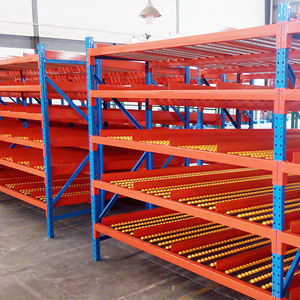
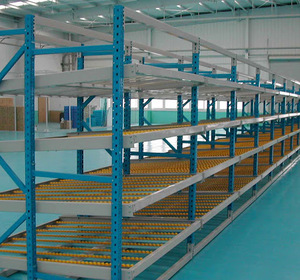
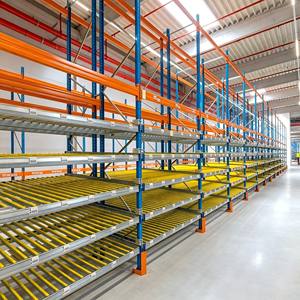
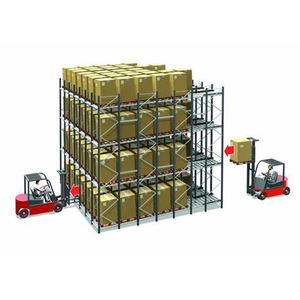
Carton flow racking—often designated as dynamic carton live storage—is an advanced gravity-driven order picking system. Operating on a First-In, First-Out (FIFO) logistics matrix, inventory loading and order picking are separated into separate aisles. Merchandise is loaded into inclined roller tracks from the replenishment aisle; under the controlled force of gravity, totes, plastic bins, or corrugated cardboard cartons glide seamlessly down toward the picking face.
From an structural engineering perspective, the efficiency of a carton flow module depends on three crucial mechanical parameters:
Incline Pitch Angle (Grade Coefficient): The standard track pitch varies between 3.0% and 5.0% (approx. 1.7° to 2.9°), calculated meticulously based on package weight, base material friction coefficient, and continuous lane depth. Lightweight plastic totes require less pitch (3.0%), whereas standard corrugated containers with bottom deflection require a steeper grade (4.5%–5.0%).
Skate Wheel vs. Full-Width Steel Roller Mechanics: Skate wheel tracks (polyolefin or high-impact ABS) provide micro-adjustability for multi-width carton channels. Full-width steel rollers offer higher load capacities (up to 120 kg/m linear load) and resist point-impact damage in heavy industrial assembly lines.
Kinetic Braking & Impact Dissipation: For lanes exceeding 3.5 meters in depth, gravity accelerates heavy containers, creating kinetic momentum that can damage front pick trays or dislodge items. Integrated centrifugal speed controllers and impact-absorption drop plates dissipate terminal kinetic energy, maintaining safe end-stop speeds below 0.3 m/s.
Engineering Information Gain: Calculating Optimal Track Pitch
The mathematical pitch formula for carton flow lanes is expressed as: P = (h / L) × 100, where h represents vertical drop height and L represents horizontal track length. When specifying OEM track assemblies, always account for bottom carton deflection (δ). If cardboard deflection exceeds 3mm under full payload, add a 0.5% grade offset to prevent lane stalling.
Ergonomic Pick Trays
Tilted front trays (15° angle) increase sku visibility and access, reducing picker bending fatigue and accelerating split-case order picking speeds by 30% to 50%.
Tool-Free Lane Dividers
Full-length drop-in guide channels snap directly into the beam profile, enabling rapid lane reconfiguration without tools when product dimensions change.
Pick-to-Light (PTL) Ready
Pre-punched channel profiles allow clean mounting of electronic PTL displays, sensor arrays, and wiring conduits for zero-defect order batching.
As a direct factory manufacturer in Xiamen, China, SolidFort engineers custom carton flow racking utilizing high-tensile structural steel profiles. Components undergo continuous roll-forming, automatic robotic welding, and multi-stage electrostatic powder coating to guarantee long-term durability in high-throughput distribution environments.
System Component
Standard Steel Grade
Fabrication Standard
Custom OEM Options
Upright Columns
Q235B / Q355B Cold-Formed Steel
BS EN 10219 / AS4084-2012
Custom pitch (50mm, 75mm, 76.2mm / 3"), heavy duty feet
3. Global Sourcing & Procurement Trends for Carton Live Systems (2026–2030)
The global warehousing and logistics ecosystem is undergoing rapid automation shifts driven by skyrocketing e-commerce order volumes, labor shortages, and rising industrial real estate costs. Procurement directors evaluating carton flow systems are prioritizing modularity, system integration, and sustainability:
A. Hybrid Pick Module Integration (AS/RS & AMR Compatibility)
Modern fulfillment centers no longer deploy standalone carton flow racks. Modern layouts combine carton flow beds on lower levels with pallet storage on upper levels or feed into Autonomous Mobile Robot (AMR) drop zones. Roller tracks must be engineered with reinforced front stop plates capable of handling repetitive mechanical handling by robotic picking arms and conveyor transfer stations.
B. Cold Storage & Harsh Environment Resilience
With global cold chain demand surging in pharmaceutical and fresh food distribution, carton flow tracks must operate reliably at freezing temperatures down to -30°C (-22°F). Standard plastic skate wheels degrade and crack in sub-zero environments. OEM manufacturers now specify specialized polyolefin compound formulations, stainless steel ball bearings, and synthetic low-viscosity grease coatings to eliminate freeze-lock failures.
C. Micro-Fulfillment Centers (MFC) & Compact Urban Warehousing
Last-mile urban fulfillment centers operate within limited building footprints. This shift demands high-density, multi-tier mezzanine carton flow structures. By utilizing vertical ceiling heights up to 10 meters with integrated catwalk floors, micro-fulfillment centers achieve maximum cubic storage density while maintaining 100% SKU access.
4. Comparative Operational ROI Analysis Matrix
Logistics directors must balance capital expenditure (CAPEX) against long-term operational efficiency (OPEX). The comparison matrix below illustrates how carton flow racking compares with alternative storage solutions across critical fulfillment metrics:
Storage System Type
Picking Speed (SKUs/Hr)
Floor Space Efficiency
Picking Error Rates
Estimated Payback Period
SolidFort Carton Flow Racking
300 – 500 picks/hr
85% High Density
< 0.1% (with PTL)
12 – 18 Months
Standard Static Shelving
80 – 120 picks/hr
40% Low Density
1.5% – 3.0% High Error
Baseline (High Labor)
Selective Pallet Racking (Case Pick)
100 – 150 picks/hr
50% Moderate
1.0% – 2.0% Moderate
24 – 36 Months
Automated ASRS Split-Case
600 – 900 picks/hr
95% Ultra High
< 0.05% Ultra Low
5 – 7 Years (High CAPEX)
5. Enterprise Manufacturing Advantage: Why Partner with SolidFort
SolidFort Storage Equipment Co., Ltd. is a factory-direct racking manufacturer based in Xiamen, China. Operating from a modern 30,000 square meter production plant, we provide end-to-end supply chain integration for industrial distributors, racking dealers, and global end users across 53+ countries.
Full Regulatory Compliance
Every system is designed and certified according to international structural standards: AS4084-2012 (Australia), RMI ANSI MH16.1 (USA), FEM 10.2.02 (Europe), and ISO 9001 quality management procedures.
Free Engineering CAD & LARC Drawings
We do not just sell raw steel—our project engineering team reviews building floor slabs, seismic zone factors, ceiling clearance, and forklift aisle constraints to generate free CAD layouts and Load Application and Rack Configuration (LARC) drawings within 24–48 hours.
Rapid 10–15 Day Production Lead Times
With extensive steel raw material inventory (Q235B & Q355B coils) and high-speed automated roll-forming lines, standard container orders ship within 10 to 15 business days, supported by optimized sea-container packing plans to lower ocean freight rates.
Comprehensive Customization (OEM/ODM)
Custom paint colors (RAL system), specialized lane widths, non-standard frame depths, anti-corrosive galvanized finishes, and custom brand logos stamped directly onto beam end plates.
Clear Knowledge & Guidance
Frequently Asked Questions for Warehouse Sourcing & Engineering
Comprehensive technical answers compiled by SolidFort's chief structural engineers to streamline your procurement process.
What is the typical cost per lane or pallet position for carton flow racking?
Pricing varies based on track length, roller wheel density, lane width, and total weight capacity. On average, standard carton flow shelf beds range from USD $40 to $90 per carton lane position. Comprehensive pick module systems including structural upright frames, heavy-duty beams, tilted trays, and drop-in dividers average USD $120 to $250 per shelf level. Factory-direct sourcing eliminates middleman markups, saving 20% to 35% on large project orders.
How do I determine whether skate wheel or full-width roller tracks are right for my inventory?
Skate wheel tracks (polyolefin wheels spaced on 1.5" or 2" centers) are ideal for uniform plastic totes and sturdy corrugated boxes. They offer maximum lane re-configurability. Full-width steel rollers are recommended when storing uneven cardboard boxes, weak bottom cartons, heavy metal tote boxes, or items requiring continuous flat surface support up to 120 kg per linear meter.
Do carton flow rack frames require concrete floor anchoring under international codes?
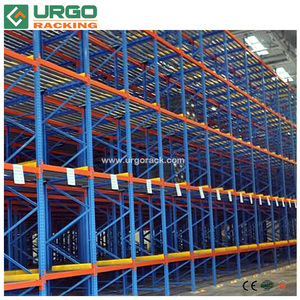
Yes. Under RMI (ANSI MH16.1), AS4084-2012, and FEM 10.2.02 standards, all industrial racking upright columns—regardless of height or dynamic load—must be securely anchored to the concrete floor slab with engineered wedge anchors. Floor anchoring prevents frame displacement caused by impact from picking carts, floor scrubbers, or seismic forces.
How is upright load capacity calculated for multi-tier carton flow pick modules?
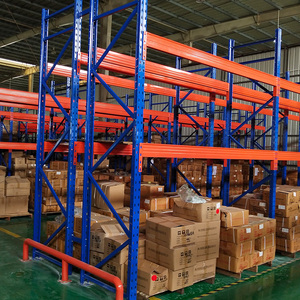
Upright frame load capacity is determined by structural steel profile size, material yield strength (e.g., Q355B vs Q235B), and crucial unbraced vertical beam spacing (the vertical distance between beam levels). As beam spacing increases, column buckling strength decreases. Never estimate frame capacity; always consult SolidFort’s factory LARC (Load Application and Rack Configuration) calculations prior to installation.
Can existing pallet racking frames be retrofitted with OEM carton flow roller beds?
Yes, absolutely. SolidFort specializes in retrofitting OEM carton flow tracks into existing selective pallet rack frames. We supply heavy-duty universal drop-in hanger brackets that lock onto standard teardrop, structural, or European beam profiles, allowing you to convert lower pallet storage bays into high-speed carton pick lanes without replacing structural uprights.
What maintenance and inspection schedules are recommended for dynamic carton flow systems?
Formal safety inspections should be performed by a qualified engineer at least once every 12 months. Additionally, warehouse supervisors should conduct monthly visual checks to ensure skate wheels rotate freely, lane dividers remain locked in position, rear loading stops are undamaged, and structural safety pins remain securely installed on all beam connectors.
What standard lead times, delivery terms, and export documentation does SolidFort provide?
Standard manufacturing lead time is 10 to 15 days from drawing approval. Large multi-tier warehouse engineering projects ship within 25 to 30 days. We support FOB, CIF, CFR, and DDP (Delivered Duty Paid) terms. Every export shipment includes full bill of lading, packing list, commercial invoice, mill test certificates (MTC), ISO quality certification, and step-by-step 3D assembly installation guides.
Ready to Optimize Your Warehouse Layout & Pick Speed?
Get in touch with SolidFort's engineering team today for a free warehouse CAD layout, structural load calculation, and factory-direct project quote.