Heavy Capacity
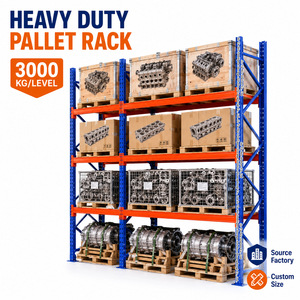
Precision-manufactured structural steel racks designed for maximum volumetric utilization, automated logistics integration, and severe load requirements.
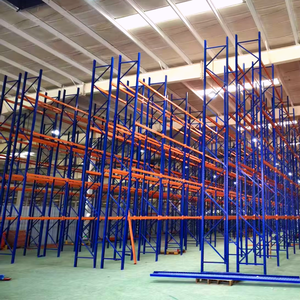
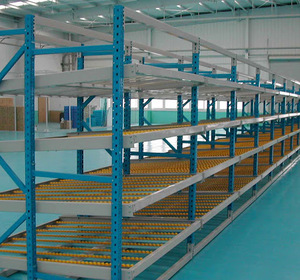
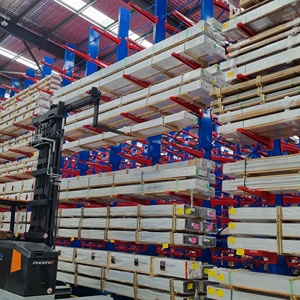
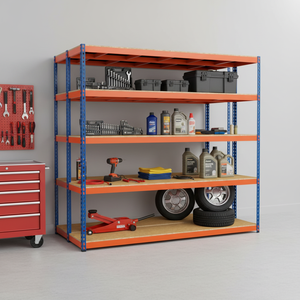
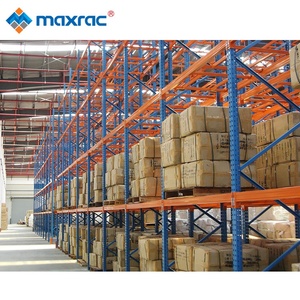
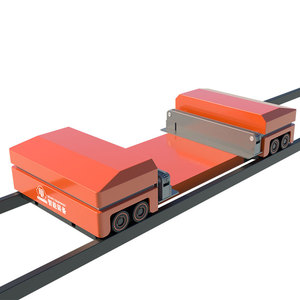
Operating from an advanced 30,000 m² smart production base in Tongan District, Xiamen, China, SolidFort Storage Equipment Co., Ltd. serves as a vertical OEM/ODM partner for tier-1 logistics contractors, structural integrators, and global racking brands.
Equipped with 18 automated continuous cold-roll forming lines, processing Q235B and high-yield Q355B structural steel coil stock into omega upright columns (80mm–140mm face width) with sub-millimeter pitch consistency.
Multi-axis Yaskawa robotic welding cells ensure full-penetration weld seams on beam end connectors and heavy footplates. Coupled with a 220m 12-stage phosphating & electrostatic powder coat line delivering >600 hours salt-spray resistance.
Every OEM custom rack project includes certified Load Application and Rack Configuration (LARC) drawings, FEA finite element analysis, and structural validation adhering to ANSI/RMI MH16.1, FEM 10.2.02, and AS4084-2012 engineering codes.
We offer full OEM customization: teardrop, speedlock, and hook-connector pitch geometry (50mm, 75mm, 76.2mm / 3-inch pitch), bespoke steel deck profiles, localized powder coating RAL color matching, private-label branding tags, and container loading optimization yielding 10–15 day standard turnaround times.
An authoritative engineering breakdown of vertical space optimization, structural load dynamics, seismic mitigation, and material yield parameters in multi-level warehouse infrastructure.
Modern fulfillment hubs and manufacturing plant warehouses face astronomical land acquisition costs. Traditional single-level selective racking systems restrict cubic utilization to a horizontal plane, often wasting up to 60% of vertical clear height. Multi-tier racking systems—comprising rack-supported platforms, catwalk multi-tier mezzanines, and high-bay pick modules—convert unutilized vertical cubic air space into productive, multi-level fulfillment floors.
When engineering multi-tier infrastructure, structural engineers categorize systems based on load transfer mechanics:
Ensuring the structural integrity of multi-tier rack systems requires strict calculations governing beam deflection, column buckling modes, flexural torsional buckling, and joint stiffness connection ratios.
The axial load capacity of a cold-formed steel rack column decreases non-linearly as the vertical unbraced length ($L_{unbraced}$) between beam levels increases. Calculating upright frame stability relies on modified Euler column buckling formulas under ANSI/RMI MH16.1 and EN 15512 standards:
$$P_{cr} = \frac{\pi^2 E I_{eff}}{(K L_{unbraced})^2}$$
Where $E$ represents the Young's Modulus of cold-rolled steel ($2.05 \times 10^5 \text{ MPa}$), $I_{eff}$ is the effective moment of inertia accounting for perforation cross-sectional reduction, $K$ is the effective length factor based on diagonal frame bracing topology, and $L_{unbraced}$ is the distance between horizontal beam nodes.
Step beams and box beams supporting pallet loads must conform to maximum allowable deflection limits under full Uniformly Distributed Load (UDL). While general commercial storage permits a deflection ratio of $L/180$, multi-tier automated racking systems and shuttle lanes strictly enforce an $L/240$ or even $L/300$ deflection boundary to prevent automated equipment jam-ups and pallet tilting during retrieval.
| System Type | Typical Beam Load (kg/Pair) | Structural Steel Grade | Max Deflection Ratio | Primary Industrial Use Case |
|---|---|---|---|---|
| Selective Pallet Racking | 1,000 kg – 4,500 kg | Q235B / Q355B | L / 200 | General Distribution, Mixed SKU Hubs |
| Multi-Tier Catwalk Rack | 500 kg – 1,500 kg / m² | Q355B High Tensile | L / 240 | E-commerce Garment & Small Part Order Fulfillment |
| Radio Shuttle Racking | 1,500 kg per position | Q355B Hot-Dip Galvanized | L / 300 | Cold Storage (-30°C), High-Density Beverage Warehousing |
| Heavy Duty Cantilever Racks | 1,000 kg – 3,000 kg / Arm | Q355B / Q235B H-Beam | L / 180 | Steel Pipe, Aluminum Profiles, Lumber & Plate Storage |
| Carton Flow Racking | 300 kg – 1,000 kg / Shelf | Q235B Cold Formed | L / 200 | Automated Pick Modules, Kitting Lines |
Every vertical rack column footplate must transfer vertical dead/live loads, uplift moments, and horizontal shear forces to the reinforced concrete floor slab. SolidFort engineers conduct rigorous base plate anchor embedment analysis under seismic spectral acceleration conditions ($S_{ds}$):
Strategic supply chain intelligence for procurement managers, structural engineers, and global warehouse operators moving into 2026 and beyond.
Procurement is rapidly shifting from static storage racking to hybrid automated structures. Modern multi-tier racking designs must incorporate sub-level clearance, flush steel mezzanine decking, and high-precision guide rails capable of hosting Autonomous Mobile Robots (AMR), Rail-Guided Vehicles (RGV), and automated palette shuttles.
Future-ready enterprise installations incorporate real-time strain-gauge IoT sensors and vibration monitors attached directly to critical upright column bases and beam-connector nodes. Procurement specifications increasingly require OEM factories to pre-drill and recess sensor channels into upright profiles for structural health tracking.
Global supply chains demand ESG-compliant manufacturing. SolidFort utilizes low-VOC epoxy-polyester thermosetting powder coatings and sources prime structural steel coils accompanied by EN 10204 3.1 Mill Test Certificates (MTC), ensuring full metallurgy traceability and reduced embodied carbon footprints.
With dynamic e-commerce SKU turnover, fixed racking layouts are obsolete. Sourcing teams prioritize modular multi-tier frameworks featuring tool-less drop-in beam connectors, adjustable 50mm/75mm pitch profiles, and expandable catwalk sub-structures that adapt to changing inventory profiles.
Expert answers regarding structural design parameters, pricing formulas, installation safety codes, and OEM factory lead times.
Cost varies based on system engineering, floor levels, steel gauge, and seismic location. Standard selective pallet racking typically averages USD 50 – USD 100 per pallet position. High-density systems (such as Radio Shuttle or Drive-In Racking) range between USD 100 – USD 250 per position. Multi-tier catwalk racking and rack-supported mezzanines are calculated on a spatial footprint basis, typically ranging from USD 80 – USD 180 per square meter of elevated decking, including structural beams, perforated steel planks, handrails, and staircase assemblies.
Yes. Under ANSI/RMI MH16.1, FEM 10.2.02, and AS4084-2012 building standards, every rack column footplate must be securely anchored to a reinforced concrete floor slab. Anchoring prevents frame displacement caused by forklift collisions, stabilizes uprights against eccentric loads, and resists wind/seismic uplift moments. Base plate thickness, anchor embedment depth, and bolt diameter (M10 to M20) must be specified by a licensed structural engineer based on slab core testing and local seismic coefficient ratings.
Racking structural capacity is evaluated through two distinct components:
For common 40" x 48" GMA (North American) or 1200mm x 1000mm Euro/Asian pallets:
SolidFort storage systems are designed, FEA-tested, and manufactured in full accordance with key global regulatory frameworks: AS4084-2012 (Australian Steel Storage Racking Standard), ANSI/RMI MH16.1 (Rack Manufacturers Institute USA), FEM 10.2.02 (European Federation of Materials Handling), and EN 15512. Production lines operate under an ISO 9001:2015 certified quality management system with CE compliance certification available for European projects.
Standard warehouse racking orders are roll-formed, powder-coated, packaged, and shipped within 10 to 15 days from order confirmation. Complex engineered projects or custom multi-tier mezzanines typically require 25 to 30 days. We support global trade terms including FOB, CIF, CFR, and DDP (Delivered Duty Paid), providing 3D container packing layouts with every shipment to optimize container space utilization.
Connect directly with SolidFort senior structural engineering directors for free CAD warehouse layout designs, LARC engineering reports, factory-direct OEM pricing, and complete technical product catalogs.