Engineered Dynamic Storage Solutions: High-Density Gravity Flow Systems Manufactured to AS4084, RMI & FEM Engineering Standards for Global Supply Chains
Industrial Product Portfolio
Heavy-Duty Pallet Racking & Automated Storage Systems
Direct factory engineering from SolidFort's 30,000㎡ manufacturing facility. Built for extreme load capabilities, structural safety, and maximum warehouse volumetric efficiency.
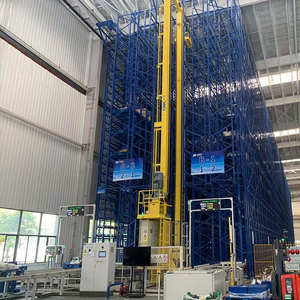
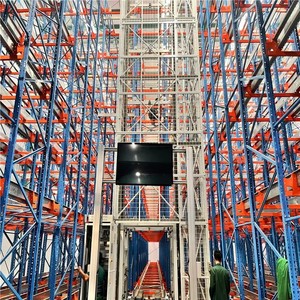
PTERIS Intelligent Stacker Crane Automated Storage Retrieval System Steel ASRS Racking for Exercise Stacking Racks Shelves
Pallet Flow Racking Engineering: Mechanics, Physics, and OEM Manufacturing Precision
Pallet Flow Racking (also classified as Gravity Flow Racking or Dynamic Flow Storage) represents the pinnacle of passive high-density material handling technology. By leveraging kinetic gravitational energy, dynamic lane inclination, and sophisticated speed-damping mechanics, pallet flow systems achieve maximum volumetric floor space utilization while strictly enforcing a First-In, First-Out (FIFO) inventory rotation model.
As a leading direct-factory OEM/ODM manufacturer headquartered in Xiamen, SolidFort engineers custom pallet flow systems that eliminate wasted forklift aisle space. In traditional selective racking systems, up to 65% of the total building footprint is dedicated to aisle clearance. By contrasting this with Pallet Flow Racking—where loading occurs at the rear replenishment aisle and picking occurs at the front discharge aisle—warehouses can increase pallet storage density by up to 100% to 150% within the exact same structural envelope.
Information Gain Insight: The functional efficiency of a dynamic gravity flow lane depends on calculating the friction coefficient between the pallet runner material (hardwood, GMA, plastic, or metal) and the steel roller bearings. A standard structural incline of 3.5% to 4.5% (approx. 7/16" pitch per foot) must be tuned to preventing both "pallet hang-up" and destructive runaway velocity.
Core Engineering Components of Heavy-Duty Gravity Flow Lanes
Every OEM/ODM pallet flow racking system manufactured by SolidFort is constructed from high-tensile cold-rolled steel profiles (Q235B and Q355B grades) to guarantee structural rigidity under massive dynamic loads (up to 2,500 kg per pallet position). The primary sub-assemblies include:
Flow Tracks & Heavy-Duty Rollers
Available in full-width steel rollers or staggered poly-wheel configurations. Machined with precision ball bearings and anti-corrosive electro-zinc coating to handle point-load forces from heavy wooden or plastic pallets.
Centrifugal & Magnetic Speed Controllers
Internal speed retarders spaced along the lane automatically engage via centrifugal force. They cap pallet velocity at a controlled, safe speed of 0.2 m/s to 0.3 m/s, preventing violent kinetic impact at the discharge face.
Mechanical Pallet Separators
Installed at the unloading end, the automatic separator isolates the lead pallet from the kinetic back-pressure of trailing pallets in deep lanes (holding up to 20+ pallets). This allows forklifts to extract pallets without line pressure friction binding.
OEM vs. ODM Fabrication Options for Global Supply Chains
SolidFort provides comprehensive OEM (Original Equipment Manufacture) and ODM (Original Design Manufacture) capabilities. Whether you require precise replication of existing European or American profile pitch dimensions or a completely custom-engineered layout for non-standard pallet geometries, our in-house engineering team delivers millimeter-accurate CAD models, finite element analysis (FEA), and physical load testing reports before full-scale production.
Procurement Intelligence
Future Procurement & Technological Trends in Dynamic Storage (2026–2030)
Global warehouse operations are experiencing rapid structural shifts driven by rising real estate acquisition costs, cold-chain expansion, labor shortages, and aggressive sustainability mandates. Procuring standard storage racks is no longer sufficient; enterprise buyers must invest in adaptable, high-density infrastructure that seamlessly integrates with automated material handling equipment.
1. AMR & AGV Guided Flow Integration
Modern pallet flow lanes are transitioning from manual forklift loading to Autonomous Mobile Robot (AMR) and Automated Guided Vehicle (AGV) interfacing. Custom entry funnels, photoelectric alignment sensors, and precision lane stops are engineered into OEM rack designs to facilitate robot-to-rack handoffs without human intervention.
2. Smart Telemetry & IoT Braking Rollers
Next-generation gravity flow lanes incorporate self-powered IoT speed controllers. These smart rollers monitor internal lane temperature, roller friction coefficient degradation, and cycle frequency, relaying real-time predictive maintenance data directly to the warehouse WMS platform.
3. Cold Storage & Sub-Zero Galvanization
With food supply chains expanding into deep-freeze warehousing (-30°C), cold-rolled powder coatings are being superseded by specialized hot-dip galvanized finishes and arctic-grade lubricant bearings that eliminate grease freeze-up and prevent micro-fissure corrosion.
4. High-Strength Low-Alloy (HSLA) Steel
To reduce shipping container gross weights and overall carbon footprints, advanced manufacturers are utilizing ultra-high-yield steel alloys (such as Q355B and Q460). This permits thinner profile gauge thickness while maintaining or exceeding structural ultimate tensile strength standards.
Choosing the correct high-density warehouse storage architecture requires evaluating throughput rate, capital expenditure (CapEx), SKU diversity, and mechanical complexity. The detailed visualization matrix below compares Pallet Flow Racking against other major industrial racking configurations:
Racking System Type
Storage Density
Inventory Flow
Selectivity (Direct Access)
Operating CapEx
Energy Dependence
Pallet Flow (Gravity Flow)
Very High (Up to 85%)
Strict FIFO
100% at Picking Face
Moderate
Zero (Gravity Driven)
Selective Pallet Racking
Low (35% - 40%)
FIFO / LIFO
100% Immediate
Low
Zero
Drive-In / Drive-Thru
High (Up to 75%)
LIFO (FIFO with Drive-Thru)
Low (Per Lane)
Low - Moderate
Zero
Radio Shuttle Racking
Extremely High (85%+)
FIFO or LIFO
Medium
High
Battery Electric Shuttle
Push Back Racking
High (60% - 70%)
Strict LIFO
Medium (2-6 Deep)
Moderate
Zero (Gravity Push back)
Automated ASRS System
Maximum (90%+)
Dynamic Software FIFO
100% Automated
Extremely High
Continuous Power Grid
SolidFort Factory Authority
Enterprise Advantages & Global OEM/ODM Manufacturing Infrastructure
SolidFort Storage Equipment Co., Ltd. operates as a premier factory-direct manufacturer situated in Tongan District, Xiamen, China. We do not operate as an intermediary trading enterprise; our 30,000 square meter state-of-the-art production complex houses full roll-forming lines, automated robotic welding cells, continuous high-speed powder coating loops, and rigorous structural testing labs.
International Engineering Compliance
All structural calculations, upright frames, box beams, and gravity flow tracks are engineered to satisfy stringent global standards: AS4084:2023 (Australia), ANSI/RMI MH16.1 (USA), FEM 10.2.02 (Europe), and ISO 9001:2015 quality management certifications.
10–15 Day Fast-Track Lead Time
By maintaining a permanent strategic reserve of prime Q235B and Q355B structural steel coils (over 5,000 metric tons on-site), we ship standard structural orders in 10 to 15 days, with engineered OEM/ODM projects completing within 30 days.
Complimentary Engineering & CAD Layouts
We provide full structural layout proposals, load application and rack configuration (LARC) drawings, 3D BIM models, and step-by-step installation documentation prior to order commitment—entirely free of charge.
Quality Assurance Protocol: SolidFort subjects every production lot to rigorous destruct test inspections: weld penetration ultrasonic testing, powder coating cross-hatch adhesion checks, saline spray corrosion analysis, and dynamic roller bearing impact endurance tests up to 150% rated payload.
What is the estimated cost per pallet position for Pallet Flow Racking?
Pallet flow racking typically ranges between USD $150 to $300 per pallet position depending on lane depth (e.g., 4-deep vs 20-deep), roller quality (steel vs plastic), speed controller frequency, and surface finish (powder coated vs hot-dip galvanized). While material cost is higher than selective racking ($50-$100/position), the dramatic space saving and labor elimination often yields a total return on investment (ROI) within 12 to 18 months.
How do floor slab conditions and anchoring affect high-density pallet flow systems?
Under ANSI/RMI MH16.1 and AS4084 standards, every rack column must be securely anchored to a structural concrete floor slab using heavy-duty expansion or concrete screw anchors. High-density flow lanes concentrate heavy point loads on upright feet; slab thickness (typically minimum 6 inches / 150mm), concrete compressive strength (minimum 3,000 PSI), and rebar reinforcement must be verified by a structural engineer before installation.
What impact does pallet condition have on gravity flow performance?
Pallet flow systems rely on uniform friction along the bottom runners. Broken, splintered, or warped wooden pallets can cause friction variation, leading to lane jams or crooked travel. SolidFort offers custom full-width steel roller tracks or staggered multi-wheel configurations to accommodate minor pallet runner defects, alongside optional entry guide channels to center pallets upon loading.
Can Pallet Flow Racking be customized for non-standard or plastic pallets?
Yes. As an OEM/ODM manufacturer, SolidFort engineers custom flow tracks specifically tuned for plastic pallets (which have lower friction coefficients and flexible bottoms), metal bins, or custom wooden skids. Roller spacing, incline angles, and speed retarder resistance are calibrated in our factory test bay using sample pallets provided by the buyer.
What maintenance is required for dynamic gravity flow lanes?
Pallet flow racking requires minimal routine maintenance due to its passive mechanical design. We recommend semi-annual visual inspections of speed controller rotation, clearing debris from roller channels, checking torque on beam connector safety locks, and verifying that mechanical pallet separators trigger smoothly without mechanical binding.
What shipping terms and international logistics support does SolidFort provide?
SolidFort supports FOB (Port of Xiamen), CIF, CFR, and DDP (Delivered Duty Paid) terms. Our logistics team provides container loading optimization plans to maximize shipping volume, bundling upright frames, beams, and pre-assembled roller tracks with steel banding and protective film to prevent transit damage.
Ready to Optimize Your Warehouse Density & Throughput?
Connect directly with SolidFort's structural engineering team. Request a free CAD layout, load capacity calculation, or factory-direct OEM price quote today.