Engineering-Grade Industrial Racking Portfolio
Custom OEM/ODM roll-formed steel storage systems engineered for maximum load-bearing efficiency, high-density throughput, and seismic compliance.
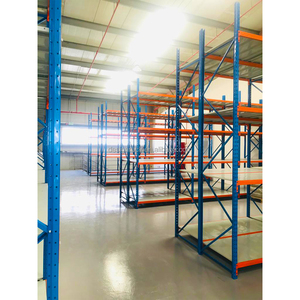
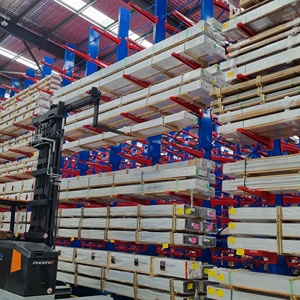
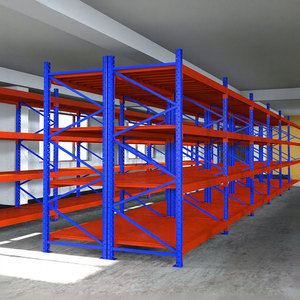
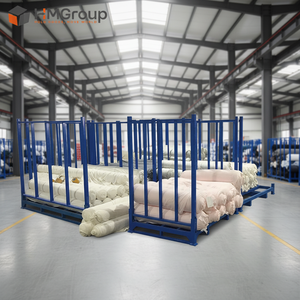
SolidFort Enterprise Advantage: Premier OEM/ODM Racking Manufacturing Ecosystem
SolidFort Storage Equipment Co., Ltd., headquartered in the industrial hub of Tongan District, Xiamen, China, stands as a tier-1 direct manufacturer and global exporter of high-yield roll-formed pallet racking systems. Spanning a 30,000 square meter integrated production facility, SolidFort bridges the gap between low-cost mill-direct steel manufacturing and high-rigor Western structural compliance. Unlike third-party trading intermediaries, our operational infrastructure is grounded in end-to-end metallurgical and structural accountability—from raw cold-rolled steel coil inspection (Q235B, Q355B grades) to automated continuous roll-forming, robotic MIG welding, thermosetting powder coating, and container-optimized export packaging.
Continuous Roll-Forming Precision
Multi-stage automated rolling lines ensure tight dimensional tolerances on open-profile columns, step beams, and heavy-duty box sections, preserving structural yield strength (fy ≥ 355 MPa).
Certified Engineering Compliance
Fully compliant with Australian standard AS4084-2023, American RMI (ANSI MH16.1), European FEM 10.2.02, and ISO9001 quality systems. Complete LARC calculation reports supplied per project.
Bespoke OEM/ODM Customization
Custom teardrop, 76.2mm, or 50mm pitch punch configurations, custom structural steel hybrid integrations, specialized non-standard powder coat colors, and OEM private labeling for global rack distributors.
Cold-Formed Steel Racking Engineering & Industry Development Trends
The global logistics and material handling ecosystem is undergoing a dramatic structural transformation. Pallet racking is no longer viewed merely as static iron framework; it is now recognized as a critical structural component of modern logistics infrastructure. Technical evolution in cold-formed steel manufacturing, automated warehouse compatibility, and stringent building safety codes are driving key engineering trends across international supply chains.
1. Advanced Profile Optimization & High-Yield Metallurgical Alloys
Historically, industrial pallet racking relied on basic hot-rolled structural channels or standard low-carbon Q235 steel profiles. Modern OEM manufacturing has shifted rapidly toward high-strength cold-formed steel alloys, notably Q355B, S355JR, and Grade 450 structural coils. Advanced multi-station roll-forming machinery allows SolidFort engineers to introduce complex stiffening ribs, returns, and multiple longitudinal folds into upright columns (e.g., 90mm x 70mm, 100mm x 70mm, and 120mm x 95mm profiles with thicknesses up to 2.5mm–3.0mm).
These geometric stiffeners drastically increase the radius of gyration ($r$) and moment of inertia ($I$), countering local flexural buckling without adding redundant dead weight. As a result, modern roll-formed frames achieve higher vertical load capacities (exceeding 25,000 kg per bay) at significantly lower raw material transport costs.
2. Seismic Resiliency & Revised Building Code Mandates (AS4084:2023 & ANSI MH16.1)
Recent updates to global engineering codes—specifically Australia's updated AS4084:2023 standard and North America's ANSI MH16.1 (RMI)—impose rigorous requirements on racking stability, rack-to-slab anchoring mechanics, baseplate design, and ductility under dynamic seismic motion. Modern cold-formed racking engineering prioritizes:
- Non-linear Dynamic Response Analysis: Evaluating racking behavior during seismic sway, including frame-to-beam connection stiffness ($k_i$) and floor anchor slip resistance.
- Heavy-Duty Baseplate Embedment: Upgrading from single-anchor light baseplates to heavy 10mm–12mm seismic footplates anchored with dual M12/M16 chemical expansion anchors.
- Impact Resistance & Column Protection: Integrating sacrificial wrap-around steel guards, polymer shock absorbers, and heavy-duty frame end-protectors directly into the engineered rack configuration.
| Engineering Criterion | Roll-Formed Steel Racking (SolidFort Standard) | Hot-Rolled Structural Steel Racking |
|---|---|---|
| Raw Material Manufacturing | Continuous precision cold-roll formed steel coil (Q355B / S355JR) | Hot-rolled structural C-channels and structural I-beams |
| Structural Flexibility & Adjustment | High: 50mm, 75mm, or 76.2mm teardrop boltless pitch adjustment | Moderate to Low: Bolted structural connections requiring field tools |
| Weight-to-Capacity Ratio | Superior strength-to-weight ratio via optimized open-section ribs | Heavier dead-weight; requires thicker concrete slab foundations |
| International Freight Efficiency | Optimal: Uprights & beams nest tightly into export 40ft HQ containers | Sub-optimal: Bulkier profile geometries increase freight volume |
| Cost per Pallet Position | Highly Economical ($50 – $100 / position typical) | Higher Capital Cost ($120 – $240+ / position typical) |
Future Procurement Trends: Modernizing Global Warehouse Infrastructure
As logistics procurement managers, 3PL operators, and warehouse system integrators prepare for 2025–2030 operational demands, purchasing criteria are expanding beyond basic per-pallet price quotes. Sourcing decisions now center on total cost of ownership (TCO), automation integration readiness, environmental sustainability compliance, and global supply chain resilience.
1. Automated Storage & Retrieval System (ASRS) & AMR Integration Readiness
The rapid shift toward warehouse automation—including autonomous mobile robots (AMRs), automated guided vehicles (AGVs), and stacker cranes—demands unprecedented dimensional tolerances from roll-formed pallet racking systems. Traditional racking tolerances (±3mm to ±5mm) can cause sensor misalignments or mechanical jams in automated picking systems.
Future-ready procurement mandates sub-millimeter precision tolerances (±1.0mm) across beam levels, upright straightness, and guide rail squareness. SolidFort's automated OEM lines implement inline laser sensors to verify profile linearity, ensuring zero-error integration with high-speed ASRS shuttles, carton flow lanes, and automated pallet conveyors.
2. Sustainable Manufacturing & ESG Procurement Compliance
Global enterprises are subject to stringent Scope 3 carbon emission reporting. Sustainable procurement strategies favor racking manufacturers that implement clean manufacturing processes:
Zero-VOC Thermosetting Powder Line
Eliminating solvent-based liquid paints in favor of electrostatic epoxy-polyester powder coatings that generate zero volatile organic compounds (VOCs) and allow 98% overspray powder recovery.
Recyclable Metallurgical Inputs
Utilizing 100% recyclable cold-rolled steel coils with traceable scrap steel content, reducing embodied carbon metrics across infrastructure projects.
Demountable & Reconfigurable Designs
Modular boltless racking systems that can be extended, relocated, or reconfigured as warehouse operational needs evolve, preventing premature equipment disposal.
3. Shift Toward High-Density Flow & Semi-Automated Gravity Racking
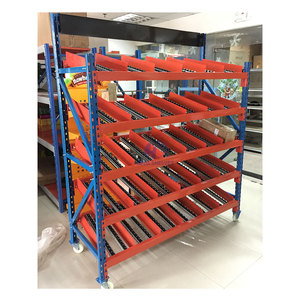
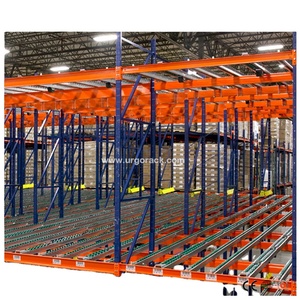
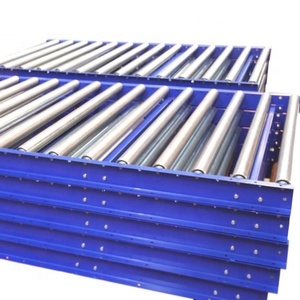
With industrial land acquisition costs rising globally, procurement trends show a clear shift away from low-density single-selective layouts toward high-density dynamic storage: Gravity Pallet Flow, Carton Flow, Push-Back, and Radio Shuttle systems. Gravity flow racking utilizes roll-formed inclined tracks equipped with precision stainless steel roller beds, speed controllers, and separation brakes. This enables high-density FIFO (First-In, First-Out) stock rotation while reducing forklift operating aisles by up to 60%.
Engineered Purchasing FAQ: Technical Solutions for Procurement Buyers
Engineering responses provided by SolidFort’s technical design department to address critical questions encountered during international warehouse layout permitting, rack specification, and procurement audits.
To deliver a structurally certified LARC (Load Application and Rack Configuration) drawing and exact project quote, our engineering team requires four primary inputs:
- Pallet Specification & Load Profile: Outer dimensions (Width x Depth x Height including cargo), entry face direction, minimum/maximum weight per pallet (e.g., 1,000 kg/pallet), and pallet bottom deck configuration (skid, GMA 4-way, or Euro pallet).
- Warehouse Architectural Plan: Clear height beneath sprinklers/roof trusses, concrete slab thickness, compressive steel strength ($f'_c$), floor flatness tolerance (FF/FL numbers), and column grid locations.
- Material Handling Equipment (MHE) Data: Forklift make/model, maximum fork lift height, minimum aisle width requirement (Right Angle Stacking Aisle), and mast tilt parameters.
- Local Building & Environmental Codes: Target jurisdiction standards (AS4084, RMI, FEM), seismic zone acceleration factors ($S_s, S_1$), and ambient operating temperatures (ambient vs. -25°C cold storage).
Pallet rack frame capacity is not a static number—it is inversely proportional to the Maximum Unsupported Beam Level Spacing (Unbraced Length $L_u$). As the vertical distance between the slab and the first beam level (or between intermediate beam levels) increases, the column's allowable buckling load decreases significantly per Euler's buckling theory ($P_{cr} = \frac{\pi^2 E I}{(K L)^2}$).
For instance, a SolidFort 90mm x 70mm x 2.0mm upright frame might support 18,000 kg when the first beam level is set at 1,500mm, but capacity drops to 13,500 kg if the first beam height is raised to 2,200mm. Always refer to SolidFort's engineered Load Application plaques rather than guessing nominal column ratings.
SolidFort provides three distinct surface protection options depending on environmental exposure:
- Standard Thermosetting Epoxy-Polyester Powder Coating (60–80 microns): Ideal for ambient dry indoor warehouses. Offers excellent scratch resistance, high aesthetic appeal, and custom RAL color matching.
- Pre-Galvanized Coil (Z100 – Z275 coating density): Suitable for high-humidity environments, cleanrooms, and food distribution centers where scratch corrosion must be contained.
- Hot-Dip Galvanizing (HDG per ASTM A123 / ISO 1461, 65–85+ microns): Mandated for outdoor rack storage, freezer environments (-30°C with severe condensation risk), and chemical/salt-exposure plants. HDG provides complete sacrificial zinc protection inside and outside roll-formed tubular sections.
Under ANSI MH16.1 and AS4084 guidelines, every beam-to-column connector must incorporate an automatic mechanical safety locking pin capable of resisting an upward vertical dislodgement force of at least 6.7 kN (1,500 lbs) per connection. SolidFort utilizes high-visibility spring steel or heavy-duty drop-lock safety pins that automatically engage upon beam insertion into teardrop or 76.2mm punch patterns, preventing accidental beam lifting during pallet placement.
Standard OEM orders (selective racking, cantilever, flow racking) are produced within 10 to 15 business days; complex engineered projects (large-scale drive-in, ASRS sub-structures) typically complete within 30 days. All components are packed using steel strapping, protective corner edging, wooden skids, and moisture-barrier plastic film. SolidFort supplies 3D computer-optimized container loading plans with every consignment, ensuring maximum cubic space utilization inside 40ft HQ ocean containers while preventing transport damage.