Featured OEM/ODM Racking Systems & Material Handling Equipment
Precision-engineered industrial pallet storage solutions designed for maximum spatial density, seismic safety compliance, and automated warehouse throughput.
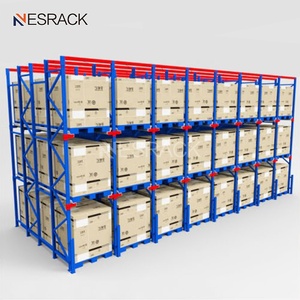
Drive-In Heavy Duty Steel Pallet Rack with 2000kg Load Capacity Seismic Reinforcement
- Pay Load: Up to 2,000 kg/pallet
- Steel Grade: Q235B / Q355B Steel
- Safety Standard: AS4084 / RMI / FEM
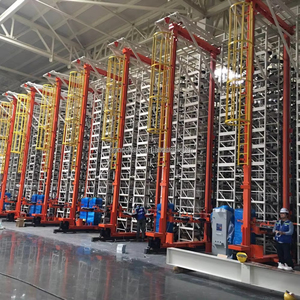
ASRS Shuttles Pallet Racking System Smart Warehouse Forklift Automation with Radio Control
- Operating Mode: FIFO & LIFO Logic
- Shuttle Speed: Up to 1.2 m/s (Loaded)
- Battery Tech: Lithium LiFePO4 Fast Charge
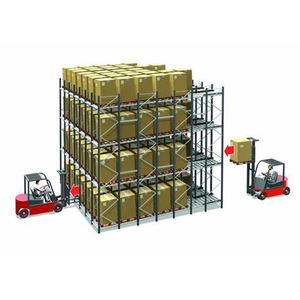
Warehouse High Density Gravity Roller Pallet Flow Racking for FIFO Operations
- Brake System: Speed Control Rollers
- Incline Angle: 3.5% - 4.0% Gradient
- Application: Perishable Goods / FMCG
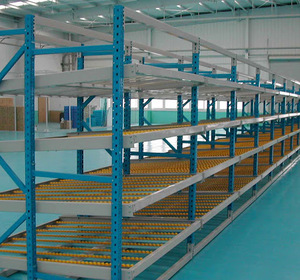
Warehouse Display High Quality Steel Industrial Storage Rack Carton Flow Metal Shelf Display Racks
- Track Type: Aluminum / Plastic Track
- Level Adjust: 50mm Pitch Adjustment
- Ideal For: E-Commerce Picking Lines
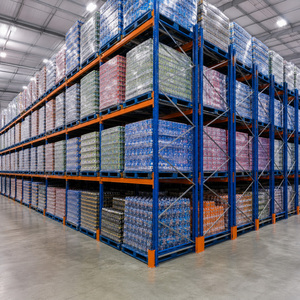
Heavy Duty Warehouse Rack Warehouse Storage Rack Q235B Steel For Logistics Hubs With High Load Capacity
- Frame Height: Up to 15 Meters
- Finish: Electrostatic Powder Coat
- Compliance: ISO 9001 / CE Certified
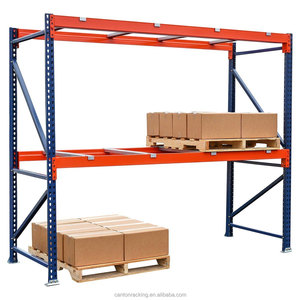
Wide Range of Metal Shelving Units and Heavy-Duty Storage Shelves in Variety of Sizes Extra Strong
- Assembly: Boltless Rivet System
- Decking: Steel / Wire / Plywood
- Load Range: 300 - 800 kg/tier
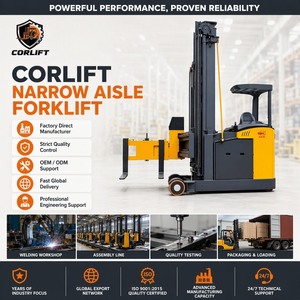
Electric High Lift Mast Reach Truck Forklift OPD15 40mm Fork Material Handling Equipment
- Lift Height: 3,000mm - 9,500mm
- Capacity: 1,500 kg Rated Load
- Aisle Width: Narrow Aisle Compatible
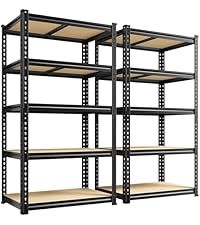
5 Layer Industrial Storage Shelving Racks Heavy Duty Adjustable Boltless Rivet Rack Powder Coated
- Layers: 5 Tier Adjustable Shelving
- Corrosion Proof: AkzoNobel Powder Coat
- Target Use: Parts Depots / Archiving
Direct-from-Factory OEM/ODM Satellite Pallet Racking Engineering
As a specialized OEM/ODM direct manufacturer operating a state-of-the-art 30,000㎡ facility in Tongan District, Xiamen, China (SolidFort Storage Equipment Co., Ltd.), we deliver high-density warehouse storage systems engineered specifically to international structural criteria including AS4084-2012 (Australia), ANSI/RMI MH16.1 (USA), and FEM 10.2.02 (Europe).
Satellite pallet racking—frequently referred to as radio shuttle racking or pallet runner systems—represents the pinnacle of semi-automated deep-lane storage. By decoupling forklift trucks from the storage channels and replacing traditional driving aisles with autonomous, radio-controlled shuttle carts, our satellite systems increase usable warehouse cubic capacity by up to 80% compared to standard selective pallet racking.
- High-Tensile Cold-Rolled Steel: Manufactured from certified Q235B and Q355B structural steel profiles to resist elastic deflection under maximum rated loading.
- Custom Shuttle Rail Profiles: Integrated guide rails hot-rolled and cold-formed to millimeter tolerances, ensuring seamless optical sensor alignment and smooth shuttle traversal.
- Automated Robotic Welding: Continuous robotic MIG/MAG welding lines guarantee consistent weld penetration across all beam connectors and baseplate assemblies.
- Surface Finishing Technology: Pre-treated phosphating followed by thermosetting AkzoNobel epoxy-polyester powder coating for superior resistance against chemical abrasion and impacts.
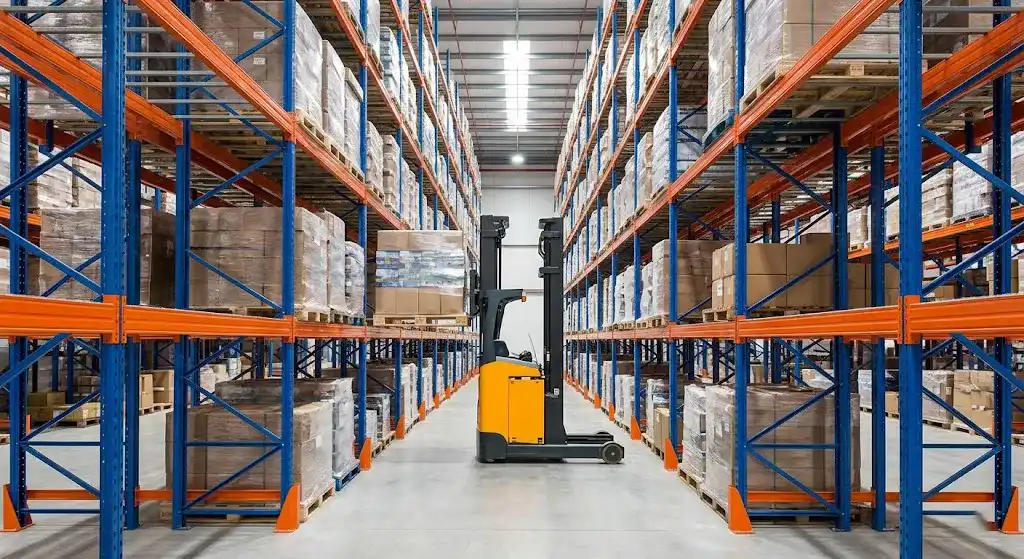
The Mechanics of Satellite Pallet Racking: OEM/ODM Customization
In-depth technical breakdown of structural load-bearing mechanics, autonomous vehicle integration, and high-density warehouse optimization.
Autonomous Radio Shuttle Dynamics
Our OEM satellite vehicles are equipped with dual-laser obstacle detection, optical positioning sensors, and brushless DC traction motors. Operating seamlessly under WMS software protocols via 2.4 GHz radio frequency, shuttles lift and transport pallets up to 1,500kg at speeds up to 1.2 m/s inside deep storage channels.
Custom OEM Component Geometry
We tailor beam profiles (80mm to 160mm height), upright column section depths (80mm to 120mm), and baseplate thickness to match specific floor slab stress tolerances and forklift clear reach height. Every custom OEM rack system undergoes Finite Element Analysis (FEA) testing before tooling production.
Seismic & Impact Reinforcement
For operations located in seismic zones, our structural engineering team incorporates heavy-duty upright frames with diagonal tubular bracing, oversized anchor bolt patterns, and custom column guards designed to withstand forklift impact forces without compromising structural rack equilibrium.
Structural Engineering Note: Deflection & Safety Factors
In accordance with ANSI/RMI MH16.1 and AS4084, satellite shuttle support rails must maintain a maximum beam deflection ratio of strictly L/200 under full rated static load. Uncontrolled deflection causes shuttle vehicle tilt, optical sensor misalignment, and automated stoppage. SolidFort custom OEM rails utilize high-yield Q355B cold-formed steel to achieve superior rigidity across span lengths exceeding 1,350mm.
Satellite Pallet Racking vs. Traditional High-Density Systems
Compare volumetric efficiency, operational throughput, labor cost reduction, and capital ROI across standard industrial storage architectures.
| Storage System Type | Volumetric Space Utilization | Operational SKU Selectivity | Forklift Aisle Requirement | Handling Throughput Speed | Labor Cost Savings |
|---|---|---|---|---|---|
| Satellite / Radio Shuttle Racking | 80% - 85% (Maximum) | Medium (Deep-lane LIFO/FIFO) | Low (Perimeter Aisles Only) | Very High (Automated) | High (Up to 50% Reduction) |
| Selective Pallet Racking | 40% - 50% (Standard) | 100% Direct Access | High (3.0m - 3.5m Aisles) | Moderate (Manual Driving) | Low (Standard Manual Driving) |
| Drive-In / Drive-Thru Racking | 65% - 75% (High) | Low (Strict LIFO) | Very Low (Forklift Drives Inside) | Slow (Risk of Collision) | Moderate (High Collision Risk) |
| Push-Back Racking (Cart System) | 60% - 70% (Moderate) | Medium (2 to 6 Pallets Deep) | Moderate (Front Loading Only) | Moderate (Gravity Push) | Moderate (Manual Pushing) |
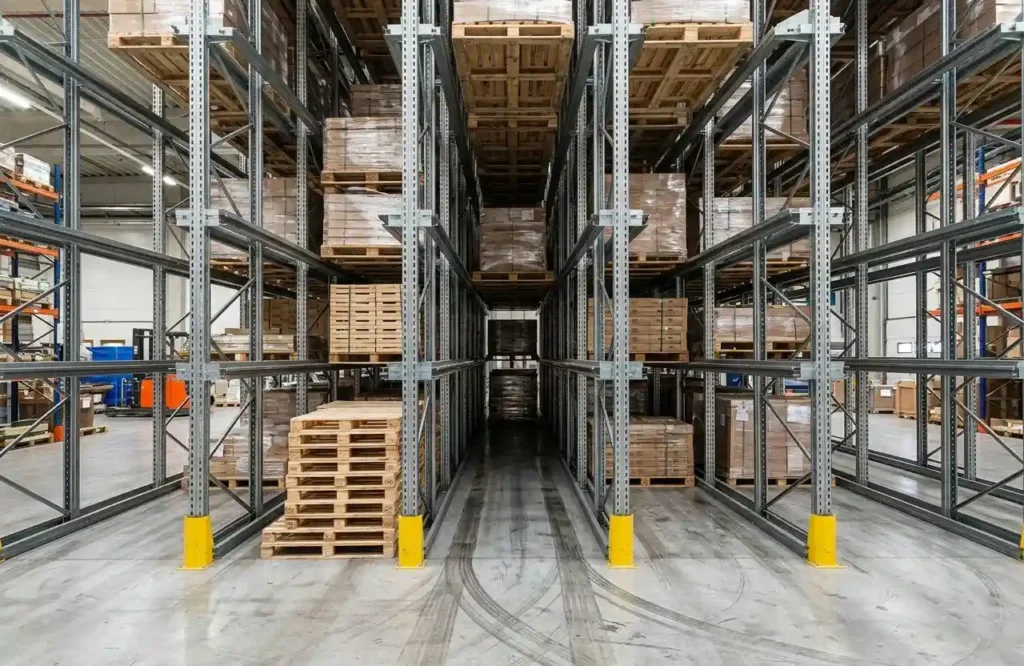
Product Future Sourcing & Technological Trends
The global warehousing and logistics sector is transitioning rapidly toward automated, energy-efficient high-density warehousing. Procurement managers, enterprise buyers, and logistics engineers must account for several major technology shifts when specifying custom satellite pallet racking systems over the next decade:
1. Cold Chain & Extreme Environment Durability (-30°C)
Cold storage logistics facilities face skyrocketing electricity costs. Satellite racking minimizes the refrigerated space volume needed to store food, beverage, and pharmaceutical items. Emerging trends require radio shuttle vehicles equipped with specialized heated electronics boxes, low-temperature synthetic lubricants, and high-discharge-rate Lithium Iron Phosphate (LiFePO4) batteries capable of sustaining 8-12 hours of continuous operation at sub-zero temperatures down to -30°C.
2. IoT Telemetry, WMS Integration & 5G Connectivity
Modern procurement trends favor satellite shuttle systems that communicate natively with Enterprise Resource Planning (ERP) and Warehouse Management Systems (WMS). Real-time telemetry via 5G or industrial Wi-Fi 6 allows operators to monitor battery state-of-health, diagnostic error codes, pallet location mapping, and throughput analytics directly on fleet control tablets.
3. Hybrid AS/RS & Automated Vertical Mother-Child Shuttles
The market is shifting from standalone forklift-carried shuttle carts to integrated 3D Matrix mother-child shuttle systems. Vertical elevators automatically transfer satellite carts between rack levels, creating fully automated, lights-out distribution hubs that completely eliminate manual forklift drivers.
Direct OEM/ODM Factory Advantages for Global Importers
From raw steel selection to final container loading, our complete supply chain control guarantees superior product quality, reduced lead times, and certified structural performance.
Direct Factory Scale & Fast Lead Times
Operating a 30,000㎡ manufacturing facility with automated roll-forming lines and continuous raw material steel inventories allows us to deliver standard orders in 10–15 days and complex engineered OEM projects within 30 days.
Free CAD Layout & Engineering Reports
We provide full project technical support prior to contract signing: complimentary 2D/3D CAD warehouse floorplan designs, maximum pallet position counts, point-load slab stress analysis, and full Load Application and Rack Configuration (LARC) drawings.
Container Loading & Global Shipping
Exporting to 53+ countries, our logistics department generates customized 3D container loading diagrams for every order to eliminate shipping void space, prevent freight damage, and minimize total landed sea freight costs on FOB, CIF, or DDP terms.
Frequently Asked Questions on Satellite Pallet Racking Sourcing
Get authoritative, technical answers from our rack structural design engineers regarding capacity, anchoring, costs, and compliance.
System cost per pallet position depends on rack height, seismic load requirements, steel price fluctuations, and the ratio of automated radio shuttle carts to storage channels. Standard steel structure material costs typically range from USD $60 to $120 per pallet position. When factoring in automated radio shuttle vehicles, total system investments usually average USD $120 to $220 per position. Compared to fully automated AS/RS stacker crane systems ($400-$800+ per position), satellite shuttle racking delivers up to 80% of the storage density at a fraction of the capital expenditure.
Yes. Under ANSI/RMI MH16.1 and AS4084 standards, every single racking column must be securely anchored to an engineered concrete slab. For heavy-duty satellite racking installations exceeding 6 meters in height, a minimum concrete slab thickness of 150mm to 200mm with a compressive strength rating of at least 30 MPa (4,350 PSI) is typically required. Anchor bolt embedment depth, expansion vs. chemical anchor selection, and baseplate thickness are calculated based on local seismic zone acceleration parameters.
Load capacity calculation requires evaluating two distinct structural components:
- Beam & Rail Capacity: Evaluates uniformly distributed loads (UDL) per pallet level (e.g., 2 x 1,500 kg pallets = 3,000 kg per beam level) adhering to L/200 maximum deflection limits.
- Upright Frame Load Capacity: Calculated using buckling stress equations. Upright capacity is highly dependent on the vertical beam level spacing (unbraced length). Increasing vertical distance between beam levels significantly reduces total frame payload capacity.
SolidFort provides formal technical calculation packages and certified load plaques (LARC drawings) detailing allowable bay capacities for every project.
Channel dimensions are built around specific pallet footprints. For standard 40" x 48" GMA pallets or 1200mm x 1000mm Euro/Industrial pallets, standard upright depth is typically 1050mm to 1100mm (allowing nominal pallet overhang). Rail clearances are designed with a 50mm safety margin on either side of the pallet to prevent contact with structural columns during autonomous shuttle movement. Bay clear width is custom configured based on whether single or double pallet entry designs are specified.
According to FEM 10.2.09 and AS4084-2012, a formal structural safety inspection must be conducted by a certified rack inspector at least once every 12 months. Additionally, warehouse supervisors must perform weekly visual checks for forklift impact damage, unseated safety beam lock pins, rail alignment shifts, and missing column protectors. Any damaged rack frame exhibiting localized column deformation exceeding 3mm over a 1-meter length must be isolated and replaced immediately.
We provide comprehensive OEM/ODM customization including custom structural steel profiles, non-standard powder coat RAL color matching, pre-galvanized or hot-dip galvanized finishes for high humidity environment protection, customized radio shuttle software protocols for specialized WMS integration, adjustable wire mesh decking, heavy-duty floor-mounted guide rails, and customized seismic baseplate anchoring systems.
Ready to Maximize Your Warehouse Storage Capacity?
Contact our structural engineering team today for direct OEM/ODM factory pricing, free 2D/3D CAD warehouse layout proposals, and structural calculation reports tailored to your building specifications.