Engineering Product Showcase
Industrial-Grade Automated Storage & Heavy-Duty Warehouse Racking Systems
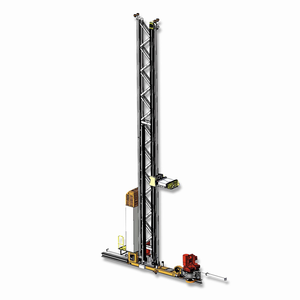
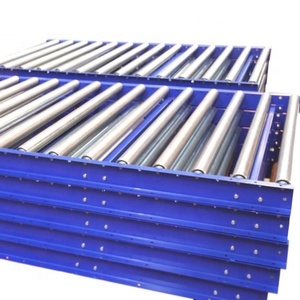
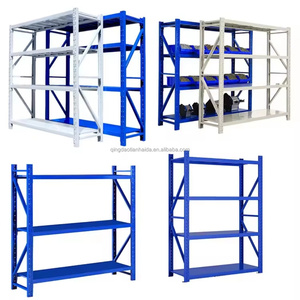
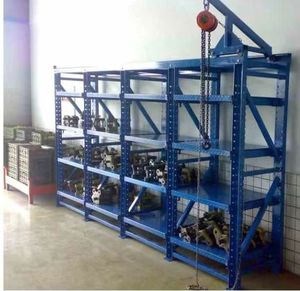
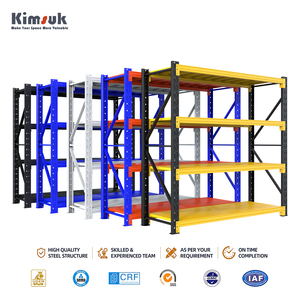
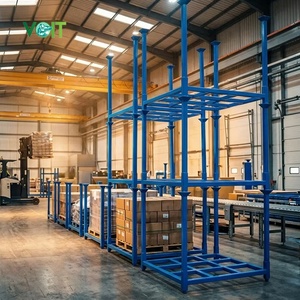
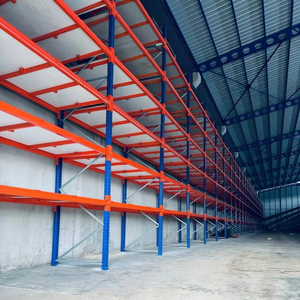
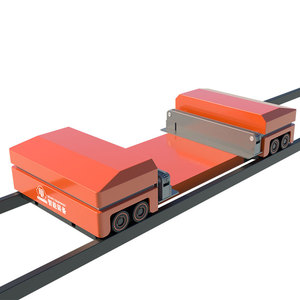
Enterprise Strengths & Manufacturing Benchmarks
Why Tier-1 Global Procurement Directors Partner with SolidFort Storage Equipment
Factory-Direct Precision Engineering
Headquartered in Tongan District, Xiamen, our 30,000㎡ facility controls the entire lifecycle—from cold-roll profile forming to continuous robotic welding and automated electrostatic powder coating.
International Structural Compliance
All structural designs, load application calculations, and rack configurations strict adherence to AS4084-2012 (Australia), RMI ANSI MH16.1 (USA), FEM 10.2.02 (Europe), and ISO 9001 standards.
Unmatched Rapid Logistics Execution
Standardized structural components feature 10–15 day lead times. Engineered AS/RS projects complete within 30 days, backed by 3D container loading software to maximize freight utilization.
1. Executive Summary & The Paradigm Shift in High-Bay Warehouse Automation
In modern industrial logistics, automated storage and retrieval systems (AS/RS) are no longer a luxury—they are a core prerequisite for throughput optimization, labor cost suppression, and high-density vertical expansion. As corporate real estate costs escalate globally, logistics managers must convert static horizontal space into dynamic high-bay storage. Selecting the correct ASRS Pallet Racking System Manufacturer & Exporter is a capital decision that dictates warehouse operational velocity for decades.
An ASRS structural racking skeleton acts as the load-bearing spine of automated facilities. Unlike traditional selective pallet racking, structural tolerances in an automated system are measured in millimeters rather than centimeters. Stacker cranes (SRMs), Radio Guided Vehicles (RGVs), and Shuttle Cruisers travel at speeds up to 240 meters per minute; even minor structural deflection under load can cause sensor tracking errors, system faults, or mechanical crashes. Therefore, engineering integrity, precise roll-forming capabilities, and strict compliance with standards like ANSI MH16.1 and FEM 10.2.02 are mandatory evaluation factors.
Technical Information Gain Insight: Standard selective rack allows a maximum beam deflection ratio of L/200 (length divided by 200). In contrast, automated crane-serviced ASRS systems require strict deflection limits of L/300 to L/400 to prevent optical sensor misalignments during high-speed pallet extraction.
2. Technical Comparison Matrix: Structural Racking Systems
To help supply chain engineers select the optimal storage layout, the matrix below details operational performance metrics across major heavy-duty racking configurations.
| System Type | Storage Density | Access Speed | Selectivity | Structural Tolerance | Optimal Operational Use Case |
|---|---|---|---|---|---|
| High-Bay ASRS Crane Racking | Maximum (90%+) | Ultra-Fast (<45s/cycle) | 100% Automated | Ultra-Tight (±1.5mm) | High-throughput distribution, 24/7 fulfillment centers |
| Pallet Shuttle Cruiser System | Very High (85%) | Fast (Automated Shuttle) | High (FIFO / LIFO) | Tight (±2.5mm) | Cold storage (-25°C), FMCG, bulk production storage |
| Selective Pallet Racking | Standard (40-50%) | Manual (Forklift Dependent) | 100% Manual Direct | Standard (±5.0mm) | High SKU diversity, dynamic order-picking warehouses |
| Drive-In / Drive-Thru Racking | High (75%) | Slow (Forklift enters rack) | Low (LIFO Dedicated) | Standard (±4.0mm) | Homogeneous seasonal inventory, raw materials storage |
| Cantilever Racking System | Medium (Variable) | Moderate (Crane/Forklift) | 100% Direct to Arms | Engineered to Load | Pipes, timber, extrusions, structural steel plates |
3. Evaluation Criteria: Sourcing from Top 10 ASRS Racking Manufacturers
When selecting a global supply chain partner for enterprise racking projects, procurement executives must evaluate suppliers against four critical engineering and commercial vectors:
Vector A: Raw Material Metallurgy & Structural Roll-Forming Capability
The structural capacity of high-bay racking relies heavily on steel chemistry. Top manufacturers specify structural-grade cold-rolled steel (such as Q235B, Q355B, or high-tensile SS400 equivalents) with guaranteed yield strengths ($f_y \ge 355 \text{ MPa}$). Advanced continuous cold-roll forming lines with 20–24 stations ensure consistent upright profiles, eliminating localized buckling vulnerabilities along column punchings.
Vector B: Surface Treatment, Corrosion Prevention, and Powder Coating
In high-humidity or sub-zero environments, chemical pretreatments and powder coating thickness directly affect long-term durability. Quality-driven factories utilize automated multi-stage iron-phosphate wash cycles followed by electrostatic thermosetting epoxy-polyester powder coating (60–80 microns thickness), passing 500-hour neutral salt-spray tests (ASTM B117).
Vector C: Custom Engineering & LARC Protocol Support
A qualified manufacturer provides Load Application and Rack Configuration (LARC) drawings for every project. Finite Element Analysis (FEA) software simulates static weight distributions, dynamic crane forces, shear stresses, and seismic ground accelerations (in accordance with localized building codes such as ASCE 7 or Eurocode 8).
4. Future Procurement Trends in Industrial Storage (2025–2030)
The material handling sector is transitioning toward hyper-dense, energy-efficient automated ecosystems. Sourcing managers should align their multi-year equipment procurement strategies with these core macro developments:
1. Rapid Adoption of 4-Way Shuttle RGV Architecture
While traditional 2-way shuttle systems require forklifts to shift vehicles between levels, 4-way radio shuttle cruisers navigate along both longitudinal and transverse storage channels. This design eliminates vertical transfer bottlenecks and increases rack cubic density by up to 35% compared to conventional layouts.
2. Cold-Chain Automation with Structural Steel Thermal Resilience
With global demand for frozen food and biopharmaceuticals surging, cold-storage ASRS installations operating down to -25°C are accelerating. Cold-room structural racking requires specialized steel grades treated to prevent low-temperature embrittlement, combined with non-shrinking anchor grouting formulations.
3. Decarbonization and Low-Carbon Steel Supply Chains
Global supply chain audits now evaluate Scope 3 carbon emissions. Leading manufacturers are adopting recycled EAF (Electric Arc Furnace) steel and eco-friendly zero-VOC powder finishes, providing verified Carbon Footprint certificates during international bidding processes.
5. Comprehensive Engineering & Procurement FAQ
Expert insights on engineering calculations, installation safety, compliance standards, and international logistics.
What is the typical cost per pallet position for ASRS vs Selective Racking?
Standard selective pallet racking averages between USD $50 to $100 per pallet position (materials only). High-density radio shuttle racking ranges from $120 to $220 per position. Fully automated, rack-supported ASRS structural clad buildings range from $300 to $600+ per position depending on total stacker crane height, WMS integration complexity, and building enclosure engineering.
Why is concrete floor anchoring mandatory under ANSI/RMI MH16.1 & AS4084?
Anchoring every footplate to the concrete slab prevents horizontal column displacement caused by forklift impacts, operational vibration, and seismic movement. Anchor bolt size, hole depth, and embedment values are calculated by structural engineers based on concrete slab compressive strength (typically $\ge 25 \text{ MPa}$) and local seismic zones.
How are beam load capacity and upright frame capacity calculated?
Beam load capacity is based on a Uniformly Distributed Load (UDL) acting on a pair of step or box beams, adhering to maximum deflection limits (e.g., L/200 for manual, L/300 for ASRS). Upright frame capacity depends on the vertical distance between beam levels (unbraced length): greater vertical beam spacing reduces overall column capacity due to Euler buckling constraints.
What structural dimensions are standard for GMA and Euro Pallets?
For standard GMA pallets (40" x 48" / 1016mm x 1219mm), typical frame depths are 42 inches (allowing a 3-inch pallet overhang front and back), with 96-inch (8ft) or 108-inch (9ft) beam spans holding two pallets side by side. For Euro pallets (1200mm x 800mm), 1100mm deep frame uprights paired with 2700mm beam levels are industry standard.
How often should enterprise structural racking systems be inspected?
Under international standards (including EN 15635 and AS4084), formal structural inspections by a qualified rack inspector must occur at least once every 12 months. Routine visual checks should be completed weekly by warehouse safety officers to identify damaged columns, dislodged safety pins, or deflected beam levels.
What lead times and shipping terms apply to export projects?
Standard component orders ship within 10 to 15 days. Complex engineered ASRS racking projects require approximately 30 days for roll forming, fabrication, surface treatment, and quality inspection. Ocean freight is routinely arranged under FOB, CIF, or DDP terms with customized container packing plans.
What is a Rack-Supported Building structure in ASRS design?
In a rack-supported building system, the heavy-duty ASRS racking grid serves as the structural framework that supports the building roof and exterior side cladding. This eliminates the need for separate structural building columns, maximizing internal volume and accelerating construction timelines.
Accelerate Your High-Bay Warehouse Project Today
Partner with SolidFort Storage Equipment for free CAD layout design, detailed engineering structural reports, and direct factory pricing on enterprise racking systems.