Modern supply chain infrastructure demands unprecedented spatial efficiency, high throughput velocity, and rigorous structural safety. Sourcing industrial warehouse racking solutions directly from top-tier automated storage racking factories requires a deep technical understanding of structural steel engineering (such as ANSI/RMI MH16.1, FEM 10.2.02, and AS4084-2012 standards), cold-roll forming profiles, dynamic load distribution, and automated shuttle integration. This whitepaper provides procurement managers, logistics consultants, and structural engineers with an authoritative breakdown of leading automated storage racking systems, manufacturing criteria, future market trends, and critical procurement FAQs.
Featured Automated & Heavy-Duty Racking Systems
Engineered for maximum weight capacity, thermal stability, and operational longevity across logistics hubs, cold chain facilities, and automated warehouses worldwide.
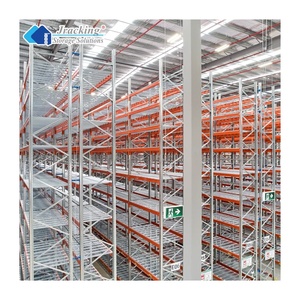
Jracking Compact Industrial Warehouse Rack Heavy Duty Steel Pallet Racking System for Cold Storage CE Certified
Send an Inquiry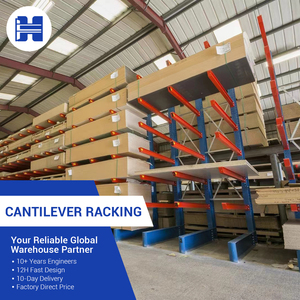
High Capacity Heavy Duty Roll Formed Cantilever Rack Adjustable Arms Powder Coated Finish for Industrial Warehouse Steel Storage
Send an Inquiry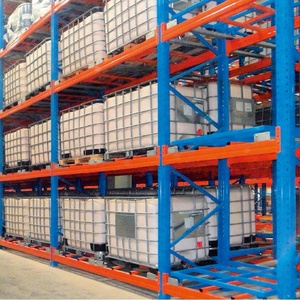
Heavy Duty Steel 5 Push Back Racking System High Capacity Powder Coated Custom Design Small Batch Multiple Variety Bulk Goods
Send an Inquiry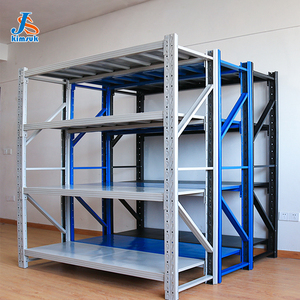
Racking Adjustable Metal Boltless Shelf and Racks Warehouse Storage Medium Duty Metal Rack Shelf
Send an Inquiry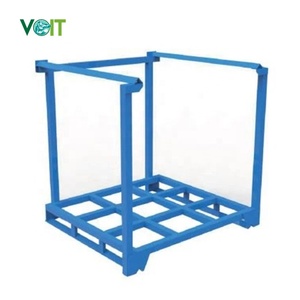
Customized Load Capacity 1000kgs Q235 Mild Steel Powder Coated Warehouse Stack Rack
Send an Inquiry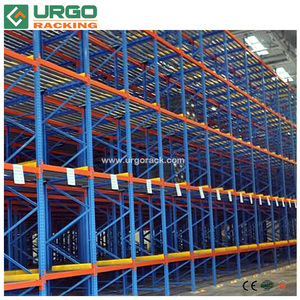
High Quality Industrial Rolling Shelves Stainless Steel Shelf Carton Flow Rack
Send an Inquiry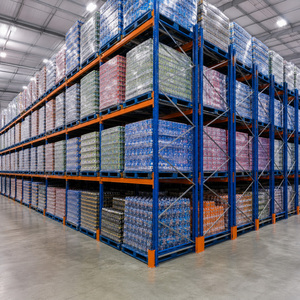
Heavy Duty Warehouse Rack Warehouse Storage Rack Q235B Steel For Logistics Hubs With High Load Capacity
Send an Inquiry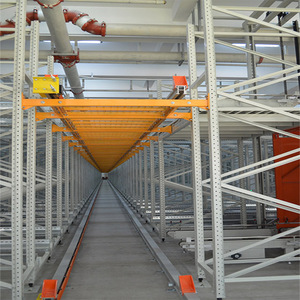
Corrosion Protected Pallet Shuttle Racking System Radio Shuttle Warehouse Storage Rack
Send an InquiryTop 10 Automated Storage Racking Configurations Analyzed
Automated warehouse infrastructure has shifted from simple static beam systems to multi-dimensional dynamic storage platforms. Selecting the optimal system requires balancing total SKU diversity, throughput velocity, cubic space utilization, and initial capital expenditure (CapEx). Below is an analytical ranking and engineering assessment of the top 10 automated and high-density racking configurations utilized by global logistics hubs:
- Radio Shuttle Pallet Racking (Semi-Automated): Utilizes self-powered shuttle carts operating inside storage channels controlled via RF remote or WMS interface. Eliminates forklift aisle travel, achieving up to 85% storage density. Ideal for cold storage (-25°C to -30°C) and fast-moving consumer goods (FMCG).
- Automated Storage & Retrieval Systems (AS/RS Unit-Load): Fully automated crane-based racking reaching vertical heights over 40 meters. Offers extreme precision, continuous 24/7 operation, and seamless integration with Warehouse Execution Systems (WES).
- Multi-Tier Shuttle & Mini-Load Racking: Designed for high-speed tote and carton handling in e-commerce fulfillment centers. Achieves picking speeds upwards of 1,000 cycles/hour per aisle.
- Push Back Racking (2 to 6 Pallets Deep): Nested carts moving along inclined rails using gravity. Operates under Last-In, First-Out (LIFO) inventory principles without requiring specialized forklifts or electronic components.
- Drive-In / Drive-Thru Racking Systems: High-density continuous lane racking where forklifts enter the structure. Extremely cost-effective per pallet position for low-SKU, high-volume operations.
- Carton Flow & Pallet Flow (Gravity Racking): Incorporates inclined roller beds with centrifugal braking rollers to maintain controlled FIFO stock rotation. Reduces picking travel distance by up to 70%.
- Heavy-Duty Cantilever Racking: Features un-obstructed front access with adjustable arms designed for long, bulky, or irregular inventory such as structural steel, lumber, pipes, and aluminum extrusions.
- Very Narrow Aisle (VNA) High-Bay Racking: Reduces aisle widths down to 1.5–1.8 meters using guided VNA trucks or wire navigation. Delivers 100% individual pallet selectivity combined with ultra-high vertical storage density.
- Mobile Pallet Racking (Electric Powered): Heavy-duty rack rows mounted on motorized mobile bases traveling on embedded floor rails. Creates an open aisle only where required, turning up to 90% of warehouse floor space into active storage.
- Modular Mezzanine Supported Rack Structures: Multi-level elevated structural steel platforms utilizing racking columns as primary vertical load supports to double or triple usable floor square footage.
Automated Racking Technical Performance Matrix
Comprehensive engineering comparison to guide procurement teams based on SKU turnover, space efficiency, and system ROI.
| Racking Configuration | Space Utilization | Selectivity | Inventory Principle | Automation Level | Avg Cost / Pallet Position |
|---|---|---|---|---|---|
| Radio Shuttle Racking | 80% – 85% | Medium (Per Lane) | FIFO / LIFO | Semi-Automated | $120 – $220 |
| AS/RS Crane System | 90% – 95% | 100% High-Speed | FIFO / LIFO | Fully Automated | $400 – $800+ |
| Drive-In Racking | 75% – 80% | Low (Bulk SKUs) | LIFO | Manual Forklift | $70 – $120 |
| Push Back Racking | 70% – 75% | Moderate (2-6 Deep) | LIFO | Mechanical Gravity | $110 – $180 |
| Selective Pallet Rack | 40% – 50% | 100% Direct Access | FIFO / LIFO | Manual / VNA | $50 – $90 |
| Mobile Powered Racking | 85% – 90% | 100% Selective | FIFO / LIFO | Motorized Automated | $250 – $400 |
Enterprise Competitive Advantages: SolidFort Sourcing Standards
As a specialized manufacturer operating out of a 30,000㎡ production facility in Tongan Park, Xiamen, China, SolidFort Storage Equipment Co., Ltd. bridge the gap between factory-direct cost efficiencies and international structural compliance. Our manufacturing workflow adheres strictly to ISO-certified quality protocols, supplying certified racking hardware to over 53 countries across North America, Europe, Australia, and the Middle East.
Certified Structural Steel
Fabricated from high-tensile Q235B and Q355B mild steel. Upright frames undergo cold-roll forming with continuous teardrop or omega punching patterns for structural stiffness and elastic resilience under dynamic loading.
Global Engineering Compliance
All storage structures are modeled using FEA (Finite Element Analysis) software and verified against Australian standard AS4084-2012, American RMI ANSI MH16.1 specifications, and European FEM 10.2.02 codes.
Precision Finishing & Powder Coating
Automated multi-stage phosphating pretreatment followed by epoxy-polyester powder coating cured at 200°C. Delivers outstanding corrosion resistance, impact durability, and hygienic surfaces for food or pharma handling.
Direct CAD & LARC Documentation
Every project quote includes free CAD warehouse layout drawings, 3D volumetric calculations, and clear Load Application and Rack Configuration (LARC) plaques for on-site safety compliance.
Rapid Lead Time & Logistics
In-house raw material inventory allows standard orders to ship within 10–15 business days. Container optimization software ensures maximum cubic payload per ocean shipment, lowering ocean freight cost per unit.
Comprehensive Protection Hardware
Integrated manufacturing of heavy-gauge upright frame protectors, heavy-duty crash barriers, row spacers, frame tie-backs, and galvanized mesh decking ensures long-term operational safety.
Future Sourcing & Technology Trends (2026–2030)
1. AMR & AGV Co-Engineering Compatibility
Standard racking design is evolving to accommodate Autonomous Mobile Robots (AMRs) and Automated Guided Vehicles (AGVs). Bottom beam levels are being re-engineered with wider floor clearances and optical sensor reflective targets to facilitate seamless robotic under-ride pallet extraction.
2. Ultra-High Density Cold Chain Optimization
With global cold chain energy tariffs rising, operators are retrofitting traditional selective racks with 4D Radio Shuttle systems. High-density shuttle systems shrink cold storage cubic volume per pallet by up to 60%, drastically cutting refrigeration thermal dissipation losses.
3. IoT Structural Health Monitoring (SHM)
Sensors embedded within upright columns detect forklift impact forces in real time. Smart load cells mounted on beam connectors transmit telemetry regarding deflection limits ($L/200$), preventing catastrophic rack collapses due to overload or structural fatigue.
4. Sustainable Steel & Low-VOC Finishes
Global ESG compliance mandates greener manufacturing inputs. Leading factories are shifting toward green-certified steel mills, utilizing closed-loop water recycled phosphating washes, and zero-emission powder coatings to minimize environmental footprint.
Product Development Trends in Automated Racking Hardware
Structural components within automated storage systems are achieving higher load-to-weight ratios through advanced cold-roll profiles, material science, and mechanical design innovations:
- Self-Locking Beam Connectors: High-precision 3 to 4-hook connector brackets fitted with automatic safety pins prevent accidental beam dislodgement during high-speed forklift or crane operations.
- Advanced Galvanized Surface Treatments: Pre-galvanized and hot-dip galvanized (HDG) steel components offering 80+ micron zinc layer protection, vital for high-humidity and chemically aggressive storage environments.
- Lithium-Iron-Phosphate (LiFePO4) Shuttle Power Systems: Fast-charging shuttle batteries capable of operating continuously in cryogenic conditions (-30°C) with operational runtimes exceeding 10 hours per 30-minute quick charge.
- Modular Boltless Shelving Integration: Hybrid systems allowing heavy-duty structural pallet storage on upper levels and boltless carton flow or picking shelves on lower levels for streamlined multi-channel e-commerce fulfillment.
Frequently Asked Questions (FAQ) for Storage Racking Procurement
Essential technical, financial, and logistical insights for warehouse managers and procurement professionals.
What is the average cost per pallet position for automated racking systems?
Pricing varies based on engineering specs, steel gauge, and system complexity. Standard selective pallet racking generally ranges from USD 50 to 100 per pallet position. High-density semi-automated systems like Radio Shuttle racking range between USD 120 and 220 per position, while fully automated AS/RS stacker crane systems can range from USD 400 to 800+ per position (inclusive of software and crane automation hardware).
Do heavy-duty pallet racks strictly require floor concrete anchoring?
Yes. Under ANSI/RMI MH16.1 and international building codes, every rack upright column baseplate must be securely anchored to an engineered concrete slab with heavy-duty mechanical wedge anchors or chemical anchors. Floor anchoring resists lateral forces, seismic shifts, and prevents displacement caused by accidental forklift impacts.
How is structural load capacity calculated for heavy-duty pallet racks?
Load capacity consists of two primary engineering metrics: 1) Beam Pair Capacity: The Uniformly Distributed Load (UDL) a pair of horizontal beams can support without exceeding deflection limits ($L/200$). 2) Upright Frame Capacity: The total vertical payload an upright frame can carry, which decreases as vertical beam elevation spacing increases. Structural calculations must always be validated via manufacturer LARC drawings.
What are the standard industrial pallet rack dimensions for GMA and Euro Pallets?
For standard North American 40" x 48" GMA pallets, upright frames are typically 42 inches deep (providing a 3-inch pallet overhang front and back), and step beams are 96 inches (8 feet) long to hold two pallets per level. For Euro pallets (1200 x 800 mm or 1200 x 1000 mm), frame depths are engineered to 1000 mm or 1100 mm with beam lengths customized to 2700 mm or 3300 mm.
What concrete slab specifications are required for high-bay and automated racking?
Standard racking requires a minimum concrete floor thickness of 6 inches (150 mm) with a compressive strength of at least 3,000 PSI (20-25 MPa). For high-bay VNA racks and AS/RS structures over 12 meters, floors must meet strict flatness and levelness tolerances (such as Superflat F-min 100 specifications under ACI 117 standards).
How frequently should industrial warehouse racking undergo structural inspection?
Formal structural safety inspections should be performed by a qualified racking engineer at least once every 12 months in compliance with EN 15635 standards. Furthermore, warehouse operators should enforce weekly visual inspections by trained staff to identify frame deformation, missing safety locks, or floor anchor looseness.
What lead times and delivery terms apply for direct factory procurement?
Standard roll-formed selective racking orders ship within 10 to 15 days post design confirmation. Complex engineered projects involving Radio Shuttle systems or customized heavy-duty cantilever racks typically require 25 to 35 days. International shipments are regularly offered under FOB, CIF, or DDP terms with container loading optimization plans.
How does cold storage affect automated storage racking materials?
In cold storage environments (-30°C), low temperatures can cause standard carbon steel to suffer hydrogen embrittlement. Dedicated cold-storage racking utilizes low-temperature structural steel grades, specialized impact-resistant epoxy coatings, or hot-dip galvanizing, alongside shuttle electronics rated with IP65 moisture protection to prevent condensation failure.
Optimize Your Storage Infrastructure Today
Get direct access to engineering expertise, custom structural designs, and competitive factory-direct pricing for your warehouse racking expansion.
Send an Inquiry