Featured High-Bay & Heavy-Duty Storage Systems
Engineered for extreme structural capacity, seamless stacker crane integration, and maximum vertical density.
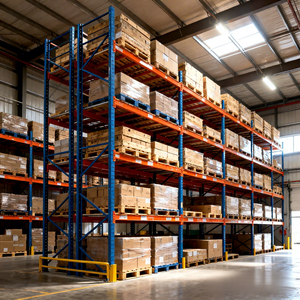
High-Rise Heavy Duty Beam Racking 10-15m Tall Steel Storage Shelves for Large Logistics Center
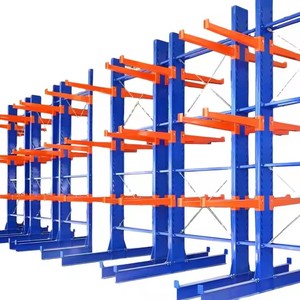
Industrial Heavy Duty OEM ODM Storage Racks Wall Mounting Tube Racking Galvanized Cantilever Rack
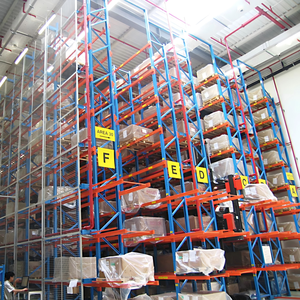
800kg to 3000kg Per Layer Load VNA Narrow Lane Pallet Rack High Rise Storage System
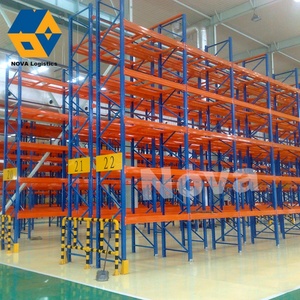
Customized Competitive Industrial Warehouse Storage Steel Heavy Duty Pallet Rack
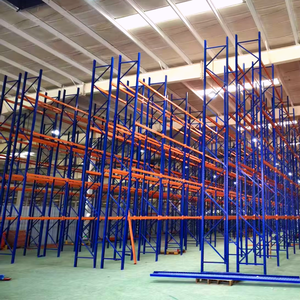
2-5 Tier Wide Aisle Heavy Load Pallet Racking for Automated Warehouse Online Order Fulfillment Hub
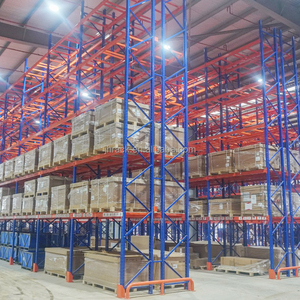
Heavy-Duty Corrosion Protected Pallet Racking Systems For Warehouse And Factory Storage
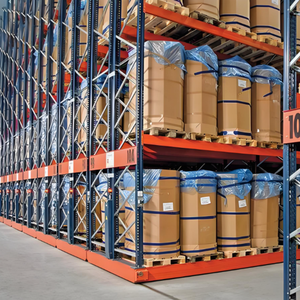
Mobile Pallet Racking Featuring Space-Efficient Design for Multi-Row Storage
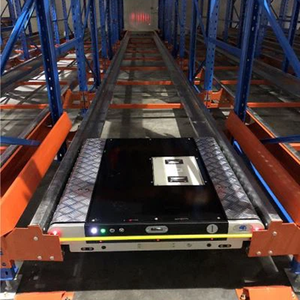
Automated Shuttle Pallet Racking System Two Way Shuttle Racking System
Understanding Crane Supported Racking Systems (Rack-Supported Buildings)
Crane-supported pallet racking—frequently designated as Rack-Supported Buildings or integrated AS/RS (Automated Storage and Retrieval System) High-Bay Racking—represents the absolute pinnacle of modern structural logistics engineering. Unlike conventional warehouse setups where free-standing rack frames are assembled inside a pre-built steel or concrete building envelope, a crane-supported racking system eliminates the need for separate building columns and roof trusses.
In this advanced architectural layout, the ultra-heavy-duty steel racking uprights serve a dual structural function:
- Internal Payload Bearing: Supporting multi-tiered palletized loads ranging from 1,000 kg to 4,500 kg per storage position across bay heights extending beyond 40 meters.
- External Building Envelope Support: Carrying the dead and live loads of roof cladding, side wall purlins, wind shear forces, seismic accelerations, and snow loads directly through the racking framework down to the reinforced concrete slab.
- Crane Guidance Integration: Housing top and bottom guide rails engineered to microscopic tolerances (FEM 9.831 standards) to support high-speed Stacker Cranes (Storage Retrieval Machines or SRMs) travelling up to 240 meters per minute.
From a capital expenditure (CapEx) perspective, rack-supported building projects offer unmatched ROI for logistics developers. By leveraging the racking steel itself as the building's primary skeleton, procurement managers eliminate structural steel building costs, accelerate tax depreciation cycles, and compress total construction timelines by up to 35%.
Top 10 Crane Supported Pallet Racking Manufacturers & Suppliers
A comprehensive engineering assessment of the global market leaders providing certified rack-supported structures and stacker crane racking infrastructure.
SolidFort Storage Equipment Co., Ltd.
Primary Specialization: High-density automated rack-supported buildings, custom heavy-duty beam profiles, stacker crane guide rail integration, and high-bay cold storage racking.
SolidFort leads the global market in direct factory engineering, offering turnkey custom racking components with ultra-precise roll-forming tolerances. Backed by extensive Finite Element Analysis (FEA) and full compliance with Western building codes, SolidFort provides maximum structural stability for crane integration at highly competitive mill-direct pricing.
SSI Schaefer Group
Primary Specialization: High-bay clad-rack warehouses, automated material handling, complex stacker crane automation systems.
SSI Schaefer is a tier-1 global provider recognized for engineering mammoth rack-supported automated warehouses exceeding 40 meters in height, complete with proprietary Exshell cladding systems.
Daifuku Co., Ltd.
Primary Specialization: Fully automated crane-supported storage, cleanroom high-bay systems, semiconductor logistics racking.
As one of the world's largest intralogistics suppliers, Daifuku specializes in seamlessly integrating high-speed rail-guided stacker cranes into custom-engineered rack matrixes.
Dematic
Primary Specialization: Automated high-bay racking, rapid shuttle-crane hybrid architectures, enterprise software integration.
Dematic delivers custom engineered high-bay pallet structures designed for extreme dynamic forces generated by ultra-fast acceleration stacker cranes.
Mecalux / Interlake Mecalux
Primary Specialization: Clad-rack storage buildings, automated single/double-deep pallet stacker crane systems.
Mecalux maintains extensive manufacturing capabilities across Europe and the Americas, specializing in structural design for rack-supported distribution centers.
Jungheinrich AG
Primary Specialization: High-bay silo racking, VNA crane racking, cold store high-bay automation.
Jungheinrich provides end-to-end silo construction where racking forms the load-bearing infrastructure for both building walls and specialized stacker cranes.
Stow Group
Primary Specialization: Movable racking, high-bay silo steelwork, heavy-duty beam profiles.
Stow Group is recognized across EMEA for high-strength steel profiles capable of absorbing heavy lateral deflection forces in crane-supported environments.
Kardex Group
Primary Specialization: Automated vertical lift modules, high-density mini-load crane racking systems.
Kardex excels in specialized ultra-dense small-parts and tote crane systems requiring high-precision structural steel frame tolerances.
KNAPP AG
Primary Specialization: Shuttle-crane hybrid matrix systems, pharmaceutical e-commerce high-bay racking.
KNAPP focuses on high-speed automated storage infrastructure designed for zero-error fulfillment hubs and cold chain logistics.
Murata Machinery, Ltd.
Primary Specialization: Heavy manufacturing AS/RS systems, severe-environment crane-supported steel racking.
Muratec supplies heavy-industrial crane-supported structures tailored to automotive and heavy manufacturing plants operating under demanding seismic conditions.
Technical Evaluation Matrix: Top Manufacturers Compared
Use this comparative engineering guide to evaluate global suppliers based on key structural performance indicators:
| Manufacturer | Max Building Height | Guide Rail Tolerances | Structural Standards | Factory Direct Pricing | Custom OEM Profiles |
|---|---|---|---|---|---|
| SolidFort | Up to 35m | ±1.0 mm to ±1.5 mm | AS4084 / RMI / FEM 10.2.02 | Very High (Direct) | Yes (Fully Custom) |
| SSI Schaefer | 45m+ | ±1.0 mm | DIN / FEM / EN 15635 | Standard Corporate | Proprietary Only |
| Daifuku | 40m+ | ±0.8 mm | JIS / FEM / RMI | Premium Integrator | Proprietary Only |
| Dematic | 40m | ±1.0 mm | RMI / ANSI / FEM | Premium Integrator | Standardized Modular |
| Interlake Mecalux | 35m | ±1.5 mm | RMI / EN / ISO 9001 | Moderate Distributor | Limited OEM |
| Jungheinrich | 40m | ±1.0 mm | FEM / EN / DIN | Standard Corporate | Standardized Modular |
Future Trends in Crane Supported Pallet Racking & High-Bay Warehousing
As global supply chains face escalating land costs, labor shortages, and stringent carbon-neutral targets, the procurement strategy for crane-supported racking systems is undergoing a rapid evolution. Logistics engineers and asset developers are incorporating several cutting-edge innovations:
Transitioning from traditional single-deep stacker cranes to 3D radio-shuttle cars operating within crane matrixes, doubling throughput speeds while maintaining vertical reach.
Embedding strain gauges and optical sensor arrays inside high-bay upright columns to measure micro-deflections, seismic shifts, and dynamic impact forces in real time.
Rack-supported cold rooms utilizing thermal-break connection plates and sealed insulated sandwich panels directly fastened to the exterior racking skeleton to prevent thermal bridging.
Procuring high-tensile cold-rolled steel coils manufactured via Electric Arc Furnaces (EAF), reducing embodied carbon in racking infrastructure by over 40%.
Frequently Asked Questions (FAQ) for Procurement Managers
Critical structural, regulatory, and engineering questions answered by senior logistics equipment specialists.
Due to the enormous point loads transferred from multi-tier high-bay upright frames (which can exceed 300 kN per column footplate) alongside dynamic crane breaking forces, a specialized reinforced concrete slab is mandatory. Slabs typically require a minimum thickness of 350 mm to 600 mm with heavy rebar mat reinforcement, achieving concrete compressive strengths of f'c ≥ 35 to 45 MPa. Additionally, slab flatness must adhere to strict super-flat standards (such as ACI 117 Fmin 100 or TR34 Superflat) to ensure stacker crane verticality.
Because the racking structure doubles as the building's structural frame, local building authorities categorize the entire facility as an industrial equipment structure rather than a conventional commercial building. Fire safety design under NFPA 13 mandates in-rack sprinkler coverage at multiple elevation levels, paired with vertical draft curtains and smoke heat vents integrated into the roof cladding framing attached to the rack tops.
Under FEM 9.831 and RMI standards, horizontal sway and deflection of the upright frames under maximum wind, seismic, and crane operational loads must not exceed L/200 to L/400 of the bay height. Stacker crane top and bottom guide rails require alignment tolerances within ±1.0 mm over 10 meters of travel length to prevent crane derailing and severe mechanical wear on crane guide wheels.
Custom crane racking requires specialized roll-forming dies for heavy-gauge structural profiles (often 3.0mm to 4.5mm thickness steel). Purchasing factory-direct allows project engineers to specify exact hole pitch patterns, custom beam connector brackets, heavy-duty baseplate anchor patterns, and specific powder coating or hot-dip galvanizing finishes while bypassing multi-layer distributor markups, saving between 15% to 30% on steel CapEx.
Engineers utilize Finite Element Analysis (FEA) computer simulations combined with 3D structural frame modeling software (such as STAAD.Pro or SAP2000). These models calculate simultaneous load combinations: full pallet dead loads, live crane acceleration impact, lateral wind forces against exterior wall cladding, and seismic spectral acceleration based on localized geological data (ASCE 7 or EN 1998 standards).
Why Partner with SolidFort Storage Equipment Co., Ltd.?
SolidFort Storage Equipment Co., Ltd. is a premier factory-direct manufacturer located in the high-tech industrial center of Tongan District, Xiamen, China. Spanning a modern 30,000㎡ production facility, SolidFort specializes in high-precision structural steel fabrication, automatic continuous cold roll-forming, robotic welding, and automated powder coating lines.
Every batch of steel is strictly engineered in compliance with Australian AS4084-2012, American RMI ANSI MH16.1, and European FEM 10.2.02 standards.
In-house structural engineering team providing free CAD facility layouts, LARC (Load Application & Rack Configuration) drawings, and FEA load calculation reports.
Standard order production in 10–15 days, with container packing optimization ensuring damage-free sea freight delivery to over 53 countries worldwide.
High-grade certified Q235B and Q355B steel coils inspected for yield strength, tensile limits, and uniform coating thickness before roll-forming.
Ready to Optimize Your Warehouse Vertical Density & Crane Integration?
Send an Inquiry