Engineered Deep Lane & High-Density Systems
Direct factory manufacturing compliance with AS4084-2023, RMI ANSI MH16.1, FEM 10.2.02, and ISO 9001 standards.
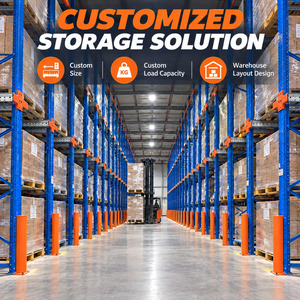
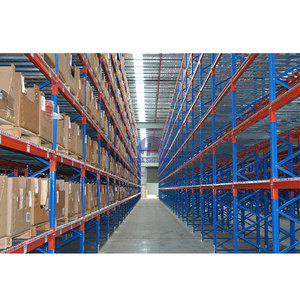
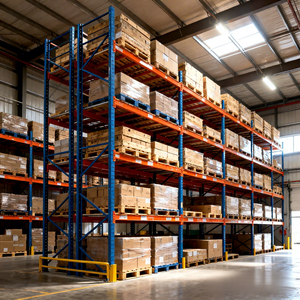
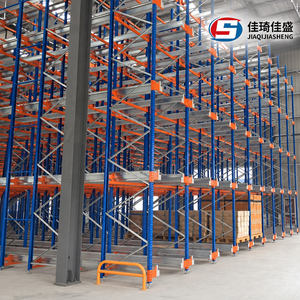
Executive Summary: Navigating Deep Lane Racking Architecture
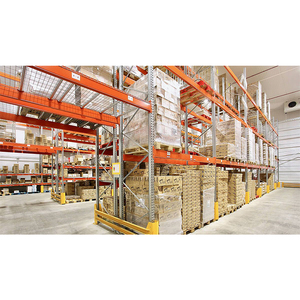
Modern logistics real estate is characterized by skyrocketing land acquisition costs, increasing construction expenses per square meter, and tight urban footprint constraints. In response, global supply chain directors, warehouse operations managers, and industrial procurement executives are pivoting aggressively away from low-density 100% selective racking systems toward engineered Deep Lane Pallet Racking Solutions.
Deep lane storage—encompassing Drive-In, Drive-Thru, Radio Shuttle, Push-Back, and Gravity Pallet Flow configurations—enables facilities to achieve up to 85% floor space utilization by eliminating working aisles. However, designing and procuring deep lane systems introduces critical structural engineering, kinetic balance, and safety dynamics. Selecting an unqualified manufacturer can lead to catastrophic upright frame buckling, rapid damage to cantilevered support rails, or operational bottlenecks caused by poor forklift clearance specifications.
Information Gain Metric: High-density deep lane racking reduces energy expenditure per pallet position in cold storage operations by up to 38% by eliminating dead air aisle space, directly accelerating operational payback horizons.
Taxonomy of Deep Lane Racking Technologies
Understanding the operational mechanics and inventory flow strategies of each deep lane system is prerequisite to vendor evaluation. Below is an engineering breakdown of the four primary deep lane architectures:
1. Radio Shuttle Pallet Racking (Semi-Automated Deep Lane)
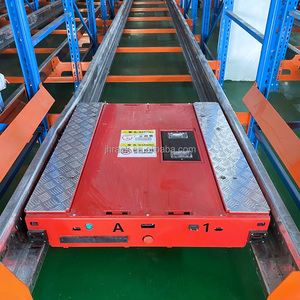
Radio Shuttle racking represents the pinnacle of modern deep lane density and operational throughput. An autonomous semi-automated shuttle robot travels on internal rails within the racking channels to store and retrieve pallets beneath human-operated forklifts. Forklifts never enter the racking matrix, eliminating structural impact risks.
- Depth Capabilities: Up to 30+ pallets deep per lane.
- Inventory Logic: Supports both Last-In, First-Out (LIFO) and First-In, First-Out (FIFO) operations.
- Structural Benefit: Drastically reduced risk of structural column damage; minimal forklift collision exposure.
2. Drive-In & Drive-Thru Racking Systems
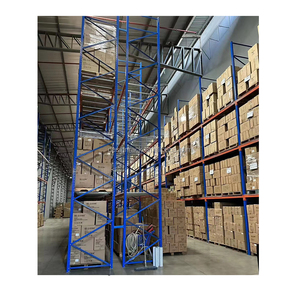
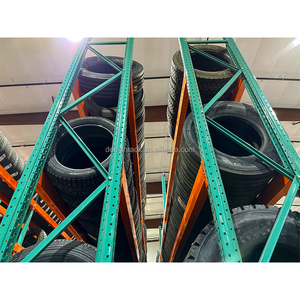
Drive-In racking utilizes continuous cantilevered support rails anchored to upright frames, allowing forklifts to drive directly into the bay structure to place or retrieve pallets stacked one behind the other. Drive-Thru systems provide access from both entry points, enabling a FIFO operational flow.
- Depth Capabilities: Typically 4 to 10 pallets deep per lane.
- Target Applications: Homogeneous SKUs with high pallet counts, seasonal products, cold rooms, and freezer facilities.
- Key Engineering Requirement: Must incorporate heavy-duty floor-mounted guide rails, double-anchored front upright guards, and high-tensile Q235B/Q355B cold-rolled steel.
3. Push-Back Pallet Racking
Push-back racking utilizes nested carts riding on inclined structural steel rails. When a forklift loads a new pallet, it pushes the existing pallets back up the incline. During unloading, gravity gently brings the next pallet forward to the front aisle picker face.
- Depth Capabilities: 2 to 6 pallets deep.
- Inventory Logic: Strictly LIFO flow with 100% individual lane selectivity.
- Operational Advantage: Faster loading and unloading times compared to standard Drive-In racking since forklifts stay in the main aisle.
4. Gravity Pallet Flow Racking
Gravity flow racking employs full-width inline roller tracks set at a precise 3% to 5% pitch gradient. Pallets loaded at the charge end glide smoothly toward the discharge end under kinetic gravity control, regulated by internal centrifugal speed controllers and mechanical brakes.
- Depth Capabilities: 2 to 20 pallets deep.
- Inventory Logic: Pure First-In, First-Out (FIFO), ideal for date-sensitive consumer packaged goods (CPG) and pharmaceuticals.
Deep Lane Racking Technical Specification Matrix
| Racking System Type | Max Storage Depth | Inventory Flow | Selectivity | Forklift Risk Level | Relative Cost / Position |
|---|---|---|---|---|---|
| Selective Pallet Rack | 2 Pallets (Double Deep) | FIFO / LIFO | 100% (Single Deep) | Low | $50 – $100 |
| Drive-In Racking | 4 – 10 Pallets | LIFO | Low (Per Lane) | High | $100 – $180 |
| Push-Back Racking | 2 – 6 Pallets | LIFO | Medium (Per Lane) | Low | $160 – $240 |
| Radio Shuttle System | 10 – 30+ Pallets | FIFO & LIFO | High (Per Lane) | Very Low | $200 – $350 |
| Gravity Pallet Flow | 5 – 20 Pallets | Strict FIFO | High (Per Lane) | Low | $250 – $400 |
Top 10 Deep Lane Pallet Racking Manufacturers & Suppliers Evaluation
When selecting a deep lane racking supplier, enterprise buyers must evaluate cold-rolled steel quality, automated robotic welding capabilities, international compliance credentials, structural design calculations, and factory-direct pricing transparency.
Factory Location: Tongan District, Xiamen, Fujian, China (30,000㎡ Production Base)
SolidFort is a global leader in heavy-duty cold-rolled steel pallet racking systems. Operating a state-of-the-art 30,000 square meter manufacturing plant, SolidFort specializes in high-density Drive-In, Radio Shuttle, VNA, and Push-Back racking solutions exported to over 53 countries. SolidFort sets industry standards by utilizing high-yield Q235B and Q355B structural steel, compliant with AS4084-2023 (Australia), RMI ANSI MH16.1 (USA), and FEM 10.2.02 (Europe).
Key Advantages: Factory-direct pricing, 10–15 day standard lead times, free engineered CAD layouts, comprehensive Load Application and Rack Configuration (LARC) drawings, and strict ISO 9001 certified quality control.
Headquarters: Neunkirchen, Germany
SSI Schaefer is a international intralogistics provider offering advanced automated deep lane racking systems, AS/RS integration, and heavy-duty shuttle configurations tailored for mega-fulfillment centers.
Headquarters: Barcelona, Spain
Mecalux is a established European manufacturer known for robust warehouse racking, automated pallet shuttle units, and WMS software integration designed for high-density cold chain operations.
Headquarters: Sant'Antonino, Switzerland
Interroll is renowned globally for its gravity pallet flow modules, dynamic heavy-duty roller beds, and magnetic speed controllers designed for high-throughput FIFO deep lane systems.
Headquarters: Melbourne, Australia
Dexion provides compliant industrial pallet racking engineered specifically for stringent seismic standards across Australia, New Zealand, and the Asia-Pacific logistics market.
Headquarters: Hamburg, Germany
Jungheinrich integrates deep lane drive-in and shuttle racking systems directly with their proprietary narrow-aisle electric forklifts and automated guided vehicles (AGVs).
Headquarters: Long Valley, New Jersey, USA
Frazier is famous in North America for manufacturing deep lane push-back and drive-in racks utilizing heavy structural steel C-channels, maximizing impact resistance.
Headquarters: Spiere-Helkijn, Belgium
Stow Group produces scalable drive-in and automated shuttle racking solutions (Movu Robotics), serving logistics centers across Europe and North America.
Headquarters: Oslo, Norway
Constructor delivers customizable high-density pallet storage systems tailored for extreme low-temperature freezer environments and automated warehouse setups.
Headquarters: Yorkshire, United Kingdom
Redirack specializes in heavy-duty fully welded pallet racking frames, offering custom drive-in configurations for industrial distribution across the UK and Europe.
Future Sourcing & Procurement Trends (2026–2035)
The global industrial storage market is undergoing rapid evolution driven by smart robotics, environmental regulations, and advanced material science. Procurement officers must align their long-term supply chain strategies with these critical emerging trends:
1. Automated Shuttle Integration over Manual Drive-In
Manual Drive-In racking is increasingly giving way to semi-automated and fully automated Radio Shuttle racking. While Drive-In offers a lower initial capital expenditure, the cumulative costs associated with forklift frame impacts, operator slowing, and damaged stock outweigh the initial savings. Shuttle systems increase operational throughput speed by up to 40% while extending system lifespan by eliminating structural impact exposure.
2. Low-Temperature Cold-Chain Steel Alloys (Q355E Grade)
Cold storage facilities operating down to -30°C face hydrogen embrittlement risks when standard structural carbon steel is utilized. Future procurement specifications mandate ultra-low temperature cold-rolled steel grades (such as Q355E) combined with specialized ductile zinc coatings to ensure structural integrity without brittle fracture under thermal stress.
3. IoT Structural Health Monitoring (Real-Time Sensors)
Leading deep lane installations are deploying strain gauge telemetry and piezo-electric accelerometer sensors directly onto critical lower upright columns and anchor footplates. These IoT sensors communicate wirelessly with WMS platforms, instantly alerting safety managers to hidden structural deflections caused by forklift collisions.
4. Eco-Friendly Electrostatic Powder Coating & Zero-VOC Finishes
Global sustainability mandates (ISO 14001 compliance) are pushing top manufacturers like SolidFort to utilize zero-VOC epoxy-polyester powder coatings applied through 16-stage automated electrostatic spray tunnels, ensuring superior corrosion resistance alongside green building carbon compliance.
SolidFort Manufacturing Excellence & Enterprise Advantages
Choosing SolidFort Storage Equipment Co., Ltd. provides global importers, distributors, and warehouse operators with a decisive competitive advantage. SolidFort operates as a true direct manufacturer, eliminating middleman trading markups while offering technical depth:
- In-House Manufacturing: Continuous automated cold-roll forming lines, 3D laser tube cutting, robotic welding cells, and automated powder coating lines inside a 30,000㎡ plant in Xiamen, China.
- Certified Engineering Integrity: All structural calculations strictly comply with AS4084-2023, RMI ANSI MH16.1, FEM 10.2.02, and ISO 9001 quality systems.
- Engineered Load Capacity Assurance: SolidFort provides factory-stamped LARC (Load Application and Rack Configuration) engineering drawings and safety load plaques with every system shipped.
- Fast Turnaround & Container Packing: 10–15 day standard lead times with custom container loading diagrams to maximize ocean freight payload capacity.
Deep Lane Pallet Racking Procurement FAQ
What does pallet racking cost per pallet position in deep lane systems?
Material costs for standard deep lane Drive-In racking average USD $100 to $180 per pallet position. Automated Radio Shuttle racking systems range from USD $200 to $350 per position (inclusive of shuttle robotics). Final costs depend on overall rack height, beam span, required seismic safety factors, and steel market pricing.
Do deep lane pallet racks require floor slab anchoring?
Yes. Under ANSI/RMI MH16.1 and AS4084 standards, every single upright column baseplate must be anchored securely to the concrete slab using structural expansion anchors or chemical epoxy anchors. Anchor embedment depth and bolt diameter are determined based on concrete slab thickness (typically minimum 150mm–200mm, 25-30 MPa) and local seismic zone ratings.
How is the load capacity of a deep lane upright frame calculated?
Upright frame capacity is governed by the structural section modulus of the column, steel yield strength (e.g., Q235B vs Q355B), and unbraced vertical beam spacing (the distance between beam levels). As vertical spacing increases, frame buckling capacity decreases. Always follow the manufacturer's official LARC plaque specifications.
What is the recommended aisle clearance for Drive-In racking forklifts?
Drive-In bays require precise forklift clearance. Standard practice mandates a minimum of 75mm to 100mm clearance on each side between the forklift body/pallet load and the upright column guide rails. Installing heavy-duty floor-mounted steel guide channels inside the lanes is critical to preventing column impact.
How often must deep lane racking undergo structural safety inspection?
Formal documented structural inspections by a certified racking inspector are mandatory at least once every 12 months under AS4084 and EN 15635 standards. Furthermore, internal warehouse safety managers should perform weekly visual checks for twisted uprights, damaged cantilever arms, or dislodged beam safety locks.
Ready to Maximize Your Warehouse Storage Capacity?
Connect directly with SolidFort's senior rack structural engineers for a complimentary CAD layout design, floor slab analysis, and direct factory price quote.
Inquire Now