Featured Deep Storage & High-Density Racking Systems
Engineered for maximum volumetric efficiency, heavy load payloads, and seamless material handling integration.
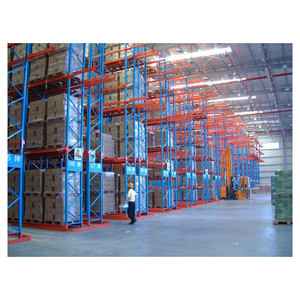
Narrow Aisle Racks Factory Price Heavy Duty VNA Rack Very Narrow Aisle Racking High Density Warehouse Storage Rack
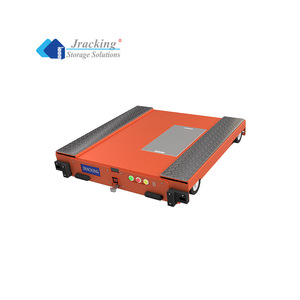
Jracking CE Certified Automated Four Way Radio Shuttle River-type Pallet Racking System For Industrial Warehouse
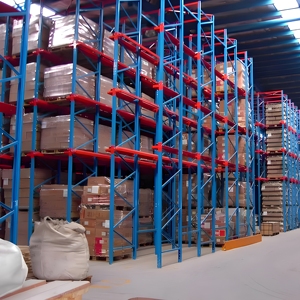
500~4000kg Industrial Drive-in Racks CE Certified Heavy Duty High Density Compact Steel Powder Coated Pallet Racking System
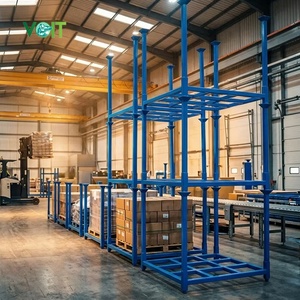
Industrial Warehouse Storage Space Saving Detachable Metal Loading Stackable Pallet Rack
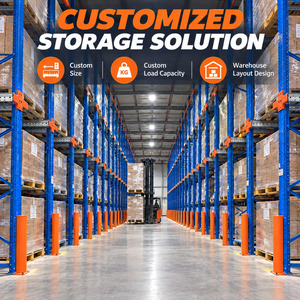
ODM OEM Q235 Steel Heavy Duty High Density Coldroom Coldstore Drive in Through Pallet Racking Warehouse Storage System
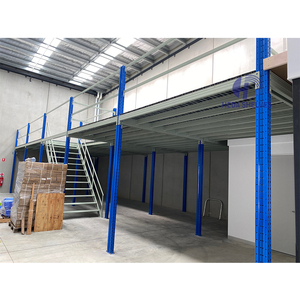
Mezzanine Beam Pallet Rack Steel Structure Mezzanine Floor Warehouse Storage Heavy Duty Loft Platform Mezzanine Racking
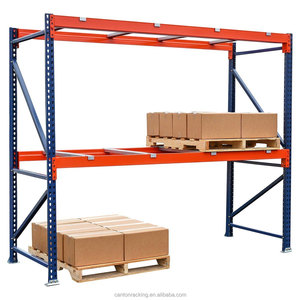
Offers a Wide Range of Metal Shelving Units and Heavy-Duty Storage Shelves in a Variety of Sizes. Extra Strong, Durable
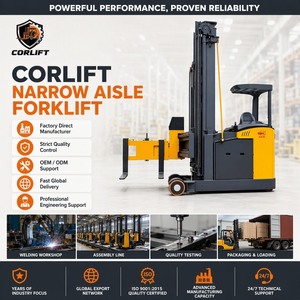
Reach Truck Forklift Electric High Lift Mast Warehouse Rack Pallet Stacking Storage Material Handling Equipment OPD15
1. The Deep Storage Pallet Racking Paradigm: Architectural Engineering & Intent Analysis
As global logistics real estate rates continue to escalate, supply chain directors and warehouse operational executives face an acute structural challenge: how to maximize cubic pallet storage density without compromising operational throughput or safety integrity. Deep storage pallet racking represents the forefront of modern high-density warehouse design, engineered to eliminate unnecessary aisle space and convert underutilized vertical and horizontal space into productive inventory positions.
Unlike traditional selective pallet racking—which dedicates up to 60% of total warehouse floor area to forklift aisles—deep storage configurations utilize multi-depth lanes. By storing pallets two, four, or even twenty deep per channel, facilities can increase volumetric capacity by 70% to 150% within the same physical footprint.
Technical Taxonomy of Deep Storage Racking Architectures
To establish a precise procurement framework, warehouse engineers categorize deep storage systems into four core engineering classes:
- Drive-In & Drive-Thru Racking: A continuous bay system where forklifts physically enter the racking structure to place or retrieve pallets supported by cantilevered side rails. Configured as Last-In, First-Out (LIFO) or First-In, First-Out (FIFO).
- Push-Back Racking: A multi-deep LIFO system using nested inclined carts riding on structural steel channels. As a new pallet is loaded, it pushes existing pallets back; when unloaded, gravity feeds remaining pallets forward to the picking face.
- Automated Radio Shuttle Racking: A semi-automated deep-lane storage system utilizing an autonomous battery-powered shuttle car running inside specialized racking rails. Eliminates forklift rack entry, delivering high-speed FIFO/LIFO operation across lanes up to 40 meters deep.
- Double-Deep Selective Racking: A variation of standard selective racking storing pallets two-deep per bay, accessed via specialized deep-reach pantograph forklifts or extendable fork attachments.
Comparative Matrix: High-Density Storage Engineering Trade-Offs
| Storage Technology | Volumetric Density | SKU Selectivity | Handling Speed | Capital Expenditure (CapEx) | Ideal Application |
|---|---|---|---|---|---|
| Selective Pallet Rack | Baseline (40%) | 100% Direct | High | Low ($50-$100/pos) | High SKU variety, fast-picking 3PL |
| Drive-In / Drive-Thru | High (75%-85%) | Low (Per Bay) | Moderate | Moderate ($100-$180/pos) | Homogeneous bulk, cold storage |
| Push-Back Racking (2-6 Deep) | High (65%-75%) | Medium (Per Lane) | Fast | Moderate-High ($150-$220/pos) | Medium SKU turnover, cold storage |
| Radio Shuttle Racking | Maximum (85%-92%) | High (Per Channel) | Very High | Automated ($200-$320/pos) | FMCG, cold chain, high throughput |
| VNA (Very Narrow Aisle) | High Vertical (70%) | 100% Direct | High | Moderate ($120-$190/pos) | High ceiling height, maximum SKUs |
2. Future Procurement Trends in High-Density Deep Storage (2026–2030)
Procurement strategies for industrial storage equipment are undergoing a fundamental transformation driven by global supply chain volatility, labor scarcity, and stringent sustainability imperatives. Overseas buyers and EPC contractors are moving beyond raw steel cost per kilogram toward Total Cost of Ownership (TCO) and Lifecycle Structural Compliance.
1. Shuttle-AMR Co-Engineering
Integration of radio shuttles with Autonomous Mobile Robots (AMRs) and AGVs is eliminating human forklift drivers in deep lane cold storage environments.
2. High-Yield Cold-Formed Steel
Migration from standard Q235 structural steel to high-yield Q355B and high-tensile cold-rolled micro-alloy steels to reduce frame deadweight while enhancing seismic resilience.
3. Strict Regulatory Mandates
Global buyers now strictly mandate certified structural compliance with AS4084-2012 (Australia), RMI ANSI MH16.1 (USA), and FEM 10.2.02 (Europe) prior to contract award.
Cold Storage & Energy Density Optimization
Cold chain logistics operations represent the fastest-growing sector for deep storage procurement. Operating refrigerated and frozen facilities (-25°C to -30°C) demands astronomical electricity consumption. Deep storage systems like Drive-In and Radio Shuttle compress storage volume, reducing empty air space that must be cooled. This density yields energy savings of up to 35% annually, drastically shortening the CapEx payback period for facility owners.
3. Enterprise Manufacturing Capabilities & Quality Assurance: SolidFort Profile
Headquartered in Tongan District, Xiamen, China, SolidFort Storage Equipment Co., Ltd. operates a state-of-the-art 30,000㎡ manufacturing complex engineered specifically for high-precision, heavy-duty industrial racking fabrication. Operating since 2016, SolidFort has established itself as an authoritative factory-direct OEM/ODM supplier exporting certified storage equipment to more than 53 countries worldwide.
Engineering Precision & Structural Manufacturing Standards
Every SolidFort deep storage component undergoes rigorous quality control from raw steel coil inspection to final powder coating cure:
- Automated Continuous Roll-Forming: High-precision multi-stage roll-forming lines guarantee millimeter-accurate upright profiles and beam section geometries, eliminating internal structural stress.
- Robotic Welding Cells: Robotic beam connector welding ensures 100% penetration welds for maximum frame rigidity under extreme moment loading.
- Pre-Treatment & Thermosetting Powder Coating: A 7-stage automated chemical wash and electrostatic epoxy-polyester powder coating yield non-peeling, corrosion-resistant finishes suitable for harsh chemical and freezer conditions.
- Structural Verification & FEA Testing: In-house engineering teams utilize Finite Element Analysis (FEA) software and mechanical testing rigs to calculate dynamic load capacities and seismic safety coefficients.
4. Comprehensive Deep Storage Procurement FAQ
Direct technical answers provided by senior structural racking engineers to solve critical buyer inquiries during project planning.
What does pallet racking cost per pallet position?
Do pallet racks need to be anchored to the floor slab?
How is the structural load capacity of pallet racking calculated?
- Beam Pair Capacity: The maximum Uniformly Distributed Load (UDL) a horizontal beam pair can safely carry without exceeding L/200 deflection limits.
- Upright Frame Capacity: The total vertical load capacity of the upright frame, which varies dynamically based on the maximum unsupported vertical beam level height (unbraced length).
What is the standard size of a warehouse pallet rack?
How often should pallet racking undergo safety inspection?
What is your standard production lead time and export shipping terms?
Which international engineering standards do SolidFort racking systems comply with?
Optimize Your Warehouse Storage Density Today
Partner with SolidFort’s senior engineering team to receive a complimentary CAD layout design, structural load calculation, and factory-direct quotation within 24 hours.