In modern industrial logistics, cold-chain distribution, and heavy equipment manufacturing, warehouse spatial optimization has transitioned from basic floor storage to high-bay, heavy-capacity racking infrastructure. Selecting a direct manufacturing partner for extra heavy duty pallet racking requires rigorous technical evaluation. Load capacity demands exceeding 2,000kg to 4,500kg per beam level demand structural structural steel precision, verified yield strengths ($f_y$), and strict compliance with international structural codes including ANSI/RMI MH16.1 (United States), AS4084-2023 (Australia), and FEM 10.2.02 (Europe).
Technical Sourcing Note: True extra heavy duty racking differs from standard selective racking in column profile geometry, steel coil yield rating (e.g., Q355B vs standard Q235B cold-rolled steel), baseplate embedment engineering, and connection hook shear resistance. Sourcing directly from certified original equipment manufacturers (OEMs) guarantees verified Load Application and Rack Configuration (LARC) engineering documentation.
Featured Commercial Extra Heavy-Duty Pallet Racks
Engineered for high-bay storage, heavy palletized cargo, and high-density warehouse operations
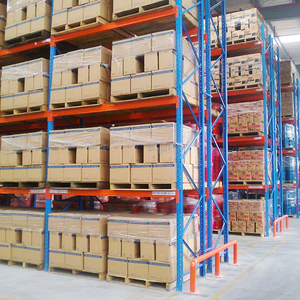
Combined Load-Row Connected Heavy Duty Industrial Storage Rack (2000kg/Level)
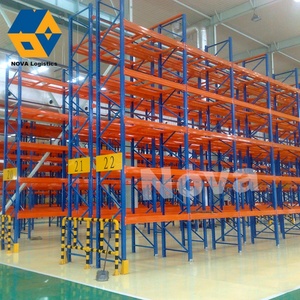
Customized Industrial High-Bay Warehouse Steel Heavy Duty Pallet Rack System
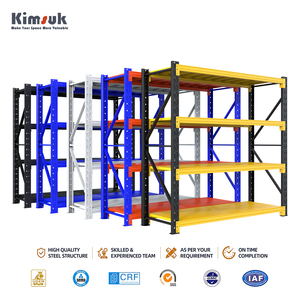
Boltless Adjustable Heavy-Duty Load-Bearing 500kg-1500kg/Layer Steel Racking
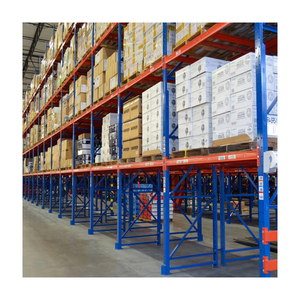
Wholesale Factory Selective Steel Pallet Rack Heavy-Duty Stacking System
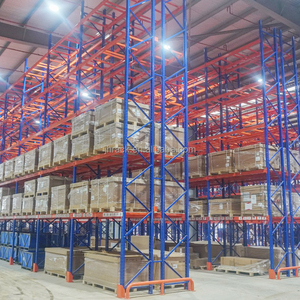
Heavy-Duty Corrosion Protected Powder Coated Pallet Racking for Cold Storage
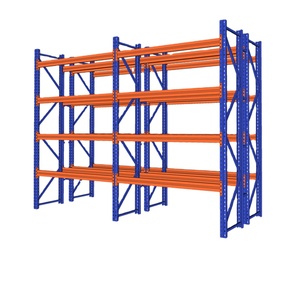
Heavy Duty Storage Frame Pallet Rack System Shelf for Logistics Facilities
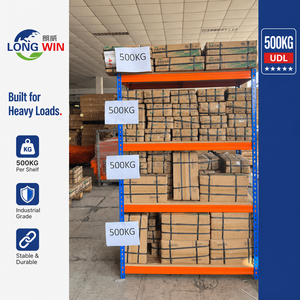
Extra Heavy Duty Boltless Steel Rack 5-Tier Adjustable 2000kg Rivet Lock System
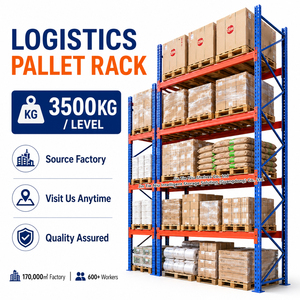
3500kg Super Heavy Duty Logistics Warehouse Pallet Beam Racking Direct Factory
Evaluation Guide: Top 10 Extra Heavy Duty Pallet Racking Manufacturers & Exporters
When selecting from global enterprise manufacturers and export hubs, procurement directors evaluate supplier capability across steel metallurgy standards, structural simulation testing, automated cold-roll forming lines, and international regulatory alignment. Below is a comparative engineering baseline established across leading global production entities:
| Manufacturer Criteria | Direct Source Factory (e.g., SolidFort) | Regional Trading Vendors | Local Commercial Distributors |
|---|---|---|---|
| Steel Grade Selection | Certified Q355B / Q235B High-Yield Cold Rolled Steel | Variable / Uncertified Commercial Steel | Standard National Specifications |
| Testing & Compliance | ANSI MH16.1, AS4084-2023, FEM 10.2.02, ISO9001 | Third-party secondary documentation | Local building code pass-through |
| Customization Depth | Full CAD/LARC Engineering, Beam Pitch, Custom Colors | Standard Off-the-Shelf Catalog Sizes | Fixed Modular Sizes Only |
| Cost per Pallet Position | Direct FOB/CIF Pricing ($45 - $95 avg.) | 15% - 30% Trading Markups | 40% - 70% Regional Logistics Markups |
| Lead Times | 10–15 Days Standard Orders / 30 Days Engineered | 25–45 Days (Dependent on Sourcing) | 1–3 Days (Stock) or 60+ Days (Import) |
Top-tier industrial rack factories maintain precise automated roll-forming lines capable of profiling 80mm to 140mm upright columns with 1.8mm to 3.0mm wall thickness. In extra heavy-duty applications (such as paper roll storage, automotive stamping die warehouses, and beverage logistics hubs), structural steel members undergo continuous automated robotic welding of box beams and step beams to ensure zero structural porosity along seam lines.
Structural Engineering & Load Mechanics Whitepaper
Determining the ultimate load rating of an extra heavy duty pallet racking installation requires precise mathematical modeling of two distinct structural components: Beam Uniformly Distributed Load (UDL) and Unbraced Upright Frame Capacity.
1. Beam Flexural Deflection Limit (L/200)
Under ANSI MH16.1 and AS4084 regulations, maximum allowable beam deflection under full design load is restricted to $L/200$ (where $L$ is the clear span beam length). For a standard 2700mm (9ft) beam carrying 3,000kg across two GMA pallets, maximum vertical center deflection must not exceed 13.5mm. Exceeding this calculation induces plastic deformation and fatigue on beam-to-column connector claws.
2. Upright Buckling & Unbraced Height Dynamics
Upright frame capacity decreases exponentially as vertical beam spacing (unbraced length) increases. An upright frame rated for 18,000kg total load at a 1200mm beam level pitch may see capacity drop by over 30% if maximum vertical beam spacing is expanded to 2100mm. Factory engineering teams utilize finite element analysis (FEA) to specify horizontal and diagonal bracing configurations.
3. Seismic & Baseplate Slab Anchoring
In high seismic zones (e.g., USGS Seismic Design Categories D–F), extra heavy duty uprights require oversized seismic baseplates (150mm x 150mm x 8mm minimum) anchored into high-strength concrete slabs using wedge anchors or chemical resin anchors. Embedment depths are calculated based on uplift moment forces created during seismic acceleration events.
4. Connector Safety Pins & Shear Load Resistance
Every heavy duty beam connection features multi-claw connector plates (typically 3 to 4 hooks) stamped from high-tensile steel plate. Mechanical auto-locking safety pins prevent dislodgement caused by upward forklift driver error, certified to withstand vertical shear forces exceeding 1,500kg per connection point.
Future Trends in Extra Heavy Duty Racking Procurement (2026–2030)
As global supply chains accelerate automation adoption and sustainability metrics become mandatory enterprise procurement key performance indicators (KPIs), industrial storage design is undergoing four major structural evolutions:
Traditional forklift-driven selective racking is increasingly complemented by high-density automated systems. Radio Shuttle pallet systems utilize self-propelled internal shuttles moving within deep racking channels, enabling 85% storage footprint density. Extra heavy-duty structural tolerance requirements in AS/RS facilities demand frame straightness deviations under 1mm per 3000mm of vertical height to accommodate high-speed robotic crane positioning.
Cold storage facilities operating down to -30°C present severe structural condensation risk. Advanced manufacturing now utilizes thermoplastic electrostatic powder coatings (80–120 microns thick) and pre-galvanized or hot-dip galvanized steel structural profiles to eliminate micro-cracking, rust bloom, and chemical degradation under thermal cycles.
To reduce overall warehouse floor slab deadweight while retaining maximum load capacity, tier-one factories are shifting from carbon steel Q235 to HSLA steels such as Q355B and Q460. This metallurgy enables thinner column gauges without sacrificing ultimate load limits, reducing sea freight container weight and transport emissions.
Direct Factory Enterprise Advantage: SolidFort Storage Equipment
SolidFort Storage Equipment Co., Ltd. operates a specialized 30,000㎡ industrial manufacturing plant located in Tongan Park, Tongan District, Xiamen, China. Operating directly as a source manufacturer since 2016, SolidFort delivers end-to-end heavy-duty warehouse infrastructure solutions engineered specifically for international export compliance.
Engineering & Free CAD Layouts
Every project is analyzed by experienced structural engineers who provide customized CAD layouts, pallet position calculations, and LARC safety drawings before manufacturing begins.
ISO & Global Standard Compliance
Racking lines are manufactured under strict ISO quality controls, designed with full compliance to AS4084, RMI (ANSI MH16.1), and FEM 10.2.02 standards with CE documentation available.
Rapid 10–15 Day Manufacturing Lead Time
With dedicated raw steel coil inventory and continuous roll-forming lines, standard production orders ship within 10 to 15 days, minimizing overall project delivery timelines.
Container Loading Optimization
Custom export packaging protocols and high-cube container packing plans maximize volume efficiency, preventing freight damage and reducing ocean shipping costs per pallet position.
Pallet Racking Technical FAQ: Procurement & Engineering
Optimize Your Warehouse Footprint with Factory-Direct Engineering
Contact our structural engineering team today to receive a detailed technical layout, weight capacity verification, and a factory-direct wholesale quotation.
Inquire Now