Featured Heavy-Duty & High-Density Racking Systems
Factory-direct engineering solutions optimized for VNA turret trucks, automated shuttle systems, and high-bay logistics centers.
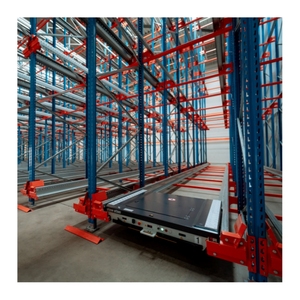
Auto Shuttle Racking System Innovative Pallet Racking Intensive Shuttle Racks Intelligent Cold Storage Shuttle Rack Automatic
Get a Quote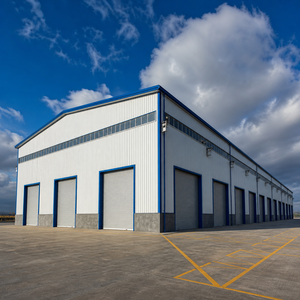
Reach Truck Aisle Steel Warehouse Building Narrow Racking High Capacity Galvanized Steel Frame System
Get a Quote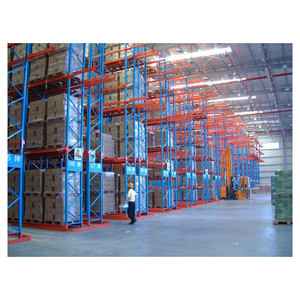
Narrow Aisle Racks Factory Price Heavy Duty VNA Rack Very Narrow Aisle Racking High Density Warehouse Storage Rack
Get a Quote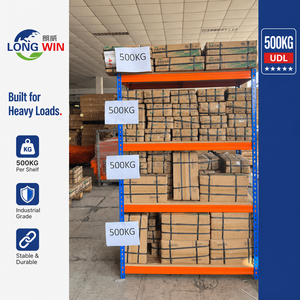
Extra Heavy Duty Boltless Steel Rack 5-Tier Adjustable 2000kg Rivet Lock Garage Warehouse Heavy Duty Warehouse Rack
Get a Quote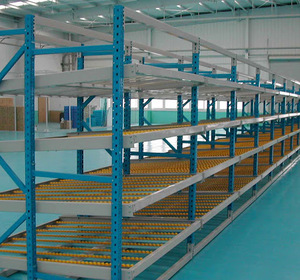
Warehouse Display High Quality Steel Industrial Storage Rack Carton Flow Metal Shelf Display Racks
Get a Quote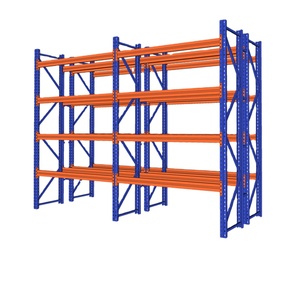
Heavy Duty Storage Rack Pallet Rack System Shelf For Industrial Storage Rack
Get a Quote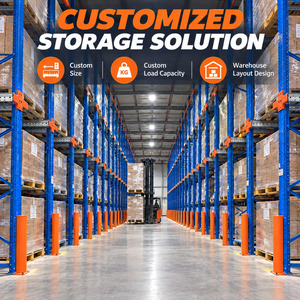
ODM OEM Q235 Steel heavy duty High Density coldroom coldstore drive in Through pallet racking Warehouse Storage system
Get a Quote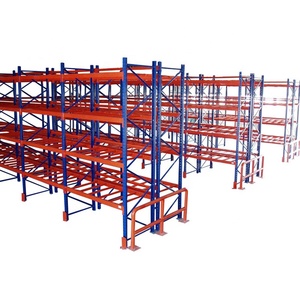
2024 Competitive Advantage Pallet Racking Storage Heavy Duty Industrial Pallet Shelf Warehouse Racking System
Get a Quote1. The Strategic Role of Very Narrow Aisle (VNA) Racking in Modern Logistics
As commercial real estate prices soar and global supply chains demand maximum SKU velocity, enterprise warehouse operators are undergoing a structural shift from horizontal expansion to vertical optimization. Very Narrow Aisle (VNA) pallet racking represents the pinnacle of high-density selective storage. Unlike traditional selective pallet racking—which requires operational aisle widths between 3.2 to 3.8 meters to accommodate standard counterbalanced forklifts—VNA racking compresses working aisles down to a precise 1.5 to 1.8 meters.
By pairing precision-engineered cold-rolled steel frames with specialized VNA articulated forklifts or VNA man-up turret trucks, warehouse managers achieve up to 45% floor space savings while preserving 100% direct pallet access. This unique combination makes VNA racking the ultimate choice for high-throughput fulfillment hubs, cold storage facilities, and pharmaceutical distribution centers where land cost per square meter directly dictates operational margins.
Technical Comparison: Storage Density vs. Accessibility
Understanding where VNA racking fits within the spectrum of warehouse storage technologies is crucial for capital investment evaluation. Below is a engineering metric breakdown comparing VNA with alternative high-density configurations:
| Racking System Type | Aisle Width (m) | Cubic Volumetric Efficiency | SKU Selectivity | Forklift Compatibility | Relative Cost / Pallet Position |
|---|---|---|---|---|---|
| Standard Selective Racking | 3.2 – 3.8m | 40% – 50% | 100% (Direct) | Counterbalanced / Reach Truck | Baseline ($) |
| VNA Pallet Racking | 1.5 – 1.8m | 80% – 90% | 100% (Direct) | VNA Turret Truck / Articulated | Moderate ($$) |
| Drive-In / Drive-Thru | N/A (Lanes) | 75% – 85% | Low (LIFO/FIFO) | Standard Counterbalance | Moderate ($$) |
| Radio Shuttle Racking | N/A (Lanes) | 85% – 95% | Medium (Batch) | Standard + Shuttle Cart | High ($$$) |
| Automated AS/RS High-Bay | 1.4 – 1.6m | 95%+ | 100% (Automated) | Stacker Cranes / AGV | Capital Intensive ($$$$) |
2. Top 10 Global VNA Forklift Pallet Racking Manufacturers & Exporters Benchmark
Selecting the right OEM/ODM racking partner requires rigorous evaluation of structural compliance (AS4084, ANSI/RMI MH16.1, FEM 10.2.02), steel tensile yield strength (such as high-grade Q235B and Q355B cold-rolled profiles), powder coating durability, and international project fulfillment capability. Below is an engineering benchmark of the top 10 global manufacturers specializing in VNA and high-density warehouse storage systems.
1. SolidFort Storage Equipment Co., Ltd.
Operating a state-of-the-art 30,000㎡ manufacturing facility in Xiamen, China, SolidFort is a premier factory-direct manufacturer exporting engineered pallet racking systems to 53+ countries. Specialized in heavy-duty VNA racking, radio shuttle systems, and cold storage racking engineered strictly to AS4084, RMI, and FEM structural codes.
- Factory Footprint: 30,000 ㎡
- Standard Lead Time: 10 – 15 Days
- Design Standards: AS4084 / RMI / FEM / ISO9001
2. SSI Schaefer Group
Headquartered in Germany, SSI Schaefer is a global provider of integrated automated logistics and modular racking infrastructure. Their VNA racking solutions emphasize high-bay vertical integration with automated guided vehicles (AGVs) and specialized turret truck interfaces.
- Headquarters: Germany
- Core Specialization: High-Bay AS/RS & VNA
- Market Reach: Worldwide
3. Jungheinrich AG
Combining Intralogistics hardware with industrial forklift manufacturing, Jungheinrich offers closely integrated VNA racking systems featuring custom wire guidance ground channels and specialized system-truck interfaces optimized for European logistics hubs.
- Headquarters: Germany
- Core Specialization: VNA Systems & Turret Trucks
- Market Reach: Global
4. Mecalux, S.A.
With massive production sites across Spain, Mexico, and the USA, Mecalux provides versatile VNA heavy-duty racking configurations. Their automated warehouse design software assists operators in simulating floor stress profiles for tall VNA structures.
- Headquarters: Spain / USA
- Core Specialization: Selective & VNA Racking
- Market Reach: 70+ Countries
5. Dexion Industry International
Pioneers in industrial structural storage solutions, Dexion manufactures custom teardrop and keyhole VNA frame components compliant with strict Australian AS4084 and European FEM structural guidelines for heavy industrial loads.
- Headquarters: Australia / UK
- Core Specialization: Industrial Pallet Racks
- Market Reach: APAC & EMEA
6. Stow Group
Based in Belgium, Stow Group is a major manufacturer of rack systems across Europe. Their VNA pallet racking products feature patented beam connectors and cold-formed upright profiles built to absorb dynamic impact during high-bay pallet insertion.
- Headquarters: Belgium
- Core Specialization: VNA & Movable Racking
- Market Reach: Europe & North America
7. Interlake Mecalux
Holding substantial market share across the United States, Interlake Mecalux produces roll-formed and structural steel VNA racking systems meeting RMI ANSI MH16.1 codes, engineered for seismic zone compliance in West Coast logistics centers.
- Headquarters: United States
- Core Specialization: RMI Structural & Roll-Formed
- Market Reach: Americas
8. Daifuku Co., Ltd.
Daifuku is a global giant in material handling automation. While focused primarily on automated AS/RS stacker crane towers, their ultra-narrow aisle high-bay rack structures set industry standards for millimeter-accurate roll forming tolerances.
- Headquarters: Japan
- Core Specialization: Automated High-Bay Storage
- Market Reach: Global
9. Frazier Industrial Company
Famous for hot-rolled structural steel channel manufacturing, Frazier manufactures heavy-duty VNA racking designed to withstand severe forklift impacts in high-traffic distribution centers where standard roll-formed steel might buckle.
- Headquarters: United States
- Core Specialization: Structural Steel Channel Racks
- Market Reach: North America
10. Ridg-U-Rak, Inc.
With extensive manufacturing capacity in North America, Ridg-U-Rak builds specialized VNA racking structures complete with mechanical guide rails, column protectors, and specialized heavy step-beam profiles for industrial users.
- Headquarters: United States
- Core Specialization: Seismic VNA & Drive-In
- Market Reach: Americas
3. Procurement Guide & Engineering Considerations for VNA Systems
Investing in a Very Narrow Aisle pallet racking system involves significantly more than buying steel components. Because turret trucks operate with fractions of an inch of clearance at heights exceeding 15 meters, civil engineering and mechanical design integration are essential.
A. Slab Flatness & Concrete Foundation Requirements
Floor levelling is the single most vital prerequisite for VNA implementation. At elevated lift heights, a minor slab variation of 2mm at ground level translates into a dangerous top-of-rack tilt exceeding 50mm. Structural engineers must enforce strict floor flatness specifications under ASTM E1155 (Superflat FF 100 / FL 50 ratings) or VDMA Guidelines. Where existing floors do not meet tolerances, laser grinding must be factored into project budgeting.
B. Guidance System Selection: Mechanical Rails vs. Wire Guidance
VNA turret trucks require precise steering guidance inside working aisles to prevent rack collisions:
- Mechanical Angle Guide Rails: Heavy steel floor channels (e.g., L100x75 or custom steel profile) are anchored directly to the slab along both sides of the aisle. The forklift utilizes side guide wheels running along these rails. While robust, rails reduce bottom pallet clearance by 50–100mm.
- Inductive Wire Guidance: A subterranean wire emitting a low-frequency signal is embedded in a shallow floor cut down the center of the aisle. Sensors on the turret truck track the wire automatically. This provides an obstruction-free floor line for low-level order picking, though installation requires precise floor cutting.
C. Upright Frame Slenderness & Deflection Limits
Under international standards such as AS4084 and ANSI/RMI MH16.1, frame capacity is heavily influenced by unsupported vertical beam spacing (the distance between beam levels). For VNA installations reaching 10 to 18 meters, frame columns must utilize high-yield Q355B structural steel with heavy-duty diagonal and horizontal bracing matrixes to resist torsional buckling under asymmetrical pallet loading.
4. Future Trends in High-Density VNA & Warehouse Racking (2025–2030)
The material handling equipment (MHE) industry is rapidly converging with robotics and artificial intelligence. Enterprise procurement officers evaluating racking systems today must design infrastructure ready for tomorrow's automated technologies.
2. Hybrid Cold-Chain Storage Optimizations: As cold-chain logistics expand to meet global food and pharmaceutical demand, VNA racking systems are being upgraded with specialized low-temperature powder coatings and hot-dip galvanized finishes. Galvanizing prevents hydrogen embrittlement and surface oxidation in sub-zero environments down to -30°C.
3. Sustainable Green Steel & Zero-VOC Coatings: Major international procurement audits now evaluate the carbon intensity of warehouse infrastructure. Leading manufacturers like SolidFort are deploying energy-efficient cold-roll forming lines and eco-friendly epoxy-polyester powder coats that emit zero volatile organic compounds (VOCs) while providing superior scratch and chemical resistance.
5. Enterprise Advantage: SolidFort Manufacturing & Global Export Services
SolidFort Storage Equipment Co., Ltd. stands at the forefront of industrial racking manufacturing in China. By combining factory-direct pricing with rigorous structural engineering, SolidFort eliminates middleman markup while providing comprehensive project assistance from layout concept to final commissioning.
Why International Buyers & Engineering Contractors Partner with SolidFort:
- Compliant Engineering Standards: Custom structural designs executed in full alignment with Australian AS4084, North American RMI (ANSI MH16.1), and European FEM 10.2.02 codes. Comprehensive Load Application and Rack Configuration (LARC) drawings provided for permit approvals.
- Full-Cycle OEM & ODM Capabilities: Custom upright profiles, non-standard beam lengths, specialized heavy wire mesh decking, and tailored column protection accessories manufactured in-house with low minimum order quantities (MOQ).
- Free CAD Engineering & Simulation: Every inquiry is backed by dedicated structural engineers providing complimentary CAD layout drawings, 3D spatial models, and accurate pallet-position density counts within 24 hours.
- Container-Optimized Export Packing: Precision bundling and heavy-duty steel strapping ensure zero transit damage, with container loading plans tailored for rapid unloading via forklift at destination ports under FOB, CIF, or DDP terms.
6. Frequently Asked Questions (FAQ) for VNA & Warehouse Racking Procurement
Q: What is the typical cost per pallet position for a VNA racking installation?
A: Standard selective pallet racking generally ranges between USD $50 to $100 per pallet position for materials. VNA pallet racking typically costs between USD $70 to $140 per position depending on rack height, upright gauge, beam load capacity, and guide rail inclusions. High-density automated shuttle systems range from $150 to $300+ per position.
Q: Must VNA pallet racking uprights be anchored to the floor slab?
A: Yes, absolutely. Under ANSI/RMI MH16.1 and AS4084 standards, every single upright column baseplate must be anchored securely to the concrete slab using heavy-duty expansion or concrete screw anchors. In tall VNA structures, anchor embedment depth and bolt diameter are specifically engineered to resist uplift and lateral shear forces generated at heights exceeding 10m.
Q: How is beam load capacity calculated for heavy-duty VNA racking?
A: Beam load capacity is calculated based on Uniformly Distributed Load (UDL) limits, ensuring a structural safety factor of at least 1.65 under RMI/FEM guidelines. Furthermore, maximum beam deflection under full capacity must not exceed L/200 (where L is beam span length). Upright frame capacity must be separately verified based on maximum unbraced vertical beam spacing.
Q: What is the standard beam length and upright depth for 40x48 inch pallets?
A: For common 40" x 48" GMA pallets, standard frame depth is 42 inches (allowing a 3-inch pallet overhang front and rear for proper beam seating). Standard beam length for carrying two 48-inch wide pallets side-by-side is 96 inches (8 feet) or 108 inches (9 feet) to allow adequate side clearance in VNA high-bay systems.
Q: How often should structural racking inspections be conducted?
A: Formal safety inspections by a qualified racking engineer should occur at least once every 12 months. Daily or weekly visual inspections should be conducted by warehouse supervisors to check for forklift impact damage, unseated safety pins, out-of-plumb uprights, or beam deflection.
Q: What lead time and shipping terms does SolidFort offer for export projects?
A: Standard manufacturing lead time for standard components is 10 to 15 days from deposit receipt, while complex engineered high-bay projects average 25 to 30 days. SolidFort handles worldwide shipping under FOB, CIF, CFR, or door-to-door DDP terms with complete customs clearance documentation.
Optimize Your Warehouse Footprint with Engineer-Led VNA Solutions
Receive a complimentary 24-hour CAD layout design, pallet capacity calculation, and factory-direct price quotation for your warehouse project.
Get a Quote