Featured Heavy-Duty Pallet Racking Systems
Precision-engineered structural racking and high-density multi-deep solutions directly manufactured at our 30,000㎡ Xiamen manufacturing facility.
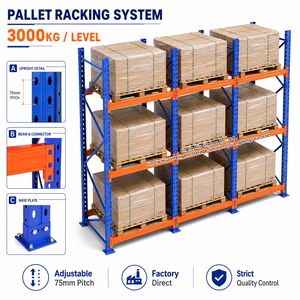
3 Pallet Levels Heavy Duty Steel Warehouse Rack Selective Pallet Racking System 3000KG
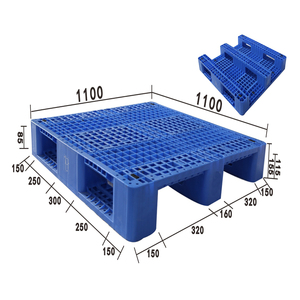
Reinforced 4-Way Medium Duty Single Faced Three-Runner Plastic Pallet Racking Steel Cores Cargo Transportation
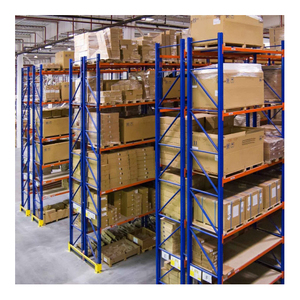
Peterack CE Certified Warehouse Storage Steel Heavy Duty Stacking Racks Shelves Selective Pallet Racking System
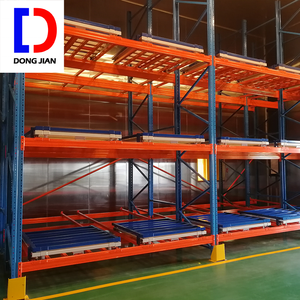
DJ Push Back Racking Push-in Racking Pallet Racking Warehouse Storage System
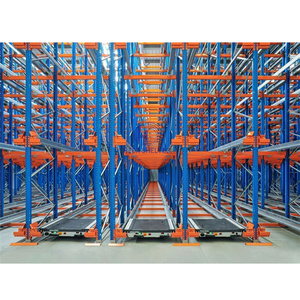
High-Density Shuttle Rack System Asrs 4-Way Shuttle Racking
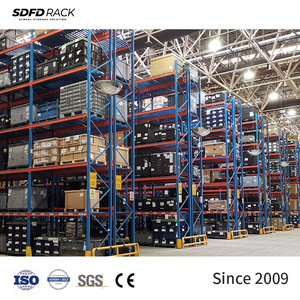
Heavy Duty Pallet Rack System Multi-layer Customized Metal High Load Industrial Warehouse Storage Steel Selective Pallet Racking
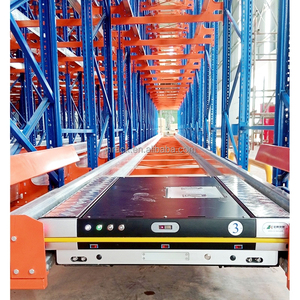
Customized High Density Storage LIFO Pallet Shuttle Racking Galvanized Warehouse Racks Series Pallet Radio- Shuttle Rack System
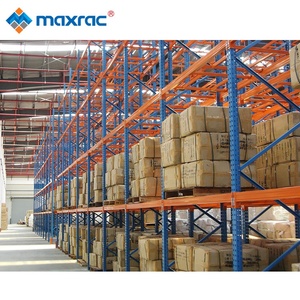
Maxrac Pallet Racking System Seismic Design
Enterprise Manufacturing Authority & Structural Integrity
As a tier-one factory-direct pallet racking manufacturer based in Xiamen, China, SolidFort Storage Equipment Co., Ltd. has established itself as an engineering benchmark for global industrial supply chains. Operating from an advanced 30,000 square meter roll-forming and steel fabrication plant, we design, calculate, manufacture, and export heavy-duty structural steel storage rack configurations engineered to withstand severe dynamic live loads, wind forces, and seismic accelerations.
Unlike trading intermediaries, our in-house manufacturing capabilities encompass high-speed automated continuous roll-forming lines, robotic MIG welding cells, non-destructive ultrasonic weld testing, and dynamic thermosetting epoxy electrostatic powder coating lines. We process premium certified Q235B and Q355B structural grade steel profiles to deliver exceptional structural yield strength, ensuring zero structural failure across thousands of completed international logistcs projects.
Global Code Compliance
Racks engineered directly against Australian standard AS4084:2023, American RMI (ANSI MH16.1), and European FEM 10.2.02 specifications. Full Load Application and Rack Configuration (LARC) engineering drawings provided for municipal building permits.
Finite Element Analysis (FEA)
Every high-density multi-deep racking layout undergoes rigorous FEA computer stress modeling to calculate torsional buckling, elastic deflection parameters (L/200 limit), and seismic baseplate anchor uplift under maximum loading conditions.
10–15 Day Rapid Lead Time
By maintaining a constant inventory of 5,000+ tons of raw coil steel and operating automated multi-shift cold-roll mills, standard high-density selective, push-back, and shuttle racking projects ship within 10–15 business days.
Multi-Deep Warehouse Racking Architecture & System Selection Guide
In modern industrial logistics, floor area acquisition and facility heating/cooling overheads represent major OPEX liabilities. Selecting the optimal Multi-Deep Pallet Racking System directly dictates cubic space efficiency ($m^3/m^2$), throughput speed, SKU selectivity, and return on investment (ROI). Below is an engineering comparison of the primary multi-deep warehouse storage architectures produced by leading Chinese manufacturing hubs.
1. Double-Deep Selective Pallet Racking
Double-deep racking stores pallets two-deep in a back-to-back rack structure, requiring deep-reach pantograph forklifts or specialized pantograph attachments. By eliminating 50% of the operational aisles required in standard single-selective layouts, double-deep configuration increases usable warehouse floor space utilization up to 60–65% while retaining 50% immediate SKU selectivity. It operates on a Last-In, First-Out (LIFO) inventory management logic per lane.
2. Push-Back Cart Racking Systems
Push-back racking utilizes nested inclined steel carts rolling on structural beam tracks. When a pallet is loaded from the aisle, it pushes the preceding pallet back along the track. As pallets are unloaded, gravity automatically feeds the remaining pallets forward to the picking face. Available in 2, 3, 4, 5, and 6-pallet deep configurations, push-back systems offer dense LIFO storage without requiring forklift trucks to enter the structural racking bays, reducing frame damage risks significantly.
3. Semi-Automated Radio Shuttle Pallet Racking
Radio Shuttle racking represents the pinnacle of semi-automated high-density storage for deep-lane operations (up to 40+ pallets deep per channel). An autonomous self-powered electric shuttle cart travels along specialized galvanized guide rails inside the rack channels to retrieve or deposit pallets beneath structural beam levels. Controlled via Wi-Fi radio remotes or warehouse management software (WMS), shuttle systems support both LIFO and FIFO inventory flows, ideal for high-volume cold storage and fast-moving consumer goods (FMCG).
4. Fully Automated 4-Way Pallet Shuttle AS/RS Systems
The 4-Way Shuttle Automated Storage and Retrieval System (AS/RS) integrates mechanical racking structures with omnidirectional robotic shuttles, vertical reciprocating lifts (elevators), and intelligent WCS/WMS execution platforms.Shuttles travel across both lateral storage lanes and longitudinal transport aisles, dynamically reconfiguring paths to handle intense throughput spikes without manual operator intervention.
| Racking System Type | Storage Density | SKU Selectivity | Inventory Logic | Max System Depth | Structural Engineering Complexity |
|---|---|---|---|---|---|
| Single Selective Racking | Baseline (40%) | 100% Direct Access | FIFO / LIFO | 1 Pallet Deep | Standard (AS4084 / RMI) |
| Double Deep Racking | High (60-65%) | 50% Direct Access | LIFO | 2 Pallets Deep | Moderate (Extended Pantograph Deflection) |
| Push Back Cart Racking | Very High (70-75%) | 1 SKU per Lane | LIFO | 2 to 6 Pallets Deep | High (Precision Inclined Rail Tolerances) |
| Radio Shuttle Racking | Maximum (80-85%) | 1 SKU per Channel | FIFO or LIFO | Up to 40+ Pallets Deep | Advanced (Integrated Mechanical Rails & Sensors) |
| 4-Way AS/RS Shuttle System | Ultra Maximum (85-90%) | Dynamic Robotic Access | Automated FIFO/LIFO | Unrestricted Channel Deep | High Precision Engineering (Sub-millimeter) |
Future Procurement & Sourcing Trends in High-Density Logistics
As international logistics networks adapt to e-commerce demand surges, geopolitical supply chain shifts, and stringent corporate ESG mandates, the global procurement landscape for industrial multi-deep pallet racking is undergoing fundamental structural changes. Supply chain directors and engineering procurement teams must evaluate the following key trends when sourcing heavy-duty rack components from OEM/ODM China factories:
1. Transition from Manual Deep Storage to AMR/AGV-Compatible Frames: Standard drive-in and double-deep racking structures are rapidly being retrofitted or specified out-of-the-box to interface with Autonomous Mobile Robots (AMRs) and Automated Guided Vehicles (AGVs). Procurement specifications now mandate tighter manufacturing tolerances (±0.5mm on beam alignment and upright frame plumbness) and structural laser-guided reflector baseplates.
2. Decarbonization and Greener Steel Traceability: Fortune 500 warehouse developers increasingly mandate Environment Product Declarations (EPDs) and Carbon Footprint verifications for steel products. Chinese manufacturers utilizing energy-efficient electric arc furnace (EAF) steel and closed-loop VOC-free powder coating processes are capturing preferential supplier status globally.
3. Shift Toward High-Tensile Cold-Formed Micro-Alloys: Rather than relying solely on thicker gauge standard mild steel, modern rack engineering utilizes ultra-high-strength steel grades (such as Q355B, Q460, and structural micro-alloyed coils with continuous rib-stiffener cold-roll profiles). This yields structural frame mass reductions of 12-18% without reducing beam carrying capacities, substantially reducing international container ocean freight costs ($/ton).
4. Total Cost of Ownership (TCO) Procurement Models: Industrial buyers are shifting away from evaluating vendor quotes purely on upfront material cost per kilogram ($/kg). Modern procurement algorithms incorporate freight density, installation velocity, seismic certification overheads, and long-term frame impact replacement costs into long-term ROI calculations.
Technical Development & Technological Evolution Trends
The structural engineering of warehouse racking has evolved far beyond traditional static structural post-and-beam assemblies. Integrated sensor technology, advanced metallurgy, and computational physics are defining next-generation multi-deep storage systems:
IoT Structural Health Monitoring
Smart upright frame protectors embedded with tri-axial piezoelectric impact sensors monitor forklift collisions in real time, alerting warehouse safety managers to structural over-stress events before structural collapse risks occur.
Advanced Cold-Chain Cryogenic Steel
Development of specialized steel alloys (Q355D/E grade) maintaining ductile strength and zero embrittlement at extreme cold-storage temperatures down to -30°C, preventing catastrophic brittle fractures under high impact loads.
Seismic Energy Dissipation Bases
Patent-pending baseplate designs incorporating friction dampers and elastomeric isolation pads that absorb kinetic lateral ground acceleration seismic waves (P-Delta effect reduction), protecting multi-tier high-bay racking systems.
Frequently Asked Questions (Procurement & Engineering FAQ)
1. Beam Pair Capacity: Determined by the maximum Uniformly Distributed Load (UDL) a pair of horizontal beams can support without exceeding the vertical deflection limit of L/200 (where L is the clear span beam length).
2. Upright Frame Load Capacity: Determined by the maximum total vertical axial load the upright columns can carry. Crucially, upright capacity is not a static figure—it decreases as the unsupported vertical distance between beam levels (beam pitch) increases due to column buckling physics. Structural capacity plaques (LARC plaques) must be permanently fixed to every rack assembly.
- Upright Frame Depth: Typically 42 inches (1,067mm), allowing a standard 3-inch (75mm) pallet overhang at both front and rear edges for proper beam seating.
- Beam Clear Span: Standard 96-inch (2,438mm) or 108-inch (2,743mm) lengths to accommodate two standard pallets side-by-side with required 3-inch side clearances.
- Height: Upright frame heights range from 8 feet (2.4m) up to 40+ feet (12m+), limited only by facility clear height, concrete floor slab capacity, and reach forklift capabilities. Euro pallets (1200x800mm) utilize 1100mm frame depths and 2700mm beam lengths.
Request a Free Technical CAD Layout & Engineering Quotation
Partner with China's leading multi-deep pallet racking manufacturer. Our structural engineering team provides custom warehouse load calculations, CAD layouts, and factory-direct pricing within 24 hours.
Inquire Now