Featured Heavy-Duty & Oversized Industrial Racking Products
Direct-from-factory engineered solutions manufactured under AS4084, ANSI/RMI MH16.1, and FEM standards.
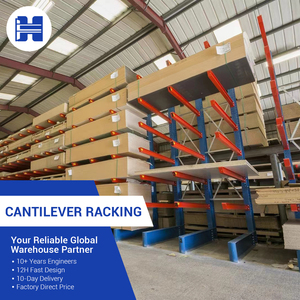
High Capacity Heavy Duty Roll Formed Cantilever Rack Adjustable Arms Powder Coated Finish for Industrial Warehouse Steel Storage
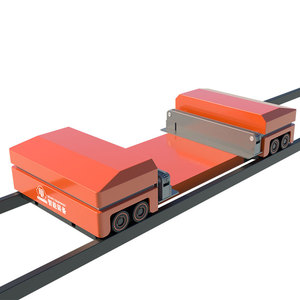
Maoyuan Shuttle Cruiser Rgv Rail Guided Vehicle Pallet Shuttle Conveyor System 1500kg Capacity Automatic Cart Storage Smart
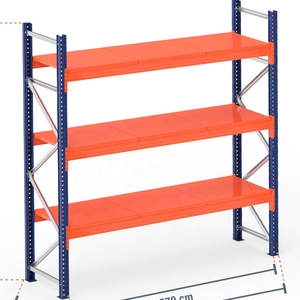
Heavy Duty Warehousing Racking Systems
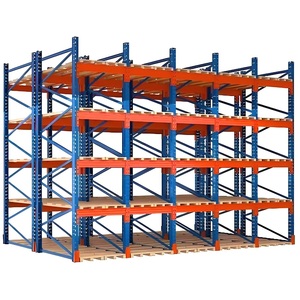
Wholesale Heavy Duty Steel Pallet Racking System for Warehouse Storage
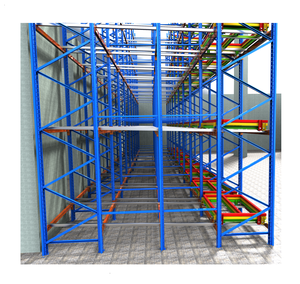
Durable Structural Design Steel Warehouse Rack Storage Racks Push Back Pallet Racking Systems with ISO 9001 & CE Certified
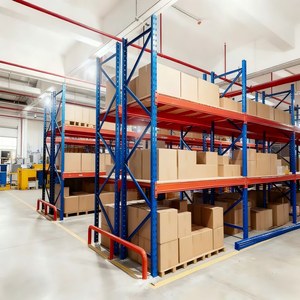
Industrial High Rise Heavy-Duty Steel Pallet Rack Corrosion Protection High Load Storage Shelf Stereo Capacity Expanding Design
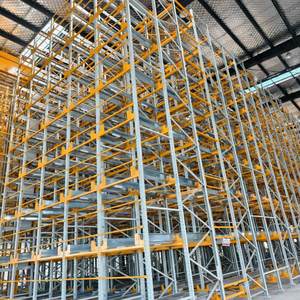
Customizable Four-Way Shuttle Racking Automated Warehouse Shelving System CE/ISO Certification Corrosion Protection Steel
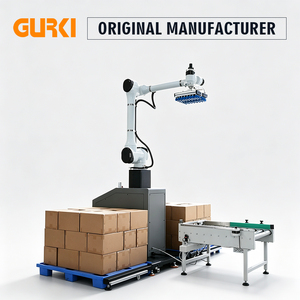
GURKI High Speed Full Automatic Robotic Palletizing Systems Carton Case Box Cobot Palletizer For Warehouse/Factory
Executive Sourcing Guide: Navigating China’s Oversized Pallet Racking Ecosystem
In modern industrial logistics, the demand for non-standard, heavy-duty, and oversized pallet racking systems has accelerated dramatically. Fast-growing e-commerce fulfillment hubs, cold chain logistics nodes, and heavy manufacturing sectors require storage configurations that exceed traditional standard GMA or Euro-pallet footprints. When evaluating top China oversized pallet racking manufacturers and factories, enterprise procurement teams must navigate complex engineering criteria, steel grade standards, seismic calculations, and international safety compliance.
China has established itself as the global manufacturing epicenter for cold-rolled and hot-rolled structural steel rack systems. However, sourcing oversized racking systems—which feature beam spans exceeding 3.9 meters, upright heights over 15 meters, or point-load capacities upwards of 4,500 kg per level—demands a level of technical due diligence far beyond off-the-shelf industrial shelving. This whitepaper analyzes manufacturing methodologies, material yield strengths, automated integration trends, and key risk-mitigation strategies for global industrial procurement managers.
Core Procurement Insight: Oversized racking is not merely a scaled-up version of standard racking. Increasing beam length or upright depth changes buckling modes, torsional stiffness, and dynamic deflection ratios under load. Working directly with factory-direct engineering teams ensures custom finite element analysis (FEA) and exact compliance with local building codes.
Core Capabilities of Top-Tier Chinese Racking Manufacturers
What differentiates leading structural rack fabricators from commodity suppliers.
High-Tensile Cold-Rolled Steel
Utilization of high-yield structural steel grades (such as Q355B and Q460) to maintain high load capacities while optimizing total system weight and shipping volume.
Custom FEA Stress Modeling
Advanced engineering simulation to test flexural rigidity, column sway, dynamic fork-truck impact resistance, and seismic zone performance prior to mass fabrication.
Global Certification Compliance
Full manufacturing alignment with Australian Standard AS4084:2023, US RMI (ANSI MH16.1), European FEM 10.2.02, and ISO 9001:2015 quality management systems.
SolidFort Storage Equipment: Manufacturing Rigor & Engineering Precision
Headquartered in Tongan Park, Tongan District, Xiamen, China, SolidFort Storage Equipment Co., Ltd. represents the modern benchmark of direct-to-enterprise pallet rack manufacturing. Operating out of a state-of-the-art 30,000 square meter production complex, SolidFort specializes in high-density, structural, and custom oversized storage solutions exported to more than 53 countries worldwide.
Unlike trading intermediaries, SolidFort controls the entire production lifecycle in-house. From incoming raw steel coil inspection to precision continuous roll forming, robotic welding of beam connectors, surface shot-blasting, and thermosetting epoxy powder coating, every step is strictly monitored under an ISO-certified quality control framework.
Key Factory Capabilities & Technical Infrastructure:
- Continuous Automated Roll Forming Lines: Capable of punching and forming heavy-gauge upright posts up to 1.8mm to 3.0mm thickness with tight pitch tolerances.
- Advanced Surface Corrosion Protection: Powder coating line featuring automated multi-stage pre-treatment and degreasing, delivering coat thickness between 60 to 80 microns for maximum abrasion and chemical resistance.
- Pre-Shipment Container Load Optimization: SolidFort engineers provide 3D container packing layouts with every project, maximizing cube utilization in 40ft HQ containers to drastically reduce international ocean freight costs per pallet position.
- Engineer-Led Consultation: Dedicated structural engineers evaluate warehouse floor slab thickness, concrete compressive strength, clear ceiling height, flue space requirements, and forklift aisle radii before finalizing CAD layout proposals.
Oversized & Heavy-Duty Racking Technical Selection Matrix
Selecting the optimal structural framework requires balancing inventory selectivity against volumetric cube utilization. The matrix below outlines technical boundaries for primary oversized racking configurations.
| Racking System Type | Typical Max Load / Level | Selectivity | Volumetric Efficiency | Primary Industrial Application |
|---|---|---|---|---|
| Selective Heavy-Duty Racking | 1,000 kg – 4,500 kg | 100% Direct Access | 60% – 65% Utilization | High SKU diversity, FMCG, logistics hubs |
| Drive-In / Drive-Thru Racking | 1,500 kg / Pallet | Low (LIFO / FIFO) | Up to 85% Utilization | Cold storage, bulk homogeneous goods |
| Radio / 4-Way Shuttle System | 2,000 kg / Shuttle | Medium High (Filo/Fifo) | Up to 90% Utilization | Automated cold chain, beverage distribution |
| Heavy-Duty Push Back Racking | 1,500 kg / Cart | Medium (LIFO) | 75% – 80% Utilization | 2 to 6 deep staging, medium turnover |
| Industrial Cantilever System | 500 kg – 5,000 kg / Arm | 100% Unobstructed | Variable (Linear) | Steel pipes, timber, aluminium profiles, sheets |
Future Procurement Trends in Oversized Pallet Racking (2026–2030)
The industrial storage landscape is undergoing a structural shift driven by warehouse automation, rising land costs, and global supply chain re-shoring. When sourcing oversized racking systems from China, enterprise buyers should design their infrastructures to accommodate upcoming technology cycles:
1. Hybrid Integration of Shuttle Carts and AGV/AMR Fleet Ecosystems
Traditional static racking is increasingly giving way to semi-automated and fully automated shuttle ecosystems. Systems like the 4-Way Radio Shuttle Racking and RGV (Rail Guided Vehicle) Shuttle Cruisers allow deep-lane pallet storage managed automatically by autonomous carts. Future-proof rack design requires tighter manufacturing tolerances (within ±1.0mm frame straightness) to ensure smooth sensor tracking for AGVs and cobot palletizers.
2. Seismic-Resistant Design & Higher-Grade Steel Formulations
With global logistics hubs expanding into high seismic risk zones across South America, Southeast Asia, and the Pacific Rim, rack design must incorporate dynamic baseplates, heavy-duty floor anchor systems, and high-ductility steel formulations. Chinese tier-one manufacturers are increasingly substituting standard Q235 steel with cold-rolled Q355B high-yield structural steel to reduce dead load while increasing resilience under dynamic shear force.
3. Sustainable Finishes and Low-VOC Thermosetting Coatings
Environmental standards in manufacturing are becoming a critical key performance indicator (KPI) in enterprise ESG audits. Leading Chinese factories are upgrading to zero-emission electrostatic powder coating lines that capture and recycle 98% of oversprayed powder, eliminating volatile organic compounds (VOCs) while ensuring long-lasting corrosion protection in high-humidity and sub-zero cold-room environments.
Frequently Asked Questions (FAQ) for Global Racking Procurement
Engineering and logistical insights directly addressing the most critical procurement inquiries.
Ready to Optimize Your Warehouse Capacity?
Connect directly with SolidFort’s senior engineering team for free CAD warehouse layout design, load application calculations, and competitive factory-direct quotations.