Featured Industrial Pallet Racking & Conveyor Systems
High-yield steel storage racks, RGV shuttle conveyors, and mezzanine platforms manufactured under AS4084, RMI ANSI MH16.1, and FEM 10.2.02 quality standards.
State of Pallet Conveyor & High-Density Storage Manufacturing in China
Modern global logistics networks are facing unprecedented pressures: rising real estate costs per square meter, labor availability bottlenecks, and aggressive order throughput SLAs. In response, global procurement managers and supply chain directors are shifting focus from standalone static storage racks to dynamic, integrated Pallet Conveyor Storage Systems and automated rail-guided vehicle (RGV) shuttle architectures.
China has established itself as the global hub for advanced material handling equipment manufacturing. Leading Chinese racking and conveyor OEMs leverage vertical integration—from high-yield raw steel sourcing (Q235B and Q355B cold-rolled steel profiles) to high-precision automatic roll-forming, robotic laser welding, and electrostatic powder coating lines. This integration allows suppliers to deliver structural engineering solutions compliant with international safety frameworks such as AS4084-2012 (Australia), ANSI/RMI MH16.1 (USA), and FEM 10.2.02 (Europe) at competitive factory-direct price points.
RGV & Shuttle Conveyor Transfers
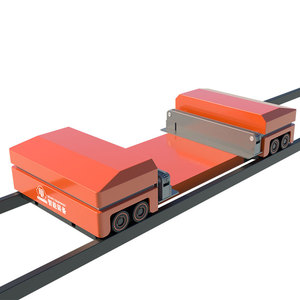
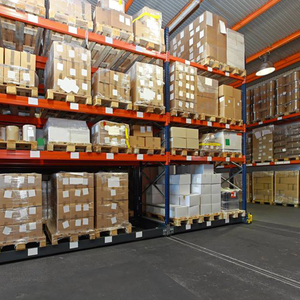
Automated Radio Shuttle Cruisers and Rail-Guided Vehicles (RGV) deliver rapid pallet transit within high-density storage tunnels up to 1,500kg load capacities, eliminating forklift travel inside rack aisles.
VNA (Very Narrow Aisle) Systems
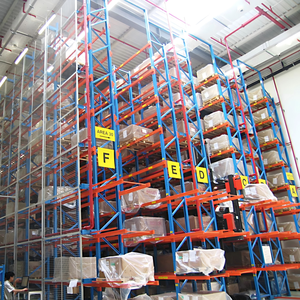
Engineered for high-rise storage up to 15 meters, VNA racking optimizes floor space utilization up to 85% by reducing working aisles to just 1.5–1.8 meters with precise guide rail tracks.
Seismic-Resistant Structural Steel
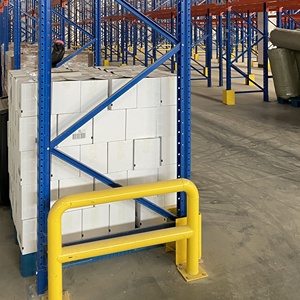
Calculated using Finite Element Analysis (FEA) to withstand seismic zone lateral dynamics, utilizing heavy-gauge upright columns, heavy-duty footplates, and chemical anchor floor ties.
Engineering Principles: Integrating Pallet Conveyors with Storage Structures
An effective industrial pallet storage ecosystem relies on the seamless convergence between mechanical conveyor dynamics and structural rack loading capabilities. Unlike static selective pallet racks, pallet conveyor storage systems introduce active dynamic loads, operational vibration frequencies, and rapid cyclic transfers.
When selecting a Chinese manufacturer for automated conveyor and shuttle racking, engineering buyers must evaluate three foundational design aspects:
- Beam Deflection Ratios & System Tolerances: Automated conveyor transfers and shuttle cars require strict deflection limits. Standard static racks allow a beam deflection of L/200, whereas automated pallet conveyor integration mandates maximum deflection ratios of L/300 to L/400 to prevent shuttle jamming and optical sensor misalignment.
- Upright Column Profile Mechanics: Cold-rolled upright profiles featuring multi-ribbed bend geometries (e.g., 11 to 13 bends) provide superior torsional rigidity compared to standard 90-degree channel sections. High-rise VNA and conveyor-fed racks rely on these profiles to carry axial loads upwards of 25,000 kg per bay.
- Surface Anti-Rust Coatings & Cold Storage Durability: For cold-chain logistics operating at temperatures down to -30°C, thermosetting epoxy polyester powder coating must undergo pre-treatment zinc phosphating, or be substituted with Hot-Dip Galvanizing (HDG) compliant with ISO 1461 to avoid micro-fracturing and structural oxidation.
Technical Insight for Sourcing Managers: Always demand Load Application and Rack Configuration (LARC) drawings signed by certified structural engineers prior to manufacturing. Ensure your supplier performs tensile testing on raw coil steel batches to verify compliance with mill test reports (MTR).
Comparative Matrix: Storage Density, Conveyor Compatibility & ROI
Compare structural racking systems engineered by Chinese OEMs to select the ideal layout for your warehouse operational profile:
| Storage System Type | Floor Footprint Utilization | Conveyor Integration Level | Pallet Selectivity | Payload Capacity / Layer | Ideal Application |
|---|---|---|---|---|---|
| Radio Shuttle & RGV System | 85% - 90% | High (Automated Rail Cart) | LIFO / FIFO Option | 1,000kg – 1,500kg | Cold Storage, Bulk FMCG, High-Volume SKUs |
| VNA High-Rise Storage Racks | 75% - 85% | Medium (Infeed Roller Conveyors) | 100% Direct Access | 800kg – 3,000kg | Manufacturing Workshops, E-Commerce Hubs |
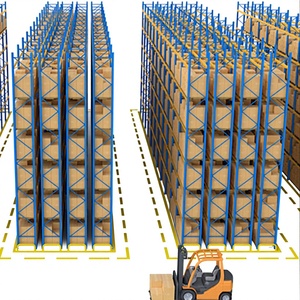
| Double Deep Pallet Racking | 65% - 75% | Low - Medium | 50% Immediate Access | 1,000kg – 2,500kg | Distribution Centers, Dry Grocery Storage |
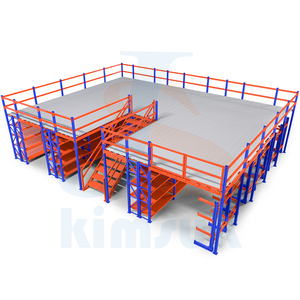
| Pallet-Supported Mezzanines | 150% - 200% (2-3 Tier) | High (Vertical Lifters & Incline Belts) | 100% Manual / Carton Pick | 300kg – 1,000kg/㎡ | Attic Storage, Auto Parts, Spare Parts Picking |
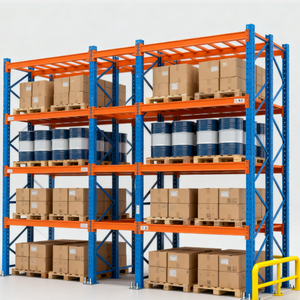
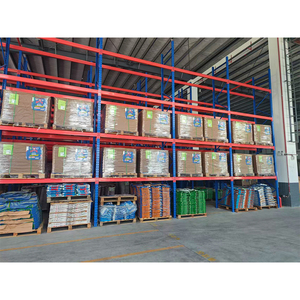
| Selective Heavy-Duty Racking | 40% - 50% | Flexible Integration | 100% Direct Access | 1,000kg – 4,500kg | General Logistics, Mixed SKU Distribution |
Future Procurement Trends in Pallet Storage & Conveying Systems
The global industrial warehouse landscape is experiencing a rapid technological transition. As procurement officers look toward China for strategic equipment partnerships, four overarching trends are shaping procurement decisions:
1. Hyper-Convergence of WCS/WMS with Hardware
Static racking and isolated conveyors are being replaced by smart, connected warehouse networks. Modern RGV shuttle systems and conveyor beds feature onboard PLC controllers, optical sensor arrays, and wireless communication protocols (Wi-Fi 6 / 5G private networks) that communicate directly with Warehouse Control Systems (WCS). This enables real-time inventory tracking, automatic routing, and predictive maintenance alerts.
2. Green Manufacturing & Low-Carbon Steel Supply Chains
Environmental regulatory compliance is becoming a non-negotiable criterion for international buyers. Premier Chinese racking manufacturers are adopting eco-friendly production practices, including closed-loop water recycled pre-treatment, solar-powered factory infrastructure, and zero-VOC electrostatic powder coatings that reduce carbon footprints across global supply chains.
3. Modular & Scalable Structural Architecture
To mitigate long-term business uncertainty, enterprise buyers prefer modular pallet rack systems that allow rapid height extension, beam adjustments at 50mm/75mm pitch increments, and seamless integration of add-on accessories (wire mesh decking, column protectors, frame barriers) without requiring structural welding or major warehouse downtime.
4. Advanced Safety Standards & Seismic Isolation
Building codes in North America, Europe, and Australasia now enforce rigorous seismic performance standards. Top Chinese suppliers utilize specialized seismic footplates, double-anchor column bases, and dynamic beam locking pins to withstand localized ground acceleration events, preserving inventory and protecting personnel.
Why Partner with SolidFort Storage Equipment
SolidFort Storage Equipment Co., Ltd. is a premier factory-direct manufacturer of heavy-duty pallet racking, RGV shuttle conveyor systems, and industrial loft platform structures based in Xiamen, China. Operating a modern 30,000㎡ manufacturing facility, SolidFort delivers end-to-end engineering excellence to clients in over 53 countries.
Direct Factory Wholesale Pricing
Eliminate middleman markups. In-house steel roll-forming and robotic welding ensure optimized manufacturing costs and fast turnaround times.
Free Engineering CAD Layouts
Our dedicated structural engineers perform pallet position optimization, forklift turning radius checks, and custom CAD floor plans at zero initial cost.
Certified Quality Management
Engineered with reference to AS4084, ANSI/RMI MH16.1, and FEM standards under ISO 9001 quality assurance with CE documentation on request.
Container Loading Optimization
Expert packing design prevents transit damage and optimizes shipping space on FOB, CIF, or DDP terms, cutting ocean freight expenditure.
Pallet Racking & Storage System FAQs
Expert insights on cost calculation, safety compliance, installation requirements, and shipping logistics.
What does pallet racking cost per pallet position?
Cost depends on raw steel market pricing, system height, and dynamic complexity. Standard selective pallet racking typically averages USD 50–100 per pallet position. High-density automated systems such as push back, drive-in, or radio shuttle racking range from USD 100–250 per position. These estimates generally cover structural materials; engineering, ocean freight, and localized installation vary according to project scope.
Do industrial pallet racks need to be anchored to the slab floor?
Yes. Under ANSI/RMI MH16.1, AS4084, and international building safety codes, every pallet rack column baseplate must be securely anchored to the concrete slab using heavy-duty expansion or mechanical chemical anchors. Floor anchoring prevents column dislocation during material loading, withstands seismic shear forces, and helps maintain frame geometry following accidental forklift impact.
How is the load capacity of a pallet rack system calculated?
Racking capacity is determined by two critical structural calculations: Beam Capacity (the Uniformly Distributed Load / UDL carried by a beam pair) and Upright Frame Capacity (which decreases as vertical beam elevation spacing increases). Structural capacity should never be estimated visually; always refer to manufacturer Load Application and Rack Configuration (LARC) drawings and maximum capacity plaques installed on rack rows.
What are the standard sizes for industrial pallet racks?
For standard 40" × 48" GMA pallets, standard frame depth is 42 inches (allowing a 3-inch overhang front and rear). Standard cross beam length is 96 inches (8 ft) to accommodate two pallets side by side with proper clearance. Heights range from 8 feet to over 30 feet depending on clear warehouse ceiling height and forklift reach capabilities. Custom dimensions for 1200 × 1000mm or 1200 × 800mm Euro pallets are readily fabricated.
How often should pallet racking be inspected for safety compliance?
A qualified structural inspector should conduct a formal safety review at least once every 12 months. In addition, warehouse operation supervisors should conduct regular weekly visual checks to detect bent column guards, sheared safety pins, deflected beams, or out-of-plumb upright frames. Damaged bays must be offloaded and isolated immediately.
What is the typical lead time and available shipping terms?
Standard selective and heavy-duty rack orders are produced and dispatched within 10 to 15 days; complex engineered automation projects typically require approximately 30 days. We support FOB, CIF, or DDP trade terms and supply full container packing plans with certified material loading manifests.
Which design and manufacturing standards do SolidFort systems meet?
SolidFort storage systems are calculated, roll-formed, and manufactured in accordance with AS4084-2012, RMI (ANSI MH16.1), and FEM 10.2.02 specifications. Production is audited under ISO 9001 quality management systems, with CE certificates and mill test reports provided upon request.
Ready to Optimize Your Warehouse Layout & Storage Capacity?
Talk directly with our structural racking engineers. Provide your warehouse architectural floor plan, pallet specs, and ceiling heights for a complimentary CAD system layout and factory quotation.