Featured Industrial Pallet Storage Racking Systems
Explore our top-rated heavy-duty pallet racking systems engineered for maximum warehouse cubic density, high load capacity, and seamless forklift accessibility.
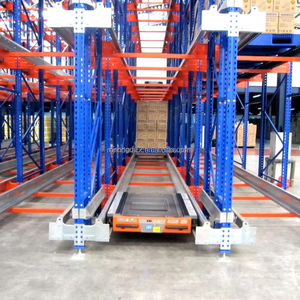
Factory Customizable Heavy-Duty 2-Way Automated Shuttle Rack Metal Radio Shuttle Racking Storage System
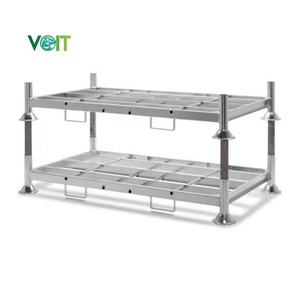
Heavy Duty Steel 2 Way Industrial Warehouse Pallet Storage Material Handling Stackable Forklift Racks
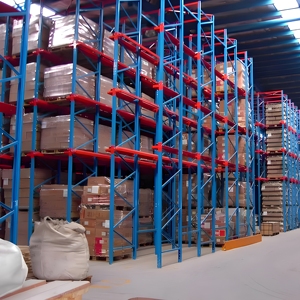
500~4000kg Industrial Drive-in Racks CE Certified Heavy Duty High Density Compact Steel Powder Coated Pallet Racking System
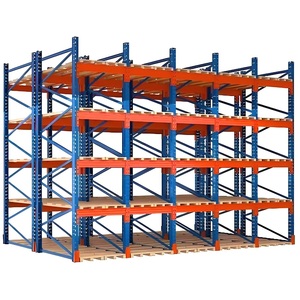
Wholesale Heavy Duty Steel Pallet Racking System for Industrial Warehouse Storage
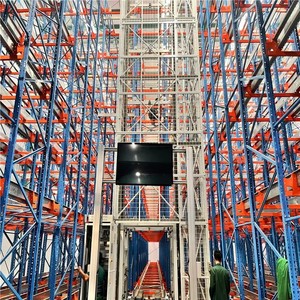
Intelligent Four-Way Steel Shuttle Rack System CE/ISO Certification Automated Pallet Storage Racking
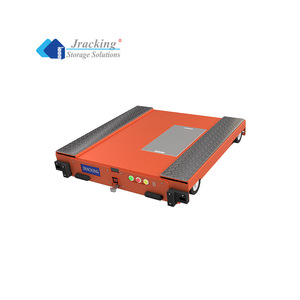
CE Certified Automated Four Way Radio Shuttle River-type Pallet Racking System For Industrial Warehouse
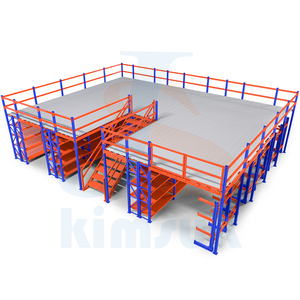
Warehouse Heavy Duty Steel Loft Platform Shelf Storage Attic Rack Pallet Racking Supported Mezzanine System
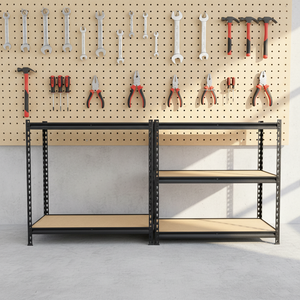
5 Layer Industrial Warehouse Storage Shelving Racks Heavy Duty Adjustable Boltless Rivet Rack Powder Coated
1. Technical Whitepaper: Selective Pallet Racking Sourcing & Engineering Dynamics
Selective pallet racking remains the definitive workhorse of modern global supply chain logistics. Accounting for over 65% of all warehouse storage installations worldwide, standard selective pallet racking provides 100% direct product accessibility to every single pallet position without requiring other pallets to be moved. As global e-commerce volumes surge and SKU diversification accelerates, logistics operators require engineering-grade structural integrity, precise dimensional tolerances, and high-strength cold-rolled steel profiles to ensure worker safety, maximize operational throughput, and comply with international building standards.
China has firmly established itself as the world's premier epicenter for heavy-duty pallet racking manufacturing. Leveraging advanced automated continuous cold roll-forming production lines, robotic MIG welding systems, and fully integrated thermosetting epoxy electrostatic powder coating infrastructure, top-tier Chinese racking manufacturers deliver unmatched engineering value, rapid scalability, and structural performance compliant with Australian (AS4084:2012), American (RMI ANSI MH16.1), and European (FEM 10.2.02) safety protocols.
Information Gain Insight: Structural stability in selective pallet racking relies heavily on steel grade selection. Standard Chinese manufacturing utilizes high-tensile Q235B and Q355B structural steel profiles (yield strengths from 235 MPa up to 355 MPa). When paired with finite element analysis (FEA) computer modeling, these profiles ensure maximum allowable frame column capacity under combined gravity, seismic, and forklift impact dynamics.
Structural Anatomy of Heavy-Duty Selective Pallet Racking Systems
A standard selective pallet racking assembly consists of engineered structural components designed to absorb dynamic loading stresses and transfer point forces down to the concrete slab base:
Upright Frames (Columns)
Cold-rolled structural steel columns formed with precise 50mm, 75mm, or 76.2mm (3-inch teardrop) pitch punchings. Braced diagonally and horizontally using C-section profiles to resist buckling under buckling load calculations (Euler's column formula).
Interlocking Load Beams
Twin-C nested box beams or step beams featuring multi-claw automatic safety connector brackets. Engineered to maintain deflection limits within $L/180$ under maximum uniformly distributed load (UDL) ratings reaching up to 4,500 kg per pair.
Anchoring & Baseplates
Heavy-duty seismic baseplates anchored directly to the reinforced concrete floor slab via mechanical expansion anchors or chemical epoxy anchors, resisting shear forces and overturning moments caused by seismic events or forklift bumps.
2. Structural Comparison Matrix: Selective Racking vs. Alternative High-Density Systems
Selecting the optimal warehouse storage architecture requires balancing pallet selectivity, volumetric density, throughput speed, and capital equipment costs. Below is an engineering evaluation comparing Selective Pallet Racking against alternative industrial storage topologies:
| Storage Topology | Direct Selectivity | Volumetric Density | Inventory Flow | Forklift Compatibility | Relative Cost / Pallet |
|---|---|---|---|---|---|
| Selective Pallet Racking | 100% Direct Access | Standard (35-40%) | FIFO or LIFO | Standard Reach / Counterbalance | USD 50 – 100 (Lowest TCO) |
| Double-Deep Selective Racking | 50% Direct Access | Medium (50-55%) | LIFO Preferred | Deep-Reach Pantograph Forklift | USD 75 – 125 |
| Drive-In / Drive-Thru Racking | Low (20-30%) | High (65-75%) | LIFO (Drive-In) / FIFO (Drive-Thru) | Narrow-aisle Counterbalance | USD 110 – 180 |
| Radio Shuttle Racking | Medium (Batch Access) | Very High (80-85%) | Automated FIFO / LIFO | Standard Lift + Autonomous Shuttle | USD 180 – 300 |
| Cantilever Racking System | 100% Open Front | Targeted (Long Items) | Free Access | Side Loader / Multi-directional | USD 120 – 250 |
3. Strategic Sourcing Guide & TCO Framework for Importers and Procurement Managers
When procuring industrial selective pallet racking from China factories, global buyers must navigate technical specifications, customs compliance, freight logistics, and structural permitting. Working directly with a tier-1 original equipment manufacturer (OEM) like SolidFort Storage Equipment Co., Ltd. eliminates intermediary markups while granting direct access to customized engineering design teams.
Key Steps for Seamless OEM/ODM Pallet Racking Procurement
- Structural Warehouse Layout Audit: Supply architectural layout drawings (DWG/PDF) highlighting building columns, clear height under roof trusses, slab thickness, concrete compressive strength ($f'_c \ge 25 \text{ MPa}$), and overhead sprinkler clearances.
- Pallet Profile Definition: Specify precise pallet dimensions ($W \times D \times H$), including bottom runner configuration (GMA, Euro, perimeter base), maximum dynamic gross load weight per pallet, and overhang parameters.
- Material & Finishing Selection: Choose high-durability epoxy powder coating for ambient temperature distribution centers, pre-galvanized finishes for humid climate zones, or hot-dip galvanized (HDG) coating exceeding $60 \mu\text{m}$ thickness for sub-zero cold storage facilities.
- Container Packing Optimization: Heavy structural steel components (upright columns, beams, wire decks) require customized steel strapping, protective corner edge wrapping, and timber dunnage to maximize CBM fill rates in standard 40ft High Cube (40HC) containers without causing transit abrasion.
4. Future Technological & Procurement Trends in Industrial Storage Racking
The material handling industry is undergoing a digital transformation. Factory buyers and warehouse engineers should account for these emerging trends when designing new warehouse infrastructure:
Decarbonized Green Steel Production
Adoption of low-carbon recycled steel billets, zero-VOC powder coatings, and solar-powered cold roll-forming lines to reduce Scope 3 carbon emissions, matching European Carbon Border Adjustment Mechanism (CBAM) requirements.
AGV & AMR Compatible Tolerances
As Autonomous Mobile Robots (AMRs) replace manual forklifts, racking manufacturing tolerances must tighten to within $\pm 1.0\text{mm}$. Precision beam level laser alignment and sensor-assisted positioning plates are now standard requirement options.
Modular Hybrid Racking Structures
Designing selective rack networks with integrated mezzanine loft platforms, wire mesh safety enclosures, and multi-tier picking aisles to facilitate omni-channel e-commerce fulfillment inside a single building footprint.
Engineering Free CAD Warehouse Layouts & Technical Load Calculations
Connect directly with SolidFort's structural racking engineers in Xiamen, China. We prepare full LARC structural drawings, finite element stress analysis, and itemized bill-of-materials within 24 hours.
Inquire Now5. Enterprise Profile: SolidFort Storage Equipment Co., Ltd.
Situated in Tongan Park, Tongan District, Xiamen City, Fujian Province, SolidFort Storage Equipment Co., Ltd. operates a modern 30,000 square meter production complex equipped with continuous cold roll-forming lines, automated robotic welding cells, and an environmental-grade powder coating line. Since 2016, SolidFort has grown into a premiere China selective pallet racking manufacturer and exporter, delivering engineered warehouse solutions to over 53 countries across North America, Europe, Australia, the Middle East, and Southeast Asia.
Our engineering team designs every racking system with direct reference to AS4084:2012 (Australia), RMI ANSI MH16.1 (United States), and FEM 10.2.02 (Europe) structural codes. From initial warehouse spatial planning to container loading verification, SolidFort provides end-to-end accountability, factory-direct pricing, and rapid 10–15 day lead times for standard orders.
6. Frequently Asked Questions (FAQ) for Pallet Racking Sourcing
What does selective pallet racking cost per pallet position?
Cost depends heavily on raw steel market prices, frame height, beam capacity, and powder coating specifications. Standard selective pallet racking manufactured in China typically averages USD 50 to USD 100 per pallet position for FOB material costs. High-density automated systems (such as Radio Shuttle or Push Back racking) range from USD 100 to USD 250 per position. Final budget calculations should incorporate ocean freight, local import duties, and site installation labor.
Do pallet rack upright columns need to be anchored to the concrete floor?
Yes. Under ANSI/RMI MH16.1, AS4084:2012, and European building safety codes, every individual racking upright column must be securely anchored to the concrete slab using certified anchor bolts. Anchoring prevents rack displacement during loading/unloading, maintains structural plumbness under load deflection, and ensures seismic stability. Anchor hole depth and bolt diameter (typically M10 to M16) are calculated based on concrete slab compressive strength and local seismic zone classifications.
How is the ultimate load capacity of a pallet rack system calculated?
Pallet rack load capacity is calculated based on two primary structural variables:
- Beam Load Capacity: Determined by the section modulus of the beam pair, span length, and steel yield strength. Beams carry a uniformly distributed load (UDL) rated with a safety factor of 1.65.
- Upright Frame Capacity: Upright capacity is governed by the vertical distance between beam levels (unsupported length). As vertical beam spacing increases, the overall frame buckling capacity decreases. Always refer strictly to the manufacturer's Load Application and Rack Configuration (LARC) engineering plaques attached to the end of racking rows.
What are the standard dimensional sizes for selective pallet racking?
For standard 40" x 48" GMA pallets (common in North America), standard frame depth is 42 inches (giving a 3-inch overhang front and back), and standard beam length is 96 inches (8 feet) to fit two pallets side-by-side. For standard Euro pallets (1200 x 800mm or 1200 x 1000mm), frame depths are engineered to 1100mm with beam lengths of 2700mm (holding three Euro pallets) or 1800mm (holding two Euro pallets). Upright column heights range from 2,500mm up to over 12,000mm based on warehouse clear ceiling height.
How frequently should warehouse pallet racking undergo safety inspections?
Formal rack safety inspections conducted by a certified inspector should occur at least once every 12 months. In addition, internal warehouse safety managers should execute weekly or monthly visual checks to identify forklift damage, column twist, missing safety locking pins, beam deflection exceedance, or baseplate anchor loosening. Damaged components must be isolated and replaced immediately to prevent structural collapses.
What is SolidFort's standard lead time and export shipping terms?
Standard manufacturing lead time at SolidFort is 10 to 15 days following approval of final CAD layout drawings and deposit receipt. Complex engineered projects requiring custom tooling typically complete in 25 to 30 days. We export under standard ocean freight terms including FOB (Xiamen/Shanghai), CIF, CFR, and DDP (Delivered Duty Paid), providing automated container packing lists and CAD loading diagrams to optimize freight efficiency.
Which international quality and safety certifications apply to SolidFort racking?
SolidFort pallet racking systems are engineered in strict compliance with Australian Standard AS4084:2012, American RMI (ANSI MH16.1), and European FEM 10.2.02 structural guidelines. Our manufacturing plant operates under an ISO9001:2015 Quality Management System, ISO14001 Environmental System, with CE Certification documentation provided for European customs import clearance.
Partner with China's Premier Selective Pallet Racking Manufacturer
Whether you require a single container order of standard selective rack components or a fully automated high-density warehouse installation, SolidFort provides factory-direct prices, certified structural quality, and dedicated engineering support.
Inquire Now